

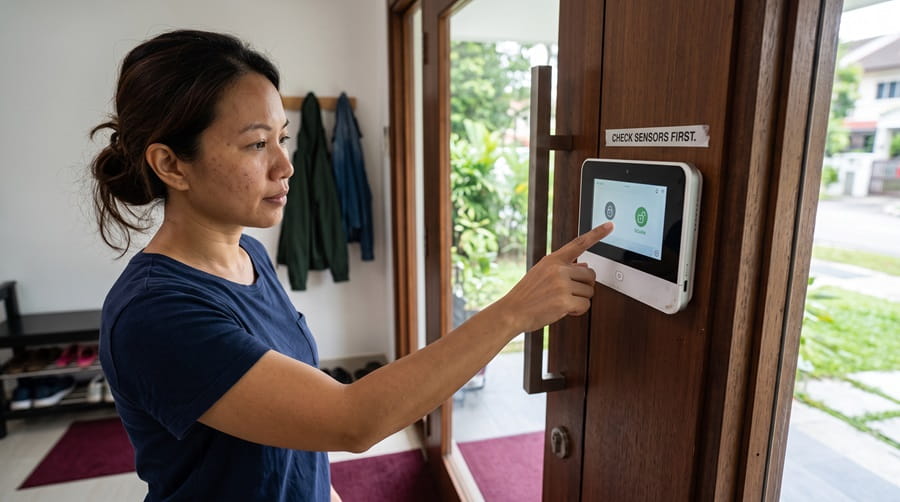
Choosing the best home security system is one of the most important decisions a homeowner or renter can make, yet the market has never been more crowded or more confusing. The options range from professionally installed systems with mandatory monitoring contracts to fully wireless DIY kits you can activate in an afternoon and cancel any time. Prices span from $75 for a basic starter kit all the way to over $400 for a professional-grade package, and monthly monitoring fees vary just as widely — from completely free self-monitoring to $49.99 per month for premium 24/7 professional response. The right choice depends on your living situation, your budget, how much smart home integration matters to you, and whether you want the security of a professional monitoring center dispatching responders on your behalf or prefer to manage alerts yourself through a mobile app.
The home security industry has changed dramatically since the era when a contract with a local alarm company was the only viable option. Today’s best systems are wireless, DIY-installable, and compatible with Amazon Alexa, Google Home, and Apple HomeKit. Many offer cellular backup so the system stays active even if your internet goes down or an intruder cuts your phone line — a feature that once cost a premium but is now standard on most mid-tier plans. Professional monitoring response times have also improved, with top providers now averaging under 35 seconds from alarm trigger to contact, compared to the industry average of 45 seconds just a few years ago. This guide covers the ten best home security systems available right now, with verified pricing, honest assessments of strengths and weaknesses, and everything you need to select the right system for your home.
Understanding the total cost of ownership is essential before committing to any system. Equipment costs are one-time purchases, but monitoring fees compound over months and years. A system that appears affordable upfront — say, a $109 starter kit — may cost over $800 in monitoring fees over three years on a contract plan, while a more expensive system with a flexible month-to-month plan may ultimately cost less if you cancel after 18 months. Always calculate the 24-month total cost of equipment plus monitoring before comparing systems on price, since sticker prices on equipment alone are rarely the most useful comparison point.
What to Look for in a Home Security System
The most important distinction to understand before evaluating any specific system is the difference between monitored and self-monitored security. A professionally monitored system connects your home to a 24/7 central monitoring station. When an alarm triggers, a trained agent attempts to contact you first, then dispatches police, fire, or medical responders if they cannot confirm it is a false alarm. This layer of human response is what justifies the monthly monitoring fee for most homeowners, since it ensures that a break-in at 3 a.m. when you are asleep — or on vacation — will still receive a timely response even if your phone is silenced. A self-monitored system sends push notifications to your phone and may sound a local siren, but relies entirely on you to see the alert and take action. Self-monitoring is significantly less reliable as a deterrent but substantially cheaper and gives you full control without ongoing fees.
Installation method is the second critical decision point. Professionally installed systems (ADT, Vivint) send a technician to your home to mount sensors, cameras, and the control panel, configure the system, and test every component before leaving. This costs more upfront but eliminates the guesswork and ensures proper placement and configuration. DIY systems (SimpliSafe, Ring Alarm, Abode, Cove) ship directly to your door and rely on peel-and-stick adhesive sensors that most people can set up in one to three hours without any tools. DIY systems have improved dramatically in quality and reliability and now represent the majority of the market, with most independent testing finding their detection performance comparable to professionally installed alternatives.
Smart home compatibility has become a meaningful differentiator, particularly for households already invested in Amazon Echo, Google Home, or Apple HomeKit ecosystems. Systems with deep native integrations — rather than just voice command passthrough — can automatically arm when you leave home based on your phone’s location, disarm when you arrive, trigger smart lights to flash when a door sensor trips, and share camera feeds directly in your smart home app. The depth of these integrations varies considerably across platforms and should be tested during a free trial period rather than assumed from a feature list.
Top 10 Best Home Security Systems
The systems below are ranked based on monitoring quality, equipment reliability, pricing transparency, contract flexibility, and smart home integration. All pricing figures come from sources verified in this research session.
1. SimpliSafe — Best Overall DIY Home Security System
Equipment: From $250.96 | Monitoring: From $22.99/month | No contract required
SimpliSafe consistently earns top rankings across independent security publications, and for good reason: it combines professional-grade monitoring response times (31 seconds average), a genuinely intuitive DIY setup experience, and transparent month-to-month pricing with no long-term contract required. The system is entirely wireless and uses cellular backup on monitored plans, meaning it stays active if the power goes out or an intruder cuts your internet connection.
- Active Guard Protection allows monitoring agents to speak through cameras to detected intruders before dispatching police
- Wireless sensors with a reported 10-year battery life on most components
- Professional or self-monitoring available on the same hardware
- Compatible with Amazon Alexa and Google Home
- Optional 24/7 video verification through indoor and outdoor cameras
SimpliSafe’s monitoring plans have been refined into a tiered structure where the Core plan at $22.99 per month covers 24/7 professional monitoring without video verification, while the higher tiers add live guard response and video recording. The genuine weakness is that SimpliSafe’s smart home integration, while functional, does not support Apple HomeKit natively, which matters for households heavily invested in the Apple ecosystem. Camera quality has also received mixed reviews compared to dedicated security camera brands, though recent hardware updates have narrowed the gap considerably.
2. ADT — Best for Professional Monitoring with Proven Response Speed
Equipment: From $404 | Monitoring: From $24.99/month | Contract required (36 months when financed)
ADT is the most established name in professional home security, with over 150 years in the industry and one of the largest monitoring center networks in North America. Its response time averages 28 seconds — the fastest of any major provider — and it monitors more than 6 million homes in the United States. ADT’s current equipment lineup includes Google Nest Cams with facial recognition capability and a control panel that integrates directly with Google Home devices.
- 28-second average monitoring response time — fastest in the industry
- Nationwide network of monitoring centers with redundant backup facilities
- Google Nest integration with facial recognition on supported cameras
- Professional installation included in most packages
- ADT+ app for remote arming, camera viewing, and smart home control
ADT’s primary limitations are its pricing structure and contract requirements. Equipment packages start at $404, and professional monitoring begins at $24.99 per month (with some sources reporting $49.99 per month depending on package and region), rising with additional features. When equipment is financed rather than purchased outright, a 36-month contract is typically required. For homeowners who value absolute reliability and proven response speed above all else — particularly those in higher-risk areas or with valuable property — ADT’s track record and monitoring infrastructure make the premium justifiable. The Blue by ADT product line, ADT’s DIY-oriented branch, offers a more flexible entry point at lower equipment costs for those who want ADT’s monitoring without the professional installation requirement.
3. Vivint — Best Smart Home Security Integration
Equipment: From $199 | Monitoring: From $24.99/month | Contract up to 60 months
Vivint Smart Home is the most advanced smart home security platform available, designed for homeowners who want a single system controlling security sensors, cameras, smart locks, garage doors, lighting, and thermostat — all from one app and one control panel. Its AI-powered Smart Deter feature detects suspicious activity on cameras and automatically activates deterrents — flashing lights, two-way audio warnings — before an intrusion escalates.
- Smart Deter AI detects and responds to suspicious activity before alarm triggers
- Touchscreen Smart Hub control panel with a clear, professional interface
- Professional installation included; trained technicians handle all component placement
- Deep smart home integration including smart locks, garage doors, and thermostats
- 24/7 professional monitoring with 33-second average response time
Vivint’s contracts — ranging from 42 to 60 months when equipment is financed — are the system’s most significant drawback. Breaking a Vivint contract early can involve paying the remaining equipment loan balance, which can amount to several hundred dollars. Monthly monitoring starts at $24.99 and rises with the number of smart devices connected. For homeowners who plan to stay in their home long-term and want the most integrated smart home experience available, Vivint’s investment is well justified. For renters, anyone likely to move within three years, or those on a tight budget, the long-term contract represents a meaningful risk.
4. Ring Alarm Pro — Best DIY System with Built-in Eero Wi-Fi Router
Equipment: From ~$299.99 (8-piece kit) | Monitoring: From $19.99/month | No contract required
Ring Alarm Pro is a distinctive product in the security market because it combines a full wireless security system with a built-in Eero Wi-Fi 6 mesh router, meaning it provides both home security and whole-home internet coverage in a single device. The base station serves simultaneously as the security hub and the router, and the Ring Protect Pro monitoring plan includes cellular backup that kicks in automatically if the internet goes out — a feature that typically costs extra on other platforms.
- Built-in Eero Wi-Fi 6 mesh router in the base station
- Cellular backup included on Protect Pro plan at no additional cost
- Extensive camera and sensor ecosystem with Ring devices
- Alexa voice control natively integrated throughout the system
- No long-term contract required; month-to-month on all monitoring plans
Ring’s monitoring starts at $19.99 per month — the lowest of any professionally monitored system on this list — and includes cellular backup on the Pro plan, representing strong value. The system integrates most naturally with Amazon devices and works well within an Alexa ecosystem. The trade-off is that Ring’s smart home compatibility beyond Amazon is limited compared to Abode or ADT’s Google Nest integration. Users in Apple HomeKit households should evaluate carefully before committing. Ring is also an Amazon-owned company, and privacy-conscious users may have concerns about data sharing policies that are worth reviewing before purchase.
5. Abode — Best for Smart Home Customization Without Contracts
Equipment: From $75 | Monitoring: Free or from $8.49/month | No contract required
Abode occupies a unique position in the market as the most flexible smart home security platform available — compatible with Z-Wave, Zigbee, Amazon Alexa, Google Home, and Apple HomeKit simultaneously, with no contracts at any tier. It offers three monitoring tiers including a completely free plan with app-based self-monitoring, a $8.49-per-month Standard plan with 10 days of cloud video storage and geofencing automation, and a $26.99-per-month Pro plan with 24/7 professional monitoring and cellular backup.
- Compatible with Z-Wave, Zigbee, Alexa, Google Home, and Apple HomeKit
- Free self-monitoring tier with no subscription required
- On-demand professional monitoring: activate only when needed, monthly or annually
- Extensive third-party sensor and device compatibility for custom configurations
- No contracts at any plan level
Abode’s genuine weakness is its camera selection, which is limited to one indoor model and a video doorbell — far fewer options than Ring, SimpliSafe, or Vivint. The system is best suited for technically confident users who want to build a custom security setup integrating existing smart home devices rather than buying into a closed ecosystem. For homeowners who already have a mix of Alexa, Google, and HomeKit devices and want security that works with all of them, Abode is the only platform that genuinely delivers this without workarounds.
6. Cove — Best Budget System with Fast Professional Monitoring
Equipment: From $109.95 | Monitoring: From $22.99/month | No contract required
Cove Security has positioned itself as the most aggressively priced professionally monitored system in the market, consistently offering starter equipment packages well under $150 and monitoring from $22.99 per month with no long-term commitment. Independent testing has found Cove’s monitoring response times competitive with more expensive providers, averaging under 35 seconds — which places it in the same tier as ADT and SimpliSafe at a lower price point.
- Lowest equipment entry cost of any professionally monitored system on this list
- Quick DIY setup with color-coded components and guided app installation
- Cellular backup included on all monitoring plans
- TouchScreen panel with clear visual status indicators
- 30-day money-back guarantee on equipment purchases
Cove’s trade-offs relative to SimpliSafe or Ring are primarily in ecosystem depth. The camera selection is smaller, smart home integrations are fewer, and the mobile app has received mixed reviews for reliability compared to more established platforms. For homeowners whose primary goal is professional monitoring at the lowest possible cost — without a long-term commitment — Cove consistently earns strong recommendations from independent reviewers. It is also a solid choice for vacation properties or rental units where a separate alarm system is needed without the investment appropriate for a primary residence.
7. Blue by ADT — Best for Renters and Small Spaces
Equipment: Flexible packages available | Monitoring: From $19.99/month | No contract required
Blue by ADT is ADT’s DIY-friendly product line, designed specifically for renters, apartment dwellers, and smaller households that want professional-grade monitoring without the professional installation requirement or long-term contract obligation. All sensors are wireless and use peel-and-stick installation, making them move-in and move-out friendly. The system runs on ADT’s professional monitoring network — the same infrastructure serving its traditional professionally installed systems — giving renters access to the same 28-second average response speed that makes ADT’s premium offering attractive.
- DIY installation with no professional visit required
- Backed by ADT’s established professional monitoring network
- No long-term contracts required
- Works with Amazon Alexa for voice control
- Renter-friendly wireless sensors with adhesive mounting
Blue by ADT’s monitoring plans start at the lower end of ADT’s pricing structure, making it more accessible than the traditional ADT product. The limitation compared to the full ADT lineup is a narrower selection of sensors and cameras, and less integration depth with Google Nest devices than the professional installation tier. For renters who want the brand recognition and monitoring reliability of ADT without a contract or professional installation, Blue by ADT delivers this combination cleanly.
8. Frontpoint — Best Customer Service and DIY Premium Option
Equipment: Packages available from Frontpoint.com | Monitoring: From $44.99/month | No long-term contract required
Frontpoint has built a loyal user base on the strength of its customer service — consistently rated among the highest in the industry — and its commitment to cellular-only communication, meaning its system never uses your home internet or landline for monitoring, which eliminates the vulnerability of a cut internet connection without any additional setup. Every Frontpoint system communicates via cellular network from the base station, and professional monitoring covers intrusion, fire, carbon monoxide, and flood detection.
- Cellular-only communication eliminates internet dependency
- Professional monitoring for intrusion, fire, carbon monoxide, and flood
- Award-winning customer service consistently rated among industry leaders
- DIY installation with no professional visit required
- Crash-and-smash protection that prevents intruders from disabling the panel
Frontpoint’s monitoring fees sit at the premium end of the DIY market, which reflects the quality of its customer support and the breadth of its professional monitoring coverage. It is not the right choice for those seeking the lowest monthly cost. For homeowners who prioritize having knowledgeable support available when questions arise — during setup, when sensors malfunction, or when the system behaves unexpectedly — Frontpoint’s reputation for customer service makes the premium worthwhile.
9. Eufy Security — Best for Camera-Centric Local Storage Security
Equipment: From $49.99 | Monitoring: Self-monitoring only (no monthly fees) | No contract required
Eufy Security takes a fundamentally different approach from every other system on this list: all video storage is local, on-device or on a local hard drive, with no mandatory cloud subscription. For homeowners who are privacy-conscious or who object to monthly cloud storage fees, Eufy’s ecosystem of cameras, video doorbells, and entry sensors provides comprehensive coverage without any ongoing cost after the initial hardware purchase.
- Local video storage on-device — no mandatory cloud subscription
- No monthly fees for camera recording and playback
- HomeBase 3 central hub with up to 16TB local storage capacity
- Works with Alexa, Google Home, and Apple HomeKit
- Wide camera selection including indoor, outdoor, pan-tilt, and floodlight models
The trade-off with Eufy is that it does not offer professional monitoring — when an alarm triggers, you receive an app notification and the system sounds a local siren, but no monitoring center will dispatch responders on your behalf. For a second home, a vacation property, or as a supplementary layer alongside another system, Eufy’s no-subscription model is compelling. As a standalone primary security system for a main residence, the absence of professional monitoring is a meaningful gap, particularly for households where the occupants are frequently traveling or sleeping through phone notifications.
10. Kangaroo — Best for Renters on an Ultra-Tight Budget
Equipment: From $29.99 | Monitoring: From $2.99/month | No contract required
Kangaroo is the most accessible entry point in the home security market by a significant margin. Individual sensors start under $30, the monitoring plan begins at $2.99 per month, and the entire system can be up and running within minutes of receiving the hardware. It is purpose-built for renters, college students, and anyone who needs basic deterrence and notification capability without the investment of a comprehensive system.
- Ultra-affordable equipment starting under $30 per device
- Monitoring from $2.99/month — the lowest in the market
- No tools required for installation; entirely adhesive-based
- Motion, entry, and siren sensors available
- Simple, beginner-friendly app with push notification alerts
Kangaroo’s limitations are proportional to its price. Professional monitoring at the lowest tier is basic compared to dedicated monitoring centers like ADT or SimpliSafe, and the hardware quality reflects the budget price point. Sensor range, detection accuracy, and smart home integration are all more limited than any other system on this list. For a secondary property, a studio apartment, or anyone who simply needs a starter system while saving for something more comprehensive, Kangaroo fills the gap without financial strain.
Home Security System Pricing Comparison
The total cost of owning a home security system spans two distinct buckets: equipment and ongoing monitoring. Equipment is a one-time cost and ranges from under $30 for a single Kangaroo sensor to over $400 for a professional ADT installation package. Monitoring is recurring and compounds over time — the choice between plans at different price points has a larger financial impact over 24 to 36 months than the equipment purchase itself.
At the budget end, Cove and Kangaroo offer the lowest barriers to entry: Cove’s starter equipment at $109.95 with $22.99-per-month professional monitoring represents one of the best value propositions in the market for monitored protection. Abode’s free self-monitoring tier is the only option on this list that delivers no ongoing cost after equipment purchase, though it sacrifices professional response. Ring Alarm Pro’s $19.99-per-month monitoring is the most affordable professionally monitored plan available, particularly when factoring in the included cellular backup that other providers charge extra for.
In the mid-tier, SimpliSafe at $22.99 per month and Vivint at $24.99 per month both offer strong monitoring quality with different trade-offs — SimpliSafe on flexibility and no contract, Vivint on smart home depth and longer commitment. ADT at $24.99 to $49.99 per month (depending on plan and region) sits in the premium tier for monitoring cost but offers the fastest documented response time in the industry. Frontpoint at $44.99 per month reflects the premium paid for customer service quality and cellular-only architecture.
For homeowners building a comprehensive system, the total cost should also factor in camera subscriptions, if applicable. Most systems include some level of cloud video storage in their monitoring plans, but the number of cameras covered and the length of recording history varies. SimpliSafe’s higher-tier plans and Ring Protect Pro both include unlimited camera coverage under one subscription, which provides meaningful savings compared to paying per-camera fees.
How to Choose the Right Home Security System
Working through six key questions will help most homeowners quickly identify which two or three systems merit a closer look and which can be eliminated from consideration immediately.
Do you own or rent your home? This single question eliminates many options. Renters should focus on systems with adhesive-only installation (SimpliSafe, Ring Alarm, Abode, Cove, Blue by ADT, Kangaroo) that leave no holes in walls when removed. Homeowners have access to the full range of options including professionally installed systems with wall-mounted panels and wired sensors that offer higher reliability but cannot be removed without patching.
How important is professional monitoring to you? If you want a monitoring center dispatching responders when an alarm triggers — particularly during the hours you are asleep or traveling — professional monitoring is worth the monthly cost. If you are comfortable managing alerts yourself through an app and have a reliable enough phone notification setup to catch alerts promptly, self-monitoring (Eufy, Abode’s free tier, Kangaroo) saves the monthly fee entirely.
What is your smart home ecosystem? Amazon Alexa households have the widest selection — virtually every system on this list supports Alexa voice commands. Google Home households should focus on ADT (with Google Nest Cam integration), SimpliSafe, or Ring. Apple HomeKit households should prioritize Abode, which offers the deepest native HomeKit integration, or check whether the system of interest supports HomeKit through third-party bridges.
Are you comfortable with DIY installation? If the idea of installing sensors yourself sounds manageable — most kits involve peeling adhesive backing and placing sensors in doorframes or windows — DIY systems deliver comparable detection performance to professionally installed ones at meaningfully lower upfront cost. If you would rather have a technician handle everything, ADT and Vivint both include professional installation, and the higher equipment cost partially reflects this service.
What is your contract tolerance? ADT and Vivint both require multi-year contracts when equipment is financed, which can lock you in for 36 to 60 months. SimpliSafe, Ring, Cove, Abode, Kangaroo, Frontpoint, and Blue by ADT all offer month-to-month plans with no early termination penalty — a meaningful advantage for renters, people who move frequently, or anyone uncertain about which system they want long-term.
What is your total budget over 24 months? Calculate equipment cost plus (monthly monitoring fee × 24) to get a fair apples-to-apples comparison. A $199 equipment package with $24.99/month monitoring costs $799 over two years. A $400 equipment package with $19.99/month monitoring costs $880 over two years. The differential narrows considerably when equipment is purchased outright rather than financed, and annual monitoring plan discounts can bring total two-year costs down by 15 to 20 percent at most providers.
Current Market Prices and Deals for Home Security Systems
The home security market in 2025 is highly competitive, and most major providers run regular promotional pricing on both equipment and monitoring plans. SimpliSafe frequently offers starter kit discounts of 20 to 40 percent on its website, with equipment packages ranging from approximately $150 during promotions to the standard $250.96 at full price. ADT runs seasonal promotions that include free equipment installation on select packages — worth monitoring if you are considering the professional installation route, as installation fees can add $99 to $200+ to the total cost.
Ring regularly bundles the Ring Alarm Pro base station with additional sensors at package discounts compared to purchasing devices individually, and Amazon Prime Day events typically feature significant Ring Alarm Pro kit discounts. Cove’s pricing is consistently aggressive year-round, and the brand frequently runs bundle offers that significantly reduce the per-sensor cost when purchasing a larger initial kit.
Abode’s annual monitoring plan pricing offers meaningful savings compared to monthly billing: the Standard plan at $79.99 per year works out to approximately $6.67 per month, significantly below the $8.49 monthly rate. The Pro plan at $245.99 per year versus $26.99 per month represents similar savings and is worth considering once you have validated the platform meets your needs on a monthly plan first.
Most providers offer a 30-day to 60-day money-back guarantee on equipment, which is worth using to test a system in your actual home before fully committing. Detection performance varies between environments — a system that works well in an open floor plan may have coverage gaps in a house with many interior walls — and the return window gives you an opportunity to evaluate this before the refund period expires.
Frequently Asked Questions About Home Security Systems
Do home security systems actually deter burglars?
Research consistently supports the deterrent effect of visible security systems. Studies from the University of North Carolina at Charlotte found that roughly 60 percent of convicted burglars stated the presence of an alarm system influenced their decision of whether to target a specific property, and more than half said they would abandon a burglary in progress if they discovered an alarm. Yard signs and window decals serve as passive deterrents even before any intrusion occurs. The combination of visible cameras, a yard sign, and an audible siren upon entry is generally considered more effective than any single element alone.
What is the difference between a monitored and unmonitored security system?
A monitored system connects your home to a professional central monitoring station that operates 24/7. When an alarm triggers, a trained agent attempts to contact you through the control panel or your registered phone number, verifies the nature of the alert, and dispatches police, fire, or medical responders if you do not respond or if you confirm an emergency. An unmonitored or self-monitored system sends push notifications to your phone and sounds a local siren when triggered, but takes no further action. You are responsible for seeing the notification and calling for help yourself. Professional monitoring typically costs $10 to $50 per month depending on the provider and plan level.
Can I install a home security system myself, or do I need a professional?
The majority of today’s best home security systems — including SimpliSafe, Ring Alarm, Abode, and Cove — are designed for DIY installation. Sensors use peel-and-stick adhesive mounting, control panels are wireless, and setup is guided by a smartphone app. Most people complete installation of an 8 to 12 piece kit in one to three hours without any tools. Professional installation (offered by ADT and Vivint) is appropriate for larger homes where optimal sensor and camera placement is more complex, for homeowners who prefer not to handle setup themselves, or when the system includes wired components or hardwired cameras.
What happens to my home security system if the internet goes out?
This depends entirely on which system and plan you have. Systems without cellular backup — typically those on free or very low-cost monitoring tiers — rely on your home’s internet connection and stop communicating with the monitoring center if that connection is interrupted. Systems with cellular backup (SimpliSafe, ADT, Vivint, Cove, Frontpoint, and Ring Alarm Pro on the Protect Pro plan) use a separate cellular connection to maintain communication even if your internet and power are cut. Cellular backup is one of the most important features to confirm when evaluating a system, particularly if you are concerned about sophisticated intruders who might cut external connections.
How many sensors do I need for a typical home?
A standard recommendation for a three-bedroom home is: one contact sensor on every exterior door (typically three to four), one contact sensor on every accessible ground-floor window (four to eight, depending on the home), one or two motion detectors covering key interior areas like hallways or the living room, and one smoke/CO detector. This translates to a 10 to 15 piece kit for a typical home. Starter kits from most providers include six to eight pieces and are designed to be expanded incrementally — you can begin with entry point coverage and add motion detection and environmental sensors over time.
Is a long-term monitoring contract worth it?
Long-term contracts (36 to 60 months) are typically associated with professional installation systems like ADT and Vivint, where the monitoring fee partially subsidizes the cost of professional installation and sometimes the equipment itself. If you are confident you will remain in the home for the contract duration and value the included installation and equipment pricing, the contract terms can represent good value. However, life circumstances change — moves, sales, and financial situations — and breaking a contract early can involve fees of several hundred dollars. For most homeowners, particularly renters or anyone with uncertainty about future plans, no-contract systems like SimpliSafe, Ring, Cove, or Abode represent a meaningfully lower-risk commitment with comparable monitoring quality.
Does homeowners or renters insurance discount for having a security system?
Yes — most homeowners and renters insurance providers offer discounts of 2 to 20 percent for having a professionally monitored security system. The discount varies by insurer and typically requires the system to use professional monitoring through a licensed provider (not just self-monitoring). Ask your insurance provider for their specific discount criteria before selecting a system, as some insurers have preferred provider lists. The annual insurance savings can partially or fully offset the cost of professional monitoring, which changes the effective cost comparison between monitored and self-monitored systems meaningfully.
Pro Tips for Getting the Most from Your Home Security System
Placement of motion detectors makes a significant difference in detection reliability that most guides overlook. Motion sensors should be positioned in corners at a height of seven to eight feet, angled diagonally across the room rather than parallel to foot traffic paths. A motion detector aimed straight down a hallway will not trigger until someone walks directly in front of it; one positioned at a corner angle detects lateral movement across its field, which is far more reliable. Most manufacturers’ instructions suggest a specific mounting height for a reason — deviating from that recommendation can create blind spots in what the sensor’s documentation shows as full coverage.
Update your emergency contact list in the monitoring center’s records every time a trusted contact changes. When a monitoring agent calls after an alarm triggers and cannot reach you, they proceed down a contact list. If that list contains an old number, a former roommate, or someone you have not spoken to in years, the first point of contact fails at the exact moment it matters most. Log into your account portal at least twice a year and verify that every number on file is current and belongs to someone who would actually answer an unknown call at any hour.
Test your system on a schedule rather than relying on it to work when needed. Most monitoring centers allow you to put your account in “test mode” through your app or by calling, during which all alerts are logged but dispatched to you rather than to emergency services. Run a full test — trigger every door and window sensor, walk through every motion detector’s coverage zone, and check that the app correctly identifies which sensor triggered. Do this when you first install the system, again after any major furniture rearrangement that might affect motion sensor sightlines, and at least twice per year as routine maintenance. A sensor with a dead battery that was never tested is security theater — it looks active but provides no protection.
Camera placement for outdoor coverage should prioritize the points of entry that statistics show are used most frequently in residential break-ins: front door, back door, garage access, and first-floor windows that are not visible from the street. According to the Bureau of Justice Statistics, the front door accounts for roughly 34 percent of residential entries, and the first floor accounts for the vast majority of break-ins. A camera covering the front door and one covering the backyard will provide meaningful coverage for most homes; cameras pointed at secondary locations like the side of the house or the driveway add value incrementally but should come after high-priority entry points are covered.
Integrate your security system with smart home devices to create layered deterrents beyond the alarm itself. Smart bulbs that flash when a sensor triggers, a smart speaker that announces “Motion detected at the back door” through the house, or outdoor lights that activate when the camera detects someone approaching all add deterrent layers that the security system’s built-in siren alone does not provide. Vivint, ADT’s Google Nest integration, Ring’s Amazon ecosystem, and Abode’s broad platform compatibility each support these kinds of integrations — the specific devices available vary by platform.
Establish and communicate a false alarm protocol for all household members and trusted contacts before running the system. False alarms generate an estimated 94 to 98 percent of all security system alerts received by monitoring centers, and repeated false alarms can result in police fines in many jurisdictions and, more practically, in emergency services deprioritizing future alerts from your address. Ensure everyone in the household knows the alarm code, knows how to disarm the system promptly, and knows the verbal passcode to confirm a false alarm to the monitoring center. A security system that generates frequent false alarms trains both the household and the monitoring center to treat alerts as noise rather than emergencies.
Building a Home Security Strategy That Actually Works
The best home security system is ultimately the one you use consistently and correctly. A premium system with professional monitoring, cellular backup, and AI-powered cameras provides no protection if the sensors are routinely bypassed because they are inconveniently placed, if household members disable the motion detection because it triggers too frequently, or if the monitoring account credentials have not been updated since installation. The operational discipline of actually arming the system every time you leave, keeping sensor batteries current, and verifying the monitoring contact list periodically matters more than any single specification difference between competing platforms.
For most homeowners, SimpliSafe represents the best overall starting point: its combination of transparent month-to-month pricing, solid monitoring response time, reliable DIY installation experience, and genuine flexibility to upgrade components over time makes it the safest recommendation for a first-time security system purchase. ADT is the right choice when professional installation and the industry’s fastest monitoring response are the top priorities and the higher price and contract terms are acceptable. Vivint earns its premium for homeowners deeply invested in smart home automation who want a single platform controlling the full environment. Ring Alarm Pro is the best value for households running on Amazon and Alexa. And Abode remains the only platform that genuinely supports the full range of smart home ecosystems simultaneously without a contract at any tier.
Whatever system you choose, start with coverage of your primary entry points, test the system on a schedule, and treat the monitoring center contact list as a living document that needs regular maintenance. Security is a practice, not just a product — the technology is only as effective as the habits built around it.

Loading comments…