

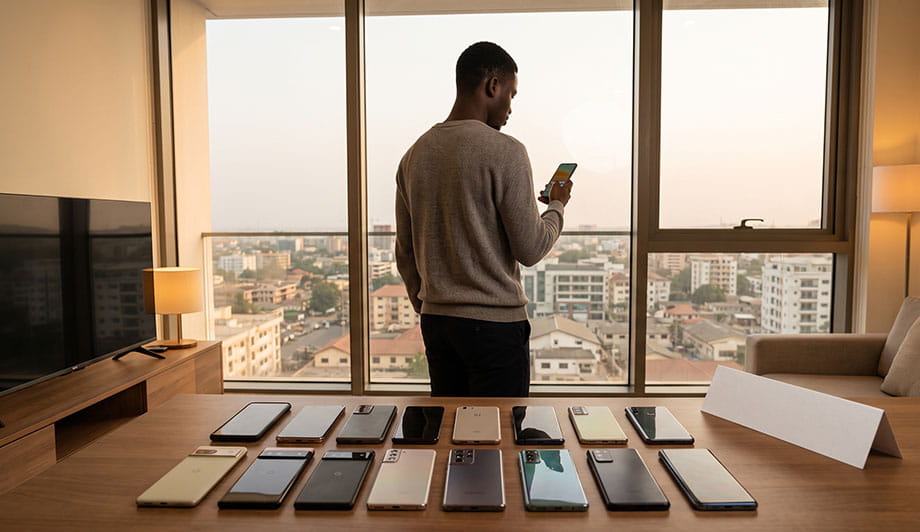
The best iPhone alternatives have never been stronger, and the gap between iOS and Android has never been narrower. Whether the motivation is better charging speeds, greater customization, a break from Apple’s pricing, or a phone that simply does something the iPhone cannot, the Android market now covers every price tier from $599 to $1,299 with devices that match or surpass the iPhone 17 lineup in category after category. The challenge is not finding an alternative — it is finding the right one for a specific set of needs and priorities.
This guide ranks ten real, currently-available smartphones across the full price spectrum, from budget-friendly flagships to direct iPhone 17 Pro Max competitors. Every price listed was verified from primary sources in this research session. Every entry receives an honest assessment of its genuine weaknesses, because a list that only names strengths is useless to a buyer making a real decision. For each phone, a recommended international shopping platform is noted to help buyers in any market find the best available price.
Why the Android Market Is Stronger Than Ever
Apple’s core advantage has historically been ecosystem lock-in: iMessage, AirDrop, FaceTime, and frictionless handoffs between iPhone, iPad, Mac, and Apple Watch. That advantage persists but has meaningfully narrowed. Samsung’s Galaxy ecosystem now mirrors Apple’s in depth — Galaxy Watch, Galaxy Buds, SmartThings, and Samsung DeX cover every touchpoint the Apple ecosystem covers. Google’s Pixel series introduced Pixelsnap Qi2 magnetic accessories and deep Gemini AI integration that rivals Apple Intelligence. Samsung’s Quick Share feature now transfers files directly to AirDrop-enabled iPhones, one of the last genuine interoperability walls removed.
Software update longevity was another iPhone stronghold that Android manufacturers have now matched. Google guarantees seven full Android OS updates on the Pixel 10 series — one more year than any current iPhone receives. Samsung commits to seven years of OS updates across the Galaxy S26 lineup. For buyers who hold phones for four or five years, these commitments change the long-term value calculation entirely. The argument for staying on iPhone solely for software support has effectively dissolved.
What the iPhone Still Does Better
Honest comparison acknowledges Apple’s genuine strengths. iOS app polish remains marginally ahead on average, particularly for creative and productivity tools where developers still tend to release on iPhone first. iMessage continues to dominate group chats in the US market with social dynamics that no RCS replacement has fully replicated. iPhone resale value consistently outperforms any Android equivalent by 15-25% at the 12-month mark. Buyers who own Apple Watch, AirPods Pro, and Mac will face real ecosystem friction in switching. None of these are reasons to avoid Android — they are the trade-offs to weigh against what Android brings to the table.
Top 10 Best iPhone Alternatives Ranked at Every Price Point
The following ten smartphones were selected across five distinct price tiers, covering flagship, mid-premium, and budget categories. Rankings factor in overall value, real-world performance, software quality, camera capability relative to asking price, and how well each device fills the gap left by leaving the iPhone ecosystem. Every device is currently available, not discontinued or pre-release.
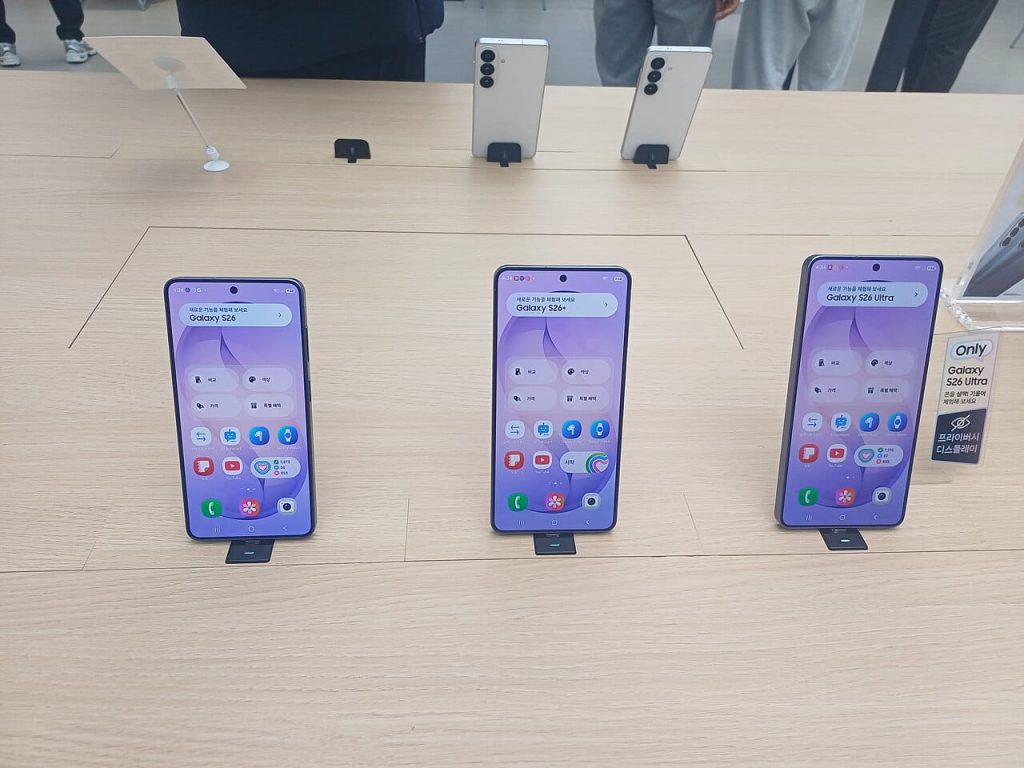
1. Samsung Galaxy S26 Ultra — Best Overall iPhone Alternative
The Galaxy S26 Ultra is the most direct challenge to the iPhone 17 Pro Max that Android has produced, and it wins on several objective measures. Powered by the Qualcomm Snapdragon 8 Elite Gen 5 chipset with up to 16GB LPDDR5X RAM, it delivers the raw performance the benchmark charts show, plus a 200MP main camera with an f/1.4 aperture that pulls extraordinary detail in low light. The world-first Privacy Display prevents shoulder surfers from seeing the screen — a hardware-plus-software privacy feature Apple has not shipped. Starting at $1,299.99 for the 256GB model, the Galaxy S26 Ultra includes an S Pen stylus at no additional cost, which the iPhone 17 Pro Max still cannot offer at any price.
- 6.9-inch QHD+ LTPO AMOLED, 1-120Hz adaptive refresh, 3,120 x 1,440 resolution, Gorilla Armor 2
- Snapdragon 8 Elite Gen 5, Armor Aluminum frame, IP68 rated, Wi-Fi 7, Bluetooth 5.4
- Quad-camera system: 200MP main (f/1.4), 50MP ultrawide, 10MP 3x telephoto, 50MP 5x periscope
- 5,000mAh battery, 60W wired, 25W wireless charging; S Pen included
- One UI 8.5 on Android 16, seven years OS updates, Privacy Display, Samsung DeX, Quick Share with AirDrop
The Galaxy AI suite and Perplexity AI integration compete credibly with Apple Intelligence. The weakness worth naming: One UI 8.5 carries more visual complexity than iOS, which takes time to configure to preference. At 214 grams, the S26 Ultra is noticeably heavy for extended one-handed use — more so than the iPhone 17 Pro Max at 227 grams only because the expectation going in is that Android flagships run lighter.
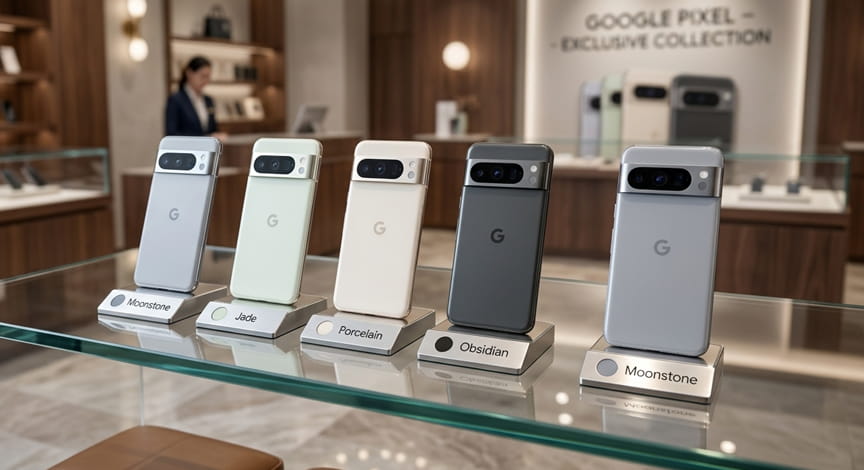
2. Google Pixel 10 Pro — Best for AI Features and Pure Software Experience
For any switcher who values clean software, guaranteed day-one updates, and camera results that look closest to what iPhone users are used to, the Pixel 10 Pro is the natural destination. Google’s Tensor G5 chip is purpose-designed for on-device AI processing rather than raw benchmark scores, and it shows: Magic Eraser, Auto Unblur, Reimagine, and Camera Coach are AI editing tools that Apple’s camera suite has not replicated at the same depth. At $999 for the 128GB base, the Pixel 10 Pro undercuts the iPhone 17 Pro by $100 while delivering seven years of guaranteed Android OS updates — one full year longer than Apple’s current commitment. The 6.3-inch Super Actua OLED peaks at 3,300 nits of brightness, making outdoor use on a sunny day noticeably more comfortable than most competing Android screens.
- 6.3-inch Super Actua OLED, 1Hz-120Hz LTPO, 2,856 x 1,280 resolution, Gorilla Glass Victus 2
- Google Tensor G5 (3nm), 16GB LPDDR5X RAM, 128GB / 256GB / 512GB / 1TB storage options
- Triple camera: 50MP main (f/1.68, 1/1.3″ sensor), 48MP ultrawide, 48MP 5x periscope telephoto
- 4,870mAh battery, 30W wired, 15W Qi2 wireless with Pixelsnap magnets
- Seven years of Android OS updates, Gemini AI built into OS, Titan M2 security coprocessor
The Pixel 10 Pro’s natural color science in photography is the most iPhone-adjacent of any Android phone — a quality that Pixel loyalists describe and new switchers consistently confirm. The legitimate limitation is charging speed: 30W wired is slow by Android flagship standards, and Pixel accessories remain harder to find at retail than Samsung or Apple equivalents.
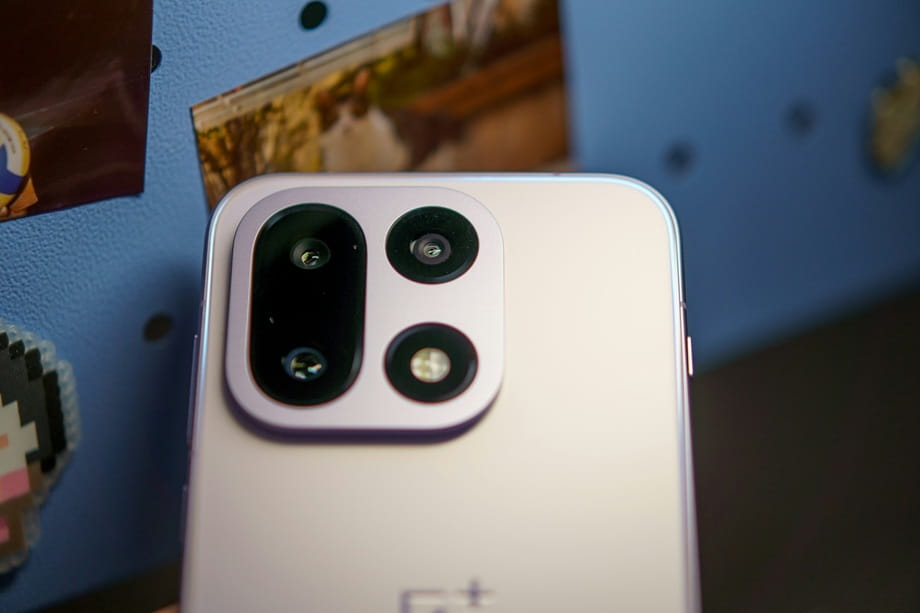
3. OnePlus 15 — Best Value Flagship Android
The OnePlus 15 makes the strongest dollar-for-dollar case of any phone in this list. For $899 — a full $200 less than the iPhone 17 — it ships with the same Snapdragon 8 Elite Gen 5 chipset that powers the $1,299 Galaxy S26 Ultra, a 7,300mAh silicon-carbon battery that is the largest on this entire list, and 120W wired charging that takes the phone from empty to full in 39 minutes. The iPhone 17 Pro charges at 30W; the OnePlus 15 at 120W is four times faster. The flat 6.78-inch BOE X3 AMOLED panel supports a 165Hz refresh rate — the fastest on this list — and slim 1.15mm bezels that make the display feel genuinely immersive. The triple 50MP camera system upgraded its main sensor from 1/1.56-inch to 1/1.4-inch over the previous generation, closing the gap against Samsung and Pixel on low-light capture.
- 6.78-inch LTPO AMOLED, 165Hz refresh, 1.5K resolution, 1.15mm bezels, Gorilla Glass Victus 2
- Snapdragon 8 Elite Gen 5, 12GB or 16GB RAM, 256GB or 512GB UFS 4.0, Glacier cooling system
- Triple 50MP cameras: main (1/1.4″ sensor), ultrawide, 3.5x periscope telephoto; DetailMax Engine processing
- 7,300mAh battery, 120W SUPERVOOC wired, 50W wireless; IP68+IP69K water resistance
- OxygenOS 16 (Android 16), Action Button, G2 gaming chip, new Glacier aerogel heat management
The OnePlus 15 carries an IP69K rating alongside IP68 — it withstands high-pressure water jets, a standard that exceeds Apple and Samsung’s IP68 certification. The trade-off worth naming: four years of major Android updates versus seven from Google and Samsung means this phone ages out of support sooner. Camera editing depth and post-processing refinement also trail Pixel’s AI suite, particularly for video.
4. Sony Xperia 1 VII — Best for Content Creators and Audiophiles
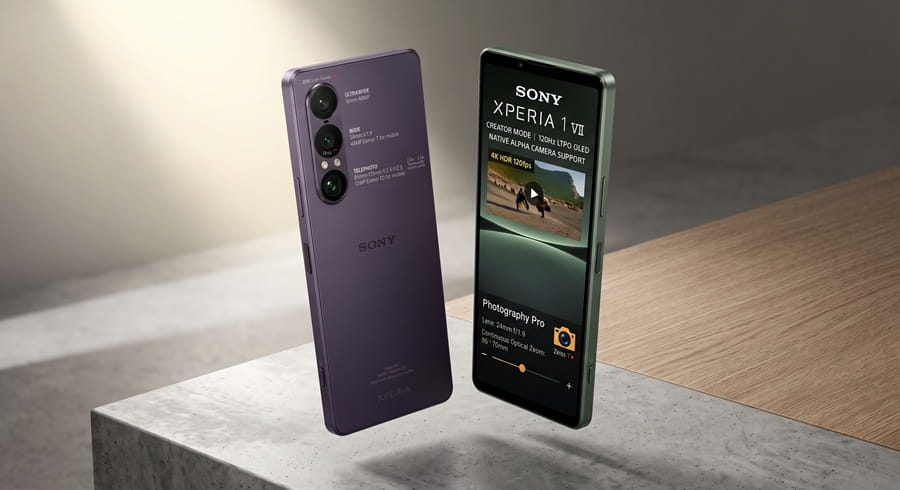
The Sony Xperia 1 VII occupies a niche no iPhone or mainstream Android has filled: a smartphone designed around professional creative workflow. Native support for Sony’s Alpha camera ecosystem allows direct remote control of full-frame Alpha cameras from the phone — a tool with no iPhone equivalent. A 3.5mm headphone jack is absent from every other phone on this list. MicroSDXC expandable storage — also unique here — lets professional videographers and musicians carry media without cloud dependency. Built on Snapdragon 8 Elite with a 5,000mAh battery and IP68 waterproofing, the Xperia 1 VII starts at $1,299.99 for the 256GB model and is primarily an argument for creators willing to pay flagship pricing for tools that do not exist elsewhere.
- 6.5-inch OLED display, 120Hz, 2,340 x 1,080 resolution (21:9 cinematic ratio), Gorilla Glass Victus 2
- Qualcomm Snapdragon 8 Elite, 12GB RAM, 256GB or 512GB UFS 4.0, microSDXC slot
- Triple camera: 48MP main (1/1.35″ sensor), 48MP ultrawide, 12MP telephoto; native Sony Alpha control
- 5,000mAh battery, 30W wired, 15W wireless; 3.5mm headphone jack; LDAC and aptX HD audio
- IP68 rated, dedicated camera shutter button, CineAlta color profiles in Cinema Pro app
The Xperia 1 VII ships with Android 15, making it already one generation behind the Android 16 phones that dominate this list. Only four years of major OS updates places it at the shorter end of update support. The manual camera UI, while powerful, has a steep learning curve that makes it poorly suited to casual everyday shooters switching from iPhone’s point-and-shoot simplicity.
5. Samsung Galaxy Z Flip 8 — Best Foldable iPhone Alternative
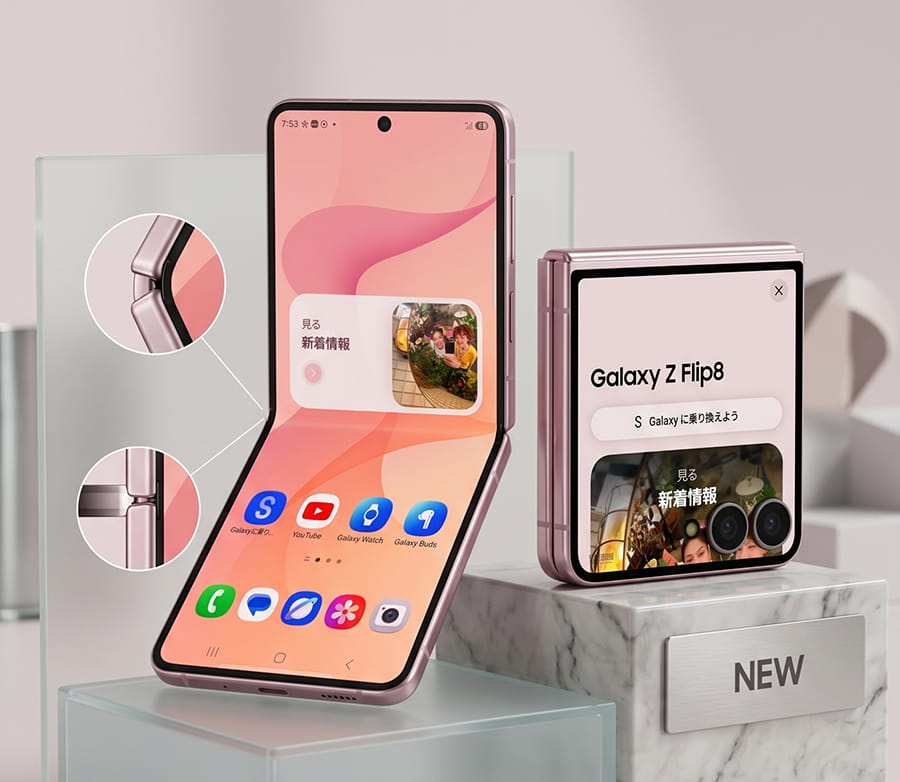
The Galaxy Z Flip 8 at $1,199 represents the one thing no iPhone can offer at any price: a clamshell foldable that fits a pocket half the size of a standard smartphone. The 6.9-inch main AMOLED display unfolds to full-size usage, then folds to a device half as tall with a 4.1-inch Super AMOLED cover display that handles notifications, quick replies, and camera use without opening the phone. Flex Mode enables hands-free video calls and tabletop photography with no stand required. The Snapdragon 8 Elite Gen 5 ensures this is a true flagship internally, not a form-factor compromise. For iPhone switchers who want something visually distinct from every other rectangle in a crowd, the Flip 8 is the strongest answer Android has.
- 6.9-inch Foldable LTPO AMOLED main display, 120Hz; 4.1-inch Super AMOLED cover display
- Snapdragon 8 Elite Gen 5, 12GB RAM, 256GB storage
- Dual camera: 50MP main, 12MP ultrawide (both accessible as selfie cameras when folded in Flex mode)
- Flex Mode for hands-free photography and video calls without a stand
- Seven years of OS updates, Samsung Galaxy AI, IP48 dust and water resistance
The foldable format introduces trade-offs a slab phone never has. The visible crease at the center of the main display is noticeable under bright ambient light and at certain viewing angles. The dual-camera setup lacks the telephoto versatility of the Galaxy S26 Ultra or Pixel 10 Pro, making the Flip 8 a weaker choice for zoom photography. The IP48 rating covers splashing but not full submersion — a step back from IP68 competitors at similar prices.
6. Samsung Galaxy S26 — Best Standard Android Switch for iPhone Users
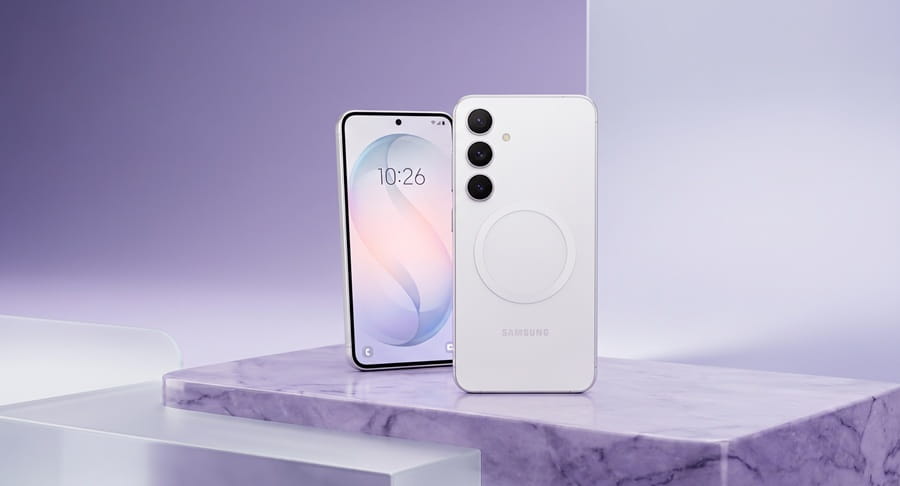
The base Galaxy S26 is arguably the most practical iPhone alternative for the mainstream switcher who does not want to think too hard about the decision. At $899, it runs the same Snapdragon 8 Elite Gen 5 found in the $1,299 S26 Ultra, ships with Android 16 and One UI 8.5 with a guaranteed seven-year update window, and comes in a 6.3-inch form factor that mirrors the iPhone 17 Pro almost exactly in display size. Samsung’s ecosystem — Galaxy Watch, Galaxy Buds, SmartThings hub integration, Samsung DeX for desktop use, and Quick Share with AirDrop interoperability — matches the Apple ecosystem touchpoint for touchpoint. Trade-in programs from Samsung.com deliver $300-$480 off the purchase price depending on the device being traded.
- 6.3-inch Dynamic AMOLED 2X, 120Hz, 2,340 x 1,080 resolution, Gorilla Glass Victus 2
- Snapdragon 8 Elite Gen 5 (US model), 12GB RAM, 256GB base storage, non-expandable
- Triple camera: 50MP main, 12MP ultrawide, 10MP 3x telephoto
- 4,300mAh battery, 65W wired, 15W wireless charging; IP68 rated
- Seven years of OS updates, Samsung DeX, Quick Share with AirDrop compatibility, One UI 8.5
The Galaxy S26 steps down from the Ultra in meaningful ways: no dedicated 5x periscope telephoto, a smaller 4,300mAh battery versus the Ultra’s 5,000mAh, and no S Pen. Buyers who frequently shoot subjects beyond arm’s reach will find the 3x telephoto limiting for event photography, sports, or travel. The one area where the S26 outclasses the Ultra is wired charging speed at 65W versus 60W — a minor reversal that matters less than the spec sheet suggests.
7. Nothing Phone 3 — Best Design-Forward iPhone Alternative
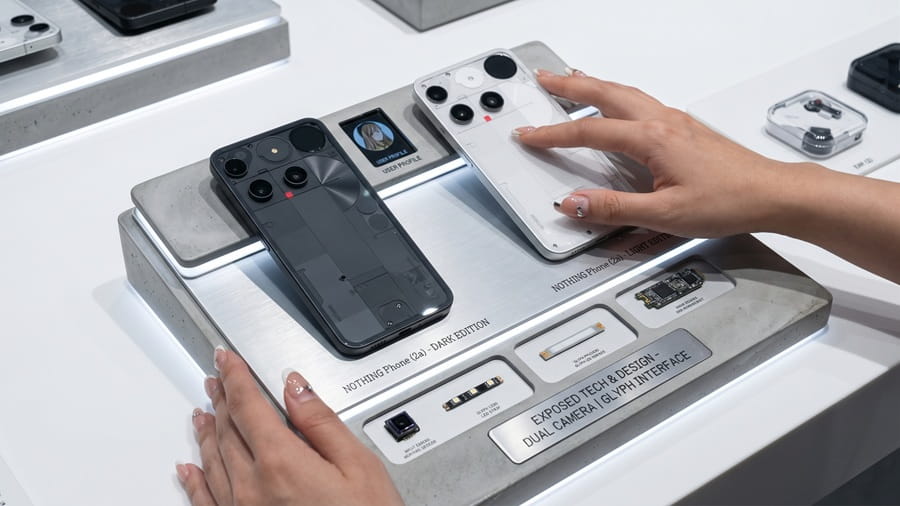
Nothing’s Phone 3 at $699 is the most distinctive design on this list and the one most likely to capture the attention of iPhone users tired of identical glass rectangles. The Glyph Interface — a programmable pattern of LEDs embedded in the transparent back glass — displays notification alerts, charging status, and silent timer progress in a way that is functionally useful rather than decorative. Nothing OS 3.0, running on Android 16, is closer to a stock Android experience than any Samsung product and delivers a cleaner software feel than either One UI or OxygenOS. For switchers who want something genuinely different without paying Galaxy Ultra prices, the Phone 3 at $699 for the base 12GB/256GB configuration represents strong value.
- 6.67-inch LTPS AMOLED display, 120Hz, 2,800 x 1,260 resolution
- Qualcomm Snapdragon 8s Gen 4, 12GB or 16GB RAM, 256GB or 512GB storage
- Triple camera system: 50MP main sensor, ultrawide, and telephoto
- Glyph Interface with programmable LED notification system on glass back
- Nothing OS 3.0 on Android 16, dual-SIM 5G, near-stock software with no manufacturer bloatware
The Snapdragon 8s Gen 4 inside the Nothing Phone 3 is a binned-down variant of the full Snapdragon 8 Elite found in Samsung and OnePlus flagships — sustained GPU performance shows a gap under heavy gaming loads. The IP54 rating covers splash resistance but not full submersion, which is a meaningful shortfall compared to IP68 competitors at similar prices. Software update commitments of three major Android versions are the shortest on this list, making this a stronger recommendation for users who upgrade every two to three years.
8. Google Pixel 10 — Best Compact Budget Flagship
The Pixel 10 at $799 shares the Tensor G5 chip with the Pro model but trims the camera system and display specification to reach a lower price point. The distinction that matters most between Pixel 10 and Pixel 10 Pro is the camera: the base model uses a 48+13+10.8MP setup rather than the Pro’s 50+48+48MP triple system, and the display runs between 60-120Hz without the Pro’s LTPO adaptive behavior. For a switcher arriving from iPhone 15 or older, those differences are largely invisible in daily use. Seven full years of Android OS updates — the same guarantee as the Pixel 10 Pro — deliver long-term value at $799 that no other Android phone at this price matches.
- 6.3-inch Actua OLED, 60-120Hz, 1,080p+ resolution, up to 3,000 nits brightness, Gorilla Glass Victus 2
- Google Tensor G5 (3nm), 12GB RAM, 128GB or 256GB storage options
- Triple camera: 48MP main, 13MP ultrawide, 10.8MP 5x telephoto; 10.5MP front camera
- Gemini AI, Auto Best Take, Magic Eraser, Photo Unblur built in; Qi2 magnetic wireless charging
- Seven years of OS updates and security patches guaranteed by Google
The Pixel 10’s 30W wired charging is the slowest in this entire list — a genuine frustration for any former iPhone user who expected at least Samsung-level 65W support. The 128GB base storage feels tight by 2026 standards when a single ProRes video clip runs several gigabytes. Selfie camera quality at 10.5MP trails the Nothing Phone 3 and Galaxy S26 for portrait-style self-portraits.
9. OnePlus 13 — Best Previous-Generation Value Buy
The OnePlus 13 has not been superseded in quality by the OnePlus 15 — it has been superseded in generation, and that distinction creates one of the best value windows in the Android market right now. Built on the original Snapdragon 8 Elite — still a top-tier chip by any real-world measure — it ships with a 6,000mAh silicon-carbon battery, Hasselblad-tuned triple 50MP camera system, and 100W SUPERVOOC wired charging. Officially priced at $899.99 on OnePlus.com in the US, it regularly appears at $769-$787 on Amazon. For a switcher who wants flagship-caliber hardware without paying current-generation premium pricing, the OnePlus 13 delivers more than the iPhone 16 at its launch price and remains a stronger device than several current-year mid-range competitors.
- 6.82-inch LTPO AMOLED, 1-120Hz adaptive, 2,800 x 1,260 resolution, Gorilla Glass 7i
- Snapdragon 8 Elite, 12GB or 16GB RAM, 256GB or 512GB UFS 4.0 storage
- Triple Hasselblad camera: 50MP main (1/1.43″ sensor), 50MP ultrawide, 50MP 3x telephoto
- 6,000mAh silicon-carbon battery, 100W SUPERVOOC wired, 50W wireless charging
- OxygenOS 15 (upgradeable), 4 major OS updates, 6 years of security patches
The OnePlus 13 will receive one fewer major OS update than the OnePlus 15 going forward, and its camera processing lacks the newer DetailMax Engine and expanded AI editing tools that came with the 15. Buyers who want the absolute newest chipset generation should step up. Buyers who want the best dollars-per-performance ratio and plan to upgrade within three years should buy here.
10. Motorola Edge 2026 — Best Budget-Friendly iPhone Alternative
Not every switcher needs a $999 flagship, and the Motorola Edge 2026 at $599.99 makes the case for budget Android more convincingly than anything Apple offers below $999. The MediaTek Dimensity 7450 chip on a 4nm node handles daily tasks, streaming, and photography without stuttering. The standout specification is the 6.3-inch Extreme AMOLED display rated at 5,200 nits of peak brightness — a figure that exceeds every other phone on this list for outdoor readability, including the Galaxy S26 Ultra. Military-grade MIL-STD-810H durability certification, IP68 and IP69 water resistance, and Dolby Atmos stereo speakers round out a package that outclasses the iPhone SE on screen quality, charging speed, and weather resistance at a lower price.
- 6.3-inch Extreme AMOLED, 120Hz, 1.5K resolution (1,220 x 2,670), 5,200 nits peak brightness
- MediaTek Dimensity 7450 (4nm), 8GB RAM, 128GB storage; Pantone Validated display colors
- Triple camera: 50MP main, ultrawide, and macro; 50MP front camera
- 5,000mAh battery, 60W TurboPower wired, 15W wireless; IP68 + IP69 dual water resistance
- Android 16, three years OS updates, MIL-STD-810H military-grade durability, Dolby Atmos
The Dimensity 7450 is a mid-range chip by flagship standards — sustained gaming performance and camera processing speed show a measurable gap against Snapdragon 8 Elite-powered phones above it. The 8GB of RAM and 128GB base storage are the most modest in this list. Three years of OS updates is the shortest commitment of any phone here, making this the right pick for frequent upgraders and budget-first buyers rather than long-term keepers.
Pricing Comparison Across the Full Range
The price ladder across these ten alternatives spans $599.99 to $1,299.99 — a $700 range that reflects genuinely different tiers of capability. At the budget end, the Motorola Edge 2026 at $599.99 offers a mid-range chip but a display that outdoes phones twice its price on peak brightness. At $699, the Nothing Phone 3 delivers a flagship-adjacent software experience with a design personality no competitor matches. The $799 tier is where Pixel 10 sits — clean software, seven-year updates, and strong AI camera tools that rival phones costing more. At $899, the OnePlus 15, Galaxy S26, and OnePlus 13 all compete with different strengths: the S26 on ecosystem depth, the OnePlus 15 on battery and charging dominance, and the OnePlus 13 on current availability at frequent discounts. Above $999, the Pixel 10 Pro at $999 is the standout mid-premium pick before the jump to $1,199 for the Galaxy Z Flip 8 and $1,299 territory for the Galaxy S26 Ultra and Sony Xperia 1 VII.
The cheapest viable current-flagship option is the OnePlus 15 at $899 — Snapdragon 8 Elite Gen 5 muscle, the fastest charging in any mainstream phone, and the largest battery here, all for less than the iPhone 17’s base price. The best value mid-premium pick is the Pixel 10 Pro at $999, where seven-year update longevity and best-in-class AI camera tools justify the step up over the $899 tier. The premium argument — Galaxy S26 Ultra at $1,299, with trade-in programs regularly reducing the effective price to $399-$599 for buyers with an eligible device — is where the S Pen, Privacy Display, and quad-camera system become hard to walk past.
How to Choose the Right iPhone Alternative
The first criterion is software philosophy. Android comes in two meaningful flavors: stock-adjacent and manufacturer-customized. Pixel and Nothing Phone 3 offer the cleanest experiences — former iPhone users typically find these least disorienting because the interface layer is thinner and closer to Google’s original design intent. Samsung’s One UI is feature-rich but visually denser; excellent for power users who want to configure everything, occasionally overwhelming for new Android users who want to pick up and go. OnePlus’s OxygenOS sits between the two, offering personalization without One UI’s full complexity.
Update commitment shapes long-term device value more than any other single factor. Seven years of guaranteed OS updates from Google and Samsung means the Pixel 10 series and Galaxy S26 line remain current through 2032 — a span that covers the entire expected lifetime of most consumer smartphones. Four years from OnePlus is workable for frequent upgraders. Three years from Motorola and Sony is the minimum bar, appropriate for buyers who plan to upgrade within that window. Anyone holding a phone for five or more years should be filtering to Pixel or Galaxy S26 series exclusively.
Camera priority shapes the decision heavily. The Galaxy S26 Ultra is the clear choice for telephoto reach, with both 3x and 5x optical zoom backed by a 200MP main sensor. The Pixel 10 Pro wins on AI-assisted editing depth and natural color science closest to iPhone’s output. The Sony Xperia 1 VII wins for manual camera control and professional video workflow. For casual everyday photography, any phone above $799 in this list delivers results that would have required a dedicated camera five years ago — the differences are meaningful for enthusiasts, invisible to casual users.
Charging speed is where Android separates decisively from iPhone across the board. Users who spend time in airports, between meetings, or in environments without reliable power access need to treat charging speed as a primary filter. The OnePlus 15’s 120W wired system and 39-minute full charge have no iPhone equivalent — the iPhone 17 Pro charges at 30W. The OnePlus 13’s 100W SUPERVOOC is the next fastest. Both Pixel models’ 30W ceiling is genuinely frustrating against this backdrop and is the most tangible daily-life limitation in the Pixel lineup.
Ecosystem fit drives long-term satisfaction more than specs do. Existing Samsung TV, Galaxy Watch, or Windows PC owners extract measurably more value from a Galaxy S26 or S26 Ultra through SmartThings, Samsung DeX, and Link to Windows. Google Workspace users — Gmail, Drive, Meet — find Pixel the most seamless daily experience with no configuration required. Former Apple Watch owners need to understand that no Android phone connects to Apple Watch; a Galaxy Watch, Pixel Watch, or similar companion device is required from day one of the switch.
Current Market Prices and Deals: Where to Buy Internationally
Amazon is the most reliable single source for unlocked Android phones in the US with fast delivery and straightforward returns. Recent promotional deals have included the Galaxy S26 Plus at $250 off and the Pixel 10 Pro at $250 off its MSRP. Amazon Renewed provides certified refurbished units at 20-40% below new retail price with a standard 90-day warranty, covering all ten phones in this list in various condition grades.
Samsung.com direct is the best starting point for Galaxy devices specifically because of the trade-in program — up to $900 off the Galaxy S26 Ultra with an eligible trade-in, reducing the effective purchase price for a 256GB model to approximately $399 for buyers with an older flagship to hand in. AT&T and T-Mobile have offered the S26 Ultra at $0 down with 36-month financing on eligible trade-ins during launch periods. Best Buy provides in-store comparison and 15-day returns, which is valuable for switchers who want to physically handle a phone before committing. B&H Photo carries unlocked international variants that are not available through US carriers, including some Sony Xperia configurations at competitive pricing with tax savings for buyers in certain states.
Back Market is the specialist refurbished marketplace most worth bookmarking for budget-conscious buyers. Refurbished units from vetted sellers carry a 12-month warranty, and discounts of 40-60% off new retail are common on phones one to two generations old. For a switcher who wants a flagship Android at iPhone SE-adjacent pricing, Back Market is the logical starting point. AliExpress carries gray-market unlocked units — particularly Chinese variants of Xiaomi, OnePlus, and Samsung — at the lowest raw prices available globally. The trade-offs are clear: no US manufacturer warranty, potential region-specific firmware, and shipping times of two to four weeks. For international buyers outside the US purchasing for use in their home market, AliExpress regularly saves $150-$300 compared to local retail on flagship models.
Frequently Asked Questions About iPhone Alternatives
What is the best Android phone to switch to from iPhone?
The Google Pixel 10 Pro offers the smoothest transition for most iPhone users. Its 6.3-inch compact form mirrors the iPhone 17, its camera color science is the most naturally iPhone-like of any Android, and the near-stock software minimizes the adjustment period. Seven years of OS updates and Qi2 magnetic wireless charging add familiar ecosystem behaviors at $999, $100 less than the iPhone 17 Pro.
Is the Samsung Galaxy better than iPhone?
Neither platform consistently outperforms the other across every category. The Galaxy S26 Ultra surpasses the iPhone 17 Pro Max on charging speed, telephoto camera reach, display flexibility, S Pen stylus functionality, and the innovative Privacy Display feature. Apple leads on resale value retention, iMessage group-chat integration in the US, and average iOS app polish. The real answer depends entirely on which categories matter most to the buyer.
Which Android phone feels most like an iPhone to use?
The Google Pixel 10 and Pixel 10 Pro are the closest in daily feel. Compact form factor, clean software structure, strong camera output in natural tones, and straightforward settings navigation replicate the iPhone experience without copying it. Nothing Phone 3’s clean Nothing OS 3.0 is a strong second, particularly for users who find Samsung’s One UI too dense and feature-heavy on first contact.
What do I actually lose when switching from iPhone to Android?
The most tangible losses are iMessage and blue bubble status in US group chats, Apple Watch pairing, native FaceTime, and AirDrop. None are irreplaceable: Google Messages supports RCS with end-to-end encryption, Google Photos replaces iCloud Photos cleanly, Samsung Quick Share now transfers files directly to AirDrop iPhones, and Google Meet covers video calling. The biggest genuine gap remains iMessage’s social dynamics in US contexts where green bubbles carry real social weight.
Does switching from iPhone to Android cause data loss?
Google’s Switch to Android app handles contacts, photos, videos, and calendar events directly from iOS with minimal friction and no data loss in standard use. Text message history requires a third-party tool such as SMS Backup & Restore to transfer. App purchases from the App Store do not transfer — paid apps need to be repurchased on the Play Store. Streaming subscriptions like Spotify, Netflix, and YouTube transfer automatically by signing into existing accounts on the new device.
Are Android phones as secure as iPhone?
The security gap between iOS and flagship Android has largely closed. Google’s Pixel 10 series receives monthly security patches on day one, and Samsung Knox — the security architecture inside all Galaxy S26 phones — is certified for use by US government agencies and enterprises with security requirements stricter than consumer iOS standards. Android’s broader app ecosystem creates a wider surface for threats only when sideloading apps from unverified sources, which the default OS settings prevent.
Is the Pixel 10 Pro worth paying $200 more than the Galaxy S26 base model?
For most users, the Galaxy S26 at $899 offers more for the price: deeper ecosystem integration, a more versatile triple camera, a brighter display, and faster 65W wired charging. The Pixel 10 Pro at $999 wins specifically on AI camera depth, faster day-one software updates, and cleaner software without manufacturer customization. The Pixel is the right pick for software longevity and camera editing power; the Galaxy S26 is the right pick for ecosystem breadth and retail availability.
Pro Tips for Switching From iPhone to Android
Configure Google Photos backup before anything else after setting up the new Android phone. It replicates iCloud’s function exactly — automatic background upload, facial grouping, searchable memories by location and subject — and the free 15GB tier covers most users’ monthly photo output. Before selling the old iPhone, install the Google Photos iOS app and let it complete a full backup. Transferring the entire existing photo library takes between one and four hours depending on library size, and it runs silently in the background without touching the phone.
Deregister the old iPhone from iMessage before activating the Android, not after. Texts from other iPhone users continue routing as iMessages to the old number until the deregistration is complete, meaning they never arrive on the Android device. Apple’s website provides a dedicated iMessage deactivation portal that takes two minutes and handles the deregistration cleanly. This is the single most common reason new Android users report missing texts in their first week.
Android’s notification system is substantially more granular than iOS. Every app exposes individual notification channels — not just a single on/off toggle — that let specific alert types remain active while others are silenced. Spending 20 minutes in Settings > Apps > each major app configuring notification channels prevents the overwhelming alert volume that leads many first-week Android users to dismiss the platform as noisier than iPhone. Nearly every study showing Android generating more interruptions traces back to users who skipped this configuration step entirely.
Buyers choosing the Sony Xperia 1 VII for professional video work should explore the Cinema Pro app immediately after setup. It supports recording in CineAlta color profiles — the same color science used in Sony’s professional cinema cameras — and combined with S-Cinetone color space and HDMI output over USB-C, the Xperia 1 VII functions as a legitimate B-camera replacement. For videographers who previously used iPhone with a separate cinema rig, the Xperia consolidates that workflow into one device and saves thousands in production hardware.
For Samsung Galaxy buyers, the trade-in calculator on Samsung.com rewards more generously than most buyers expect going in. A cracked-screen iPhone 14 Pro Max in damaged condition delivers up to $720 in trade-in credit toward a Galaxy S26 Ultra, bringing the effective purchase price to $579 for the 256GB model. Buyers who assume trade-in value requires pristine condition regularly leave hundreds of dollars on the table. Samsung’s “any condition” trade-in policy during promotional periods is worth checking before buying from any third-party retailer.
Purchase unlocked phones directly from manufacturer websites — Samsung.com, Google Store, OnePlus.com — whenever possible rather than through carrier retail locations. Carrier-purchased devices are typically locked for 60-180 days, may carry pre-installed carrier bloatware that cannot be removed, and occasionally receive delayed OS updates behind the unlocked variants. The price difference is negligible, and the flexibility to switch carriers and retain full update priority is worth it across the device’s full lifespan.
Anyone who regularly charges a phone at a laptop or portable battery bank should check charger compatibility before buying. The OnePlus 15’s 120W SUPERVOOC requires OnePlus’s own charger to achieve peak speeds — third-party USB-C chargers will work but charge significantly slower. The Pixel 10 series supports standard USB Power Delivery and charges at full speed from most third-party 30W adapters. The practical implication: OnePlus buyers who plan to charge from a travel battery need to either carry the OnePlus charger or accept reduced charging speeds on the road.
Ten Options, One Decision — Here Is How to Make It
The best iPhone alternative is not one phone. It is the phone that fills the specific gap left by leaving Apple. For anyone who wants Android to outperform iPhone on every measurable specification — camera reach, display flexibility, S Pen utility, ecosystem depth, Privacy Display — the Galaxy S26 Ultra at $1,299 (or effectively $399-$599 with aggressive trade-in) delivers the most complete package. For anyone who cares most about software polish, camera AI, and the longest guaranteed update window, the Pixel 10 Pro at $999 is the best value at that tier and the most natural transition from iPhone’s visual language. For anyone whose primary frustration with iPhone is the 20% battery at noon and 30W ceiling on charging, the OnePlus 15 at $899 settles that argument within a single day of use.
Switchers on tighter budgets should start at the Motorola Edge 2026 at $599.99 or Nothing Phone 3 at $699 before assuming Android requires a premium investment. Both deliver daily experiences the iPhone SE cannot match — the Motorola on outdoor display brightness and dual water-resistance ratings, the Nothing Phone 3 on design personality and clean software. The point of comparison is not the iPhone 17; it is the phone a budget buyer is actually choosing between. On that measure, both outperform the iPhone SE at lower cost.
The sourcing decision matters as much as the device decision. Samsung’s trade-in programs and Google’s seasonal discounts reduce effective prices by $200-$250 on the phones most buyers actually want. Back Market refurbished units extend the value further, putting the previous generation of every flagship here within reach of a budget that would otherwise be limited to mid-range new. The iPhone ecosystem is excellent. Android in 2026 is also excellent. The difference is that Android now offers a phone precisely tuned for nearly every priority — and the only question left is which priority wins.

Loading comments…