

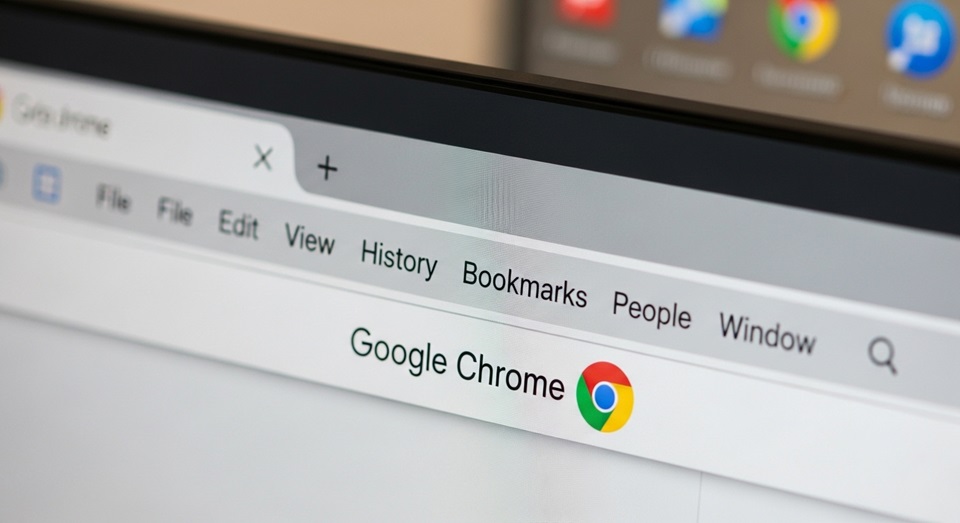
The Chrome menu bar is the command center for every Google Chrome function — from managing browsing history and extensions to fine-tuning privacy settings and downloading files. Unlike Firefox or older Internet Explorer versions that displayed a traditional horizontal menu bar with File, Edit, View, and Help tabs, Chrome replaced all of that with a single three-dot icon in the top-right corner. For users switching from legacy browsers, this shift is genuinely confusing. The menu bar hasn’t disappeared — it has been consolidated and redesigned.
This guide covers exactly where to find Chrome’s menu on Windows and Mac, how to restore a missing toolbar, what each menu option controls, and how to supercharge the browser with the right tools and shortcuts. Whether the toolbar vanished after a Chrome update, an extension conflict, or accidental full-screen mode, the fix is straightforward once you know where to look.
Where Is the Chrome Menu Bar on Windows
On Windows, Chrome’s menu bar lives in the top-right corner of the browser window as three vertical dots — officially called the “Customize and control Google Chrome” button. This replaces every traditional menu bar item in a single compact icon. Click those three dots and a dropdown panel opens, giving access to new tabs, incognito windows, history, downloads, bookmarks, zoom controls, printing, casting, extensions, and the full Settings panel.
The address bar (Omnibox) sits in the center of the toolbar row, with navigation arrows (back, forward, refresh) to its left and the extensions area plus the three-dot menu to its right. If the entire toolbar row is gone — not just the menu icon — the browser is almost certainly in full-screen mode. Press F11 to exit full-screen and restore the complete toolbar instantly.
On Windows 11, Chrome also benefits from the taskbar thumbnail preview, which lets users switch between open Chrome windows without returning to the browser. Right-clicking the Chrome icon in the taskbar shows quick-launch options including opening a new window or a new incognito session directly from the desktop.
Where Is the Chrome Menu Bar on Mac
On macOS, Chrome has two menu systems working together. The first is the familiar three-dot icon in the top-right corner of the Chrome window — identical in function to the Windows version. The second is the macOS system menu bar at the very top of the screen, which shows Chrome-specific entries (File, Edit, View, History, Bookmarks, Profiles, Tab, Window, Help) whenever Chrome is the active application.
The macOS menu bar cannot be hidden by Chrome itself. If it disappears, macOS has entered a system-level full-screen state — press Cmd + Ctrl + F to exit. From the macOS View menu, users can show or hide the bookmarks bar, enter or exit full-screen, and zoom the page. These options mirror what is available in the three-dot menu but are accessible via keyboard navigation through the system menu bar instead.
Mac users who prefer a classic menu structure can use the macOS menu bar exclusively for most Chrome functions. For everything else — extensions, casting, translate, safe browsing reports — the three-dot icon remains the access point.
How to Restore a Missing Chrome Toolbar
Exit full-screen mode first. The most common reason Chrome’s toolbar and address bar vanish completely is full-screen mode. On Windows, press F11. On Mac, press Cmd + Ctrl + F or move the cursor to the very top of the screen to reveal the hidden toolbar temporarily. This solves the problem in the majority of cases with no other action needed.
If the toolbar is still missing or partially gone after exiting full-screen, the next step is checking extensions. A rogue or corrupted extension can interfere with Chrome’s interface layout. Navigate to chrome://extensions in the address bar and toggle extensions off one by one, relaunching Chrome after each to identify the culprit. Security and VPN extensions are most frequently responsible for toolbar conflicts.
Resetting Chrome settings is the next-level fix. Go to chrome://settings/reset and select “Restore settings to their original defaults.” This does not delete bookmarks, saved passwords, or browsing history. It does disable all extensions, reset the startup page, clear pinned tabs, and remove any modified search engine settings. After the reset, re-enable extensions one at a time from chrome://extensions to confirm the toolbar remains intact.
If none of the above resolves the issue, reinstalling Chrome is the final option. Uninstall Chrome via Windows Control Panel or Mac Applications folder, download a fresh installer from google.com/chrome, and run a clean install. User data synced to a Google Account restores automatically on the first login.
How to Show the Bookmarks Bar in Chrome
The bookmarks bar sits directly below the address bar and is separate from the three-dot menu bar. It frequently gets hidden by accident. To restore it, press Ctrl + Shift + B on Windows or Cmd + Shift + B on Mac. Alternatively, open the three-dot menu, go to Bookmarks, and select “Show bookmarks bar.” This setting persists across sessions.
For users who only want the bookmarks bar visible on the New Tab page but hidden on regular sites, Chrome offers a “Show bookmarks bar on New Tab page only” toggle under Settings → Appearance. This keeps the interface clean while still giving one-click access to saved pages whenever a new tab opens.
Key Options Inside the Chrome Three-Dot Menu
The three-dot menu contains every control Chrome exposes to the user. New Tab, New Window, and New Incognito Window sit at the top for fast session management. The History panel shows complete browsing history across synced devices. Downloads opens the full file list with options to clear or open file locations. Bookmarks covers saving, organizing, and accessing the full bookmark manager.
The Extensions submenu provides direct access to the Extensions Manager and the Chrome Web Store. Settings is the deepest panel, covering sync, autofill, passwords, privacy, security, appearance, search engines, default browser, on-startup behavior, and advanced options including site permissions, system proxy, and accessibility. The Help menu links to Chrome’s About page — the fastest way to trigger an update manually.
Chrome Keyboard Shortcuts That Replace the Menu Bar
Power users rarely touch the three-dot menu because keyboard shortcuts cover nearly every common function faster. On Windows, Ctrl + T opens a new tab, Ctrl + N opens a new window, and Ctrl + Shift + N launches incognito mode. History opens with Ctrl + H, downloads with Ctrl + J, and the Settings panel with Alt + F then S. Pressing Ctrl + Shift + B toggles the bookmarks bar. To jump directly to any Chrome internal page, type its URL (chrome://settings, chrome://extensions, chrome://flags) in the Omnibox and press Enter.
On Mac, the equivalents swap Ctrl for Cmd: Cmd + T for new tab, Cmd + N for new window, Cmd + Shift + N for incognito. History is Cmd + Y, downloads are Cmd + Option + L, and settings open via Cmd + ,. Memorizing six or eight of these shortcuts effectively eliminates the need to navigate the menu manually during daily browsing.
Top 10 Windows 11 and Browser Software Deals Online
Browsing efficiently in Chrome is only one piece of a well-configured Windows setup. The right Windows 11 license, productivity suite, and browser tools make a measurable difference in daily performance — and all of them are available at significant discounts through the retailers below. Every price is sourced from the listed platform’s official product page.
Microsoft Windows 11 Home — Microsoft Store
The official retail version of Windows 11 Home from Microsoft’s own store is the safest and most transferable license available. At $139, it ships as a digital download with a product key redeemable on the Microsoft account, fully transferable to a future PC build, and backed by Microsoft’s 30-day refund window. It is the highest-cost option but the only one with zero gray-market risk. The Snap Layouts, redesigned Start menu, native Android app support via the Amazon Appstore, and built-in TPM 2.0 security make this the right choice for users who want a clean, permanent retail license without any uncertainty about future activation. The weak point is price — third-party authorized resellers often offer the same Windows 11 Home license for significantly less.
- Retail license — fully transferable to a new PC
- Instant digital delivery via email after purchase
- 30-day Microsoft refund window
- Includes all future Windows 11 feature updates
- Backed by Microsoft’s full support lifecycle
Microsoft Windows 11 Pro — Microsoft Store
Windows 11 Pro at $199 from the Microsoft Store adds BitLocker drive encryption, Remote Desktop host capability, Hyper-V virtualization, Windows Sandbox, and domain join support on top of everything in Home. For developers, IT professionals, and power users who run virtual machines or need enterprise-grade security without a business Microsoft 365 subscription, Pro is the version to buy. The price premium over Home is $60, and the additional features are meaningful for anyone working with sensitive data, managing multiple machines remotely, or testing software in isolated environments. Like the Home version, it arrives as an instant digital download tied to the purchasing Microsoft account.
- BitLocker full-disk encryption included
- Remote Desktop host (accept incoming connections)
- Hyper-V virtualization for running VMs locally
- Windows Sandbox for isolated app testing
- Group Policy and domain join for business environments
StackSocial — Windows 11 Pro Lifetime License
StackSocial consistently offers one of the lowest verified prices for Windows 11 Pro, frequently running promotions at $14.97 with occasional promo codes dropping it further. The licenses are OEM-type digital keys delivered instantly via email, verified by thousands of buyers on the platform with a 4.9/5 average review score. StackSocial has partnered with Microsoft-affiliated distributors and is widely used for discounted genuine software deals. The tradeoff versus the Microsoft Store is that OEM keys are technically tied to the original PC hardware configuration, though in practice activation on a rebuilt or upgraded system typically works without issue. For home users and freelancers who want a working, activated Windows 11 Pro install at a fraction of retail cost, StackSocial is consistently the most cost-effective verified option.
- Lifetime license — no subscription required
- Instant digital delivery with activation instructions
- 4.9/5 rating from 2,700+ verified buyers
- Unredeemed licenses returnable for store credit within 30 days
- Regular promotional pricing below $20
Newegg — Windows 11 Pro 64-bit
Newegg is a long-established electronics retailer with strong buyer protection and one of the largest authorized software inventories in the US. Windows 11 Pro 64-bit on Newegg is available from $100 to $140 depending on the format (DVD or digital download) and current promotional pricing. Newegg’s seasonal sales — particularly during Black Friday and back-to-school periods — frequently drop Windows 11 Pro to its lowest available price from a trusted retailer. The Newegg platform applies its standard return and dispute resolution policies, making it a safer alternative to gray-market key sites. Users building new PCs or upgrading a desktop system will find Newegg’s combined hardware and software purchasing experience particularly efficient.
- Available as DVD or digital product key
- Buyer protection under Newegg’s standard return policy
- Frequent seasonal discount promotions
- Seller ratings and verified reviews on every listing
- Bundles available with compatible hardware
Amazon — Windows 11 Pro (Authorized Resellers)
Amazon carries Windows 11 Pro through both Microsoft directly and a range of authorized third-party resellers, with prices typically ranging from $99 to $199 depending on the seller and format. The key advantage of Amazon is the A-to-Z Guarantee, which protects every purchase regardless of which seller fulfilled it. When buying Windows licenses on Amazon, selecting sellers with “Fulfilled by Amazon” tags and strong ratings (4.5 stars or above, 1,000+ reviews) provides the most reliable experience. Amazon Prime members also benefit from faster digital delivery and easier refund processing. Avoid sellers with sparse review histories or prices well below $50 on Amazon, as these frequently represent gray-market or revoked Volume License batches.
- Amazon A-to-Z Guarantee covers all purchases
- Microsoft sold directly alongside authorized resellers
- Prime members get priority digital delivery and returns
- Extensive buyer review system for vetting sellers
- Price comparison easy across multiple sellers on one page
Best Buy — Windows 11 PCs and Software
Best Buy is the largest US brick-and-mortar electronics retailer and carries both Windows 11 licenses and Windows 11 pre-installed laptops and desktops across every major brand. For buyers who prefer in-store pickup, hands-on demos, or Geek Squad installation support, Best Buy is the most practical retail option. The current trade-in promotion offers a $50 coupon toward a Windows 11 PC purchase of $300 or more when trading in a qualifying Windows 10 machine — making it an attractive upgrade path for existing PC owners. Software licenses are available as boxed retail copies and digital key cards. Geek Squad can assist with activation, data migration, and setup for an additional service fee.
- In-store pickup and hands-on hardware demos available
- $50 trade-in coupon for Windows 10 to Windows 11 upgrades
- Geek Squad setup and activation support on-site
- Price match guarantee against major competitor listings
- Extensive Windows 11 laptop inventory across all budgets
Microsoft Store — Surface and Windows Deals
The Microsoft Store’s dedicated deals page runs rotating promotions on Surface devices, Windows licenses, Xbox hardware, and Microsoft 365 subscriptions. Current promotions include trade-in deals on new Surface Pro and Surface Laptop purchases through September 2026, with discounts applied after submitting a qualifying device trade-in claim online. Surface Laptop models start at $999 with Windows 11 Home pre-installed, and the deals page regularly features bundles that combine hardware with Microsoft 365 Family subscriptions at reduced combined pricing. This is the only place to buy Surface hardware with direct Microsoft warranty support and the option to finance through Microsoft’s own installment plan.
- Official Microsoft warranty on all hardware purchases
- Trade-in promotions for Surface Pro and Surface Laptop through Sept 2026
- Microsoft financing available on hardware purchases
- Microsoft 365 bundles at combined discount pricing
- Exclusive first access to new hardware releases
Slickdeals — Windows 11 Community Deal Tracker
Slickdeals is a community-driven deal aggregator where members post, vote on, and discuss the best live software and hardware promotions — including Windows 11 licenses, browser extensions, antivirus software, and PC accessories. Windows 11 Pro deals on Slickdeals have historically surfaced at prices between $9.99 and $25 through StackSocial, DigitalKeysBox, and similar vendors when promo codes are active. The community voting system quickly surfaces legitimate deals and flags suspiciously cheap keys, making Slickdeals an effective filter for finding the lowest verified prices at any given time. Subscribing to deal alerts for “Windows 11” on Slickdeals ensures the best promotions surface before they expire.
- Community voting identifies legitimate deals and flags scams
- Deal alerts via email or app for specific product categories
- Discussion threads provide real buyer experience reports
- Covers both software keys and hardware bundles
- Historically surfaces the lowest Windows 11 Pro prices
Google Chrome — Official Download (Free)
Chrome itself is free and available directly from Google’s official website, compatible with Windows 7 through Windows 11, macOS 10.15 and later, Linux, iOS, and Android. The current stable release on Windows 11 delivers full integration with Google Account sync, Passkeys for passwordless login, Tab Groups with visual organization, Memory Saver mode that suspends inactive tabs to reduce RAM usage, and the built-in Google Translate engine. No cost for personal use. For enterprise deployments, Google Workspace administrators can push Chrome policies, restrict extensions, and enforce safe browsing settings via Google Admin Console. Staying on the latest stable version is the most effective way to prevent toolbar and menu bar display bugs, as Google frequently patches UI regressions in minor updates.
- Free for personal use on all major operating systems
- Automatic background updates keep the browser current
- Google Account sync across all devices and platforms
- Memory Saver reduces RAM consumption from inactive tabs
- Enterprise policy management via Google Admin Console
Proper Menubar — Chrome Extension
Proper Menubar is a free Chrome extension that restores a classic horizontal menu bar directly inside the browser window, adding File, Edit, View, History, Bookmarks, and Tools menus in the style of older browsers. It is the most direct answer for users who genuinely miss the traditional menu bar layout and find the three-dot dropdown unintuitive. The extension adds minimal resource overhead and does not interfere with Chrome’s native functionality — the three-dot menu remains available alongside the restored bar. Free with no paid tier. Compatible with all modern Chrome versions on Windows and Mac. For teams transitioning from legacy browsers to Chrome, deploying Proper Menubar via policy provides a familiar interface that reduces retraining time significantly.
- Restores classic File, Edit, View, History, Bookmarks menu bar
- Free — no premium or subscription tier
- Compatible with current Chrome on Windows and Mac
- Minimal performance overhead
- Enterprise deployable via Chrome policy
Pricing Comparison for Windows 11 Licenses and Browser Tools
The official retail price for Windows 11 Home sits at $139 from the Microsoft Store, while Windows 11 Pro costs $199. Authorized resellers on Newegg and Amazon frequently offer the same licenses between $100 and $140 with buyer protection in place. StackSocial and similar digital-key platforms run promotional pricing between $10 and $30 for OEM-type licenses, delivering significant savings for users who understand the OEM license limitation (hardware-tied activation). Chrome and the Proper Menubar extension are both completely free. Best Buy’s trade-in promotion effectively reduces Windows 11 PC upgrade costs by $50 for qualifying Windows 10 machine holders. For pure cost efficiency on a functional Windows 11 Pro license, StackSocial’s verified deals consistently represent the lowest price-per-feature across all listed options.
How to Choose the Right Windows 11 License
The decision comes down to license type, transferability, and risk tolerance. Retail licenses from the Microsoft Store or Amazon’s authorized sellers are tied to a Microsoft account rather than a single machine, meaning they survive hardware upgrades and PC rebuilds. OEM licenses from platforms like StackSocial are lower cost but technically bound to the original PC — though most activate fine after hardware changes in practice.
Home versus Pro is a simpler question. Windows 11 Home covers everything a typical user needs: the Snap Layouts multitasking system, Microsoft Teams integration, Windows Hello biometrics, DirectStorage for faster game loading, and full support for all current software. Pro adds BitLocker, Remote Desktop host mode, Hyper-V, and Group Policy — features that matter primarily to developers, system administrators, and professionals who handle encrypted files or need to access their work PC remotely.
Avoid key reseller sites without established buyer protection (no verifiable Trustpilot reviews, no traceable payment method, no stated refund policy). The worst-case outcome with a gray-market Volume License key is deactivation months after purchase, leaving the system in a non-genuine state with reduced functionality and no recourse. If the price is under $10 with no review history, the risk is not worth the savings.
Frequently Asked Questions
Where is the menu bar in Google Chrome?
Chrome does not use a traditional horizontal menu bar. The equivalent is the three vertical dots icon in the top-right corner of the browser window, labeled “Customize and control Google Chrome.” Clicking it opens a dropdown with access to all browser settings, history, bookmarks, downloads, extensions, and more. On Mac, Chrome also adds menu items to the macOS system menu bar at the top of the screen.
Why did my Chrome toolbar disappear?
The most common cause is full-screen mode, activated accidentally by pressing F11 on Windows or Cmd + Ctrl + F on Mac. Press those keys again to exit full-screen and restore the toolbar. If the toolbar is still missing, a conflicting extension may have altered the browser interface — disable extensions at chrome://extensions to test. A Chrome settings reset at chrome://settings/reset resolves most remaining cases without deleting saved data.
Can I add a traditional menu bar back to Chrome?
Chrome does not have a built-in option to display a traditional File, Edit, View menu bar like older browsers. The Proper Menubar Chrome extension adds this functionality for free, restoring a classic horizontal menu directly inside the browser window. It works alongside Chrome’s native three-dot menu and is compatible with all current Chrome versions on Windows and Mac.
Pro Tips for Mastering the Chrome Menu
Pin the extensions used most frequently to the toolbar instead of leaving them buried under the puzzle-piece Extensions icon. Open chrome://extensions, find each extension, and click the pin icon. Password managers, VPNs, and tab management tools work significantly better with one-click access from the toolbar rather than requiring two or three clicks through the Extensions submenu.
Use Chrome’s profile feature to separate work and personal browsing entirely. Each profile has its own bookmarks, history, extensions, and saved passwords. The profile switcher button sits in the top-right corner next to the three-dot menu. Creating a dedicated work profile prevents cross-contamination of personal browsing data and keeps work-related extensions separate from personal ones.
The Chrome flags panel at chrome://flags exposes experimental features before they reach the stable release. Parallel downloading, GPU rasterization, and smooth scrolling improvements are among the flags that meaningfully improve Chrome performance on Windows 11 hardware. Enable them one at a time and relaunch Chrome after each to confirm stability before adding the next.
Set Chrome to open specific pages on startup rather than the New Tab page for faster daily workflow. Under Settings → On startup → Open a specific page or set of pages, add the tools and dashboards opened every morning. Chrome loads them in background tabs on launch, eliminating the manual navigation step at the start of each session.
For users who frequently encounter the Chrome menu bar missing issue after system updates, pinning Chrome to the taskbar and always opening it from there (rather than a desktop shortcut) reduces the likelihood of a window spawning in an unexpected state. Additionally, keeping Chrome updated via the three-dot menu → Help → About Google Chrome ensures the latest interface bug fixes are always applied.
The Chrome Menu Bar and What It Means for Windows 11 Users
Chrome’s shift away from the traditional menu bar reflects a broader trend in modern software design — consolidating controls into compact, context-aware menus rather than always-visible toolbars. On Windows 11, this approach aligns with the operating system’s own design language, which hides most system controls behind the Settings app, the Action Center, and right-click context menus. Users who understand where Chrome’s controls live — the three-dot menu, the Omnibox, keyboard shortcuts, and pinned extension icons — navigate the browser faster than those relying on a visible menu bar ever could.
The addition of the Proper Menubar extension bridges the gap for users who prefer the traditional layout, while Chrome’s native keyboard shortcuts provide a faster alternative for power users. Combining the right Windows 11 license from a trusted source with a properly configured Chrome setup — including pinned extensions, profile separation, and startup pages — produces a browsing environment that is both faster and more secure than the default out-of-box experience. The tools and licensing options listed above cover every budget and use case, from the zero-cost Chrome download to the full-price Microsoft Store retail license.
Restoring the Chrome menu bar, understanding its structure, and extending its functionality with the right tools transforms a confusing interface quirk into a genuine productivity advantage. The three-dot icon contains everything the traditional menu bar ever did — and on Windows 11, it integrates more smoothly with the operating system than any legacy menu bar ever managed.
