

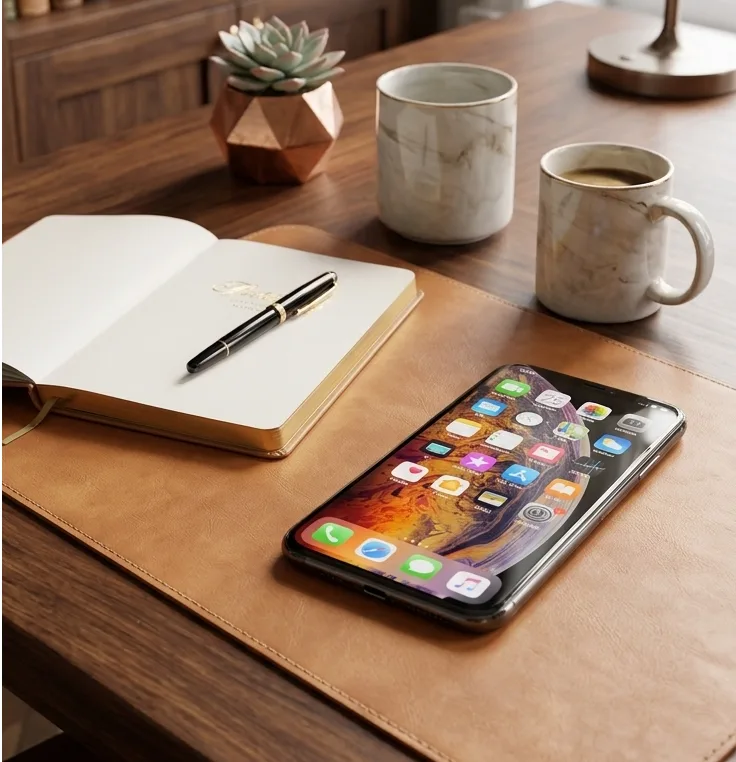
The iPhone XS launched in September 2018 as Apple’s most refined flagship to date — the first iPhone built on a 7-nanometer chip, the first with Smart HDR photography, and the first with Dual SIM support via eSIM. It was an engineering milestone at the time. In 2026, it sits in a different position: a refurbished market device available from $95 to $200 depending on condition, running iOS 18 as its final major operating system version, and competing against newer-generation iPhones at nearly identical price points. This guide covers everything about the iPhone XS — its complete technical specifications, real-world performance, camera capabilities, and an honest assessment of whether it makes sense to buy one in the current market.
The key facts to understand upfront: Apple has excluded the iPhone XS from iOS 26, which launched in 2026. The device is frozen on iOS 18 as its maximum supported version. This does not mean the hardware stops working — the A12 Bionic chip remains capable of daily tasks, the OLED display is still excellent, and the build quality holds up well after years of use. But the software exclusion changes the value calculation compared to buying the iPhone 11 or iPhone 12, both of which support iOS 26 and are available at nearly the same refurbished price. Every section of this guide accounts for the current software reality, not the device’s position at launch.
iPhone XS Full Specifications
| Category | Specification |
|---|---|
| Released | September 21, 2018 |
| Form Factor | 143.6 × 70.9 × 7.7 mm, 177g |
| Colors | Space Gray, Silver, Gold |
| Display | 5.8-inch Super Retina OLED, 2436×1125, 458ppi |
| Brightness | 625 nits typical, 1,000,000:1 contrast ratio |
| Display Features | HDR10, Dolby Vision, True Tone, P3 wide color, 3D Touch |
| Chipset | Apple A12 Bionic (7nm), 6.9 billion transistors |
| CPU | Hexa-core: 2× Vortex (2.49GHz) + 4× Tempest (1.59GHz) |
| GPU | Apple-designed 4-core GPU |
| Neural Engine | 8-core, 5 trillion operations per second |
| RAM | 4GB LPDDR4X |
| Storage Options | 64GB, 256GB, 512GB (no expandable storage) |
| Rear Cameras | 12MP f/1.8 wide + 12MP f/2.4 telephoto, OIS on both, 2× optical zoom |
| Front Camera | 7MP f/2.2 TrueDepth with Face ID |
| Video | 4K at 24/30/60fps, 1080p at 30/60fps, stereo audio, OIS |
| Camera Features | Smart HDR, Portrait Mode with Depth Control, 5 Portrait Lighting effects |
| Battery | 2,658 mAh, up to 12h internet use, 14h video playback |
| Charging | Fast charge (0–50% in 30 min with 20W+), Qi wireless charging |
| Biometrics | Face ID (30,000 infrared dot projection) |
| Connectivity | Gigabit LTE with 4×4 MIMO, Wi-Fi 5 (802.11ac), Bluetooth 5.0, NFC |
| SIM | Nano-SIM + eSIM (Dual SIM support) |
| Water Resistance | IP68 — up to 2 meters for 30 minutes |
| Audio | Stereo speakers, no headphone jack, Lightning connector |
| Operating System | Launched iOS 12 — maximum supported: iOS 18 |
| iOS 26 Support | No — excluded from iOS 26 |
Design and Premium Build Materials
The design philosophy of the iPhone XS is centered on the concept of “surgical-grade” precision. Apple utilized a custom-engineered stainless steel alloy that is both durable and aesthetically striking. The frame of the device is polished to a mirror-like finish, seamlessly blending into the front and back glass panels. This construction method was designed not only for beauty but also for structural integrity. The glass used on the front and back was, at the time of release, the most durable ever used in a smartphone, achieved through a dual-ion exchange process that strengthens the material at a molecular level. This ensures that the device can withstand the rigors of daily use while maintaining its premium look and feel.
One of the most notable design updates introduced with the iPhone XS was the inclusion of the Gold finish, which joined the existing Space Gray and Silver options. This specific shade of gold was achieved through a physical vapor deposition (PVD) process, ensuring that the color was deeply embedded into the stainless steel rather than just being a surface coating. This process results in a rich, metallic hue that resists scratching and fading over time. The device also maintained the notched display design, which houses the sophisticated TrueDepth camera system used for Face ID. This system replaced the traditional home button and Touch ID, allowing for an edge-to-edge screen experience that maximized the display area without significantly increasing the physical footprint of the phone.
The iPhone XS also saw an improvement in environmental resistance. It was rated IP68 under IEC standard 60529, which means it can withstand immersion in up to 2 meters of water for up to 30 minutes. This was a step up from the IP67 rating of previous models, providing users with greater peace of mind against accidental spills or exposure to rain. Furthermore, Apple tested the device’s resistance against various liquids, including coffee, tea, and soda, ensuring that the internal components remain protected even in common household accidents. The physical dimensions remain compact at 143.6 mm by 70.9 mm, with a thickness of 7.7 mm and a weight of 177 grams, making it one of the most pocket-friendly flagships in Apple’s modern lineup.
Attention to detail extends to the antenna bands as well. To support Gigabit-class LTE, Apple added additional antenna lines on the top and bottom of the frame. This allowed for 4×4 MIMO (Multiple Input Multiple Output) and LAA (License Assisted Access), which significantly increased data speeds in areas with compatible network infrastructure. While these lines are visible on the stainless steel frame, they are integrated so precisely that they do not detract from the overall aesthetic. The buttons—volume, mute switch, and the side power button—all provide a tactile, high-quality click that reinforces the device’s luxury positioning. The absence of a 3.5mm headphone jack continued with this model, pushing users further toward the wireless ecosystem of AirPods and Bluetooth connectivity.
Super Retina OLED Display Technology
The display on the iPhone XS is a 5.8-inch Super Retina OLED panel that delivers an exceptional visual experience. With a resolution of 2436-by-1125 pixels at 458 pixels per inch (ppi), the screen is incredibly sharp, making text look crisp and images appear lifelike. OLED technology allows for “true blacks” because each pixel is self-illuminating and can be turned off completely. This results in a staggering contrast ratio of 1,000,000:1, which is vastly superior to traditional LCD panels. Whether you are watching a high-definition movie or browsing high-resolution photos, the depth and vibrancy of the colors are immediately apparent.
Apple implemented several advanced display technologies into the iPhone XS to ensure color accuracy and viewing comfort. The display supports HDR10 and Dolby Vision, allowing for a much wider dynamic range in video content. This means that details in the brightest parts of a scene and the darkest shadows are preserved, providing a more cinematic experience. Furthermore, the XS features True Tone technology, which uses a six-channel light sensor to subtly adjust the white balance of the display to match the color temperature of the light around you. This makes the screen look more natural, almost like a piece of paper, and reduces eye strain during long periods of use.
The iPhone XS was also one of the last flagship models to feature 3D Touch. This technology uses pressure-sensitive sensors beneath the display to detect how hard a user is pressing on the screen. It allows for “Peek and Pop” gestures, where a light press provides a preview of a link or email, and a deeper press opens it fully. While 3D Touch has since been replaced by Haptic Touch in newer models, many enthusiasts still prefer the physical sensation and speed of the 3D Touch system. Additionally, the screen supports a wide color gamut (P3), ensuring that the colors you see on the screen are as close to real-world colors as possible, which is a critical feature for mobile photographers and designers.
The technical specifications of the display are summarized in the following list:
- Screen Size and Type: 5.8-inch (diagonal) all-screen OLED Multi-Touch display that utilizes the Super Retina HD standard for maximum clarity and color depth.
- Resolution and Density: 2436-by-1125-pixel resolution at 458 ppi, providing a high level of detail that makes individual pixels indistinguishable to the human eye at normal viewing distances.
- Contrast and Brightness: 1,000,000:1 contrast ratio with a typical maximum brightness of 625 nits, ensuring visibility in various lighting conditions and deep black levels.
- HDR Support: Full support for HDR10 and Dolby Vision content, enabling users to enjoy high-quality streaming services with enhanced dynamic range and color accuracy.
- Color Accuracy: Wide color display (P3) combined with True Tone technology ensures that the visuals remain consistent and vibrant across different environments.
- Durability Coating: Fingerprint-resistant oleophobic coating helps keep the display clean from smudges and oils, while the glass is engineered for high scratch resistance.
A12 Bionic: The Engine of Innovation
When it was launched, the A12 Bionic chip was a marvel of semiconductor engineering. It was the industry’s first 7-nanometer chip to be commercially available in a smartphone, a feat that allowed Apple to cram 6.9 billion transistors onto a single piece of silicon. The A12 Bionic features a six-core architecture: two performance cores that handle heavy computational tasks and four efficiency cores that manage everyday activities like texting or browsing the web. The performance cores are up to 15 percent faster than those in the A11 Bionic, while the efficiency cores are up to 50 percent more power-efficient. This intelligent distribution of labor ensures that the phone remains responsive while maximizing battery life.
The true standout of the A12 Bionic is its 8-core Neural Engine. This dedicated hardware is designed specifically for machine learning tasks, such as Face ID recognition, augmented reality (AR) experiences, and real-time photo processing. The Neural Engine in the A12 can perform a staggering 5 trillion operations per second, compared to the 600 billion operations of the A11. This massive leap in power enabled features like “Smart HDR,” which captures multiple images at different exposures and intelligently blends them into a single photo with incredible detail. It also improved the speed and accuracy of Face ID, making the biometric unlock process feel almost instantaneous for the user.
Graphics performance also saw a significant boost with the A12 Bionic. The Apple-designed four-core GPU is up to 50 percent faster than its predecessor, specifically optimized for Metal 2, Apple’s graphics API. This makes the iPhone XS an excellent device for mobile gaming and graphics-intensive applications. Even years after its release, the A12 Bionic remains capable of running modern games from the App Store with respectable frame rates. The integration of the GPU, CPU, and Neural Engine into a single System on a Chip (SoC) allows for extremely low latency and high-speed communication between components, which is why the iPhone XS still feels snappy and fluid when navigating the user interface.
Memory and storage configurations also play a role in the performance of the XS. The device comes with 4GB of LPDDR4X RAM, which was an upgrade over the 3GB found in the iPhone X. This extra gigabyte of memory allows for better multitasking, keeping more apps open in the background without needing to reload them. For storage, Apple offered three options: 64GB, 256GB, and for the first time in an iPhone, a 512GB variant. The 512GB model was targeted at power users who take thousands of high-resolution photos or 4K videos and want to keep them all stored locally on the device without relying solely on iCloud. This variety of storage options ensured that there was a model suitable for every type of user, from the casual social media browser to the professional content creator.
Advanced Camera Systems and Photography
The iPhone XS features a sophisticated dual 12MP camera system on the rear, consisting of a wide-angle lens and a telephoto lens. The wide-angle lens has an f/1.8 aperture, while the telephoto lens has an f/2.4 aperture. Both lenses are equipped with Optical Image Stabilization (OIS), which helps to counteract hand shake and produce sharper photos and smoother videos, especially in low-light conditions. One of the most significant upgrades in the XS was the sensor itself; the pixels were made larger and deeper (1.4 microns), which allows for better light gathering and improved image fidelity. This hardware improvement, combined with the power of the A12 Bionic, redefined what was possible with smartphone photography at the time.
Smart HDR is perhaps the most important software-driven camera feature introduced with the XS. By leveraging the Neural Engine and the image signal processor (ISP), the camera captures a “zero shutter lag” buffer of multiple frames the moment the app is opened. When you tap the shutter button, the system analyzes these frames—each taken at different exposures—and merges the best parts of each into a final image. This results in photos with better highlight recovery and shadow detail, preventing the “blown out” skies or crushed blacks that often plagued earlier mobile cameras. This process happens in the background in a fraction of a second, providing a seamless experience for the user.
Portrait Mode also received a substantial update with the introduction of Depth Control. For the first time, users could adjust the depth of field (the “bokeh” effect) after a photo had been taken. By sliding a digital aperture control from f/1.4 to f/16, you can change how blurred the background is, allowing for professional-looking portraits where the subject is perfectly isolated. The XS also offers five Portrait Lighting effects: Natural, Studio, Contour, Stage, and Stage Mono. These effects use machine learning to map the contours of a subject’s face and apply lighting changes that would typically require a professional studio setup, adding a layer of artistic flexibility to mobile photography.
The video capabilities of the iPhone XS are equally impressive. It can record 4K video at 24, 30, or 60 frames per second (fps), and 1080p HD video at 30 or 60 fps. A major addition to the video department was the ability to record stereo sound. The XS features four built-in microphones that capture high-quality audio with a wide stereo separation, making your home movies sound as good as they look. The device also supports extended dynamic range for video up to 30 fps, which brings the benefits of Smart HDR to moving images. Additionally, cinematic video stabilization ensures that footage looks steady even if the person filming is walking or moving the camera quickly.
Connectivity, Security, and Face ID
Security on the iPhone XS is handled by Face ID, which Apple claims is the most secure facial authentication system ever in a smartphone. Unlike simple photo-based face unlock systems used by some competitors, Face ID uses the TrueDepth camera system to project and analyze more than 30,000 invisible dots to create a precise depth map of your face. It also captures an infrared image. This data is processed in the Secure Enclave of the A12 Bionic chip, ensuring that your biometric information never leaves the device and is never uploaded to the cloud. Face ID is designed to adapt to changes in your appearance over time, such as growing a beard or wearing glasses, and it works in total darkness thanks to an infrared flood illuminator.
In terms of connectivity, the iPhone XS was a major step forward for Apple users. It was the first generation of iPhones to support Dual SIM capability through the use of a physical nano-SIM and an integrated eSIM (electronic SIM). This allows users to have two phone numbers on a single device, which is incredibly useful for travelers or individuals who want to separate their work and personal lines. As previously mentioned, the device also supports Gigabit-class LTE with 4×4 MIMO, providing significantly faster download and upload speeds compared to the iPhone X. While it lacks 5G support, the LTE modem in the XS remains very capable in most metropolitan areas with robust 4G infrastructure.
Wireless technology on the XS includes support for Wi-Fi 5 (802.11ac) with 2×2 MIMO, Bluetooth 5.0, and NFC with reader mode. The inclusion of Bluetooth 5.0 ensures a stable connection with wireless peripherals like headphones and smartwatches, while also offering improved range and data transfer speeds. The NFC chip is used for Apple Pay, allowing for secure and contactless payments at millions of locations worldwide. Furthermore, the XS supports “Express Cards with power reserve,” which means you can use your phone for transit or as a digital key even if the battery is so low that the device has shut down, providing an extra layer of utility for commuters.
The audio experience was also enhanced in the XS. The device features wider stereo playback, which creates a more immersive soundstage when listening to music or watching movies without headphones. The stereo speakers are balanced and loud, with a noticeable improvement in bass response compared to earlier models. While there is no headphone jack, Apple included a pair of EarPods with a Lightning connector in the box at the time of launch. For those using wireless audio, the iPhone XS supports high-quality codecs to ensure that the sound quality over Bluetooth remains high. The microphone system is also utilized for noise cancellation during phone calls, ensuring that your voice remains clear even in noisy environments.
Battery Performance and Charging Capabilities
The battery life of the iPhone XS is designed to provide all-day usage for the average consumer. It features a 2,658 mAh lithium-ion battery. While this capacity might seem small by modern standards, the efficiency of the A12 Bionic chip and the optimizations in iOS allow it to perform admirably. Apple states that the XS lasts up to 30 minutes longer than the iPhone X. In real-world terms, this typically translates to approximately 12 to 14 hours of talk time, 12 hours of internet use, or up to 14 hours of video playback. However, it is important to note that battery performance is highly dependent on usage patterns, such as screen brightness and the use of power-hungry applications like GPS or high-end games.
Charging the iPhone XS is flexible, with support for both wired and wireless methods. For wired charging, the device uses the Lightning port and is capable of fast charging. With a 20W or higher power adapter (sold separately), you can charge the iPhone XS from zero to 50 percent in just 30 minutes. This is a critical feature for users who need a quick top-up during the day. For wireless charging, the XS supports the Qi standard, allowing it to work with a wide variety of charging pads and stands. While wireless charging is generally slower than wired charging, it offers the convenience of simply placing the phone on a surface to begin the power transfer process.
Over time, lithium-ion batteries naturally degrade, and the iPhone XS includes software features to help manage this process. Within the “Battery” section of the Settings app, users can check their “Battery Health,” which shows the current maximum capacity relative to when it was new. iOS also includes a “Peak Performance Capability” feature that manages the processor’s power draw to prevent unexpected shutdowns if the battery is unable to deliver the necessary voltage. Furthermore, “Optimized Battery Charging” learns your daily charging routine and waits to finish charging past 80 percent until you need to use the phone, which helps reduce the rate of chemical aging of the battery.
The power management system in the iPhone XS is sophisticated, utilizing various sensors to adjust performance in real-time. For instance, the device will dim the screen or reduce the frequency of background app refreshes if it detects that the battery is running low or if the device is getting too warm. This holistic approach to power management ensures that users get the most out of every charge while protecting the long-term health of the hardware. For users who find themselves away from a power source for extended periods, “Low Power Mode” can be manually enabled to significantly extend the remaining battery life by disabling non-essential features and visual effects.
Current Market Price and Deals for 2025
In 2025, the iPhone XS is no longer available directly from Apple as a new product, as it has been replaced by several subsequent generations. However, it remains a popular choice on the secondary market. The value of an iPhone XS today depends largely on its condition, storage capacity, and whether it is “unlocked” for use with any carrier. Because it is an older model, the prices have dropped significantly, making it one of the most affordable ways to enter the Apple ecosystem with a device that still features a high-quality OLED screen and a premium stainless steel design.
- Refurbished Condition: On major platforms such as Amazon Renewed, Back Market, or Gazelle, a refurbished iPhone XS typically ranges from $180 to $250. Higher prices are usually associated with “Excellent” condition units that have minimal cosmetic wear and high battery health.
- Used Private Sales: Through marketplaces like Swappa or eBay, you can find the device for as low as $150. These units may have more visible wear and tear, and it is important to verify that the iCloud lock has been removed and that the Face ID system is functional before purchasing.
- Storage Premiums: The 64GB model is the most common and least expensive. Stepping up to the 256GB or 512GB versions usually adds a premium of $30 to $60, which is highly recommended for users who do not want to rely heavily on cloud storage.
- Carrier Deals: Some smaller prepaid carriers or MVNOs (Mobile Virtual Network Operators) occasionally offer the iPhone XS as a “free” or highly discounted device when signing up for a new service plan. However, these are becoming rarer as the device reaches the end of its official software support lifecycle.
- Trade-in Value: If you currently own an iPhone XS and are looking to upgrade, most trade-in programs will offer between $50 and $90 in credit. While this is low compared to the original purchase price, it can still provide a small discount on a newer model like the iPhone 15 or 16.
iPhone XS vs iPhone 11 vs iPhone 12: Which Refurbished iPhone to Buy
The iPhone XS does not exist in a vacuum on the refurbished market. The iPhone 11 and iPhone 12 are available at nearly identical price points in 2026, and both offer meaningfully different software longevity and hardware capability. Understanding the differences is essential before spending money on any of the three.
| iPhone XS | iPhone 11 | iPhone 12 | |
|---|---|---|---|
| Released | September 2018 | September 2019 | October 2020 |
| Chip | A12 Bionic (7nm) | A13 Bionic (7nm) | A14 Bionic (5nm) |
| Display | 5.8″ OLED, 458ppi | 6.1″ LCD, 326ppi | 6.1″ OLED, 460ppi |
| iOS 26 Support | No — capped at iOS 18 | Yes | Yes |
| 5G | No | No | Yes |
| Night Mode | No | Yes | Yes |
| MagSafe | No | No | Yes |
| Battery | 2,658 mAh | 3,110 mAh | 2,815 mAh |
| Refurbished Price | $95–$200 | $120–$180 | $150–$220 |
| Recommended in 2026? | Conditional | Yes | Best value |
The iPhone XS makes sense in one specific scenario: you can find a refurbished unit in excellent condition with high battery health under $120, and the use case is basic — calls, messaging, social media, and light browsing on a secondary device. At that price, the OLED display, compact size, and premium stainless steel build offer a better physical experience than many Android phones at the same price point.
Outside that scenario, the iPhone 12 is the stronger purchase at $150 to $180. It supports iOS 26, includes 5G connectivity, uses the more efficient A14 Bionic chip, and has an OLED display that matches the XS in quality. The iPhone 12’s 5G support matters for network longevity — carriers continue deprioritizing LTE infrastructure as 5G expansion continues. For a primary device you plan to use for two or more years, the iPhone 12 is the objectively better investment at nearly the same price. You can also restore an iPhone to factory settings when buying refurbished to ensure the device is clean and starts fresh under your own Apple ID.
The iPhone 11 sits between the two — it supports iOS 26, has a better battery than the XS, and adds Night Mode photography, but it uses an LCD display rather than OLED and lacks 5G. At overlapping refurbished prices, the iPhone 12 beats the iPhone 11 as well. The XS remains a viable option only at a meaningful price discount compared to these alternatives.
Pros and Cons of the iPhone XS
Evaluating the iPhone XS in the modern era requires a balanced look at its strengths and its aging hardware. While it was a masterpiece at launch, the standards for mobile technology have shifted significantly in the years since. Below is a detailed breakdown of the pros and cons to consider before purchasing or continuing to use this device.
- Pro: Premium Build Quality. The stainless steel and glass construction remains one of the most luxurious designs Apple has ever produced. It feels more substantial and high-end in the hand than many modern mid-range smartphones that use aluminum or plastic frames.
- Pro: Exceptional Display. The Super Retina OLED panel is still beautiful. With deep blacks, HDR support, and high pixel density, it rivals the screens found on much newer devices and provides a superior media consumption experience compared to modern LCD phones.
- Pro: Compact Form Factor. For users who find modern “Pro Max” or even standard 6.1-inch phones too large, the 5.8-inch XS is a perfect size. It is easy to use with one hand and fits comfortably in almost any pocket.
- Con: Aging Battery Life. The 2,658 mAh battery was never the device’s strongest suite, and as the software has become more demanding, the battery life has struggled. Most used units will likely require a battery replacement to last a full day of heavy use.
- Con: Lack of 5G Connectivity. As 5G networks become the standard, the iPhone XS is limited to 4G LTE. While LTE is still fast enough for most tasks, users in areas with poor 4G but strong 5G coverage will notice a significant difference in data performance.
- Con: Limited Software Longevity. The iPhone XS is approaching the end of its life for major iOS version updates. While it will likely continue to receive security patches for a few more years, it may not support the latest features in upcoming iOS releases.
- Con: No Night Mode. The camera system, while excellent in daylight, lacks the dedicated “Night Mode” found in the iPhone 11 and later. Low-light photography is noticeably noisier and less detailed compared to newer models.
Pro Tips for iPhone XS Users
If you are currently using an iPhone XS or have just purchased a refurbished one, there are several ways to maximize its performance and lifespan. First and foremost, monitor your battery health closely. If the maximum capacity falls below 80 percent, the device may experience performance throttling. Replacing the battery through an authorized service provider is a relatively inexpensive way to make the phone feel “new” again, as it allows the A12 Bionic chip to run at its full potential without power constraints.
To keep the device running smoothly, manage your storage effectively. With a 64GB model, storage can fill up quickly with high-resolution photos and 4K videos. Use the “Offload Unused Apps” feature in the settings to automatically remove apps you don’t use while keeping their data. Additionally, consider using HEIF and HEVC formats for photos and videos, which are the high-efficiency formats Apple uses to save space without sacrificing quality. Regularly clearing out your browser cache and old message attachments can also help maintain system speed.
Another tip is to leverage the accessibility features to enhance your experience. For instance, if you find the OLED display too bright at night even at the lowest setting, you can use the “Reduce White Point” feature in the Accessibility settings to dim the screen even further. If you miss the physical home button, you can enable “AssistiveTouch,” which puts a virtual button on the screen that can be customized to perform various tasks like taking screenshots, opening the Control Center, or returning to the home screen with a single tap.
Frequently Asked Questions
Does the iPhone XS support iOS 18?
The iPhone XS supports iOS 18, which is its maximum supported version. Apple released iOS 26 in 2026 and officially excluded the iPhone XS from the upgrade list, making iOS 18 the final major operating system the device will receive. The phone continues to function on iOS 18 and may receive occasional security patches, but it will not receive the features, performance improvements, or application compatibility updates that come with iOS 26 and future versions.
Is the iPhone XS waterproof?
The iPhone XS has an IP68 rating, meaning it is water-resistant rather than completely waterproof. It is designed to survive immersion in up to 2 meters of water for 30 minutes. However, this resistance can diminish over time due to normal wear and tear, and water damage is typically not covered under Apple’s standard warranty.
Can the iPhone XS use MagSafe accessories?
The iPhone XS does not have the internal ring of magnets required for MagSafe technology, which was introduced with the iPhone 12. While it can still be charged on a MagSafe charger because it supports Qi wireless charging, it will not snap into place magnetically, and it will not charge at the faster 15W MagSafe speeds.
How does the iPhone XS camera compare to the iPhone 15?
While the iPhone XS still takes great photos in good lighting, the iPhone 15 features a much larger main sensor, significantly improved low-light performance with Night Mode, better HDR processing, and advanced video features like Action Mode. For casual social media use, the XS is still adequate, but for photography enthusiasts, the difference is substantial.
Should I buy an iPhone XS in 2026?
The iPhone XS is worth buying in 2026 only under specific conditions: the purchase price is under $120 for a unit in excellent condition with battery health above 85%, and the use case is a secondary or backup device rather than a primary smartphone. For a primary device, the iPhone 12 — available refurbished at $150 to $180 — offers iOS 26 support, 5G, a newer chip, and a longer usable lifespan at a modest price premium. If budget is the absolute constraint and only the XS fits within it, prioritize units from certified refurbished sellers like Back Market, Swappa, or Amazon Renewed over private listings on eBay to ensure iCloud lock removal and a verified return policy.
Does the iPhone XS support iOS 26?
No. Apple excluded the iPhone XS from iOS 26, which launched in 2026. The iPhone XS is limited to iOS 18 as its maximum supported version. The oldest iPhones that support iOS 26 are the iPhone 11 and iPhone SE (2nd generation). This means the iPhone XS will no longer receive new features or major security updates beyond what iOS 18 provides, though Apple may continue issuing minor security patches for a period after the exclusion.
Conclusion
The iPhone XS remains a testament to Apple’s ability to create hardware that stands the test of time. With its surgical-grade stainless steel frame, a stunning Super Retina OLED display, and the groundbreaking A12 Bionic chip, it was a device that defined the modern flagship era. In this guide, we have explored its intricate technical specifications, from the 458 ppi display density to the 5 trillion operations per second performed by its Neural Engine. We have also analyzed its current position in the market, noting that while it is an incredibly affordable entry point into the Apple ecosystem, users must be mindful of its aging battery and the approaching end of its major software update cycle. Despite these considerations, the iPhone XS continues to offer a premium experience that many modern budget phones cannot match. Whether you are using it as a primary device or a secondary backup, the iPhone XS is a remarkable piece of technology that proved the “S” year refinements are often some of the most enduring models in smartphone history.
