

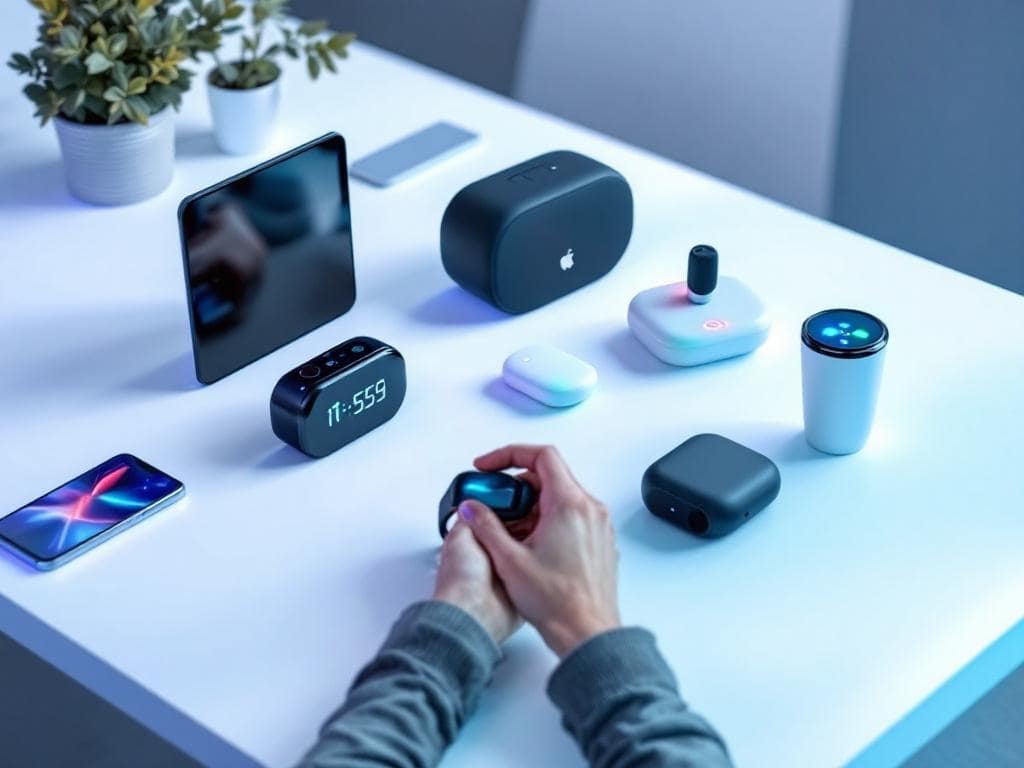
The consumer technology landscape entering 2025–2026 reflects a clear shift toward smarter, more integrated, and more practical gadgets designed to enhance daily life rather than merely showcase experimental features. After years of rapid innovation, manufacturers are now refining artificial intelligence, battery efficiency, connectivity, and sustainability into products that deliver real-world value. From next-generation smartphones and AI-powered laptops to health-focused wearables and smart home upgrades, the newest gadgets are defined by usefulness, reliability, and long-term relevance.
This report provides a comprehensive, fact-based overview of the most important new gadgets shaping the 2025–2026 market. It focuses on devices that have been officially announced, released, or firmly positioned by major manufacturers, avoiding speculation or unverified concepts. Each category highlights why these gadgets matter, how they fit into current user needs, and what buyers can realistically expect in terms of performance and pricing.
The goal is not to chase hype, but to explain how modern gadgets are evolving and which products are setting meaningful benchmarks across consumer technology.
Smartphones Defining the 2025–2026 Era
Smartphones remain the centerpiece of consumer technology, and the latest generation emphasizes efficiency, on-device AI, and improved longevity rather than radical design changes.
Apple iPhone 16 Series
The iPhone 16 lineup continues Apple’s focus on performance optimization, computational photography, and deeper AI integration within iOS. Improvements center on enhanced chip efficiency, better thermal management, and refined camera processing rather than dramatic form-factor changes.
- Core innovation: Stronger on-device AI for photography, voice tasks, and system automation, reducing reliance on cloud processing.
- Camera evolution: Improved low-light performance and smarter video stabilization for creators.
- Battery efficiency: Incremental gains through chipset optimization rather than larger batteries.
- Software longevity: Long-term iOS support remains a major differentiator.
- U.S. pricing: Expected starting range around $799–$899 depending on configuration.
Samsung Galaxy S25 Series
Samsung’s Galaxy S25 lineup focuses heavily on AI-powered features, display efficiency, and camera versatility. The devices emphasize customization, multitasking, and integration with the broader Galaxy ecosystem.
- Display technology: Enhanced AMOLED panels with better brightness control and power efficiency.
- AI features: Built-in tools for real-time translation, photo enhancement, and productivity assistance.
- Camera system: Improved sensors and software-driven zoom clarity.
- Performance: Flagship processors optimized for sustained workloads.
- U.S. pricing: Typically starting around $799, with Ultra models exceeding $1,100.
Wearable Technology Moving Beyond Fitness Tracking
Wearables in 2025–2026 are increasingly focused on health insights, safety, and ecosystem integration rather than step counting alone.
Apple Watch Series 10
The Apple Watch continues to evolve as a health-focused companion, emphasizing long-term wellness tracking and safety features.
- Health monitoring: Expanded heart health, sleep analysis, and movement tracking.
- Safety tools: Fall detection, emergency alerts, and location sharing improvements.
- Display: Brighter and more energy-efficient screen technology.
- Integration: Seamless connection with iPhone and Apple services.
- U.S. pricing: Expected to start around $399.
Samsung Galaxy Watch 7
Samsung’s latest smartwatch emphasizes personalization and cross-device compatibility within the Android ecosystem.
- Health focus: Improved sleep tracking, stress monitoring, and fitness insights.
- Battery optimization: Better endurance for multi-day usage.
- Customization: Extensive watch face and band options.
- Android integration: Deep compatibility with Galaxy phones and services.
- U.S. pricing: Typically ranges from $299 to $399.
AI-Powered Laptops and Tablets
Personal computing devices in 2025–2026 increasingly integrate dedicated AI processing, allowing for smarter workflows and improved efficiency.
Microsoft Surface Laptop (AI Edition)
Microsoft’s AI-focused Surface devices highlight the shift toward locally processed artificial intelligence for productivity and creativity.
- AI acceleration: Dedicated hardware for real-time language processing and image tasks.
- Battery life: Designed for extended use without frequent charging.
- Design: Lightweight, premium build with high-resolution displays.
- Productivity: Deep integration with Windows AI features.
- U.S. pricing: Commonly starts around $999.
Apple iPad Pro (M-Series)
The iPad Pro continues to blur the line between tablet and laptop, particularly for creative professionals.
- Performance: Desktop-class processing power for demanding apps.
- Display: High-refresh-rate panels optimized for creative work.
- Accessories: Enhanced keyboard and stylus support.
- Use cases: Ideal for design, video editing, and note-taking.
- U.S. pricing: Starting around $999, depending on size and storage.
Smart Home Gadgets Becoming Truly Intelligent
Smart home devices are 2025–2026 emphasize interoperability, energy efficiency, and automation that requires minimal user input.
Next-Generation Smart Speakers
Smart speakers now focus on contextual understanding rather than simple voice commands.
- AI assistants: More natural conversations and better task execution.
- Home control: Improved automation for lighting, climate, and security.
- Privacy controls: More transparent data management options.
- Audio quality: Noticeable improvements in sound performance.
- U.S. pricing: Typically $99–$199 depending on model.
Smart Thermostats and Energy Devices
Energy-focused gadgets help households reduce consumption and manage costs more effectively.
- Learning algorithms: Adapt heating and cooling based on behavior.
- Energy insights: Detailed usage reports and recommendations.
- Integration: Works with major smart home ecosystems.
- Sustainability: Supports energy-saving initiatives.
- U.S. pricing: Generally $200–$300.
Audio Gadgets Focused on Personalization
Headphones and earbuds in 2025–2026 prioritize adaptive sound, comfort, and long-term listening health.
Apple AirPods Pro (Next Generation)
The latest AirPods Pro refine active noise cancellation and adaptive audio features.
- Noise cancellation: More effective across a wider range of environments.
- Comfort: Improved fit for extended wear.
- Integration: Deep compatibility with Apple devices.
- Audio quality: Clearer spatial audio experiences.
- U.S. pricing: Around $249.
Sony WH-1000XM6
Sony’s flagship headphones remain a benchmark for noise cancellation and sound quality.
- Sound tuning: Balanced audio with strong bass clarity.
- Noise control: Industry-leading adaptive cancellation.
- Battery life: Designed for long travel and workdays.
- Comfort: Lightweight with improved padding.
- U.S. pricing: Typically around $399.
Gaming and Entertainment Gadgets
Gaming hardware continues to prioritize immersive experiences, portability, and cross-platform access.
Next-Generation Handheld Gaming Devices
Portable gaming systems now deliver console-quality experiences in compact designs.
- Performance: Capable of running modern games smoothly.
- Display: High-refresh-rate screens for responsive gameplay.
- Cloud gaming: Integrated access to streaming platforms.
- Controls: Ergonomic layouts for extended play.
- U.S. pricing: Commonly $399–$699.
Streaming and Home Entertainment Upgrades
Streaming devices and smart TVs emphasize ease of use and content discovery.
- User interface: Faster navigation and personalized recommendations.
- Picture quality: Continued improvements in HDR and color accuracy.
- Connectivity: Better Wi-Fi and device integration.
- Energy efficiency: Reduced power consumption.
- U.S. pricing: Varies widely by screen size and features.
Pros and Cons of the New Gadget Wave
Pros
- Smarter AI integration: Devices now solve real problems rather than showcasing novelty.
- Better battery efficiency: Improved hardware-software optimization.
- Stronger ecosystems: Seamless experiences across devices.
- Focus on health and safety: Wearables provide meaningful insights.
- Longer product lifespans: Extended software support.
Cons
- Higher prices: Premium features often come at a cost.
- Incremental upgrades: Less dramatic year-over-year changes.
- Ecosystem lock-in: Best features often tied to specific brands.
- Learning curve: Advanced features may require adjustment.
- Privacy concerns: AI-driven devices require careful data management.
Pro Tips for Buying New Gadgets in 2025–2026
- Prioritize long-term support: Choose brands known for extended software updates.
- Buy for your ecosystem: Gadgets work best when paired with compatible devices.
- Watch sales cycles: Major discounts often appear during holiday and launch windows.
- Assess real needs: Avoid paying extra for features you won’t use.
- Check return policies: New tech should fit your workflow and lifestyle.
Frequently Asked Questions
Are 2025–2026 gadgets significantly better than older models?
Improvements focus on efficiency, AI, and usability rather than radical redesigns, making upgrades most valuable for users on older hardware.
Is AI now essential in consumer gadgets?
AI enhances convenience and personalization but is designed to work quietly in the background rather than replace user control.
Should buyers wait for newer releases?
Most devices offer strong value at launch, but prices often drop within months.
Are smart home gadgets secure?
Security has improved significantly, though users should enable privacy settings and updates.
Which category offers the best value?
Wearables and audio gadgets often deliver noticeable benefits at relatively accessible price points.
Conclusion
The best new gadgets of 2025–2026 reflect a maturing technology market focused on refinement, intelligence, and real-world usefulness. Smartphones deliver smarter performance without sacrificing reliability, wearables provide deeper health insights, laptops integrate AI for productivity, and smart home devices finally feel intuitive rather than experimental. While prices remain premium for flagship products, the value lies in longer lifespans, better efficiency, and meaningful improvements that integrate seamlessly into daily life. For consumers willing to choose thoughtfully, the current generation of gadgets offers some of the most practical and polished technology experiences to date.
