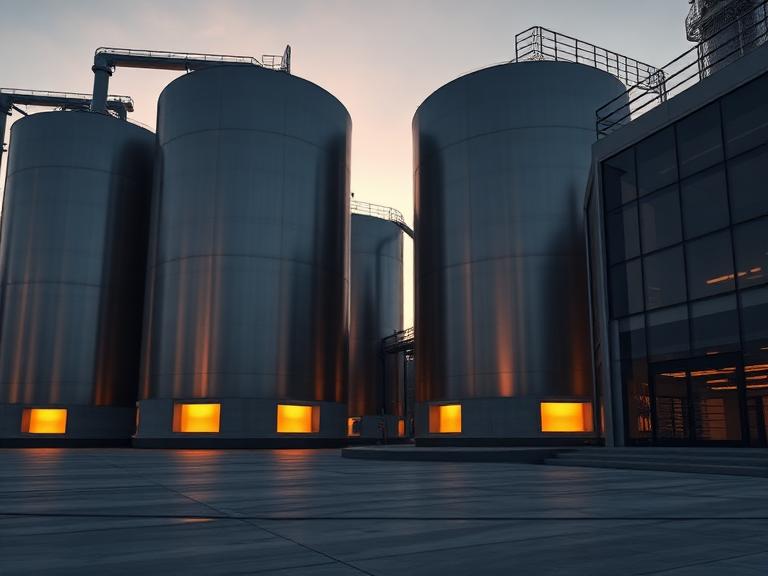
Maximizing Efficiency with Industrial Thermal Energy Storage
As the global industrial sector faces mounting pressure to achieve net-zero emissions by 2050, the role of Large-Scale Thermal Energy Storage (TES) has transitioned from a niche experimental technology to a fundamental pillar of modern energy infrastructure. Industrial processes, particularly those in the chemical, food processing, and metallurgical sectors, account for a staggering portion of global energy consumption. Most of this energy is utilized as process heat rather than electricity. Large-scale thermal energy storage addresses the critical “intermittency gap” of renewable energy by capturing surplus heat or electricity and storing it for use during peak demand or low-generation periods. By decoupling energy generation from consumption, industries can significantly lower operational costs and enhance grid stability.
The integration of advanced thermal batteries and sensible heat systems allows manufacturing plants to transition away from fossil-fuel-reliant boilers. In 2026, the technology has reached a point of commercial maturity where multi-gigawatt-hour deployments are becoming standard in high-load environments such as green hydrogen production and large-scale desalination. These systems work by utilizing abundant materials—such as molten salts, crushed rock, or specialized concrete—to retain heat at temperatures exceeding 600°C for days or even weeks. This guide explores the strategic implementation, technological frameworks, and economic advantages of deploying large-scale thermal energy storage in heavy industry.
Understanding the fundamental physics behind thermal storage is essential for selecting the right technology for a specific industrial application. Currently, the market is divided into three primary categories: sensible heat, latent heat, and thermochemical storage. Sensible heat storage is the most common, relying on the temperature increase of a solid or liquid medium. Latent heat storage utilizes Phase Change Materials (PCMs) that absorb energy during the transition from solid to liquid, offering much higher energy density. Finally, thermochemical storage, though still emerging at the largest scales, uses reversible chemical reactions to store energy with almost zero thermal loss over long periods. For most industrial-scale projects in 2026, sensible and latent systems provide the most reliable return on investment.
The Architecture of Industrial-Scale Thermal Batteries
Modern industrial thermal batteries are engineered to handle the massive thermal loads required by heavy manufacturing. These systems typically consist of a storage medium, a heat exchanger, and a sophisticated control system that integrates with the facility’s Energy Management System (EMS). In a typical configuration, surplus renewable electricity from on-site solar or wind farms is used to power resistive heaters or heat pumps, which then transfer energy into the storage core. When the factory requires heat for steam production or drying processes, the system reverses the flow, extracting the stored energy through a secondary heat transfer fluid. This “charging” and “discharging” cycle is optimized by AI-driven predictive algorithms that monitor weather patterns, energy prices, and production schedules.
One of the most significant breakthroughs in 2026 is the use of solid-state thermal batteries. Unlike traditional liquid-based systems that require complex piping and pump systems, solid-state batteries use blocks of carbon or firebrick. These materials are incredibly durable and can withstand tens of thousands of thermal cycles without degradation. Because they use earth-abundant materials, the levelized cost of storage (LCOS) is often a fraction of that of lithium-ion batteries, making them the preferred choice for long-duration industrial energy storage. These units can be modularly expanded, allowing companies to start with a 10 MWh pilot and scale up to a 500 MWh system as their renewable capacity grows.
For industries that require cooling rather than heating—such as data centers, pharmaceutical manufacturing, and food storage—Cool Thermal Energy Storage (CTES) is the primary solution. These systems store “cold” during off-peak hours when electricity is cheaper, often using ice-slurry or chilled water tanks. By shifting the cooling load to nighttime hours, industrial facilities can reduce their peak demand charges by up to 40%. This not only saves money but also relieves stress on the electrical grid during the hottest parts of the day when air conditioning demand is at its peak. As global temperatures continue to rise, the demand for high-efficiency CTES is projected to grow by 12% annually through 2030.
Core Technologies for Industrial Heat Storage
Selecting the right storage medium is a balance of temperature requirements, space constraints, and capital expenditure. The following list details the primary technologies currently being deployed in large-scale industrial environments:
- Molten Salt Storage: This technology, pioneered in concentrated solar power (CSP) plants, uses a mixture of sodium and potassium nitrate. It is ideal for high-temperature applications (up to 565°C) and provides excellent heat transfer properties. The salts remain liquid at high temperatures, allowing for easy transport through heat exchangers, although they require careful temperature management to prevent “freezing” or solidification in the pipes.
- Solid-Particle Thermocline: Utilizing sand, gravel, or ceramic pellets, these systems store heat in a single tank where a temperature gradient (the thermocline) separates the hot and cold zones. This design is highly cost-effective because it uses low-cost materials and requires fewer tanks than binary molten salt systems. It is particularly effective for storing heat from 300°C to 800°C for industrial steam production.
- Phase Change Materials (PCM): These systems take advantage of the latent heat of fusion. By using materials like paraffin waxes or salt hydrates that melt and solidify at specific temperatures, PCMs can store a vast amount of energy in a very small footprint. They are perfect for industries with precise temperature requirements, as the energy is released at a constant temperature during the phase transition.
- Concrete and Firebrick Blocks: High-performance concrete or specialized firebricks are used as a solid storage medium. Electricity is converted to heat via resistive heating elements embedded in the blocks. This is a very robust technology with low maintenance costs and a lifespan exceeding 30 years, making it a “buy once, use forever” solution for heavy industry.
- Liquid Air Energy Storage (LAES): While technically a mechanical-thermal hybrid, LAES involves cooling air to cryogenic temperatures to liquefy it. When energy is needed, the liquid air is reheated and expanded to drive a turbine. This process generates both electricity and high-grade cold, which can be reused in industrial refrigeration or cooling processes, creating a highly efficient circular energy loop.
The transition to these technologies is further accelerated by the decarbonization of process heat. In manufacturing, over half of the energy used is for “process heat”—the heat required to create chemicals, melt metals, or cook food. Unlike low-temperature residential heating, industrial heat often requires temperatures that were previously only achievable via natural gas combustion. However, the 2026 generation of high-temperature thermal batteries can now deliver “green steam” at pressures and temperatures that meet even the most demanding industrial standards. This is a game-changer for companies looking to eliminate Scope 1 emissions from their manufacturing footprint.
Step-by-Step Implementation Guide for Large-Scale TES
Implementing a large-scale thermal energy storage system is a multi-year engineering project that requires careful planning, from the initial energy audit to final grid integration. For facility managers and sustainability directors, the process must be approached methodically to ensure the system delivers the expected financial and environmental returns. The following sections outline the critical steps involved in a successful TES deployment.
Phase 1: Energy Profiling and Audit
The first step is to establish a high-resolution baseline of the facility’s thermal and electrical demand. This involves installing sub-metering on major equipment to capture energy usage patterns at 15-minute intervals. The goal is to identify the “thermal peaks” and “valleys”—the times when heat is being wasted and the times when the grid is most expensive. An audit should also identify waste heat recovery opportunities. Many industrial processes vent high-temperature exhaust gas or discharge hot water; capturing this “free” energy and directing it into a TES system can improve the overall plant efficiency by 15% to 20% before any new renewable energy is even added.
During the audit, engineers must also determine the required “quality” of heat. Heat quality is defined by temperature and pressure. For example, a food processing plant might only need 150°C steam for pasteurization, whereas a glass manufacturer might need 1,200°C. Matching the storage technology to the required heat grade is vital for minimizing exergy loss—the loss of useful energy potential during the transfer process. A system designed for high-grade heat that is used for low-grade applications is economically inefficient and over-engineered.
Phase 2: Technology Selection and Sizing
Once the energy profile is clear, the specific TES technology must be selected based on the storage duration and temperature requirements. Sizing the system is a complex optimization problem. If the system is too small, it won’t provide enough energy during peak times; if it’s too large, the capital costs will be prohibitively high and the system may never reach a full state of charge. In 2026, most engineers use Digital Twin modeling to simulate how different storage sizes would have performed against the previous year’s energy data and weather patterns.
This phase also includes evaluating the physical footprint. Large-scale thermal tanks or brick arrays are heavy and require specialized foundations. For example, a 100 MWh molten salt system might require two tanks, each 15 meters in diameter. If land is limited at an existing facility, engineers might opt for a more energy-dense PCM system or a “buried” thermal storage solution like Aquifer Thermal Energy Storage (ATES), which uses the earth itself as an insulator. The selection process must also account for local safety regulations, especially when dealing with high-pressure steam or molten fluids.
Phase 3: Integration with Renewables and the Grid
For a TES system to be truly “green,” it must be integrated with renewable energy sources. This can be done via on-site solar PV, wind turbines, or by drawing electricity from the grid during periods of high renewable penetration (when prices are often negative or very low). The integration requires a bidirectional power conversion system. When the grid has a surplus of wind energy at 2:00 AM, the TES system “charges” by converting that electricity into heat. During the 4:00 PM peak, the factory uses that stored heat for production, avoiding the high peak-hour electricity rates.
Furthermore, large-scale TES can provide grid-forming services. In 2026, many regional grids require large energy users to help maintain frequency and voltage stability. Thermal storage systems equipped with modern inverters can act as a “virtual power plant,” responding to grid signals in milliseconds. This allows the industrial facility to not only save on its own bills but also generate revenue by participating in demand-response programs. This dual-revenue stream—cost avoidance plus grid service payments—dramatically shortens the payback period for the investment.
Pro Tips for Thermal Energy Storage Optimization
Maximizing the performance of a large-scale TES system requires ongoing attention to detail and proactive management. Here are several expert recommendations for 2026:
- Optimize Insulation Thickness: The most common source of efficiency loss in TES is thermal leakage. Use high-performance aerogels or vacuum-insulated panels for high-temperature tanks. While more expensive upfront, the reduction in heat loss over a 20-year lifespan provides a massive return.
- Implement Predictive Maintenance: Thermal cycling causes expansion and contraction of materials, which can lead to structural fatigue. Use sensors to monitor the integrity of the storage medium and heat exchangers. Catching a small crack in a tank or a fouled heat exchanger early prevents catastrophic downtime.
- Leverage Market Volatility: Configure your control system to automatically charge the TES whenever grid prices drop below a certain threshold. In many markets, renewable oversupply creates “negative pricing” where you are actually paid to take electricity from the grid.
- Cascading Heat Usage: Design your system to use “waste heat from the waste heat.” For example, use high-temperature storage for process steam, and then use the lower-temperature “exhaust” from that process for space heating or pre-heating boiler feed water.
- Strategic Siting: If building a new facility, site the TES tanks as close as possible to the primary heat-using equipment to minimize pipe runs and pumping energy losses.
Frequently Asked Questions (FAQ)
How long can thermal energy be stored without significant loss?
With modern high-performance insulation, large-scale industrial systems can store heat for 24 to 72 hours with less than 1% to 2% loss. For seasonal storage applications (storing summer heat for winter use), specialized systems using underground pits or aquifers can retain heat for several months, though the round-trip efficiency is lower than short-term storage.
Is thermal energy storage safer than lithium-ion batteries?
Generally, yes. Most thermal storage media like molten salts, water, and rocks are non-flammable and do not present the “thermal runaway” risks associated with some battery chemistries. However, they do involve high temperatures and sometimes high pressures, which require standard industrial safety protocols and robust containment systems.
What is the typical lifespan of a thermal battery?
Industrial thermal batteries are designed for longevity. Solid-state systems (like firebricks or concrete) can last 30 to 50 years. Liquid systems (like molten salts) typically last 20 to 25 years before major components like pumps or heat exchangers might need refurbishment. This is significantly longer than the 10-to-15-year lifespan of most chemical batteries.
Can TES be retrofitted into existing factories?
Yes, retrofitting is a major market trend. The primary challenge is finding space for the storage units and integrating the new heat exchangers with existing steam or hot water loops. Modular “containerized” thermal batteries are now available that can be placed in parking lots or on rooftops to simplify the retrofit process.
What are the typical costs for a large-scale system?
In 2026, the capital cost for sensible heat storage ranges from $20 to $60 per kWh of capacity, depending on the temperature and scale. This is substantially lower than the $150 to $250 per kWh typically seen for industrial-scale lithium-ion battery projects, making TES the clear winner for bulk energy storage applications.
Conclusion
Large-scale thermal energy storage is no longer just a theoretical solution; it is a commercially viable, cost-effective, and essential technology for the 2026 industrial landscape. By enabling the capture of low-cost renewable energy and waste heat, TES allows industries to decouple their production cycles from the volatility of the energy market. Whether through the use of molten salts for high-temperature steam or chilled water for district cooling, these systems provide the flexibility needed to stabilize the grid and achieve deep decarbonization. As technology continues to advance—with solid-state batteries and AI-driven optimization leading the way—the industrial sector is well-positioned to lead the global transition toward a more sustainable and efficient energy future. The key to success lies in a methodical implementation: thorough auditing, precise technology matching, and smart grid integration. For the forward-thinking industrial enterprise, thermal energy storage is the most powerful tool available to ensure both economic competitiveness and environmental stewardship in an increasingly green economy.