

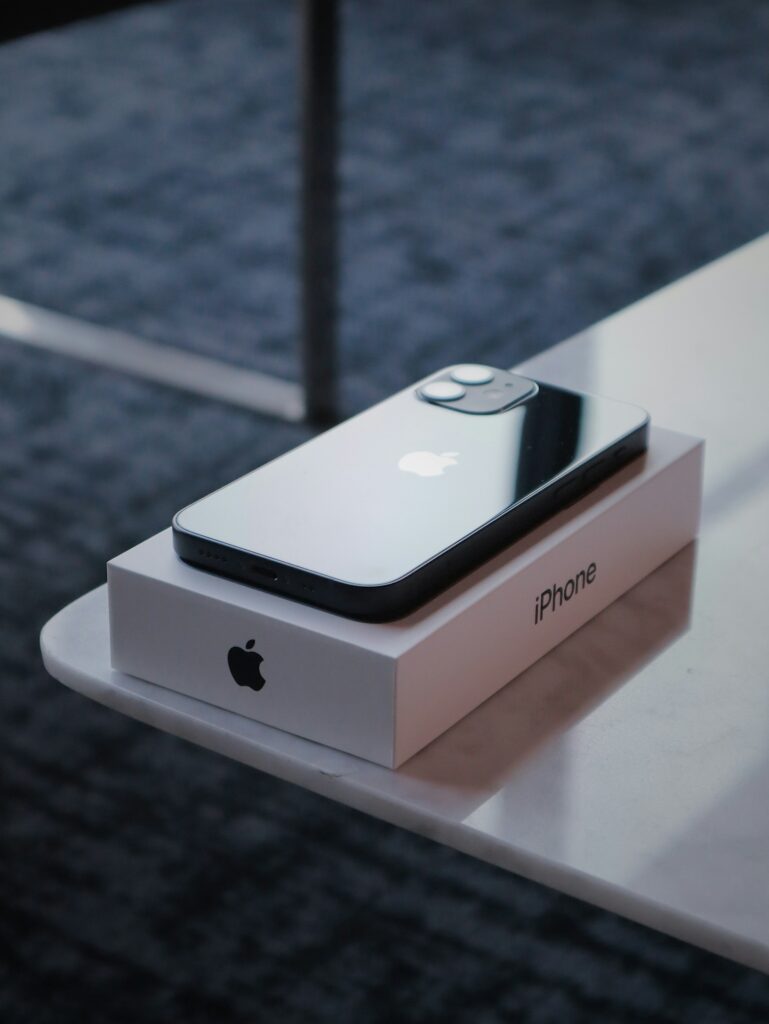
The iPhone 12 arrived in 2020 as Apple’s mainstream 6.1-inch model, bringing 5G connectivity, the A14 Bionic chip, and an OLED display to a broad audience. In 2025, the device is no longer Apple’s newest offering, but it remains widely used, widely available on the refurbished market, and still relevant for many buyers. This guide explains the full specifications, evaluates real-world strengths and limitations, and offers practical advice on maintenance, buying used, and maximizing longevity. The goal is to give an objective, up-to-date resource for anyone considering the iPhone 12 today.
Design, Materials, and Durability
Build and form factor
The iPhone 12 features a flat-edge aluminum frame and a glass back, a design language that marked Apple’s return to angular sides. The front uses Ceramic Shield glass, which Apple introduced with claims of improved drop resistance compared with prior models. The device measures 146.7 mm tall, 71.5 mm wide, and 7.4 mm thick and weighs about 164 grams, striking a balance between screen size and one-handed usability.
Water and dust resistance
The device is rated IP68 under IEC standard 60529, meaning it can withstand immersion in water under specified conditions (Apple’s guidance cites up to 6 meters for 30 minutes when new). Water-damage resistance can decline over time due to wear or repair, so used-device buyers should consider the risk and check for signs of past water exposure.
Repairability and common failure points
Early teardowns and repairability guides show that the iPhone 12 is moderately serviceable compared with older models. Common repair items include the battery and display module, and replacing those components typically restores much of the phone’s function. Back glass repairs, however, may be costly because they often require full-panel replacement. Buyers should seek certified repair providers or Apple-authorized service when possible to preserve longevity and warranty coverage.
Display and Multimedia Experience
Screen technology and quality
The iPhone 12 uses a 6.1-inch Super Retina XDR OLED display with a native resolution of 2532 × 1170 pixels, producing a pixel density of about 460 ppi. The OLED panel delivers true blacks, high contrast ratios, and excellent color reproduction across the P3 color gamut. Peak brightness reaches high levels in HDR content, and the screen supports HDR10 and Dolby Vision playback for compatible video sources.
Touch and interaction
The panel supports Haptic Touch rather than a physically separate 3D Touch mechanism. While Haptic Touch is functionally similar for long-press interactions, it relies on software to present contextual menus. The display’s touch responsiveness and accuracy remain solid for gaming and daily use.
Performance and Processing
A14 Bionic architecture
Powered by the A14 Bionic chip, the iPhone 12 was Apple’s first device with a 5-nanometer process node. The SoC combines a six-core CPU, a four-core GPU, and a 16-core Neural Engine, delivering strong single-threaded performance and efficient multi-threaded processing. These attributes make the phone responsive for apps, gaming, photo editing, and augmented reality tasks even several years post-launch.
Real-world performance in 2025
Although newer iPhone models have advanced CPU and GPU performance, the A14 remains capable for most everyday workloads. Users can expect fast app launches, smooth UI animations, and competent performance in current mobile games. Heavy pro workflows—extensive 4K video editing, complex computational tasks, or prolonged mobile gaming at maximum settings—will perform better on newer silicon, but the 12 still covers the needs of the majority of users.
Memory, Storage, and Software Support
Storage tiers
The iPhone 12 shipped with 64 GB, 128 GB, and 256 GB storage options. In 2025, 64 GB may feel constrained for users who capture lots of high-resolution photos and videos or install many large apps. For longevity and resale value, the 128 GB and 256 GB variants are preferable.
RAM and multitasking
Apple does not officially advertise RAM figures for every model, but credible teardowns indicate approximately 4 GB of RAM for the iPhone 12. Combined with iOS optimizations, this amount manages app suspension and multitasking adequately, though very aggressive background multitasking workloads will be better handled by newer models with greater RAM.
iOS updates and futureproofing
Apple’s software support cadence historically provides many years of iOS updates for major devices. The iPhone 12 launched with iOS 14 and has been supported through numerous subsequent versions. In 2025, it continues to receive updates, security patches, and compatibility improvements. This consistent update support is a primary reason the model remains viable for multi-year ownership.
Cameras and Imaging Capabilities
Hardware overview
The rear camera system includes a dual-camera array: a 12 MP wide (main) sensor with optical image stabilization and a 12 MP ultra-wide sensor with a 120° field of view. The combination is versatile for everyday photography—landscape, portrait, and low-light shots—especially when coupled with Apple’s computational photography features.
Computational photography features
Key imaging features include Night mode (available on both wide and ultra-wide), Deep Fusion for texture and low-light detail, Smart HDR for balanced exposures, and Portrait Mode with depth control and multiple lighting effects. Video capabilities include 4K recording at up to 60 fps, HDR with Dolby Vision, and slow-motion options at 1080p. These features make the device attractive for casual creators and social-media producers.
Practical photo/video advice
- Use Smart HDR and Deep Fusion: Let the phone handle high-dynamic-range scenes; manual exposure adjustments are rarely needed for average users.
- Prefer wide lens for low light: The main wide camera has larger pixels and OIS, which generally yields better low-light results than the ultra-wide.
- Keep storage in mind when filming: 4K video consumes space quickly—choose 128 GB or higher if you plan frequent high-resolution recording.
Connectivity and 5G Considerations
5G support and regional variants
The iPhone 12 introduced broad 5G support to Apple’s mainstream lineup, including both sub-6 GHz and mmWave bands where supported by carriers. The real-world benefits in 2025 depend on carrier deployment in your region. Substantial enhancements in download/upload speed, lower latency, and improved mobile streaming are region and carrier dependent.
Wi-Fi, Bluetooth, and Ultra Wideband
The device supports Wi-Fi 6 (802.11ax) with 2×2 MIMO, Bluetooth 5.0, NFC for Apple Pay and reader mode, and Apple’s Ultra Wideband (UWB) chip for spatial awareness functions such as precision tracking with Find My and improved AirTag integration.
Battery Life, Charging, and Power Management
Battery capacity and everyday endurance
Apple does not disclose raw battery capacity in promotional materials, but testing and teardowns show modest cell sizes relative to larger flagship models. In typical mixed usage—messaging, web browsing, media streaming, and occasional navigation—the iPhone 12 is likely to deliver a full day of use. Heavy 5G usage, prolonged gaming, or extensive GPS navigation will reduce runtime more quickly.
Charging options and best practices
The iPhone 12 supports fast wired charging via USB Power Delivery (up to 20W with a compatible adapter) and wireless charging using Qi and MagSafe (up to 15W on MagSafe accessories). To preserve long-term battery health, enable Optimized Battery Charging in iOS, avoid excessive heat while charging, and avoid leaving the device at 100% for prolonged periods.
Maximizing battery longevity
- Enable Optimized Battery Charging: This learning-based feature reduces the time the battery spends at full charge and slows capacity loss over time.
- Use low-power modes: When you need to extend runtime, the Low Power Mode reduces background activity and system animations to stretch daily use.
- Avoid extreme temperatures: Batteries degrade faster when exposed to heat or cold; keep the phone in moderate conditions when possible.
- Replace the battery when needed: If maximum capacity falls significantly, an authorized battery replacement restores usable longevity.
Security, Privacy, and Safety Features
Face ID and device security
The iPhone 12 uses Face ID for biometric authentication, employing a TrueDepth camera system that securely maps facial geometry and integrates with iOS security features. The Secure Enclave stores sensitive information like biometric data and cryptographic keys, which enhances the device’s resilience against tampering and unauthorized access.
Privacy protections in iOS
Apple’s privacy focus includes granular app permission controls, on-device processing for many features, and transparency measures (e.g., privacy nutrition labels in the App Store). These features help users control data access and monitor which apps request sensitive permissions.
Regulatory and health considerations
Occasional regulatory testing and reports may raise questions about emissions or device compliance. In practice, devices sold in major markets must meet established standards. Users concerned about prolonged call exposure can use hands-free options, headsets, or text messaging to reduce direct proximity to the head.
Buying Used, Refurbished, or New in 2025
What to check when buying used
- Battery health: Ask for the reported battery maximum capacity and consider replacing the battery if it is significantly degraded.
- Screen and housing condition: Inspect for cracks, discoloration, or touch issues that may indicate deeper problems.
- Carrier and regional compatibility: Confirm the model supports the bands used by your carrier, especially for 5G service.
- Activation lock and iCloud status: Ensure the device is not linked to a previous owner’s Apple ID and is properly reset for your use.
- Warranty and return policy: Prefer sellers who offer short-term warranties or return windows, particularly for refurbished units.
Refurbished options and value
Certified refurbished models from reputable sellers or Apple itself often include battery and outer-case refresh and may come with a limited warranty. This option reduces purchase cost while providing more assurance than private sales.
Practical Maintenance and Care
Software maintenance
Keep the device updated with the latest iOS releases and security patches to minimize vulnerabilities and improve stability. Regularly review installed apps, reclaim storage space by offloading unused apps, and back up important data via iCloud or encrypted local backups.
Physical care
Use a protective case and consider a screen protector to limit damage from drops and scratches. For water exposure, avoid charging a wet device and seek professional assessment if water ingress is suspected.
When to Upgrade from an iPhone 12
Consider upgrading if you find the following increasingly problematic: insufficient battery life after attempted replacements, need for Pro-level camera tools (telephoto, LiDAR), desire for significantly faster chip performance for pro workflows, or a preference for newer iPhone features that rely on recent sensors or hardware. For most average users, the iPhone 12 remains serviceable and cost-effective in 2025.
Common Myths and Clarifications
- Myth: Older iPhones can’t run modern apps. Reality: iPhone 12 continues to run the majority of mainstream apps and services smoothly thanks to iOS optimization and the A14 chipset.
- Myth: 5G always drains battery faster. Reality: 5G can use more power in areas with poor signal, but adaptive network modes and modern chipsets mitigate excessive drain in many real-world situations.
- Myth: Refurbished phones are unreliable. Reality: Certified refurbished devices often undergo rigorous testing and restoration; buying from reputable sources substantially reduces risk.
Conclusion
In 2025, the iPhone 12 stands as a mature smartphone that balances performance, design, and software longevity. Its A14 Bionic chip, OLED display, 5G capability, and capable dual-camera system make it a practical choice for users seeking value without sacrificing essential modern features. While it lacks some of the advanced hardware found in the latest models—such as multiple telephoto lenses, higher refresh-rate panels, or the newest chipsets—it benefits from continued iOS support and a thriving second-hand market. For buyers mindful of battery health and storage, choosing a higher-capacity or refurbished-certified unit and following careful maintenance practices will yield years of dependable service. The iPhone 12 remains a relevant and often cost-effective option for many users in 2025.
