

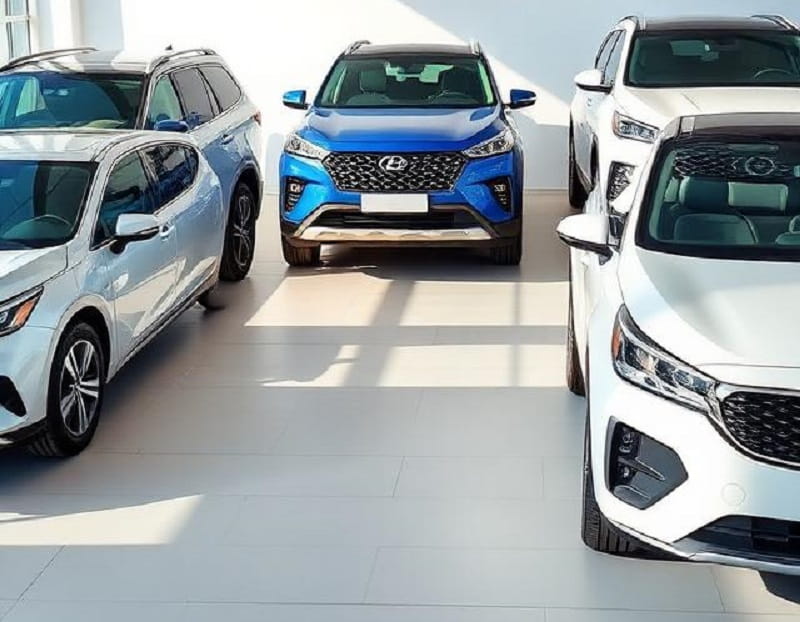
Finding the perfect balance between passenger capacity, cargo space, and fuel economy has become increasingly important for families considering three-row sport utility vehicles. The 2025 model year brings impressive advancements in fuel-efficient technology, particularly among hybrid and plug-in hybrid variants that deliver exceptional gas mileage without sacrificing the versatility that families need.
The automotive landscape has transformed dramatically, with manufacturers prioritizing efficiency alongside spaciousness. Modern three-row SUVs now achieve fuel economy ratings that would have seemed impossible just a few years ago, with the top performers reaching combined ratings of 36 miles per gallon or higher. This comprehensive guide examines the most fuel-efficient three-row SUVs currently available, analyzing their specifications, real-world performance, and value propositions to help families make informed purchasing decisions.
Understanding Fuel Economy in Three-Row SUVs
The average fuel efficiency for three-row SUVs in 2025 stands at approximately 22 miles per gallon combined, according to industry analysis. However, the gap between average performers and top-tier efficient models has widened significantly. Vehicles achieving ratings above this benchmark represent genuine fuel savings over time, potentially saving thousands of dollars in fuel costs over a typical ownership period of five years.
Three-row SUVs face inherent challenges in achieving high fuel economy due to their size and weight. These vehicles typically weigh between 4,000 and 5,500 pounds and must overcome substantial aerodynamic drag from their boxy profiles. The additional weight of third-row seating, reinforced chassis structures, and larger powertrains necessary to move these vehicles creates a natural penalty on fuel consumption. Despite these obstacles, hybrid technology and advanced engineering have enabled several models to achieve remarkable efficiency.
The calculation of fuel economy involves both city and highway driving scenarios, with the combined rating representing a weighted average. City driving typically yields lower mpg figures due to frequent acceleration and deceleration, while highway driving allows engines to operate in their most efficient zones. The Environmental Protection Agency conducts standardized testing to provide consumers with comparable metrics across all vehicles.
Top Hybrid Three-Row SUVs Leading in Fuel Economy
The 2025 Toyota Grand Highlander Hybrid, Hyundai Santa Fe Hybrid, and Kia Sorento Hybrid share the distinction of delivering 36 miles per gallon combined when equipped with front-wheel drive configurations. These three models represent the pinnacle of fuel efficiency in the segment, offering families the ability to transport seven to eight passengers while achieving fuel economy comparable to many compact sedans.
The Toyota Grand Highlander Hybrid utilizes a 2.5-liter four-cylinder engine paired with Toyota’s proven two-motor planetary-gear hybrid system, producing a combined output of 245 horsepower. The front-wheel-drive variant achieves an EPA-estimated 36 mpg city and 36 mpg highway for a combined rating of 36 mpg. All-wheel-drive models see a slight reduction to 34 mpg combined, trading two mpg for enhanced traction and all-weather capability. With a 17.2-gallon fuel tank, the Grand Highlander Hybrid offers an impressive total range of approximately 619 miles between fill-ups, making it ideal for long family road trips.
Pricing for the 2025 Grand Highlander Hybrid starts at approximately $44,710 for the base LE trim before the $1,495 destination charge. The XLE trim, recommended by automotive experts for its comprehensive feature set, includes power-adjustable heated front seats, a 12.3-inch infotainment touchscreen, wireless smartphone charging, and a power-operated liftgate. The hybrid system operates seamlessly, with transitions between electric and gasoline power occurring almost imperceptibly during normal driving. The vehicle seats up to eight passengers with the available bench seat configuration in the second row.
Hyundai Santa Fe Hybrid: Efficiency Meets Modern Design
The 2025 Hyundai Santa Fe Hybrid represents a complete redesign that brings bold styling and exceptional fuel economy to the three-row SUV segment. Achieving the same 36 mpg combined rating as the Toyota Grand Highlander Hybrid, the Santa Fe Hybrid differentiates itself through aggressive exterior design elements borrowed from traditional off-road SUVs, though it remains optimized for on-road efficiency rather than rugged terrain capability.
Standard equipment on the Santa Fe Hybrid includes three rows of seating with either seven or eight-passenger capacity, nearly 80 cubic feet of storage space with all seats folded, and sustainable leather upholstery options throughout the cabin. The dashboard features a flowing curved panel that houses both the 12.3-inch digital gauge cluster and touchscreen infotainment system, with a separate 6.6-inch touchscreen dedicated to climate controls. This thoughtful layout keeps commonly used functions within easy reach while maintaining a modern aesthetic.
The base SEL trim starts just under $40,000, with the mid-tier Limited priced at $46,195 and the high-end Calligraphy approaching $50,000. Even at the entry level, the Santa Fe Hybrid delivers comprehensive technology and safety features, making it an attractive value proposition for budget-conscious families seeking maximum efficiency. The vehicle’s towing capacity of 2,000 pounds accommodates small trailers or recreational equipment, though it trails some competitors designed for heavier hauling duties.
Kia Sorento Hybrid and Plug-In Hybrid Variants
The Kia Sorento line offers both conventional hybrid and plug-in hybrid powertrains, providing families with options based on their daily driving patterns and charging infrastructure access. The 2025 Sorento Hybrid achieves 36 mpg combined with front-wheel drive, matching the efficiency of the Toyota and Hyundai competitors while offering Kia’s distinctive styling and comprehensive warranty coverage.
Available in EX and SX Prestige trims for the standard hybrid, the Sorento Hybrid comes equipped with a 1.6-liter turbocharged inline-four engine paired with an AC motor connected to an 11.8-kWh battery pack. The system produces 261 horsepower and routes power through a six-speed automatic transmission. Standard features include a 12.3-inch touchscreen with wireless Apple CarPlay and Android Auto connectivity, SiriusXM satellite radio, and an impressive 75 cubic feet of maximum cargo capacity with all rear seats folded.
The Sorento Plug-In Hybrid elevates efficiency even further, achieving an EPA rating of 74 MPGe when operating in electric mode with a fully charged battery. The plug-in variant offers approximately 30 miles of all-electric driving range, sufficient for many daily commutes without consuming any gasoline. Once the battery depletes, the vehicle continues operating as a conventional hybrid, achieving 33 mpg combined. Starting at $49,435 for the EX PHEV trim, the plug-in model includes 19-inch alloy wheels, advanced safety features including Forward Collision-Avoidance and Lane Keeping Assist, and a total driving range of 440 miles when combining electric and gasoline operation.
Mitsubishi Outlander PHEV: Compact Efficiency Champion
The 2025 Mitsubishi Outlander Plug-In Hybrid occupies a unique position as one of the rare compact SUVs offering three-row seating capability. This vehicle achieves remarkable efficiency for families requiring occasional third-row seating without the bulk of traditional midsize three-row SUVs. The EPA rates the Outlander PHEV at 64 MPGe combined when operating with electric assistance from its fully charged 22.0-kWh battery pack, which provides 38 miles of all-electric driving range.
When relying solely on gasoline power after battery depletion, the Outlander PHEV returns 26 mpg combined. The vehicle utilizes a 2.4-liter four-cylinder engine paired with electric motors, delivering adequate power for daily driving while prioritizing efficiency over performance. The total driving range reaches 420 miles, combining electric and gasoline operation, which accommodates most weekly driving needs without requiring frequent fuel stops.
The Outlander PHEV starts at approximately $34,990 for the SE FWD trim, making it one of the more affordable plug-in hybrid three-row options. Mitsubishi’s comprehensive warranty coverage, among the longest in the industry, adds value to the ownership proposition. However, prospective buyers should note that the third row is quite compact, best suited for children or occasional adult use rather than regular long-distance seating. The vehicle’s compact dimensions create a nimble driving experience but limit cargo capacity compared to larger midsize competitors.
Mazda CX-90 Plug-In Hybrid: Premium Efficiency
The 2025 Mazda CX-90 Plug-In Hybrid combines upscale materials, refined driving dynamics, and efficient plug-in hybrid technology. Achieving an EPA rating of 56 MPGe combined with electric assistance, the CX-90 PHEV offers 26 miles of all-electric range from its battery pack. When operating as a conventional hybrid after battery depletion, the vehicle returns 25 mpg combined, slightly trailing the Outlander PHEV but matching or exceeding many non-hybrid three-row competitors.
The CX-90’s interior showcases Mazda’s commitment to premium materials and thoughtful design. Soft-touch surfaces, genuine leather upholstery, and real wood trim create an atmosphere approaching luxury-brand vehicles while maintaining more accessible pricing. The vehicle’s driving dynamics reflect Mazda’s sporting heritage, with well-weighted steering and composed handling that makes it the most engaging three-row SUV to pilot through winding roads, though comfort hasn’t been sacrificed in pursuit of sportiness.
Seating capacity reaches seven passengers across three rows, with the first two rows offering generous space for adults. The third row accommodates adults for shorter trips, representing an improvement over many competitors. Standard features include advanced safety systems, a comprehensive infotainment setup with both smartphone integration platforms, and a quiet cabin that isolates occupants from external noise. Pricing positions the CX-90 PHEV as a premium offering, competing against entry-luxury vehicles while delivering superior fuel economy.
Best Non-Hybrid Three-Row SUVs for Fuel Economy
Families not ready to transition to hybrid technology can still find respectable fuel economy among conventional gasoline-powered three-row SUVs. The 2025 Volkswagen Tiguan leads non-hybrid three-row SUVs with an EPA-estimated 28 mpg combined, achieving this figure through a compact footprint and efficient turbocharged four-cylinder engine paired with an eight-speed automatic transmission.
The Tiguan’s three-row configuration comes standard, though its compact dimensions mean the third row is best reserved for children. The vehicle seats seven passengers total, with the rear cargo area offering limited space when all seats are occupied. Folding the third row provides 33 cubic feet of cargo volume, adequate for weekly grocery shopping but modest compared to larger midsize competitors. Front-wheel-drive models deliver the best efficiency, while all-wheel-drive variants sacrifice approximately one mpg but gain all-weather traction capability.
The 2025 Mitsubishi Outlander with conventional gasoline power achieves 27 mpg combined, ranking second among non-hybrid three-row SUVs. Its 2.5-liter four-cylinder engine produces adequate power for family duties while prioritizing efficiency. The continuously variable transmission helps maximize fuel economy by maintaining optimal engine speeds across various driving conditions. Pricing starts around the mid-$30,000 range, making it an accessible option for budget-conscious families seeking decent efficiency without hybrid complexity.
The 2025 Kia Sorento with its 2.5-liter four-cylinder engine and eight-speed automatic transmission achieves 26 mpg combined, offering 23 mpg city and 31 mpg highway. This powertrain provides 191 horsepower, sufficient for daily driving though less potent than available V6 alternatives. The Sorento’s spacious interior, comprehensive warranty coverage, and competitive pricing make it a strong value proposition even in non-hybrid form, though the hybrid variants deliver significantly better fuel economy for a relatively modest price premium.
Full-Size Three-Row SUV Efficiency Leaders
The full-size three-row SUV segment traditionally emphasizes capability and space over efficiency, but hybrid technology has enabled respectable fuel economy even in these larger vehicles. The 2025 Toyota Sequoia, built on a body-on-frame truck platform, utilizes a hybrid powertrain consisting of a 3.4-liter twin-turbocharged V6 engine paired with an electric motor. This system produces 437 horsepower while achieving approximately 19-22 mpg combined depending on configuration, representing a significant improvement over traditional V8-powered full-size SUVs.
The Sequoia’s hybrid system provides substantial towing capacity up to 9,000 pounds when properly equipped, accommodating large trailers, boats, or recreational vehicles. The vehicle seats up to eight passengers with generous legroom in all three rows, while cargo capacity reaches impressive levels with the rear seats folded. Pricing starts above $62,000, reflecting the Sequoia’s full-size dimensions, hybrid powertrain, and comprehensive capability, positioning it as a premium offering for families requiring maximum versatility.
The 2025 Chevrolet Tahoe with its available 3.0-liter Duramax turbo-diesel inline-six engine achieves approximately 23 mpg combined, representing the best fuel economy in the traditional full-size SUV category. This engine produces 277 horsepower and 460 pound-feet of torque, providing ample power for towing up to 8,400 pounds. The diesel option carries a price premium over gasoline V8 models but delivers significantly better fuel economy, potentially recouping the additional cost for families with high annual mileage.
Luxury Three-Row SUVs with Strong Fuel Economy
The luxury three-row SUV segment prioritizes refinement and premium features alongside respectable efficiency. The 2025 Volvo XC90 leads luxury competitors with a combined rating of 26 mpg when equipped with its 2.0-liter turbocharged and supercharged four-cylinder engine. This mild-hybrid system combines mechanical forced induction with electric assistance, delivering 316 horsepower while maintaining efficiency unusual for a luxury vehicle of this size.
The XC90’s cabin showcases Scandinavian design philosophy with clean lines, premium materials including Nappa leather and real wood, and exceptional front seat comfort. The vehicle seats seven passengers with adequate space in the first two rows, while the third row accommodates children or smaller adults. Standard safety features include Volvo’s comprehensive suite of driver assistance technologies, reflecting the brand’s longstanding commitment to occupant protection. Pricing starts in the upper $50,000 range, positioning the XC90 as an accessible luxury option compared to German competitors.
The Volvo XC90 Plug-In Hybrid, marketed as the Recharge variant, achieves 58 MPGe combined when operating with electric assistance from its battery pack, which provides 33 miles of all-electric range. When the battery depletes, the vehicle continues as a conventional hybrid, achieving 27 mpg combined. This makes it ideal for families with short daily commutes who can complete most trips on electricity alone while maintaining gasoline backup for longer journeys. The panoramic sunroof, quad-zone climate control, and premium Bowers & Wilkins audio system available on upper trims create a luxurious environment for all occupants.
The 2025 Mercedes-Benz GLB stands out among compact luxury SUVs by offering optional third-row seating, achieving 28 mpg combined with its 2.0-liter turbocharged four-cylinder engine. Though the third row is quite compact, suitable primarily for children, the GLB’s efficiency and premium materials make it attractive for families prioritizing luxury brand prestige alongside fuel economy. All-wheel drive comes standard, providing all-weather capability while maintaining competitive efficiency for the luxury segment.
Factors Affecting Real-World Fuel Economy
Understanding that EPA estimates represent standardized testing conditions helps families set realistic expectations for real-world fuel economy. Actual consumption varies based on numerous factors including driving style, terrain, climate, cargo load, and vehicle maintenance. Aggressive acceleration and frequent braking significantly reduce efficiency compared to smooth, anticipatory driving techniques that maximize momentum conservation.
Climate plays a substantial role in fuel economy, with cold weather reducing efficiency through several mechanisms. Engine warm-up periods consume additional fuel, while dense cold air increases aerodynamic drag. Heating systems draw power that must ultimately come from the engine, even in hybrid vehicles, while tire pressure naturally decreases in cold temperatures, increasing rolling resistance. Summer air conditioning also reduces efficiency, though typically less dramatically than winter heating in most climates.
Cargo load directly impacts fuel consumption through increased weight and, in the case of roof-mounted carriers, substantially increased aerodynamic drag. Each 100 pounds of additional weight typically reduces fuel economy by approximately one percent, while roof boxes can decrease efficiency by 10-25 percent depending on size and highway speed. Families regularly carrying significant cargo should account for these realities when comparing vehicles and estimating operating costs.
Tire selection and pressure maintenance affect rolling resistance, with under-inflated tires creating measurable efficiency penalties. Premium fuel requirements, where specified by manufacturers, should be factored into total operating costs. Some turbocharged engines require premium gasoline to prevent engine knock and achieve rated power outputs, adding approximately 15-20 percent to per-gallon costs compared to regular-grade fuel.
Hybrid System Types and Their Efficiency Implications
Conventional hybrid systems, as found in the Toyota Grand Highlander Hybrid and similar vehicles, combine a gasoline engine with electric motors and a battery pack. The electric motors assist the engine during acceleration, reducing fuel consumption, while regenerative braking recaptures energy typically lost as heat during deceleration. The battery charges through the gasoline engine and regenerative braking, never requiring external charging infrastructure. This system delivers consistent efficiency improvements over gasoline-only powertrains without requiring any changes to refueling habits.
Plug-in hybrid systems, featured in vehicles like the Kia Sorento PHEV and Mitsubishi Outlander PHEV, include larger battery packs that can be recharged from external power sources. These vehicles operate as pure electric vehicles for shorter distances, typically 25-40 miles depending on model and conditions, before transitioning to hybrid operation once the battery depletes. Families with access to home charging and daily commutes within the electric range can complete most trips without consuming any gasoline, dramatically reducing fuel costs. However, the larger battery packs add weight and cost, and families without regular charging access may not realize the full efficiency potential.
Mild-hybrid systems, sometimes called 48-volt systems, provide electric assistance to the gasoline engine but cannot propel the vehicle on electricity alone. These systems offer modest efficiency improvements, typically 1-3 mpg, at lower cost and complexity than full hybrid systems. Regenerative braking and start-stop functionality at traffic lights reduce fuel consumption in urban driving, while the electric motor provides torque fill during acceleration to improve responsiveness.
Total Cost of Ownership Considerations
Evaluating three-row SUVs requires examining total cost of ownership rather than focusing exclusively on purchase price or fuel economy. Hybrid and plug-in hybrid models typically carry price premiums of $3,000-$8,000 over comparable gasoline models, which families must recoup through fuel savings over their ownership period. Calculating the payback period requires estimating annual mileage, current fuel prices, and the efficiency difference between compared vehicles.
Using current average gasoline prices of approximately $3.50 per gallon and assuming 15,000 miles of annual driving, a family choosing the Grand Highlander Hybrid achieving 36 mpg combined over a conventional Grand Highlander achieving 24 mpg combined would save approximately $729 per year in fuel costs. This calculation divides annual mileage by each vehicle’s fuel economy to determine gallons consumed, then multiplies by current fuel prices to find total annual fuel expenditure. Over a typical five-year ownership period, the hybrid saves approximately $3,645 in fuel costs, potentially offsetting much of its purchase price premium while providing a smoother, quieter driving experience.
Maintenance costs for hybrid vehicles often prove comparable to or lower than conventional vehicles due to reduced brake wear from regenerative braking and less thermal stress on engine components from electric assist. However, eventual battery replacement, though rare during typical ownership periods, represents a significant potential expense. Most manufacturers warrant hybrid batteries for 8-10 years or 100,000 miles, providing protection during the time most families own vehicles.
Insurance costs vary by model based on repair costs, theft rates, and safety ratings. Vehicles with comprehensive safety features and strong crash-test performance may qualify for insurance discounts, partially offsetting higher purchase prices. Resale values also factor into total ownership costs, with certain brands and particularly efficient models maintaining stronger residual values in the used vehicle market.
Choosing Between Front-Wheel Drive and All-Wheel Drive
The choice between front-wheel drive and all-wheel drive configurations affects both fuel economy and capability. Front-wheel drive models typically achieve 1-2 mpg better combined fuel economy through reduced weight and drivetrain friction. For families in temperate climates with minimal snow or off-road needs, front-wheel drive provides adequate traction while maximizing efficiency and minimizing purchase cost, as all-wheel drive systems add $1,500-$2,500 to vehicle prices.
All-wheel drive benefits families in regions with regular snow or ice, providing enhanced traction during acceleration and improved stability in slippery conditions. However, all-wheel drive does not improve braking performance or prevent losing control at higher speeds on ice, requiring appropriate driving techniques and winter tires for maximum safety. The systems add weight through additional driveline components and consume energy to power all four wheels, creating the measurable fuel economy penalty.
Some manufacturers offer different all-wheel-drive systems across their lineups, ranging from basic on-demand systems that engage only when front-wheel slippage occurs to sophisticated torque-vectoring systems that actively distribute power to individual wheels for enhanced handling. Families should evaluate their specific needs, considering local climate, planned usage, and willingness to install winter tires as a potentially more effective alternative to all-wheel drive for cold-weather traction.
Cargo Capacity and Interior Versatility
Three-row SUVs vary significantly in cargo capacity, particularly behind the third row when all seats are occupied. The Grand Highlander leads many competitors with 20.6 cubic feet behind the third row, adequate for several carry-on-sized bags or a week’s worth of groceries. With the third row folded, capacity expands to 58 cubic feet, while folding both rear rows reveals up to 97.5 cubic feet of maximum cargo space, rivaling some full-size SUVs.
Families regularly utilizing all three rows for passengers while carrying substantial cargo should carefully evaluate specific models’ rear cargo areas. Some compact three-row SUVs offer minimal space behind the third row, forcing compromises between passenger capacity and luggage volume. Mid-gate or pass-through features allowing long items to extend into the cabin add versatility for families transporting skis, lumber, or other lengthy cargo without folding seats.
Second-row seat configurations affect both passenger comfort and cargo flexibility. Captain’s chairs, standard or optional on many models, provide easier third-row access through a center walk-through but reduce seating capacity from eight to seven passengers. Bench seats maximize passenger count while creating three shoulder belts and seating positions, ideal for families with multiple children or frequent carpooling duties. Some models offer both configurations across different trim levels, allowing families to choose based on their typical passenger count.
Technology and Infotainment Systems
Modern three-row SUVs include comprehensive technology packages even at base trim levels, with touchscreen infotainment systems ranging from 8 to 12.3 inches becoming standard across the segment. Wireless Apple CarPlay and Android Auto integration appears on most 2025 models, eliminating cable clutter while enabling smartphone integration for navigation, music, and messaging. Built-in navigation systems, once commanding significant premiums, increasingly come standard or at modest additional cost, though many families prefer smartphone-based navigation apps for superior real-time traffic data and search functionality.
Digital instrument clusters replace traditional gauge needles on many models, providing configurable displays showing trip information, navigation directions, and efficiency data directly in the driver’s sight line. Head-up displays, projecting key information onto the windshield, appear on upper trim levels of many models, allowing drivers to monitor speed and navigation without looking down at the dashboard.
Rear-seat entertainment systems, featuring fold-down screens or tablet-style displays, help occupy children during long drives, though many families now rely on personal tablets and smartphones instead. Multiple USB charging ports throughout the cabin, including dedicated rear-seat ports, have become essential features for families with multiple devices. Wireless charging pads for smartphones appear increasingly on mid and upper trim levels, providing convenient charging without cable connection for compatible devices.
Safety Features and Driver Assistance Systems
Advanced driver assistance systems have migrated from luxury exclusive features to standard equipment on most three-row SUVs, significantly enhancing safety for family transport duties. Automatic emergency braking, which applies brakes if the system detects an imminent collision, now appears on virtually all new vehicles. Pedestrian detection extends this protection to recognize people crossing the vehicle’s path, providing additional safety in urban environments.
Lane departure warning and lane keeping assist systems monitor road markings, alerting drivers if the vehicle begins drifting from its lane and providing gentle steering corrections to maintain position. These features reduce fatigue-related accidents on long highway drives, particularly valuable for family road trips. Blind-spot monitoring uses radar sensors to detect vehicles in adjacent lanes that might not be visible in mirrors, warning drivers before lane changes that could result in collisions.
Rear cross-traffic alert, employing the same sensors as blind-spot monitoring, warns of approaching vehicles when backing from parking spaces, reducing the risk of low-speed collisions in parking lots. Parking sensors or cameras, including 360-degree surround-view systems on upper trim levels, assist when maneuvering large three-row SUVs in tight spaces. These features particularly benefit drivers transitioning from smaller vehicles to full-size three-row models.
Adaptive cruise control maintains set speeds on highways while automatically adjusting to match the pace of traffic ahead, reducing driver workload on long trips. More advanced systems incorporate stop-and-go capability, managing speed in heavy traffic conditions down to complete stops before resuming when traffic moves. These semi-autonomous features reduce stress during commutes while improving safety through consistent following distances.
Warranty Coverage and Ownership Peace of Mind
Warranty coverage varies significantly across manufacturers, affecting long-term ownership costs and peace of mind. Kia and Hyundai offer industry-leading coverage with 10-year/100,000-mile powertrain warranties and 5-year/60,000-mile comprehensive warranties, providing exceptional protection during typical ownership periods. These warranties transfer to subsequent owners with some limitations, enhancing resale values.
Toyota and Lexus provide 3-year/36,000-mile comprehensive coverage and 5-year/60,000-mile powertrain warranties, representing industry standard coverage while banking on the brands’ reliability reputations. Toyota includes two years of complimentary scheduled maintenance on new vehicles, reducing ownership costs during the early period when maintenance requirements remain minimal. Hybrid components, including battery packs and electric motors, receive separate 8-year/100,000-mile warranties from most manufacturers, protecting against expensive failures of these unique systems.
Mitsubishi’s comprehensive warranty coverage, including 10-year/100,000-mile powertrain protection and 5-year/60,000-mile comprehensive coverage, adds value to the brand’s offerings despite lower brand prestige compared to some competitors. This coverage particularly benefits families planning extended ownership periods or purchasing vehicles approaching the comprehensive warranty expiration on competing brands.
Extended warranty options, offered by dealers and third-party providers, allow families to extend coverage beyond manufacturer warranties. Evaluating these products requires careful cost-benefit analysis, considering the vehicle’s reliability reputation, planned ownership duration, and risk tolerance. Manufacturer-backed extended warranties typically provide superior coverage and fewer claim disputes compared to third-party alternatives, though at higher initial costs.
Current Market Prices and Availability
The three-row SUV market continues experiencing strong demand in 2025, with manufacturer incentives remaining modest compared to historical norms. The 2025 Toyota Grand Highlander Hybrid starts at approximately $44,710 for the LE trim before destination charges, with the popular XLE trim commanding around $47,480 with all-wheel drive. The Hybrid Max variants with more powerful performance start at approximately $52,210 for the Limited trim, extending to $58,475 for the Platinum before destination fees.
The 2025 Hyundai Santa Fe Hybrid offers competitive pricing starting just under $40,000 for the SEL trim, with the Limited at $46,195 and the flagship Calligraphy approaching $50,000. This positions the Santa Fe as one of the more accessible hybrid three-row options while delivering efficiency matching significantly more expensive competitors. Dealer availability varies by region, with some markets experiencing limited inventory on high-demand hybrid variants requiring order placement and extended wait times.
The Kia Sorento Hybrid EX starts around the low $40,000 range, while the Sorento Plug-In Hybrid EX PHEV begins at $49,435. The SX Prestige PHEV trim, equipped with premium features including the Bose audio system and panoramic display, approaches the mid-$50,000 range. Federal tax credits of up to $7,500 may apply to qualifying plug-in hybrid models depending on battery capacity, final assembly location, and domestic content requirements, potentially reducing effective purchase prices substantially for eligible buyers.
Leasing options provide alternative financing paths for families preferring lower monthly payments and shorter commitment periods. Current lease deals vary by manufacturer, region, and inventory levels, with competitive monthly payments often available on models manufacturers seek to move. Families planning to keep vehicles long-term typically benefit from purchase financing, while those preferring newer vehicles every 2-3 years may find leasing advantageous despite lacking equity build-up.
Pro Tips for Maximizing Fuel Economy
- Maintain Steady Highway Speeds: Using cruise control on highways maintains consistent speeds, preventing the acceleration and deceleration cycles that increase fuel consumption. Driving at 65 mph rather than 75 mph can improve highway fuel economy by approximately 10-15 percent, as aerodynamic drag increases exponentially with speed. Planning highway trips during less congested times allows maintaining efficient speeds without frequent speed adjustments for traffic.
- Optimize Tire Pressure Monthly: Check tire pressure at least monthly when tires are cold, adjusting to manufacturer-specified pressures listed on the driver’s door jamb. Under-inflated tires increase rolling resistance, reducing fuel economy by 1-2 percent for every PSI below optimal pressure. Over-inflation improves efficiency slightly but reduces tire contact patch, compromising traction and increasing uneven wear.
- Remove Unnecessary Weight and Cargo Carriers: Clean out accumulated cargo from the rear storage area, as every 100 pounds reduces fuel economy by approximately one percent. Remove roof racks and cargo boxes when not in use, as these create significant aerodynamic drag even when empty. Consider alternative cargo solutions like hitch-mounted carriers that create less drag than roof-mounted options.
- Plan Combined Errands and Routes: Combine multiple short trips into single longer journeys when possible, as cold starts consume significantly more fuel than trips when the engine has reached operating temperature. Use navigation apps to optimize routes, avoiding traffic congestion that requires frequent braking and acceleration. Consider running errands during off-peak hours when traffic flows more smoothly.
- Utilize Eco Driving Modes: Most modern three-row SUVs include selectable driving modes, with Eco or Economy modes adjusting throttle response, transmission shift points, and climate control operation to maximize efficiency. While these modes may reduce performance slightly, the fuel savings prove worthwhile during commuting and routine driving. Reserve Sport or Normal modes for situations requiring maximum performance, such as highway merging or mountainous terrain.
- Maximize Hybrid System Effectiveness: For hybrid vehicles, learn to anticipate stops and decelerate gradually, allowing regenerative braking to capture maximum energy rather than relying on friction brakes. Monitor hybrid system displays to understand when the electric motor operates versus the gasoline engine, adjusting driving style to favor electric operation during low-speed driving. For plug-in hybrids, maintain regular charging habits to maximize electric-only operation on daily commutes.
- Schedule Regular Maintenance: Follow manufacturer recommended maintenance schedules, replacing air filters, spark plugs, and fluids at specified intervals. Dirty air filters restrict airflow, reducing engine efficiency, while worn spark plugs create incomplete combustion that wastes fuel. Use manufacturer-specified oil weights and consider synthetic oils that reduce internal friction, improving both efficiency and engine longevity.
- Minimize Air Conditioning Load: Use fresh air ventilation when possible rather than air conditioning, particularly during mild weather. When air conditioning is necessary, recirculation mode cools cabin air more efficiently than constantly cooling fresh outside air. Park in shade when possible to reduce initial cabin temperatures, minimizing air conditioning requirements when starting trips.
Frequently Asked Questions
What is the most fuel-efficient three-row SUV for 2025?
The 2025 Toyota Grand Highlander Hybrid, Hyundai Santa Fe Hybrid, and Kia Sorento Hybrid all share the title of most efficient three-row SUVs, each achieving 36 mpg combined with front-wheel drive. These hybrid models deliver exceptional fuel economy without sacrificing the passenger and cargo capacity families need. All-wheel-drive variants of these vehicles achieve slightly lower ratings of approximately 34 mpg combined but still lead the segment significantly.
Are hybrid three-row SUVs worth the extra cost?
Hybrid three-row SUVs typically cost $3,000-$8,000 more than equivalent gasoline models but can save $700-$1,000 annually in fuel costs for families driving 15,000 miles per year with current fuel prices. The payback period ranges from 3-7 years depending on specific models compared, annual mileage, and fuel prices. Beyond financial considerations, hybrids offer smoother acceleration, quieter operation, and lower emissions, providing value beyond fuel savings alone.
How much can I save annually by choosing a fuel-efficient three-row SUV?
Families driving 15,000 miles annually and choosing a hybrid three-row SUV achieving 36 mpg versus a conventional model achieving 24 mpg save approximately $729 per year at $3.50 per gallon fuel prices. Over a five-year ownership period, this amounts to approximately $3,645 in reduced fuel expenditures. Actual savings vary based on annual mileage, local fuel prices, and specific vehicles compared.
Do plug-in hybrid three-row SUVs make sense for families?
Plug-in hybrid three-row SUVs provide maximum value for families with short daily commutes within the vehicle’s electric range and access to home or workplace charging. These families can complete most trips using only electricity, dramatically reducing fuel costs while maintaining gasoline backup for longer journeys. Families without regular charging access or with consistently long daily drives may find conventional hybrids more practical and cost-effective.
How does all-wheel drive affect fuel economy in three-row SUVs?
All-wheel-drive systems typically reduce fuel economy by 1-2 mpg combined compared to front-wheel-drive configurations due to additional weight and drivetrain friction. The efficiency penalty proves worthwhile for families in regions with regular snow or ice, providing enhanced traction during acceleration and improved stability in slippery conditions. However, all-wheel drive does not improve braking performance, requiring appropriate driving techniques and potentially winter tires for maximum cold-weather safety.
What real-world fuel economy should I expect compared to EPA estimates?
Real-world fuel economy typically ranges from 90-105 percent of EPA combined estimates depending on driving conditions, climate, and driving style. Highway-heavy driving often exceeds EPA estimates, while urban driving with frequent stops and acceleration may fall below. Cold weather reduces efficiency through longer warm-up periods, increased aerodynamic drag, and heating system demands. Maintaining steady speeds, proper tire pressure, and minimal cargo weight helps achieve results closer to EPA estimates.
Are three-row SUVs more efficient than minivans?
Three-row hybrid SUVs now match or exceed most minivans in fuel efficiency. The Toyota Grand Highlander Hybrid, Hyundai Santa Fe Hybrid, and Kia Sorento Hybrid achieve 36 mpg combined, significantly better than the Chrysler Pacifica Hybrid achieving 30 mpg combined in hybrid mode and conventional minivans averaging 22-28 mpg combined. However, minivans typically offer superior cargo capacity and easier third-row access through sliding doors, making them more practical for some families despite efficiency trade-offs.
How long do hybrid batteries last in three-row SUVs?
Hybrid batteries in modern three-row SUVs typically last well beyond 150,000 miles with many exceeding 200,000 miles before requiring replacement. Manufacturers warrant hybrid batteries for 8-10 years or 100,000 miles, providing protection during typical ownership periods. Battery degradation occurs gradually rather than catastrophically, with most hybrids losing only 10-20 percent of capacity over the first 100,000 miles while remaining fully functional. Replacement costs have declined substantially from early hybrid generations, currently ranging from $2,000-$4,000 including installation for most mainstream models.
Conclusion
The 2025 three-row SUV market offers families unprecedented fuel efficiency without compromising passenger capacity or cargo versatility. The segment leaders, including the Toyota Grand Highlander Hybrid, Hyundai Santa Fe Hybrid, and Kia Sorento Hybrid, achieve 36 mpg combined, delivering fuel economy comparable to many compact sedans while seating seven to eight passengers. These hybrid models represent the pinnacle of efficiency for families requiring three-row capability, with plug-in variants like the Kia Sorento PHEV and Mitsubishi Outlander PHEV extending efficiency even further for families with short commutes and regular charging access.
Choosing the optimal three-row SUV requires balancing fuel economy against other priorities including passenger space, cargo capacity, technology features, safety systems, and total cost of ownership. While hybrid models command price premiums over conventional gasoline alternatives, families with typical annual mileage often recoup these costs within 3-7 years through fuel savings while enjoying quieter operation and lower emissions. The availability of both front-wheel-drive and all-wheel-drive configurations allows families to optimize efficiency for their climate and driving conditions.
Understanding factors affecting real-world fuel economy, including driving style, climate, cargo load, and maintenance, helps families set realistic expectations and maximize efficiency. Simple practices like maintaining proper tire pressure, removing unnecessary weight, combining errands, and utilizing eco driving modes can improve efficiency by several percent without requiring vehicle modifications. For hybrid owners, learning to maximize regenerative braking and electric-only operation further enhances fuel savings.
The three-row SUV segment continues evolving rapidly, with manufacturers expanding hybrid offerings and improving efficiency across all powertrains. Families prioritizing fuel economy while requiring versatile passenger and cargo capacity have more compelling options in 2025 than ever before, making it an excellent time to transition from older, less efficient vehicles to modern hybrids that deliver both economic and environmental benefits.
