

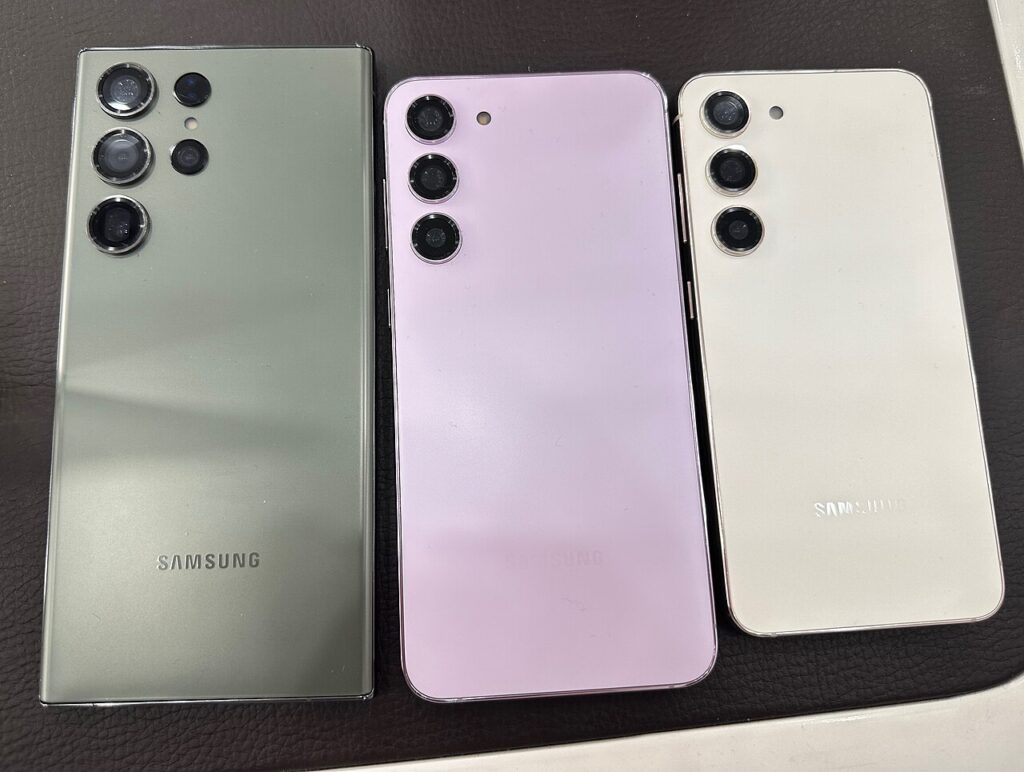
Budget smartphones have never been better. The gap between what a $200 phone can do in 2026 and what required $700 just three years ago is genuinely striking — AMOLED displays, 5G, 50MP cameras, and batteries that last two days are now standard features at entry-level prices. The hard part is no longer finding a decent budget phone. It’s knowing which one earns its spot in your pocket for the next three to five years.
Battery life sits at the centre of that question. A phone with a 5,000 mAh cell and efficient chipset running Android 16 will outlast a flashier device on a hungry processor every time. The phones ranked here were selected on that basis: real-world endurance, verified current pricing, software update commitments, and the features that matter in daily use — not synthetic benchmarks or spec-sheet showmanship.
What to Look for in a Budget Phone with Long Battery Life
Battery capacity alone does not determine how long a phone lasts. A 5,000 mAh cell paired with a power-hungry processor and a 144Hz display running at full brightness can drain faster than a 4,500 mAh cell paired with an efficient chip on a sensible power profile. The relationship between capacity, display technology, chipset efficiency, and software optimisation is what separates a phone that reaches dinner from one that needs a mid-afternoon charge.
Display type matters more than most buyers realise. OLED and AMOLED panels consume no power on black pixels, which is why dark mode and darker wallpapers meaningfully extend endurance on these screens. An LCD panel uses backlight power continuously regardless of what is on screen. At the budget tier, both appear regularly — Samsung’s A-series leans AMOLED, Motorola’s G Power series uses LCD — and the choice is not always clear-cut in real-world use, because LCD phones often carry larger batteries to compensate.
Software update longevity deserves far more attention than it typically gets in buying decisions. A phone promising two years of OS updates bought in late 2026 will be running unsupported software by early 2029. At the same time, a phone promising six years of updates from the same purchase date remains on supported, secure software until 2032. Samsung and Google are the leaders here; both now extend six to seven years of updates to budget devices, which used to be a flagship-only commitment.
Charging speed is the third variable. A 5,000 mAh battery with 15W charging takes over two hours to fill. The same capacity with 45W charging fills in under an hour. At the budget tier, charging speeds range from a modest 23W on the Pixel 9a to 80W on the OnePlus Nord CE 5, and that gap has real consequences for how the phone fits into a daily routine.
Top 10 Budget Phones with the Best Value and Battery Life
Each phone below was selected based on verified current pricing from official and major retail sources, confirmed battery specifications, software support commitments, and where it fits in the broader landscape of what is available under $500 in 2026. The list covers the full price spectrum from $150 to $499, deliberately including the strongest long-support option under $200, the best camera value in the mid-tier, the top battery endurance pick, and one lesser-known contender that rarely appears on competing lists.
Google Pixel 9a — Best Overall Budget Android Phone
The Pixel 9a is the clearest answer for buyers who want a complete package without spending flagship money. Released in April 2025, it runs on Google’s Tensor G4 chip with 8GB of RAM, pairs a 6.3-inch 120Hz OLED display with an IP68 water resistance rating, and carries a 5,100 mAh battery that Google rates at over 30 hours of continuous use — up to 100 hours in Extreme Battery Saver mode. The 48MP main camera produces images that consistently compete with phones at twice the price, particularly in low light. Current pricing sits at $499 on the Google Store, with discounts available at Walmart and other major retailers bringing it closer to $430.
- 5,100 mAh battery with Adaptive Battery management, rated over 30 hours
- Google Tensor G4 chipset, 8GB RAM, 128GB or 256GB storage
- 6.3-inch Super Actua OLED display, 120Hz, IP68 rated
- Seven years of OS, security, and Feature Drop updates guaranteed
- 48MP main camera with Google’s computational photography stack
The strongest case for the Pixel 9a is longevity: seven years of updates from a phone under $500 is simply unmatched at this price. Gemini AI is built in, and the camera handles difficult conditions — backlit scenes, low light, fast-moving subjects — better than any other phone on this list. The weakness is charging speed. At 23W wired, the Pixel 9a is the slowest charger on this list; rivals at a similar price fill up in half the time. Wireless charging is included but equally modest at 7.5W, and there is no telephoto camera, which keeps it behind more versatile setups at the same price point.
Samsung Galaxy A36 5G — Best Samsung Budget Phone Under $300
Samsung’s Galaxy A36 5G is the strongest all-around Samsung device under $300 available in 2026. It ships with a 6.7-inch 120Hz Super AMOLED display, a 5,000 mAh battery with 45W fast charging, IP67 water resistance, and a Snapdragon 6 Gen 3 chipset. Samsung has committed to six years of OS updates and six years of security patches, which puts it on par with its own flagship update promise at a fraction of the cost. The triple camera system — 50MP main with OIS, 8MP ultrawide, 5MP macro — handles everyday photography well. Pricing on the Samsung US website and major US retailers sits at $299.99 new, with unlocked models available at Walmart from $224.99.
- 5,000 mAh battery, 45W fast charging — fast enough to top up during a lunch break
- 6.7-inch 120Hz Super AMOLED, 1,900 nit peak brightness
- Snapdragon 6 Gen 3 chipset, 6GB RAM, expandable storage via microSD
- IP67 water resistance, Gorilla Glass Victus+ on the front
- Six years of OS upgrades and six years of security updates from Samsung
The A36 5G earns its spot by combining a premium display, meaningful water resistance, and Samsung’s exceptional update commitment at a price well under $300. It is also the easiest budget Android phone to find — available at every major US carrier and retailer, which matters for buyers who need in-store support. The limitation is performance: the Snapdragon 6 Gen 3 handles daily tasks and light gaming well but slows under heavy multitasking. The 6GB RAM baseline also ages less gracefully than the 8GB offered by several competitors at a similar price.
Motorola Moto G Power (2026) — Best Battery Life for the Money
Motorola’s G Power (2026) was built around a single priority: endurance. The 5,200 mAh battery paired with the MediaTek Dimensity 6300 chipset and a power-optimised 6.8-inch 120Hz LCD panel delivers genuine two-day battery life for moderate users, which remains rare at any price in 2026. The phone launched in January 2026 at $299.99 from Motorola, Verizon, and Best Buy, though it is regularly available under $270 at Amazon. It carries both IP68 and IP69 ratings for water and dust resistance and has been certified across 14 MIL-STD-810H categories, making it the most ruggedised option on this list. Android 16 ships out of the box.
- 5,200 mAh battery, 30W wired charging; Motorola claims 80% capacity retention after 1,000 charge cycles
- 6.8-inch FHD+ LCD, 120Hz, 1,000 nit peak brightness, Gorilla Glass 7i
- MediaTek Dimensity 6300, 8GB RAM, 128GB storage with microSD expansion
- IP68 and IP69 dual water resistance rating, MIL-STD-810H certified
- 50MP main camera, 8MP ultrawide, 32MP front camera
The G Power (2026) is the right pick for buyers who go a full day away from an outlet — commuters, field workers, students, outdoor enthusiasts. The durability ratings back up the name, and the price-to-endurance ratio is the strongest on this list. The trade-off is the display: the FHD+ LCD is bright and sharp, but it lacks the contrast and black-level depth of an AMOLED panel. The Dimensity 6300 also underperforms at demanding gaming and video editing, and Motorola only promises three years of OS updates from launch — a meaningful step back from Samsung and Google’s commitments at comparable prices.
CMF Phone 2 Pro — Best Value Under $300 with Premium Display
The CMF Phone 2 Pro launched in May 2025 and remains one of the strongest value propositions in the sub-$300 category a year later. Built by Nothing under its CMF sub-brand, it pairs a 6.77-inch 120Hz AMOLED panel with a Dimensity 7300 Pro chipset, triple cameras (50MP main, 50MP telephoto, 8MP ultrawide), and a modular rear cover that accepts physical accessories including a card wallet, stand, and custom decorative panels. The 5,000 mAh battery with 33W charging delivers close to two days of light use. Current pricing for the 8GB/256GB model sits at $279 on the official Nothing website and Amazon.
- 5,000 mAh battery, 33W fast charging, reverse charging support
- 6.77-inch 120Hz AMOLED, 3,000 nit peak brightness
- 50MP main + 50MP telephoto + 8MP ultrawide triple camera system
- Modular rear cover system — a unique hardware differentiator at this price
- Three years of OS updates, six years of security patches from Nothing
The CMF Phone 2 Pro stands out because of what it delivers visually at a price where most competitors compromise on the display first. The AMOLED panel with 3,000 nit peak brightness is exceptional for this tier. The telephoto camera is also unusual under $300 — most rivals at this price offer only a main and ultrawide setup. The weaknesses are real: the 33W charging is slower than the 45W and 80W options available from rivals, and some users report inconsistent real-world screen-on time that falls short of the two-day claim. US carrier support is limited, and buyers should confirm band compatibility before purchasing.
Samsung Galaxy A17 5G — Best Budget Samsung Under $200
The Galaxy A17 5G launched in the US in January 2026 at $199.99 from Samsung, AT&T, T-Mobile, Verizon, and major retailers. It combines a 6.7-inch FHD+ Super AMOLED display with a 5,000 mAh battery, 50MP main camera with OIS, 5G connectivity, IP54 splash resistance, and Samsung’s promise of six generations of Android OS upgrades plus six years of security support. At under $200, the update commitment alone makes it the most future-proof phone in its price bracket. The Exynos 1330 processor handles everyday tasks well, and the AMOLED display is genuinely impressive at this price point.
- 5,000 mAh battery, 25W wired charging
- 6.7-inch FHD+ Super AMOLED, smooth and vivid for under $200
- Exynos 1330 chipset, 4GB RAM base, 128GB storage with microSD support
- 50MP main camera with OIS — uncommon at this price tier
- Six years of OS upgrades, six years of security updates
No other phone under $200 in 2026 offers the A17’s combination of AMOLED display, OIS camera, and six-year update promise. It is the clear recommendation for first-time smartphone buyers, parents buying a first phone for teenagers, or anyone on a tight budget who needs to know the device will remain supported and secure for years. The compromises are real: 4GB of RAM is tight for heavy multitasking by 2026 standards, 25W charging is slow, video recording maxes out at 1080p, and there is a single speaker. Galaxy AI features are absent, reserved for higher-tier Samsung devices.
OnePlus Nord CE 5 — Fastest Charging Budget Phone
The OnePlus Nord CE 5 brings 80W fast charging to the budget segment — a charging speed that competes with phones costing three times as much. The 5,200 mAh battery paired with 80W SuperVOOC charging means a full charge in under an hour, which changes how the phone fits into a daily routine: a 20-minute charge during a commute or lunch break provides a meaningful top-up that slower chargers cannot match. The MediaTek Dimensity 8350 Apex chipset is the most capable processor in this price range, with genuine headroom for demanding apps, multitasking, and gaming. US pricing from AliExpress and grey-market importers sits around $304; the phone is not sold through major US carriers, which limits its accessibility for some buyers.
- 5,200 mAh battery, 80W SuperVOOC wired charging — fastest in this price range
- 6.77-inch 120Hz AMOLED display, 5,000,000:1 contrast ratio
- MediaTek Dimensity 8350 Apex (4nm), 8GB or 12GB RAM configurations
- 50MP main camera, 8MP ultrawide; expandable storage via microSD
- IP65 water resistance, in-display fingerprint sensor
The Nord CE 5 is the most capable performer on this list at its price point, and its charging speed has no peer at under $350. For buyers who travel frequently, work long days without access to an outlet, or simply prioritise minimising time plugged in, the 80W charging is a genuine quality-of-life upgrade. The limitation is US market availability: without major carrier support, buyers must verify band compatibility themselves, and post-purchase support channels are limited compared with Samsung or Motorola. OnePlus promises two years of OS updates and three years of security patches, which is the shortest commitment on this list.
Nothing Phone (3a) — Best Camera Under $400
Nothing’s Phone (3a) launched in March 2025 with a feature set that challenged phones $200 more expensive: a Snapdragon 7s Gen 3 chipset, a 6.77-inch 120Hz AMOLED with 3,000 nit peak brightness, triple cameras including a 50MP main, 50MP telephoto, and 8MP ultrawide, and the distinctive Glyph Interface notification light system on the back. The 5,000 mAh battery with 50W charging delivers solid all-day performance. Current pricing for the 8GB/128GB model sits around $369 on Amazon, with the 12GB/256GB variant at $439. The Nothing OS 3.0 experience is clean, well-optimised, and genuinely distinct from Samsung’s One UI and stock Android.
- 5,000 mAh battery, 50W fast charging
- 6.77-inch 120Hz flexible AMOLED, 3,000 nit peak brightness, IP64 rated
- Snapdragon 7s Gen 3 (4nm), 8GB or 12GB RAM
- 50MP main + 50MP telephoto (with 30x zoom) + 8MP ultrawide triple camera
- Nothing OS 3.0, Glyph Interface notification system, in-display fingerprint
The Nothing Phone (3a) earns its rank for buyers who care about camera versatility and a premium software experience at under $400. The 30x zoom range from the telephoto camera is the strongest optical flexibility at this price on this list. Nothing OS’s clean aesthetic and the Glyph Interface make it visually and functionally distinct from the sea of budget Android phones that look identical. The weaknesses are meaningful for some buyers: IP64 is splash-resistant but not submersion-proof, US carrier availability is limited compared to Samsung or Motorola, and the Snapdragon 7s Gen 3 sits behind the Nord CE 5’s Dimensity 8350 Apex in raw performance.
Google Pixel 8a — Best Camera Quality Under $350
The Pixel 8a launched in May 2024 at $499 but has since dropped significantly in price — current US pricing from Walmart and third-party sellers sits around $349, making it the best-value Google phone for buyers who cannot stretch to the Pixel 9a. It carries a 6.1-inch 120Hz OLED display, Google Tensor G3 chip, 64MP main camera with Google’s computational photography, and a 4,492 mAh battery with 18W wired and 7.5W wireless charging. Seven years of guaranteed updates remain, and all the AI features — Circle to Search, Audio Magic Eraser, Best Take, Call Screen — are present. IP67 water resistance and Gorilla Glass 3 protection round out the package.
- 4,492 mAh battery, 18W wired charging, 7.5W wireless charging
- 6.1-inch 120Hz OLED Actua display, 2,000 nit peak brightness
- Google Tensor G3 chip, 8GB LPDDR5X RAM, 128GB or 256GB storage
- 64MP main camera, 13MP ultrawide; outstanding computational photography
- Seven years of OS, security, and Feature Drop updates through 2031
The Pixel 8a is the right choice for buyers who prioritise camera performance and Google’s AI photo tools above raw battery capacity. At around $350 in 2026, it offers seven years of updates and Google’s best-in-class camera software at a price point that has become genuinely compelling. The battery is the clear trade-off: 4,492 mAh is the smallest on this list, and 18W charging is slow enough that overnight charging is the practical approach. The compact 6.1-inch form factor is either a strength or a weakness depending on screen size preference — it remains one of the few quality budget phones that does not approach seven inches.
Motorola Moto G (2026) — Best Under $200 for Battery Life
Motorola’s Moto G (2026) landed alongside the G Play (2026) in late 2025 with a headline claim that needed a second look: up to 48 hours of battery life from a 5,200 mAh cell. Tom’s Guide testing of the 2025 predecessor recorded 18 hours and 32 minutes of screen-on time, and the 2026 model’s increased capacity meaningfully extends that. The Moto G (2026) sits below $200 at major retailers — under $180 at promotional pricing through Motorola and Verizon — and delivers a 6.7-inch display, 50MP AI camera, 8GB RAM, and 128GB expandable storage. For buyers whose primary goal is making a phone last through a full day and well into a second, this is the lowest-cost option that reliably delivers.
- 5,200 mAh battery, rated up to 48 hours; two-day endurance for moderate users
- 6.7-inch FHD+ display, 50MP AI camera system
- 8GB RAM, 128GB storage with microSD expansion
- Available at Verizon, Best Buy, Amazon, and Motorola.com
- Android 16 at launch, clean near-stock experience
The Moto G (2026) is the budget pick for buyers who refuse to carry a charger. At its price, the battery-to-dollar ratio is the strongest on this list. The compromises are predictable at under $200: the display is not AMOLED, the processor is entry-level, charging speed is modest, and Motorola’s update commitment is shorter than Samsung or Google’s. It is not a phone for demanding users — but for light to moderate everyday use that genuinely lasts two days, nothing else at this price comes close.
Samsung Galaxy A26 5G — Most Balanced All-Rounder Under $300
The Samsung Galaxy A26 5G is the phone most frequently cited as the safest all-around recommendation under $300 in 2026 by independent buyers’ guides, and the specs support that consensus. A 6.7-inch 120Hz Super AMOLED display, 5,000 mAh battery with 25W charging, Exynos-based processing, IP67 water resistance, and six years of Samsung software support combine into a package that handles every everyday use case without notable weakness. Pricing sits around $279 for the 256GB variant, with the 128GB model available from $199 at major US retailers.
- 5,000 mAh battery, 25W wired charging; IP67 water resistance
- 6.7-inch 120Hz Super AMOLED, 1,200 nit HBM brightness
- Dual SIM, 128GB or 256GB storage with microSD expandability
- 50MP main camera with OIS, 12MP ultrawide
- Six years of OS upgrades and six years of security updates from Samsung
The Galaxy A26 5G is the phone for buyers who want to make a purchase once, hand it off to anyone in the family, and not revisit the decision for five years. Samsung’s ecosystem support — Smart Switch, Samsung Wallet, Samsung TV Plus, Circle to Search, carrier availability at every major US network — makes the ownership experience frictionless in a way no other budget brand matches. The weaknesses are that 25W charging is slower than the 45W on the A36 5G and the 45W on the A36 5G, and the camera system, while competent, does not match the versatility of Nothing or OnePlus setups at similar prices. Buyers who want the absolute best camera or fastest charging have better options; buyers who want the most reliable, supported, low-hassle smartphone under $300 do not.
Pricing Comparison: Budget Phones from $150 to $500
The price ladder in the budget phone segment in 2026 is more distinct than it appears at first look. Under $200, the Samsung Galaxy A17 5G at $199.99 and the Moto G (2026) under $180 are the two credible options — the A17 wins on display quality and update longevity, the Moto G wins on raw endurance. Between $200 and $300, the Moto G Power (2026) at $299.99 and the Samsung Galaxy A26 5G at around $259 to $279 represent the range, with the A26 offering a better display and the G Power offering better battery life and durability. The Samsung Galaxy A36 5G at $224.99 to $299.99 splits the difference with the strongest AMOLED display under $300 and 45W charging.
From $300 to $400, the CMF Phone 2 Pro at $279 for the 256GB model sits near the bottom of this tier, the Nothing Phone (3a) at $369 sits near the middle, and the Pixel 8a at around $349 competes directly on camera quality. The OnePlus Nord CE 5 at around $304 from import sources falls here too, bringing the fastest charging available in this guide. The Pixel 9a at $499 is the clear premium pick — it offers the longest update commitment, the best-optimised camera experience, and the largest battery of the Google lineup — but it sits above the $400 mark, and buyers who cannot stretch to it will find strong alternatives at $350 and below.
How to Choose the Right Budget Phone for Your Needs
Software update longevity should be the first filter applied to any budget phone decision. A phone purchased in late 2026 will likely see daily use through 2029 or 2030. A phone with only two years of OS update support — common in the sub-$200 category from some manufacturers — reaches end-of-life while still in active use, leaving the device without security patches and locked out of new app versions that require newer OS versions. For anyone buying a phone to use for three or more years, the minimum acceptable update commitment is three years of OS upgrades; Samsung and Google’s six and seven-year promises are the benchmark.
Battery capacity should be matched to actual use patterns rather than maximised as a default. A user who spends most of the day at a desk with outlet access has little need for a 5,200 mAh cell — a 4,492 mAh Pixel 8a with a better camera and update commitment is the smarter choice. A delivery driver, a nurse doing long shifts, a student who is out all day, or anyone who travels frequently benefits meaningfully from the Moto G Power or Moto G (2026)’s endurance over a shorter school or work day. Be honest about the actual usage scenario.
Display technology matters for the phone’s primary use. AMOLED panels — found on Samsung’s A-series, the CMF Phone 2 Pro, the Nothing Phone (3a), and the Pixel 9a — produce more vivid colours and deeper blacks that make video, social media, and photo viewing substantially more enjoyable. LCD panels on the Moto G Power and Moto G (2026) are bright and sharp but cannot match AMOLED contrast. For buyers who stream a lot of video or spend significant time in apps with dark interfaces, prioritising AMOLED is justified even at a slight price premium.
Camera versatility has increased across the board, but the differences are real. The Nothing Phone (3a) and CMF Phone 2 Pro are the only phones in this guide with a dedicated telephoto camera — a meaningful advantage for outdoor photography, portrait work, or anyone who shoots subjects at a distance. The Pixel phones — 9a and 8a — lead on computational photography: their single-camera systems outperform multi-camera setups from rival brands in difficult conditions. Buyers who primarily shoot in good light and want zoom flexibility should lean toward Nothing; buyers who shoot in mixed or low light and want the most consistently excellent results should lean toward Pixel.
Availability and after-sales support are practical factors that rarely appear in spec comparisons but matter considerably. Samsung phones are available at every major US carrier, every big-box retailer, and every Samsung Experience Store — walk-in support, trade-in programmes, and carrier financing are all accessible. Motorola has strong carrier distribution. Nothing and OnePlus require online purchase and shipping, with no walk-in repair or support network. For buyers who are not comfortable troubleshooting hardware issues independently, Samsung and Motorola’s distribution networks are a genuine quality-of-life advantage.
Frequently Asked Questions About Budget Phones and Battery Life
Which budget phone has the best battery life under $300 in 2026?
The Motorola Moto G Power (2026) at $299.99 delivers the strongest real-world endurance under $300. Its 5,200 mAh battery with the Dimensity 6300 chipset regularly achieves two full days of moderate use, and Motorola’s battery longevity guarantee — retaining over 80% capacity after 1,000 charge cycles — makes the claim credible for multi-year ownership.
How many years of software updates should I expect from a budget phone?
The minimum acceptable standard in 2026 is three years of OS updates. Samsung now offers six years of OS upgrades on budget A-series phones including the A17 5G, A26 5G, and A36 5G. Google offers seven years on both the Pixel 8a and Pixel 9a. Motorola typically commits to three years. OnePlus provides two years of OS and three years of security patches, which is the shortest commitment on this list.
Is 5,000 mAh enough battery for all-day use?
For most users with moderate usage — social media, messaging, navigation, streaming — a 5,000 mAh battery on an efficient chipset comfortably lasts a full day and often extends into a second. Power users who run GPS continuously, stream video for hours, or use their phone as a mobile hotspot will drain any battery faster and benefit more from the 5,200 mAh options on this list or from a phone with fast charging to top up midday.
What is the cheapest 5G phone worth buying in 2026?
The Samsung Galaxy A17 5G at $199.99 is the lowest-cost 5G smartphone worth recommending in 2026. It combines a 5,000 mAh battery, Super AMOLED display, 50MP OIS camera, and six years of Samsung software support at a price that undercuts most comparable options by $50 to $100. The Moto G (2026) under $180 also supports 5G and delivers two-day battery endurance, though its display and camera do not match the A17.
Does a bigger battery always mean better battery life?
No. Chipset efficiency, display type, screen resolution, refresh rate, and software optimisation all affect how quickly a battery drains. A 6,000 mAh battery on a power-hungry processor with a 144Hz LCD at full brightness can drain faster than a 5,000 mAh battery on an efficient chip with an OLED panel in dark mode. Look at verified screen-on time tests from independent reviewers, not capacity figures alone.
Which budget phone has the fastest charging in 2026?
The OnePlus Nord CE 5 leads this list with 80W SuperVOOC fast charging, which can fill its 5,200 mAh battery in under an hour. The Samsung Galaxy A36 5G (45W), CMF Phone 2 Pro (33W), and Moto G Power 2026 (30W) follow. The Pixel 9a (23W) and Pixel 8a (18W) are the slowest chargers on this list, reflecting Google’s consistent de-prioritisation of charging speed in its A-series designs.
Are budget phones good for gaming?
Entry-level budget phones under $200 handle casual gaming well but struggle with graphically demanding titles. The OnePlus Nord CE 5 with the Dimensity 8350 Apex is the strongest gaming performer on this list at under $400. The Samsung A36 5G and CMF Phone 2 Pro manage mid-tier games at medium settings comfortably. For competitive gaming with frame-rate stability, spending up to the $300–$400 range makes a noticeable difference over sub-$200 options.
Pro Tips for Getting More From a Budget Phone Battery
Dark mode is one of the most effective and underused battery-saving tools on AMOLED phones. Black pixels on an OLED display consume no power; a predominantly dark UI can reduce display power consumption by 40% to 60% in demanding conditions. Enabling dark mode system-wide and choosing dark-themed wallpapers costs nothing and extends screen-on time meaningfully — on the Samsung A36 5G or CMF Phone 2 Pro, the difference over a full day is measurable.
Adaptive refresh rate settings deserve attention. Most budget phones on this list offer 60Hz and 120Hz display modes. Running at 60Hz rather than 120Hz reduces display power draw, which extends battery life by roughly 15% to 20% in typical use. On phones where the refresh rate is adaptive — the Pixel 9a’s 60–120Hz panel adjusts automatically — let the system manage it rather than locking at 120Hz manually.
Background app refresh is the largest hidden drain on battery life and the one most users never audit. Apps that constantly pull data in the background — social media, email, news feeds — consume battery even when the screen is off. On Android 16, navigating to Settings > Apps > Battery and restricting background activity for non-essential apps can add hours to a daily charge cycle. The impact is larger than most users expect from a settings change.
Charging to 80% rather than 100% and avoiding discharge below 20% significantly extends the long-term health of lithium batteries. Several phones on this list — including the Nothing Phone (3a) and Samsung A-series — have built-in battery protection modes that limit charging to 85% to extend the cell’s lifespan over hundreds of cycles. Enabling this setting from the start is especially valuable on a budget phone intended for three or more years of use, where degraded capacity in year two or three would otherwise require a battery replacement or new device.
Location permissions are worth reviewing annually. Apps that use continuous GPS tracking — map apps, fitness trackers, weather apps — maintain a persistent drain that accumulates across a full day. Restricting location access to “while using the app” rather than “always on” for apps that do not require continuous tracking reduces background power draw without affecting the apps’ core function. Most users grant location permissions during initial setup and never revisit them.
Screen brightness is the single largest power consumer on any smartphone, typically accounting for 30% to 50% of total battery draw. Relying on adaptive brightness works well for most users, but manually capping brightness at 60% to 70% in indoor environments — rather than letting adaptive settings push to 80% or above unnecessarily — provides a consistent battery benefit that compounds over a full day.
The Right Phone for Your Budget
The budget smartphone market in 2026 rewards buyers who look past the spec sheet and think about three-year cost of ownership. The Pixel 9a at $499 is the most complete package: seven-year update commitment, the strongest camera on this list, and a 5,100 mAh battery that lasts well past a full day. It is the recommendation for buyers who can stretch to it. The Samsung Galaxy A17 5G at $199.99 is the recommendation for buyers who cannot — a six-year update promise on an AMOLED phone under $200 with an OIS camera is not a compromise; it is a value proposition that barely existed two years ago.
Battery life and software longevity are the two variables that most reliably determine whether a budget phone feels like a good decision two years after purchase. A phone that is fast and cheap today but running unsupported software by 2028 is a worse long-term value than a slightly slower device that receives security patches through 2031. The Motorola Moto G Power (2026) and the Samsung A36 5G represent the strongest pairing of endurance and price between $200 and $300. For buyers who need the best battery life at the lowest possible cost, the Moto G (2026) under $180 delivers two-day endurance at a price that leaves money for a case and a charger.
Every phone on this list handles the fundamentals — calling, messaging, navigation, streaming, social media — without the compromises that defined budget phones five years ago. The differentiators are update longevity, camera versatility, charging speed, and display quality. Match the phone to what matters most in daily use, verify current pricing before purchasing, and expect the device to earn its keep for at least three years.
