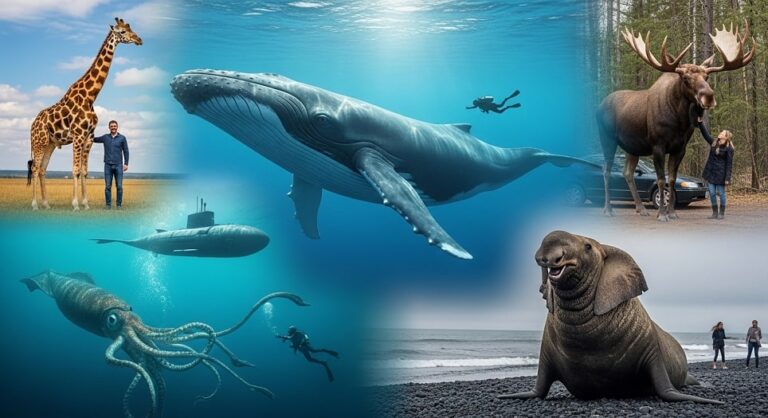
Perceptions of wildlife often stem from distant observations or media portrayals, leading to underestimations of true scales in nature. Many species possess dimensions that challenge common assumptions, revealing the vast diversity in animal forms. This exploration delves into various examples where reality exceeds expectations, highlighting the importance of accurate knowledge for appreciation and conservation efforts.
From terrestrial giants to aquatic behemoths, these animals demonstrate how size influences survival strategies and ecological roles. Understanding their actual proportions provides insight into evolutionary adaptations and environmental interactions. Such awareness fosters greater respect for biodiversity and the need to protect habitats.
Human encounters with wildlife frequently occur in controlled settings, skewing views on natural magnitudes. Direct comparisons with familiar objects or other species clarify these discrepancies, emphasizing the awe-inspiring aspects of the natural world.
Conservation challenges arise when misconceptions affect public support for protection initiatives. Accurate information counters myths and promotes informed advocacy for threatened populations. This knowledge also aids in safe interactions during outdoor activities.
Terrestrial Mammals That Dwarf Expectations
Among land dwellers, certain herbivores exhibit proportions that surprise even seasoned observers. Their bulk serves multiple purposes, from defense to resource access. These features evolved over millennia to suit specific niches.
Height plays a crucial role in foraging efficiency for some species. Towering statures allow reach to vegetation inaccessible to competitors. This advantage contributes to their dominance in ecosystems.
Weight distribution affects mobility and energy requirements. Heavier builds demand substantial caloric intake, influencing dietary habits and movement patterns. Such traits shape daily behaviors and seasonal migrations.
Moose: Towering Forest Residents
These ungulates stand prominently in northern woodlands, with shoulder heights reaching impressive levels. Their antlers add to overall stature, creating an imposing silhouette. Encounters often reveal their true scale against human figures.
Body mass varies seasonally, peaking before winter. This accumulation supports survival during scarce periods. Their long legs facilitate navigation through deep snow and marshy terrain.
Social dynamics influence perceived size during rutting seasons. Males display enlarged features to assert dominance. This behavior underscores their role in herd structures.
Bison: Prairie Powerhouses
North American plains host these robust bovids, whose frames exceed many domestic counterparts. Shoulder humps contribute to their massive appearance. Herds amplify the sense of scale in open landscapes.
Historical accounts note their abundance shaping ecosystems. Modern populations, though reduced, still demonstrate formidable presence. Conservation efforts aim to restore natural balances.
Interactions with vehicles highlight risks from underestimating their bulk. Safety protocols emphasize distance respect. Educational programs address common misjudgments.
Giraffe: Sky-High Browsers
African savannas feature these long-necked mammals, whose total heights challenge imagination. Necks alone match human statures. This anatomy enables unique feeding strategies.
Cardiovascular systems adapt to extreme proportions. Blood pressure mechanisms prevent fainting during head movements. Such physiology fascinates researchers.
Calf growth rates astonish, with rapid increases post-birth. Maternal care ensures survival amid predators. Group living provides additional protection.
Aquatic Giants Beyond Imagination
Ocean depths conceal enormous life forms, where size aids in vast environments. Buoyancy allows for scales impossible on land. These inhabitants often remain unseen, fueling underestimations.
Migration patterns cover thousands of miles, requiring substantial energy reserves. Body mass supports long-distance travel. Feeding methods evolve for efficient nutrient gathering.
Human impacts threaten these colossi through pollution and fishing. Awareness campaigns stress sustainable practices. Research vessels document behaviors to inform policies.
Blue Whale: Oceanic Leviathans
The planet’s largest known animal, these cetaceans dwarf all others. Lengths rival building heights. Hearts alone match small vehicle sizes.
Filter feeding sustains their mass through krill consumption. Daily intake volumes stagger. Vocalizations carry across vast distances.
Calving occurs in warmer waters, with newborns already immense. Maternal bonds last years. Population recovery from whaling remains ongoing.
Giant Squid: Deep-Sea Enigmas
Abyssal zones house these cephalopods, whose tentacles extend remarkably. Eye diameters exceed basketballs. Encounters typically involve beached specimens.
Beak structures enable prey capture. Bioluminescence aids in dark habitats. Lifespan estimates suggest rapid growth.
Myths surround their interactions with whales. Scar evidence indicates battles. Modern footage reveals graceful movements.
Manta Ray: Gentle Ocean Gliders
These rays span widths equaling small rooms. Filter plates process plankton volumes. Group feeding creates spectacular displays.
Cleaning stations attract symbiotic fish. Intelligence shows in problem-solving. Tourism balances observation with disturbance minimization.
Elephant Seal: Coastal Behemoths
Beach masters dominate breeding grounds with sheer bulk. Proboscises amplify roars. Diving depths reach kilometers for foraging.
Fasting during mating seasons tests endurance. Pup growth accelerates rapidly. Colony dynamics reflect hierarchical structures.
Invertebrates and Amphibians of Unexpected Proportions
Smaller phyla occasionally produce outsized representatives. Adaptations allow exploitation of niches. These examples challenge size stereotypes.
Exoskeletons limit but enable unique forms. Molting facilitates growth spurts. Habitats influence maximum potentials.
Conservation overlooks invertebrates often. Public education highlights roles. Amphibian declines signal environmental issues.
Japanese Spider Crab: Armored Arachnid-Likes
Leg spans rival human arm reaches. Carapaces protect vital organs. Scavenging sustains in deep waters.
Molting vulnerability requires hiding. Regeneration repairs lost limbs. Aquarium displays educate on marine diversity.
Lion’s Mane Jellyfish: Tentacled Titans
Bells expand to vehicle widths. Tentacles trail extensively. Stings deter predators effectively.
Seasonal blooms affect fisheries. Bioluminescence enhances nighttime visibility. Lifecycle includes polyp stages.
Chinese Giant Salamander: Ancient Amphibians
Lengths approach human heights. Skin absorption supplements lungs. Vocalizations resemble infant cries.
Stream habitats face pollution threats. Farming complicates wild conservation. Genetic studies reveal cryptic species.
Surprising Sizes in Familiar Fauna
Everyday encounters may mislead on maximum potentials. Regional variations contribute to misconceptions. Captive specimens often undersize wild counterparts.
Diet influences growth trajectories. Urban adaptations alter behaviors. Human-wildlife conflicts arise from proximity.
Rehabilitation centers handle oversized individuals. Public reports aid monitoring. Coexistence strategies promote harmony.
Komodo Dragon: Island Predators
Lengths surpass expectations for lizards. Venom enhances hunting efficiency. Group feeding observed occasionally.
Tourism boosts local economies. Conservation protects unique biodiversity. Monitoring tracks population health.
Flemish Giant Rabbit: Domestic Oversizes
Bred for magnitude, these lagomorphs dwarf standard breeds. Gentle temperaments suit companionship. Housing requires ample space.
Dietary needs exceed smaller relatives. Breeding programs maintain standards. Shows celebrate exceptional specimens.
Raccoon: Urban Adaptors
Weights fluctuate with food access. Dexterity enables problem-solving. Nocturnal habits reduce sightings.
Intelligence facilitates survival in cities. Disease transmission concerns health officials. Relocation debates continue.
- Moose shoulder heights often exceed 7 feet, allowing them to tower over vehicles. This stature aids in browsing high foliage unavailable to deer. Encounters emphasize the need for vehicle caution in habitats.
- Bison can weigh up to 3000 pounds, comparable to small cars. Their mass enables charging speeds of 35 mph. Herd movements create dust clouds visible from afar.
- Giraffes reach 18 feet tall, with necks comprising half that length. This allows access to acacia leaves. Ossicones add to their distinctive profile.
- Blue whales span 100 feet, longer than three school buses. Their tongues alone weigh as much as elephants. Baleen plates filter tons of krill daily.
- Giant squids have eyes the size of dinner plates for deep-sea vision. Tentacles extend 33 feet. Beaks rival parrot strength.
- Manta rays wingspans reach 23 feet, gliding through currents effortlessly. Brain size indicates high intelligence. Cleaning symbioses maintain health.
- Elephant seals males weigh 8800 pounds, dominating beaches. Dives last hours at depths over 5000 feet. Pups gain 7 pounds daily nursing.
- Japanese spider crabs leg spans hit 12 feet, scavenging ocean floors. Molts allow continual growth. Claws manipulate food precisely.
Conclusion
Examining these species reveals consistent patterns where actual dimensions surpass common perceptions, influenced by media and limited exposure. From forest dwellers to ocean inhabitants, size plays pivotal roles in survival and ecology. Accurate understanding enhances appreciation and supports conservation. Addressing misconceptions promotes safer interactions and informed policies. Ultimately, recognizing true scales fosters deeper connections with the natural world.