

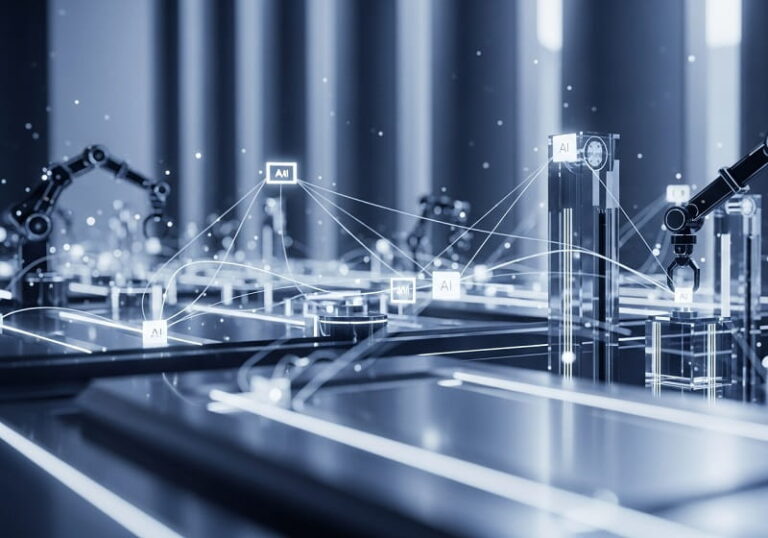
Hyper-automation is emerging as one of the most transformative forces in modern digital enterprises, enabling organizations to automate complex business processes across digital and physical environments. By combining artificial intelligence, the Internet of Things, and robotics into unified workflows, organizations can move beyond traditional automation toward intelligent, self-optimizing systems that continuously improve performance.
Unlike conventional automation approaches that rely on static rules and scripts, hyper-automation leverages data-driven intelligence, real-time sensing, and autonomous execution. This convergence allows enterprises to streamline operations, reduce costs, enhance decision-making, and deliver superior customer experiences. As digital transformation accelerates across industries, hyper-automation is becoming a strategic priority for organizations seeking to remain competitive in an increasingly data-driven economy.
The integration of AI, IoT, and robotics enables enterprises to connect data, intelligence, and action in real time. AI interprets complex data and generates insights, IoT devices collect and transmit real-world data, and robotics executes tasks in both physical and digital environments. Together, these technologies form the foundation of next-generation automation architectures that can adapt to changing conditions and business needs.
As global enterprises invest in digital infrastructure and automation initiatives, hyper-automation is expected to redefine productivity, operational resilience, and innovation across sectors such as manufacturing, healthcare, finance, logistics, and smart infrastructure.
Core Technologies Driving Hyper-Automation
Artificial Intelligence as the Decision-Making Engine
Artificial intelligence serves as the cognitive core of hyper-automation systems, enabling machines to analyze data, learn patterns, and make informed decisions. Machine learning algorithms process structured and unstructured data to predict outcomes, detect anomalies, and optimize processes. Deep learning and neural networks enhance capabilities such as image recognition, speech processing, and natural language understanding.
In enterprise automation, AI orchestrates workflows by determining which tasks should be automated, when they should be executed, and how resources should be allocated. AI-driven analytics also provide predictive insights that help organizations anticipate demand, prevent system failures, and improve strategic planning.
Internet of Things as the Data Collection Layer
The Internet of Things connects physical devices, sensors, and machines to digital networks, enabling continuous data collection and communication. IoT devices capture real-time information such as temperature, pressure, vibration, energy usage, and location, providing a comprehensive view of operational environments.
In industrial settings, IoT sensors monitor machinery health, production processes, and environmental conditions. In smart infrastructure, IoT networks manage energy grids, transportation systems, and public safety operations. This real-time data stream is essential for enabling AI-driven decision-making and automation.
Robotics as the Execution and Action Layer
Robotics represents the physical and digital actuators that execute tasks determined by AI and informed by IoT data. Industrial robots perform tasks such as assembly, welding, packaging, and material handling, while collaborative robots work alongside humans to enhance productivity and safety.
In digital environments, software-based robotic process automation agents execute repetitive tasks such as data entry, invoice processing, and customer onboarding. In hyper-automation architectures, robotics integrates with AI and IoT to perform tasks autonomously based on real-time insights and predictive analytics.
Strategic Business Value of Hyper-Automation
Operational Efficiency and Cost Optimization
Hyper-automation significantly improves operational efficiency by reducing manual intervention, eliminating process bottlenecks, and minimizing errors. AI-driven optimization identifies inefficiencies, while robotics ensures consistent and precise task execution. IoT-based monitoring prevents equipment failures through predictive maintenance, reducing downtime and repair costs.
Organizations adopting hyper-automation often achieve faster cycle times, improved throughput, and lower operational expenses. By automating end-to-end workflows, enterprises can scale operations without proportionally increasing labor costs.
Data-Driven Decision-Making and Predictive Intelligence
AI analytics powered by IoT data provides real-time and predictive insights into operations, customer behavior, and market trends. Decision-makers gain visibility into key performance metrics, enabling proactive interventions and strategic planning.
Predictive models support demand forecasting, supply chain optimization, fraud detection, and personalized customer experiences. This data-driven approach enhances competitiveness and business agility.
Enhanced Customer Experience and Service Delivery
Hyper-automation improves customer interactions through intelligent chatbots, automated service workflows, and personalized recommendations. Robotics in logistics and manufacturing ensures faster delivery times and consistent product quality.
By integrating AI-driven automation into customer-facing processes, organizations can deliver seamless, responsive, and personalized experiences across digital and physical channels.
Industry Applications of Hyper-Automation
Manufacturing and Smart Industrial Operations
In manufacturing, hyper-automation enables smart factories where AI, IoT, and robotics collaborate to optimize production. IoT sensors monitor equipment performance, AI algorithms predict maintenance needs, and robots adjust production processes autonomously.
Smart factories achieve higher productivity, reduced waste, improved quality control, and enhanced worker safety. Collaborative robots enable flexible production lines and human-machine collaboration.
Healthcare and Life Sciences
Healthcare organizations leverage hyper-automation for patient monitoring, diagnostics, administrative workflows, and robotic-assisted surgery. IoT devices track patient vitals, AI algorithms analyze medical images and health data, and robots assist in laboratory automation and surgical procedures.
This integration improves clinical outcomes, reduces administrative workload, and enhances patient care quality while supporting regulatory compliance and data security.
Financial Services and Banking
Financial institutions use hyper-automation for fraud detection, customer onboarding, risk assessment, and regulatory compliance. AI models analyze transaction patterns, robotic process automation handles back-office operations, and IoT devices secure physical assets such as ATMs and branch infrastructure.
Hyper-automation increases processing speed, improves accuracy, and strengthens security and compliance frameworks in financial operations.
Logistics and Supply Chain Management
In logistics, hyper-automation optimizes inventory management, warehouse operations, route planning, and last-mile delivery. IoT sensors track shipments, AI algorithms optimize demand forecasting and route planning, and robots automate picking, sorting, and packaging tasks.
These capabilities enhance delivery speed, reduce costs, and improve supply chain resilience and visibility.
Architecture and Components of Hyper-Automation Systems
Process Orchestration and Integration Platforms
Hyper-automation requires orchestration platforms that integrate AI models, IoT devices, and robotic systems into unified workflows. These platforms manage automation triggers, workflow execution, and system interoperability across heterogeneous environments.
Centralized orchestration enables governance, monitoring, and optimization of automation processes at scale.
Cloud and Edge Computing Infrastructure
Cloud computing provides scalable processing and storage for AI analytics and automation platforms, while edge computing processes data locally for low-latency applications. Edge AI enables real-time decision-making for robotics and IoT devices in environments where connectivity and latency are critical.
Hybrid cloud-edge architectures balance performance, scalability, and cost, supporting distributed automation deployments across global operations.
Security, Compliance, and Governance Frameworks
Hyper-automation introduces new cybersecurity and governance challenges due to increased connectivity and autonomous decision-making. Organizations must implement robust security controls, data privacy policies, and ethical AI frameworks to ensure trust and regulatory compliance.
Governance frameworks define accountability, risk management, and oversight mechanisms for automated systems, ensuring responsible and transparent automation practices.
Challenges and Risks in Hyper-Automation Adoption
Technical Complexity and Integration Challenges
Integrating AI, IoT, and robotics into existing enterprise environments requires specialized expertise, legacy system integration, and interoperability standards. Data silos, inconsistent data quality, and system compatibility issues can hinder automation initiatives.
Successful adoption requires comprehensive architecture design, phased implementation, and continuous integration testing to ensure system stability and scalability.
Workforce Transformation and Skills Requirements
Hyper-automation transforms workforce requirements, increasing demand for data scientists, automation engineers, cybersecurity specialists, and AI developers. At the same time, routine manual roles may be transformed or eliminated.
Organizations must invest in workforce reskilling and upskilling programs to prepare employees for automation-driven roles and foster effective human-machine collaboration.
Ethical, Legal, and Regulatory Considerations
AI-driven automation raises ethical concerns related to transparency, bias, accountability, and data privacy. Regulatory frameworks are evolving to address these challenges, requiring organizations to implement responsible AI practices and data governance policies.
Ensuring fairness, explainability, and compliance is essential for building trust in hyper-automation systems and avoiding legal and reputational risks.
Emerging Trends Shaping the Future of Hyper-Automation
Autonomous Enterprises and Self-Optimizing Operations
The next phase of hyper-automation involves autonomous enterprises where systems continuously optimize processes without human intervention. AI-driven orchestration platforms dynamically adjust workflows based on real-time data and predictive insights.
Self-healing systems detect anomalies, initiate corrective actions, and adapt to changing business conditions, enhancing resilience and operational continuity.
Digital Twins and Simulation-Based Automation
Digital twin technology creates virtual replicas of physical assets, processes, and systems, enabling simulation-driven optimization. AI models test scenarios and optimize automation strategies before deployment, reducing risk and improving performance.
Digital twins will become integral to hyper-automation, supporting predictive maintenance, process optimization, and strategic planning.
Human-Centric Automation and Augmented Intelligence
Future hyper-automation systems emphasize human-machine collaboration, augmenting human capabilities rather than replacing them. AI copilots, collaborative robots, and intelligent assistants support knowledge workers and frontline employees.
This human-centric approach enhances productivity, creativity, and decision-making while maintaining human oversight and ethical accountability.
Strategic Roadmap for Implementing Hyper-Automation
Process Discovery and Automation Assessment
Organizations should begin by identifying processes suitable for automation, evaluating data readiness, and defining business objectives. Process mining tools and AI-driven analytics help uncover inefficiencies and automation opportunities.
Clear performance metrics and governance structures ensure alignment with strategic goals and measurable outcomes.
Technology Selection and Architecture Design
Selecting appropriate AI platforms, IoT infrastructure, and robotics solutions is critical for successful implementation. Organizations must design scalable architectures that support integration, security, and governance requirements.
Vendor partnerships, open standards, and modular architectures accelerate deployment and ensure interoperability across systems.
Phased Deployment and Continuous Optimization
Phased implementation reduces risk and allows organizations to validate value before scaling. Continuous monitoring and AI-driven optimization ensure automation systems evolve with changing business needs.
Feedback loops, performance analytics, and governance oversight support continuous improvement and innovation.
Key Benefits of Combining AI, IoT, and Robotics
- End-to-End Intelligent Automation: Integrating AI, IoT, and robotics enables automation across digital and physical workflows, reducing manual intervention and ensuring consistent execution. This holistic approach connects data collection, decision-making, and task execution into a unified automation pipeline.
- Real-Time Operational Intelligence: IoT sensors provide real-time data, AI interprets insights, and robotics executes actions instantly. This closed-loop automation enables rapid responses to changing conditions, improving operational agility and resilience.
- Predictive Maintenance and Asset Management: AI models analyze IoT data to predict equipment failures before they occur, while robotics can perform maintenance tasks autonomously. This reduces downtime, extends asset lifespan, and lowers maintenance costs.
- Scalable and Adaptive Operations: Hyper-automation systems scale dynamically to meet demand fluctuations. AI-driven orchestration ensures resources are allocated efficiently, and robotics adjusts production or service levels automatically.
- Improved Safety and Compliance: Robotics reduces human exposure to hazardous environments, while AI and IoT monitor compliance with safety and regulatory standards. Automated reporting and auditing enhance governance and risk management.
- Accelerated Innovation and Competitive Advantage: Organizations leveraging hyper-automation can innovate faster, launch new services, and optimize customer experiences, gaining a strategic advantage in the digital economy.
Conclusion
Hyper-automation represents a paradigm shift in enterprise operations, combining artificial intelligence, the Internet of Things, and robotics into integrated, intelligent systems. By unifying data, intelligence, and execution, organizations can achieve unprecedented efficiency, agility, and innovation. While technical, workforce, and governance challenges exist, the strategic benefits of hyper-automation are substantial. As technologies mature and regulatory frameworks evolve, hyper-automation will become a foundational pillar of digital transformation, enabling enterprises to build autonomous, resilient, and customer-centric operations in the evolving digital economy.


