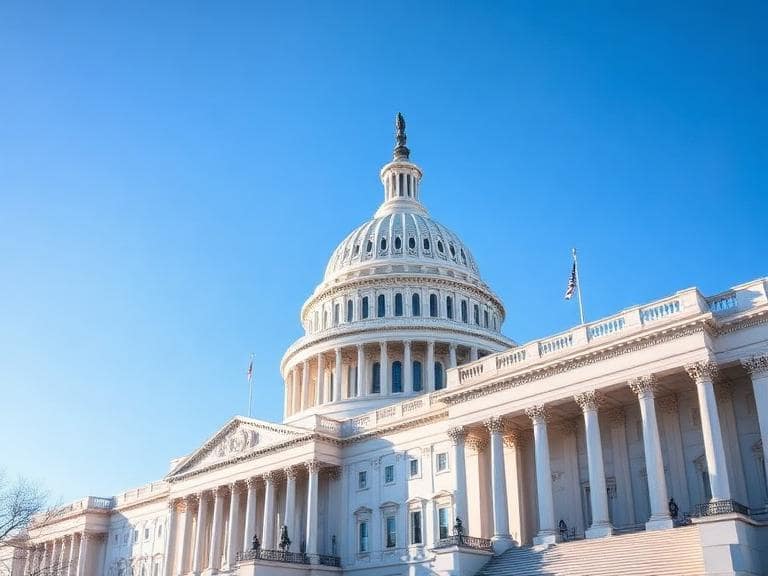
On January 20, 2025, Donald J. Trump was sworn in as the 47th President of the United States, alongside JD Vance as the 50th Vice President, in a ceremony that balanced deep-seated American tradition with unprecedented logistical adjustments. In a rare departure from the custom of outdoor ceremonies on the Capitol’s West Front, the official swearing-in was moved inside the historic U.S. Capitol Rotunda. This decision, driven by life-threatening freezing temperatures and high winds in the nation’s capital, marked only the second time in modern history that weather necessitated such a shift, echoing the 1985 inauguration of Ronald Reagan. Despite the change in venue, the ceremony proceeded with the full solemnity required by the Constitution, signaling the official commencement of the second Trump administration and a new chapter in American governance.
The day began with a series of traditional events designed to facilitate a peaceful transfer of power. Following a morning church service at St. John’s Episcopal Church—a tradition for presidents-elect dating back to Franklin D. Roosevelt—Donald and Melania Trump were received at the White House by outgoing President Joe Biden and First Lady Jill Biden. This meeting, which included a tea reception, served as a symbolic gesture of continuity. Shortly thereafter, the leaders traveled together in the presidential motorcade to the Capitol. While the public gathered in massive numbers on the National Mall, the Rotunda became the intimate stage for the transition, housing the three branches of government, former presidents, and foreign dignitaries who witnessed the administration of the oaths of office at precisely noon.
The significance of this inauguration extended beyond the venue. It marked the return of a former president to office for a non-consecutive second term, a feat achieved only once before in U.S. history by Grover Cleveland in 1892. The inclusion of JD Vance, a former Marine and U.S. Senator from Ohio, brought a new generation of leadership to the executive branch. Security for the event was at its highest possible level, designated as a SEAR 1 National Security Event. Law enforcement agencies from across the country, supported by thousands of National Guard members, established a “ring of steel” around the Capitol complex. This heightened posture reflected both the historical weight of the day and the complex security environment surrounding high-profile political transitions in the 21st century.
The formal swearing-in ceremony followed a strict protocol administered by the judicial branch. Vice President JD Vance was the first to take the oath, administered by Associate Justice Brett Kavanaugh. Raising his right hand, Vance swore to “support and defend the Constitution of the United States against all enemies, foreign and domestic.” His wife, Usha Vance, held the Bible as he committed to faithfully discharging the duties of the Vice Presidency. This moment solidified his transition from the legislative branch to the executive, a move necessitated by his resignation from the Senate earlier in the month. The ceremony then turned to the presidential oath, the 35 words specified in Article II, Section 1 of the Constitution, which remained the central focus of the assembly.
Chief Justice John Roberts administered the presidential oath of office to Donald Trump as the clock struck twelve. With his hand on a family Bible, Trump repeated the historic pledge to “faithfully execute the Office of President of the United States” and to “preserve, protect and defend the Constitution.” The Rotunda, with its towering dome and monumental paintings of American history, provided a resonant backdrop for the address that followed. In his inaugural speech, President Trump outlined a vision focused on national renewal, economic revitalization, and a recalibration of American foreign policy. He emphasized a commitment to the “forgotten men and women” of the country, echoing themes from his previous campaign while calling for national unity in the face of global challenges.
Musical performances added a layer of cultural significance to the indoor proceedings. The University of Nebraska–Lincoln Combined Choirs and “The President’s Own” United States Marine Band provided the prelude, filling the marble halls with patriotic hymns. Carrie Underwood, accompanied by the Armed Forces Chorus and the U.S. Naval Academy Glee Club, performed a stirring rendition of “America the Beautiful.” The program also included an invocation by Cardinal Timothy Dolan and the Reverend Franklin Graham, as well as a multi-faith benediction featuring leaders from various religious traditions. These elements sought to ground the political transition in the broader moral and cultural fabric of the nation, even as the small interior space limited the physical scale of the presentation.
Following the swearing-in, the newly inaugurated president moved to the President’s Room, located just off the Senate Chamber, for the formal signing ceremony. This administrative tradition involves the president signing nominations, executive orders, and proclamations that establish the initial framework of the new administration. Members of the Joint Congressional Committee on Inaugural Ceremonies (JCCIC) watched as President Trump authorized the documents that would be transmitted to the Senate for confirmation. This transition of authority is a critical step in the activation of the executive branch, allowing the new president to begin the work of governing almost immediately after taking the oath.
The afternoon featured the traditional Inaugural Luncheon in Statuary Hall, hosted by the JCCIC. This bipartisan event brought together the new president and vice president with leaders of Congress and members of the Supreme Court. The menu, often inspired by the home states of the incoming leaders, serves as a moment of levity and cooperation before the start of the legislative session. Gifts were presented to the President and Vice President, including flags that flew over the Capitol during the ceremony and commemorative bowls. This luncheon is one of the few times during the year when all three branches of government sit together in an informal setting, reinforcing the collaborative nature of the American constitutional system.
One of the most significant adjustments due to the weather was the relocation of the inaugural parade. Traditionally, the parade travels down Pennsylvania Avenue from the Capitol to the White House, viewed by thousands from roadside bleachers. In 2025, the decision was made to move the main parade events to the Capital One Arena in downtown Washington, D.C. This move ensured the safety of participants, including high school marching bands and military units, from the extreme wind chill. The indoor format allowed for a controlled environment where the President and Vice President could review the units and address the crowd without the risks posed by the sub-zero temperatures outside. The “Pass in Review” by military troops also occurred in a modified format at the Capitol Visitor Center.
The administrative transition also involved a digital transfer of power that occurred simultaneously with the physical ceremony. Ownership of official executive branch social media accounts, including @POTUS, @VP, and @WhiteHouse, was transferred to the new administration. The White House website was refreshed to reflect the new President’s priorities, while the previous administration’s digital records were archived by the National Archives and Records Administration (NARA). This “digital inauguration” has become a modern standard, ensuring that the communications apparatus of the United States government remains functional and representative of the current leadership from the first hour of the new term.
Public access to the inauguration remained a priority despite the security and weather challenges. While the indoor ceremony was limited to ticketed guests, the National Mall was filled with spectators who watched the proceedings on massive Jumbotron screens. To manage the large crowds, the National Park Service and the Secret Service coordinated a complex logistics plan that included airport-style security screenings at all entry points. Spectators were advised to prepare for long wait times and to bring essential supplies, though many items like umbrellas and large bags were prohibited for safety reasons. The resilience of the public, standing in freezing conditions to witness the ceremony, underscored the enduring importance of the inauguration as a civic ritual.
The security apparatus surrounding the 2025 inauguration was among the most robust in history. Following a SEAR 1 designation, the Secret Service coordinated with over 40 law enforcement agencies. Key security features included:
- The “Ring of Steel”: A perimeter of nearly 30 miles of anti-scale fencing was erected around the Capitol and the National Mall to prevent unauthorized access.
- Personnel Deployment: Over 25,000 military and law enforcement personnel were stationed throughout the city, including 7,800 National Guard members and 4,000 officers sworn in as special marshals.
- Access Control: Vehicle access was restricted in a massive bus perimeter, and the “protective bubble” included strict checkpoints for both pedestrians and vehicles.
- Prohibited Items: A comprehensive list of banned items, ranging from aerosols to bicycles and thermal containers, was strictly enforced to mitigate potential threats.
- Emergency Coordination: Multi-agency command centers monitored intelligence in real-time to respond to potential demonstrations or safety incidents outside the secure zones.
The historical context of the 60th Presidential Inauguration provides a window into the evolution of American democracy. Presidential inaugurations were not always held on January 20. Originally, George Washington was sworn in on April 30, 1789, and subsequent ceremonies were held on March 4. It was not until the ratification of the 20th Amendment in 1933 that the date was moved to January to shorten the “lame duck” period between an election and the start of a new term. This shift, while politically efficient, significantly increased the likelihood of ceremonies occurring during the harshest part of the winter, leading to the weather-related challenges seen in 1985 and 2025. The 2025 event also coincided with Martin Luther King Jr. Day, the third time this overlap has occurred.
The 2025 inauguration also continued the tradition of involving the families of the incoming leaders in the public eye. First Lady Melania Trump and Second Lady Usha Vance took on prominent roles throughout the weekend’s festivities. Their presence at the church service, the White House tea, and the inaugural balls provided a personal dimension to the political transition. Historically, the First Lady’s participation in the inauguration has evolved from a quiet background presence to a significant ceremonial role, often including the holding of the Bible during the oath of office and hosting the various social events that conclude the inaugural week.
Beyond the primary ceremony, the inaugural weekend was marked by several high-profile events. On the evening prior to the inauguration, a “MAGA Victory Rally” was held at the Capital One Arena. This event featured speeches by the President-elect and key supporters, as well as musical performances by artists such as Kid Rock and the Village People. Earlier that day, the incoming leaders participated in a wreath-laying ceremony at the Tomb of the Unknown Soldier at Arlington National Cemetery. This somber tradition honors the sacrifices of the American military and serves as one of the final acts of the President-elect before assuming the role of Commander-in-Chief.
The conclusion of the inaugural day is traditionally marked by a series of balls held throughout Washington, D.C. These events, ranging from formal galas to unofficial state society parties, celebrate the start of the new administration and provide a venue for supporters and officials to gather. In 2025, several official balls were held at venues such as the National Building Museum and various convention centers. The President and First Lady typically make appearances at several of these balls, often performing a ceremonial first dance. Despite the long day of ceremonies and meetings, these celebrations serve as a final, festive capstone to the transition of power.
The 2025 inauguration also served as a moment for international diplomacy. Dozens of foreign heads of state and ambassadors were in attendance, representing the global community’s interest in the direction of American policy. The presence of these dignitaries underlines the role of the President as the primary architect of U.S. foreign relations. For many countries, the inauguration is an opportunity to re-establish ties and gauge the priorities of the new administration. The inaugural address is closely watched worldwide for signals regarding trade, alliances, and military commitments, making the Rotunda ceremony a global media event.
The 60th Presidential Inaugural Committee (PIC) was responsible for the planning and execution of all these events. Funded primarily through private donations, the committee works in tandem with the JCCIC to manage everything from the parade line-up to the ticketing for the swearing-in. The logistics of moving thousands of people through a high-security environment in extreme weather required months of preparation. The committee also managed the distribution of tickets through congressional offices, a process that saw overwhelming demand as supporters from across the country sought to be part of the historic occasion.
Economic impacts of the inauguration on the District of Columbia were substantial. Hotels across the metropolitan area reported being at full capacity, with room rates reaching record highs. The influx of hundreds of thousands of visitors provided a significant boost to local restaurants, transportation services, and retailers. However, the heavy security and road closures also presented challenges for local businesses and residents. The “Inauguration Day” federal holiday for local workers helped mitigate some of the traffic congestion, but the “ring of steel” effectively transformed the core of the city into a restricted zone for nearly 72 hours.
As the sun set on January 20, 2025, the transition was complete. The Trump-Vance administration officially took the reins of the executive branch, with the President moving into the White House to begin his first full day of work. The move from the Capitol to the White House symbolizes the shift from the ceremonial to the operational. For the next four years, the decisions made within the Oval Office will be the focus of national and international attention. The 2025 inauguration, with its unique blend of indoor grandeur and high-tech security, will be remembered as a moment of resilience and adherence to constitutional duty in the face of challenging environmental conditions.
Pro Tips for Attending a Presidential Inauguration
Planning for a future inauguration requires significant foresight. If you intend to be part of the crowd, consider these expert recommendations to ensure a safe and memorable experience:
- Request Tickets Early: Tickets for the swearing-in ceremony are free but extremely limited. Contact your Senator or Representative’s office several months in advance to be placed on a request list, as these are often distributed via a lottery system.
- Dress for Survival, Not Style: D.C. weather in January is unpredictable and often brutal. Wear multiple layers of moisture-wicking fabric, use thermal socks, and bring hand warmers. Avoid cotton, which loses insulation when damp from snow or sleet.
- Master the Metro: Driving in D.C. during the inauguration is virtually impossible due to road closures and security perimeters. Purchase a SmarTrip card in advance and use the Metro, but expect significant delays and “crowd control” measures at major stations.
- Minimalist Packing: Security screenings are similar to those at airports but often more stringent. Carry only the essentials in a small, clear plastic bag to speed up your entry through the checkpoints and avoid having items confiscated.
- Hydration and Nutrition: While some food vendors may be present, they will have long lines. Carry high-energy, non-perishable snacks. Note that thermal containers are often banned, so rely on disposable water bottles that meet security guidelines.
- Arrive Before Dawn: Security gates typically open as early as 6:00 a.m. To secure a good viewing spot on the National Mall or to ensure you reach your ticketed seat by the 11:30 a.m. start, plan to be in line several hours before the gates open.
Frequently Asked Questions About the 2025 Inauguration
Why was the ceremony held inside the Capitol Rotunda?
The ceremony was moved indoors due to extreme weather conditions, specifically freezing temperatures and dangerously high winds. The Joint Congressional Committee on Inaugural Ceremonies determined that an outdoor event posed a health risk to the participants and spectators. This was the first time since 1985 that the swearing-in was moved inside.
Who administers the oath of office to the President?
By tradition, the Chief Justice of the United States administers the oath of office to the President. In 2025, Chief Justice John Roberts performed this duty. The Vice President’s oath is usually administered by an Associate Justice of the Supreme Court or another high-ranking official; in this case, it was Associate Justice Brett Kavanaugh.
What happens if the inauguration date falls on a Sunday?
When January 20 falls on a Sunday, the President is typically sworn in during a private ceremony at the White House to fulfill the constitutional requirement. The public ceremony and festivities are then moved to the following day, Monday, January 21. This was not necessary in 2025, as January 20 fell on a Monday.
Is the presidential inauguration a federal holiday?
Inauguration Day is a legal holiday only for federal employees who work in the “Inauguration Day Area,” which includes the District of Columbia, Montgomery and Prince George’s Counties in Maryland, and Arlington and Fairfax Counties in Virginia. It is not a nationwide federal holiday, although schools and local businesses in the D.C. area often close due to the logistics of the event.
How long is a typical inaugural address?
Inaugural addresses vary significantly in length. George Washington gave the shortest address at just 135 words during his second inauguration. William Henry Harrison gave the longest at 8,445 words. Modern addresses typically range between 1,500 and 2,500 words and last approximately 15 to 25 minutes.
Conclusion
The second inauguration of Donald Trump stands as a testament to the resilience of American civic traditions in the face of logistical and environmental challenges. By moving the ceremony inside the U.S. Capitol Rotunda, officials preserved the essential constitutional requirements while ensuring the safety of the participants. The day was marked by the peaceful transfer of power, the swearing-in of JD Vance as Vice President, and a vision for the future outlined in the President’s inaugural address. From the high-security perimeters to the digital transfer of government accounts, the 60th Presidential Inauguration blended 18th-century oaths with 21st-century technology. As the new administration begins its term, the events of January 20, 2025, remain a significant milestone in the ongoing history of the United States, reflecting the enduring strength of its democratic institutions and the continuity of its leadership.the inauguration day.

Full-stack developer at Scylla Technologies (USA), working remotely from Bangladesh. Adobe Certified Magento Developer.