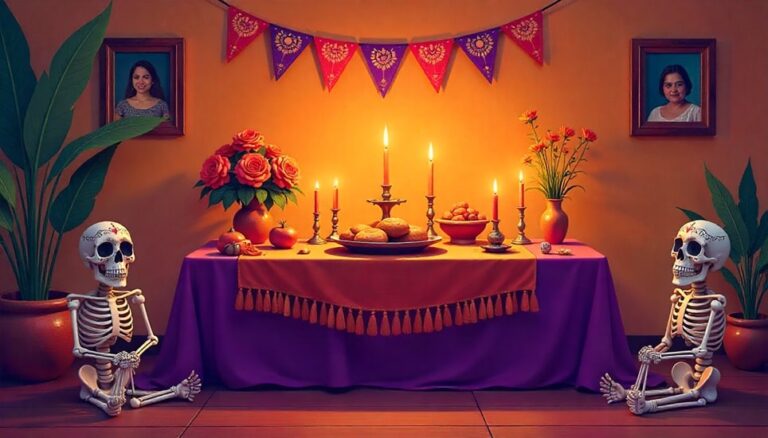
As the crisp autumn air settles over Mexico and diaspora communities across the globe, the vibrant spirit of Día de los Muertos comes alive once more in 2025. This cherished holiday, spanning October 31 to November 2, transforms grief into a jubilant reunion with ancestors, blending ancient rituals with contemporary expressions of love and remembrance. In Mexico City, grand parades light up the streets with colossal alebrijes and calaveras, while families in rural villages tend to candlelit graves under starry skies. Far beyond its origins, the celebration has woven itself into the cultural fabric of the United States, Europe, and beyond, drawing millions who honor the dead not with sorrow, but with music, marigolds, and shared meals.
This year’s observances carry a particular resonance, coinciding with heightened global awareness of cultural preservation amid rapid modernization. From the bustling Zócalo in Mexico City to neighborhood block parties in Los Angeles, participants erect ofrendas laden with photos, pan de muerto, and copal incense, inviting souls to return for a fleeting visit. UNESCO’s longstanding recognition underscores its universal value, yet 2025 highlights innovative fusions, such as digital altars and eco-friendly processions, ensuring the tradition evolves without losing its soul. As vigils flicker and laughter echoes through cemeteries, Día de los Muertos reaffirms life’s cyclical beauty, a testament to resilience in the face of loss.
Rooted in millennia-old beliefs, the holiday invites reflection on mortality’s role in vitality. Families share stories of departed loved ones over tamales and mezcal, bridging generations and geographies. In 2025, with tourism rebounding post-pandemic and virtual events expanding reach, more people than ever participate, turning personal tributes into communal spectacles. This report delves into the holiday’s rich history, timeless traditions, and the kaleidoscope of 2025 celebrations, illuminating why Día de los Muertos endures as a beacon of cultural continuity.
The Historical Tapestry of Día de los Muertos
The story of Día de los Muertos begins long before colonial encounters, tracing back to the indigenous peoples of Mesoamerica who viewed death not as an end, but as a portal to another realm. Archaeological evidence from sites like Teotihuacán reveals rituals dating to 2000 BCE, where offerings of food and flowers guided spirits home during harvest seasons. These early practices emphasized harmony with the cosmos, aligning human cycles with nature’s rhythms of decay and renewal.
Pre-Columbian Roots
In the Aztec empire, the festival of Miccailhuitontli—dedicated to the goddess Mictecacihuatl, ruler of the underworld—formed the holiday’s foundational core. Celebrated in the ninth month of the Aztec calendar, roughly corresponding to late summer, it involved elaborate feasts, blood offerings, and dances to appease deities and welcome ancestral visits. Priests adorned themselves in skeletal garb, symbolizing the thin veil between worlds, while communities built temporary altars in homes and temples. This ritual, intertwined with agricultural abundance, underscored the belief that the dead nourished the living, much like rain fed the earth.
Similar observances among the Maya and Purépecha peoples featured clay effigies and ball games honoring fallen warriors, evolving into communal vigils that strengthened social bonds. These traditions persisted orally, passed through generations via codices and songs, resisting erasure even as empires rose and fell. By the time Spanish conquistadors arrived in the 16th century, these practices had solidified into a profound cultural institution, resilient against imposed doctrines.
The fusion with Catholicism arrived with the All Saints’ and All Souls’ Days, imposed by Franciscan missionaries to supplant pagan rites. Yet, rather than obliteration, this led to syncretism: indigenous altars merged with Christian icons, creating a hybrid faith where saints coexisted with ancient gods. In regions like Oaxaca, Mixtec codices illustrate this blending, showing skeletal figures alongside crosses, a visual metaphor for cultural survival.
Colonial Transformations and National Revival
During the colonial era, Spanish authorities suppressed overt indigenous elements, rebranding the holiday as a somber Catholic observance confined to graveyards. Families were encouraged to pray rather than feast, but underground persistence kept marigold paths and skull motifs alive in secret gatherings. By the 19th century, as Mexico asserted independence, intellectuals like José Guadalupe Posada revived these symbols through satirical calaveritas—humorous poems and engravings mocking the elite with bony caricatures—infusing the holiday with political bite.
The 20th century marked a renaissance, propelled by muralists Diego Rivera and Frida Kahlo, who immortalized Día de los Muertos in frescoes depicting vibrant ofrendas amid revolutionary fervor. Post-1910 Mexican Revolution, the government promoted it as a national emblem, distancing from Spanish austerity and embracing indigenous pride. This era saw the rise of public comparsas—costumed processions—transforming private rituals into festive assertions of identity.
In 2008, UNESCO inscribed the indigenous festivity dedicated to the dead on its Representative List of the Intangible Cultural Heritage of Humanity, affirming its role in fostering community cohesion and intergenerational dialogue. This global nod, building on a 2003 proclamation, safeguarded practices from commercialization while encouraging documentation of regional variants, from Pátzcuaro’s candlelit lake vigils to Tzintzuntzan’s Purépecha towers of silence.
Today, historians note how these layers—pre-Hispanic reverence, colonial adaptation, and modern reclamation—create a dynamic narrative. Artifacts like Posada’s La Calavera Catrina, now an icon of elegance in death, embody this evolution, reminding celebrants of the holiday’s journey from shadowed rituals to luminous heritage.
Enduring Traditions: Symbols and Rituals
At its heart, Día de los Muertos thrives on rituals that guide the dead home, each element laden with symbolism drawn from nature and cosmology. Homes transform into sacred spaces, where the scent of burning copal mingles with the sweetness of sugar skulls, creating an olfactory bridge to the beyond. These customs, varying by region yet unified in purpose, emphasize hospitality toward spirits, ensuring no soul wanders lost.
Preparation begins weeks in advance, with markets overflowing in cempasúchil—marigold flowers whose golden petals trace luminous paths for returning ancestors. Artisans craft papel picado banners, their intricate cutouts dancing in breezes to signal welcome. Families consult elders for recipes passed down, blending personal anecdotes with communal lore to honor specific loved ones.
Building the Ofrenda: A Portal of Remembrance
The ofrenda, or altar, stands as the ceremony’s centerpiece, a multi-tiered tableau representing the journey from earth to heaven. Typically arranged on a cloth-draped table, it features levels symbolizing the underworld, earthly life, and celestial realms. Photographs of the deceased take pride of place, surrounded by personal mementos like a favorite hat or lipstick, evoking intimate connections.
Water quenches thirst accumulated in the afterlife, while salt preserves the body and purifies the soul. Candles illuminate the way, their flames mirroring stars that guide nocturnal travelers. Incense rises as prayers, its smoke carrying messages upward, a practice echoing ancient Mayan censers unearthed in archaeological digs.
Food offerings tempt palates long dormant: tamales wrapped in corn husks signify abundance, mole sauces their complex flavors a nod to life’s intricacies. Pan de muerto, the bone-shaped sweet bread, dusted with sugar like fresh snow, invites sharing among the living and dead alike.
Key Symbols and Their Deeper Meanings
Central to these rituals are symbols that weave a narrative of continuity, each chosen for its evocative power in indigenous lore. These icons transcend decoration, serving as mnemonic devices that recount stories of loss and legacy.
- Marigolds (Cempasúchil): Native to Mexico, these vivid orange blooms guide spirits with their scent and color, believed to attract souls like butterflies to nectar. Farmers harvest them en masse in Michoacán, where fields turn into seas of gold, and families string garlands to line paths from graves to doorsteps. Their pollen-dusted petals ensure no ancestor misses the feast, a tradition rooted in Aztec associations with the sun god Tonatiuh.
- Sugar Skulls (Calaveras de Azúcar): Molded from cane sugar and adorned with royal icing names, these edible effigies personalize tributes, placed on ofrendas or worn as masks. Artisans in Aguascalientes blend tradition with whimsy, inscribing messages of farewell, transforming mortality into a sweet, consumable art form. Eaten at day’s end, they symbolize the dissolution of the physical self, echoing philosophical views on impermanence.
- Copal Incense: Derived from the resin of the copal tree, this sacred smoke purifies spaces and summons deities, its earthy aroma a staple since Olmec times. Burned in clay braziers during vigils, it creates a hazy veil that blurs boundaries between realms, allowing easier passage for visitors from Mictlán. In 2025, sustainable sourcing from community cooperatives preserves both ritual and ecology.
- Alebrijes: Fantastical wooden carvings of mythical creatures, popularized by Pedro Linares in the 1930s, guard ofrendas with their vibrant, hybrid forms—elephant-eagles or dragon-armadillos. Crafted in Oaxaca workshops, they blend Zapotec folklore with modern imagination, warding off malevolent spirits while delighting children. Their explosion in popularity reflects the holiday’s adaptability, now featured in parades worldwide.
- Pan de Muerto: This anise-flavored bread, shaped like skulls or crossbones, crowns altars as an offering of sustenance, its dough kneaded with intentions of gratitude. Baked in communal ovens across Puebla, it fosters gatherings where recipes evolve, incorporating nuts or chocolate for regional twists. Breaking bread together reinforces communal ties, a gesture as old as Mesoamerican maize rituals.
- La Catrina: Inspired by Posada’s elegant skeleton, this top-hatted figure embodies vanity’s folly, donned in costumes during comparsas to satirize society. Women paint faces with floral motifs, merging beauty and mortality in a defiant celebration of femininity. Her image, ubiquitous in 2025 murals, challenges death’s terror with poised irreverence.
- Xoloitzcuintli Dogs: Ancient hairless guardians, depicted in figurines, ferry souls across the underworld river, a role from Aztec mythology. Revered in Colima ceramics, they symbolize loyalty, placed at altars for protective companionship. Modern breeders highlight their therapeutic presence in therapy programs during the holiday.
- Monarch Butterflies: Migrating to Michoacán’s oyamel forests precisely for November, these orange-winged migrants are seen as reincarnated ancestors, their arrival a miraculous alignment. Sanctuaries host silent vigils amid fluttering clouds, where visitors whisper secrets to the insects. Conservation efforts in 2025 amplify their symbolic flight as emblems of fragile, returning life.
These symbols, layered with history, invite participants to engage sensorially, turning abstract grief into tangible communion.
Celebrations Across Mexico in 2025
In the heartland of its origin, Mexico’s 2025 Día de los Muertos unfolds as a symphony of regional splendor, from urban extravaganzas to serene rural rites. The capital pulses with energy, while highland villages glow with quiet devotion, each locale infusing the holiday with unique flavors and fervor. This year, enhanced safety measures and digital mapping apps guide tourists, blending reverence with accessibility.
Mexico City’s Grand Spectacles
The Desfile de Día de Muertos dominates Paseo de la Reforma on November 2, 2025, a spectacle born from the 2016 James Bond-inspired event that has since ballooned into a national phenomenon. Over 2,000 performers in LED-lit costumes parade alongside 20-foot alebrijes, their floats depicting underworld journeys with pyrotechnic flair. Crowds numbering in the hundreds of thousands cheer as comparsas from indigenous groups perform danzas de los concheros, drums echoing ancient war cries.
The Zócalo’s monumental ofrenda, spanning 5,000 square meters, features a sea of marigolds framing a towering Catrina, illuminated by projections of folk tales. Artisans from across the republic contribute, creating interactive zones where visitors inscribe calaveritas on communal walls. Night falls with a son et lumière show, lasers tracing skeletal motifs against the cathedral’s facade, merging technology with tradition.
In Xochimilco’s chinampas, trajineras ferry revelers to floating altars, where mariachi bands serenade submerged souls. This canal-side vigil, enhanced by 2025’s eco-boats, draws families for picnics amid lotuses, their lanterns bobbing like fireflies on water.
Highland Heartlands and Coastal Rites
Michoacán’s Pátzcuaro Lake hosts one of the world’s most poignant observances, where Purépecha fishers in canoes deliver candlelit offerings to islands on November 1-2, 2025. Nets of marigolds drape shores as communities in embroidered rebozos gather for all-night velorios, sharing atole and yarns of the departed. UNESCO-protected, this site limits visitors to preserve sanctity, with live streams allowing global witnessing.
Oaxaca’s Mixtec villages erupt in muertitos processions, children in skeletal face paint leading mule-drawn coffins to cemeteries for grave cleanings. On November 1, focused on innocents, sand tapestries depict biblical scenes fused with local myths, trampled at dawn to symbolize life’s transience. Art markets buzz with barro negro pottery, black-clay skulls etched with family names.
Along the Gulf, Veracruz’s Papantla launches voladores—flying men—who spiral from 100-foot poles, their ribbons painting the sky in ritual descent. This Totonac ceremony, integrated into Día de los Muertos, honors fertility and death’s dance, captivating 2025 audiences with synchronized dives amid fireworks.
Coastal Yucatán blends Mayan roots with Catholic pomp, as in Mérida’s pibipollos feasts—chicken pies buried in pits for souls to unearth. Processions wind through cenotes, sacred sinkholes, where divers offer copal to water spirits, a nod to Xibalbá’s watery underworld.
Día de los Muertos in the United States: 2025 Highlights
Across the border, Mexican-American communities have reimagined Día de los Muertos as a bridge between homelands, infusing U.S. celebrations with bilingual vigor and hybrid innovations. In 2025, events span coasts to heartland, from mega-festivals to intimate gallery shows, reflecting diaspora resilience. Enhanced by grants for cultural equity, these gatherings foster inclusivity, welcoming all to the table of memory.
Southwestern Strongholds
Los Angeles’ Olvera Street hosts a nine-day extravaganza from October 25 to November 2, 2025, with artisan markets under string lights and nightly altar unveilings. La Placita’s procession features danzantes in feathered headdresses, circling the historic church in rhythmic homage. Food trucks serve fusion fare like kimchi tamales, nodding to the city’s multicultural mosaic.
San Antonio’s largest U.S. event transforms Hemisfair Park into a marigold labyrinth, where alebrije sculptures tower over stages hosting conjunto bands. On October 31, a Catrina costume contest crowns queens of the night, while cemetery tours recount Tex-Mex histories of loss. This year’s theme, “Raíces Eternas,” spotlights oral histories from elder vaqueros.
El Paso’s Desfile & Festival on November 1 draws 100,000 to downtown, with floats from Juárez sister cities crossing bridges in binational unity. Mariachi fills the air as families picnic on chamizo rugs, sharing border-crossing tales of endurance.
Coastal and Heartland Vibrancy
In San Diego, the 15th annual celebration at Balboa Park on November 1-2, 2025, blends beachside altars with Aztec dance circles, free entry drawing diverse crowds. Workshops on copal carving precede a luminaria-lit parade, where participants carry photos of migrants lost at sea. Seafood ceviches join traditional mole, symbolizing coastal adaptations.
Albuquerque’s Old Town marks 10 days from October 25, featuring the Marigold Mile—a petal-strewn path to the Catrina procession—and globitos balloon releases for children souls. Native American influences shine in Pueblo-inspired pottery ofrendas, fostering intertribal dialogues on shared ancestor reverence.
Denton’s three-day festival, October 24-26, merges Halloween whimsy with Día de los Muertos depth, hosting harvest markets and horror-lit comparsas. University students contribute digital projections on barns, animating calaveras in AR experiences for younger generations.
Further east, Connecticut’s events on November 1-2 include Hartford’s altar exhibitions in museums, where immigrant artists layer Venezuelan arepas atop Mexican breads. Bridgeport’s harbor vigil floats paper lanterns inscribed with names, drifting out to symbolize journeys across oceans.
Modern Evolutions: Adapting Ancient Rites
As Día de los Muertos globalizes, it absorbs contemporary currents, from environmental advocacy to technological integration, ensuring relevance in a fast-changing world. In 2025, these shifts manifest in sustainable practices and virtual realms, where traditions breathe anew without diluting essence. Chicano activists, echoing 1970s movements, lead this charge, reclaiming narratives from Hollywood gloss to grassroots authenticity.
Environmental consciousness reshapes rituals: biodegradable sugar alternatives replace plastic-wrapped skulls, and solar-powered lanterns supplant wax candles in urban parks. Michoacán’s monarch sanctuaries partner with conservationists for “Butterfly Altars,” educating on habitat loss while honoring migrations. This eco-turn, amplified by 2025 climate summits, positions the holiday as a call for planetary stewardship.
Digital innovations expand participation; apps like “Ofrenda Virtual” let remote families upload photos to shared online altars, synced with GPS for real-time grave visits. Social media floods with #Muertos2025 challenges, where users paint faces or bake pan de muerto, democratizing creation. Yet, elders caution balance, advocating “unplugged hours” during vigils to savor unmediated presence.
In the U.S., fusion thrives: LGBTQ+ collectives in San Francisco craft queer Catrinas, subverting gender norms with rainbow rebozos, fostering inclusive spaces for marginalized memories. Hip-hop artists remix son jarocho with beats, performing in warehouses where ofrendas honor victims of violence. These evolutions, born from diaspora ingenuity, enrich the canon, proving the dead’s stories evolve with the living.
Commercialization poses challenges, with mass-produced kits diluting artisanal depth, but community-led boycotts and fair-trade labels counter this. Museums like the Smithsonian host exhibits on Chicano innovations, from graffiti murals to VR underworld tours, archiving change for posterity. Globally, echoes resound in Tokyo’s catrina cafes and London’s marigold markets, a testament to cultural diffusion without domination.
Amid these transformations, core tenets—remembrance, joy, community—remain anchors. 2025’s evolutions, from AI-generated calaveritas to refugee-led processions, illustrate adaptability as survival’s art, ensuring Día de los Muertos whispers across eras.
The holiday’s psychological balm endures, studies showing reduced grief through ritual participation, as shared narratives heal collective wounds. In pandemic-scarred years, it gained layers of tribute to COVID losses, with empty chairs at tables symbolizing recent voids. This resilience, woven into modern fabric, invites all to partake, turning solitary mourning into symphony.
Conclusion
Día de los Muertos in 2025 stands as a luminous thread connecting ancient Aztec hearths to tomorrow’s horizons, its history a chronicle of fusion and fortitude, traditions a palette of symbols painting life’s indelible hues. From Mexico’s candle-flecked lakes to U.S. streets alive with hybrid harmonies, celebrations reaffirm death’s role in vitality’s dance, inviting souls and survivors alike to feast on memory’s bounty. As marigolds wilt and altars dismantle, the holiday leaves an indelible imprint: in embracing endings, we cultivate beginnings, a eternal cycle where love outlives bone.
This year’s observances, enriched by innovation yet grounded in reverence, underscore cultural heritage’s power to unite amid division. Whether tracing ancestral paths in Pátzcuaro or lighting virtual flames from afar, participants honor the timeless truth that the dead dwell in stories told, songs sung, and breads broken. In a world of flux, Día de los Muertos endures as sanctuary and spectacle, whispering that to remember is to live fully, forever.