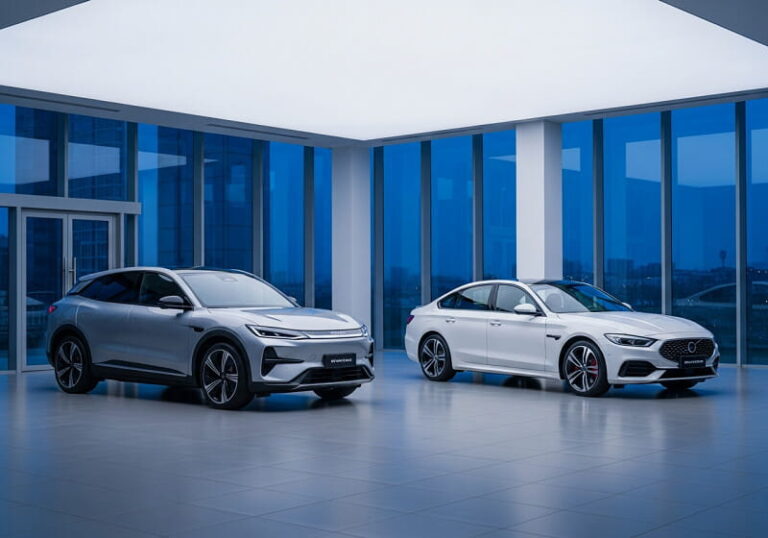
The American automotive landscape in 2026 represents a pivotal intersection of heritage engineering and rapid technological evolution. As the industry moves further into the second half of the decade, the sheer variety of vehicle manufacturers available to U.S. consumers has reached an unprecedented level. This diversity is driven by the coexistence of legacy domestic giants, established international powerhouses, and an influx of specialized electric vehicle startups that have successfully transitioned from prototypes to production-ready offerings. Navigating this crowded marketplace requires a deep understanding of which brands remain committed to internal combustion, which have pivoted entirely to electrification, and which are finding a middle ground through advanced hybridization.
For the modern consumer, brand identity in 2026 is less about national origin and more about technological ecosystems. Buyers are no longer just choosing a chassis and an engine; they are selecting a software platform, a charging infrastructure network, and a suite of autonomous driving capabilities. This guide provides a factual, in-depth exploration of the automotive brands currently operating in the United States, categorized by their market position and strategic focus. By examining the current state of these manufacturers, prospective buyers and industry enthusiasts can gain a clearer picture of the reliability, innovation, and value propositions offered across the domestic and import spectrum.
The stability of the U.S. market continues to attract global investment, ensuring that American drivers have access to the widest array of vehicle types in history. From ultra-efficient urban commuters to heavy-duty work trucks and high-performance luxury grand tourers, the 2026 lineup reflects a global effort to meet stringent environmental standards while satisfying the American appetite for power and versatility. The following sections detail the current standing of these brands, their flagship models, and their trajectories in a rapidly changing economy.
The Dominance of American Heritage Brands
The “Big Three” and their various subsidiaries continue to anchor the U.S. market, though their internal structures have shifted to prioritize high-margin SUVs and trucks. General Motors (GM), Ford, and Stellantis remain the primary architects of the American road, leveraging decades of brand loyalty to transition their customers toward newer propulsion technologies. These manufacturers have consolidated their lineups, often retiring traditional sedans in favor of crossovers that offer better utility and higher resale value. Their 2026 strategies are defined by massive investments in domestic battery production and software-defined vehicle architectures.
Ford Motor Company has maintained its leadership in the truck segment while aggressively expanding its “Model e” division. The brand has focused on creating distinct identities for its iconic nameplates, ensuring that vehicles like the F-150 and Mustang remain relevant in both electric and combustion formats. By 2026, Ford has integrated advanced hands-free driving technology across a broader range of its fleet, making sophisticated driver-assist features a standard expectation rather than a luxury add-on. Their commitment to the BlueOval City manufacturing complex has also begun to stabilize their supply chains for electric components.
General Motors operates through four core brands in the U.S.: Chevrolet, GMC, Buick, and Cadillac. Each has a specific role in the 2026 market. Chevrolet remains the volume leader, offering a mix of affordable traditional vehicles and a growing “Equinox” and “Silverado” EV lineup. Cadillac has nearly completed its transformation into a premier luxury electric brand, rivaling European competitors in interior tech and aesthetics. Buick has pivoted to a premium SUV-only brand, successfully attracting a younger demographic with sleek design languages, while GMC continues to dominate the “professional grade” luxury truck niche with its Denali and AT4 sub-brands.
European Luxury and Performance Manufacturers
European brands continue to define the luxury and performance segments in the United States for 2026. The German trio of BMW, Mercedes-Benz, and Audi remains at the forefront, though they face increasing pressure from both domestic and Asian competitors. These brands have invested heavily in dedicated electric platforms that do not sacrifice the driving dynamics their customers expect. Mercedes-Benz, in particular, has leaned into “digital luxury,” with cabin designs dominated by hyper-screens and artificial intelligence-driven user interfaces that learn driver preferences over time.
Volkswagen Group maintains a massive footprint, not just through the VW brand, but also through its high-end subsidiaries like Porsche, Bentley, and Lamborghini. Porsche has successfully bridged the gap between enthusiast-grade performance and sustainable technology, with the Taycan and electric Macan leading their sales charts. Meanwhile, the core Volkswagen brand has focused on the ID series, aiming to make electric mobility accessible to the mass market while maintaining the classic European handling characteristics that define the Golf and Tiguan legacy. Their 2026 lineup shows a significant emphasis on modularity and shared components to keep costs competitive.
Beyond Germany, brands like Volvo and Land Rover have carved out significant niches. Volvo, under its commitment to safety and sustainability, has moved closer to an all-electric future, with the EX90 flagship setting new standards for lidar-based safety systems. Stellantis-owned European brands like Alfa Romeo and Maserati are also fighting for relevance in the U.S. by introducing electrified powertrains that retain their signature Italian soul. These manufacturers target buyers who prioritize exclusivity and design flair over the utilitarian nature of mass-market competitors.
Asian Manufacturers and the Quest for Reliability
Japanese and South Korean automakers remain the gold standard for reliability and value in the 2026 American market. Toyota and Honda continue to dominate the hybrid space, a segment that has seen a massive resurgence as consumers seek a middle ground between gasoline and full electricity. Toyota’s “multi-pathway” approach has proven successful, offering a diverse array of hybrids, plug-in hybrids, and hydrogen fuel cell options alongside their emerging bZ electric series. Their reputation for long-term durability keeps brands like the RAV4 and Camry at the top of the sales charts year after year.
The Hyundai Motor Group, encompassing Hyundai, Kia, and the luxury brand Genesis, has perhaps seen the most rapid ascent in brand perception. In 2026, they are recognized as leaders in electric vehicle architecture, with their E-GMP platform providing some of the fastest charging speeds in the industry. Kia has successfully rebranded as a design-forward, tech-heavy manufacturer, while Genesis is consistently outperforming established luxury rivals in initial quality surveys. Their ability to offer premium features at a slightly lower price point than European counterparts remains a key competitive advantage.
Subaru and Mazda continue to thrive by catering to specific lifestyle niches. Subaru remains the go-to choice for outdoor enthusiasts, leaning on its standard symmetrical all-wheel-drive and “Eyesight” safety suite. Mazda, on the other hand, has successfully moved upmarket, positioning itself as a “premium-alternative” brand that offers near-luxury interior quality and superior driving dynamics compared to other mainstream Asian brands. Both manufacturers have introduced more electrified options by 2026, though they remain conservative in their approach compared to the aggressive pivots seen at Hyundai or GM.
Emerging Electric Vehicle Startups
The 2026 landscape is notable for the survival and maturation of several EV-only startups that were once considered speculative. These brands have moved past the “early adopter” phase and are now competing directly for mainstream market share. They often bypass the traditional dealership model, opting instead for direct-to-consumer sales and mobile service units, which has fundamentally changed how Americans buy and maintain cars.
- Tesla: Still the undisputed volume leader in the EV space, Tesla continues to iterate on its Model 3 and Model Y, while the Cybertruck has become a common sight in American suburbs. Their Supercharger network remains a primary selling point, though the opening of this network to other brands has changed the competitive landscape.
- Rivian: Focusing on the “electric adventure” market, Rivian has solidified its place with the R1T truck and R1S SUV. By 2026, their more affordable R2 platform has launched, significantly increasing their volume and making the brand accessible to a wider demographic of middle-class families.
- Lucid Motors: Positioned at the pinnacle of EV engineering, Lucid focuses on extreme range and efficiency. The Lucid Air continues to hold the title for the longest-range EV available in the U.S., and the Gravity SUV has expanded their reach into the lucrative family luxury segment.
- Polestar: Originally a performance wing of Volvo, Polestar has established itself as a standalone brand focused on minimalist Scandinavian design and sustainable materials. Their 2026 lineup includes a variety of performance fastbacks and SUVs that appeal to tech-forward buyers.
- VinFast: The Vietnamese newcomer continues its aggressive expansion into the U.S. market. By 2026, they have established a domestic manufacturing presence, aiming to overcome early criticisms through long warranties and competitive lease structures for their VF series of SUVs.
- Scout Motors: A revived American nameplate under the Volkswagen Group umbrella, Scout has entered the 2026 market with rugged, off-road focused electric trucks and SUVs designed specifically for the North American buyer who misses the utilitarian spirit of the original 1960s models.
The State of the Specialty and Ultra-Luxury Market
At the highest end of the spectrum, the 2026 market for ultra-luxury and exotic vehicles remains robust, unaffected by the economic fluctuations that impact mass-market brands. Manufacturers like Rolls-Royce, Ferrari, and Aston Martin have all embraced electrification, not necessarily for environmental reasons, but for the performance benefits of instant torque and silent operation. These brands offer a level of customization that turns a vehicle into a commissioned piece of art, with waitlists often extending years into the future.
Ferrari and Lamborghini have both introduced hybrid and fully electric supercars by 2026, proving that “emotional” driving experiences can coexist with modern regulations. These vehicles utilize advanced synthetic fuels and hybrid boosters to maintain the high-revving auditory experience that collectors demand. In the ultra-luxury sedan and SUV space, the Rolls-Royce Spectre has set a new benchmark for “waftability,” using electric motors to achieve a level of refinement that internal combustion engines simply cannot match. This segment remains a vital laboratory for technologies that eventually trickle down to mainstream vehicles.
Additionally, small-volume manufacturers and “boutique” brands like Koenigsegg and Pagani continue to sell limited-run hypercars to American collectors. These brands often use the U.S. as their primary market, navigating complex “Show or Display” regulations to bring cutting-edge automotive art to American soil. Their presence in 2026 highlights the enduring passion for mechanical excellence and the willingness of the ultra-wealthy to invest in the future of high-speed engineering.
Current Market Prices and Deals (2026 Estimates)
The pricing environment in 2026 has stabilized following the volatile years of the early 2020s. However, the average transaction price remains high due to the integration of advanced safety tech and battery costs. Below is a breakdown of typical starting price points across different brand categories. Note that these are base MSRPs and do not include regional incentives or dealer markups.
- Economy Brands (Toyota, Honda, Hyundai, Kia): Base models for compact cars start between $24,000 and $28,000. Popular mid-sized SUVs in this category typically range from $35,000 to $48,000 depending on the powertrain (Hybrid vs. ICE).
- Domestic Trucks (Ford, Chevy, Ram): Standard work trucks start around $38,000, but the highly sought-after crew-cab luxury trims (King Ranch, Denali, Limited) frequently exceed $75,000. Electric variants like the F-150 Lightning start near $55,000.
- Luxury Brands (BMW, Mercedes, Audi, Lexus): Entry-level luxury sedans and crossovers start in the $45,000 to $55,000 range. Mid-tier executive SUVs generally command between $65,000 and $90,000.
- EV Startups (Tesla, Rivian, Lucid): Tesla’s Model 3/Y stay competitive in the $40,000–$55,000 bracket. Rivian and Lucid occupy the premium space, with most configurations falling between $70,000 and $110,000.
- Ultra-Luxury/Exotics: This segment begins at approximately $220,000 (e.g., Bentley Bentayga) and can easily exceed $500,000 for bespoke Ferrari or Rolls-Royce commissions.
Prospective buyers in 2026 should look for “National Lease Deals” which have returned as inventory levels normalized. Financing rates have also seen a slight decline from their 2024 peaks, making 60-month and 72-month loans more manageable for the average household. Tax credits for electric vehicles remain a significant factor, though they are increasingly tied to strict domestic sourcing requirements for battery minerals.
Pros and Cons of the 2026 Automotive Landscape
Choosing a brand in 2026 involves weighing the benefits of legacy reliability against the advantages of new-age innovation. Below are the general pros and cons of the current market structure for American consumers.
Pros:
- Safety Standards: Almost every brand now includes automatic emergency braking, lane-keeping assist, and blind-spot monitoring as standard equipment, significantly reducing accident rates.
- Powertrain Choice: Consumers have the highest number of choices in history, ranging from traditional gas engines and efficient hybrids to long-range EVs.
- In-Car Technology: Over-the-air (OTA) updates are now standard for most brands, meaning your vehicle can receive new features and performance improvements without visiting a dealership.
- Fuel Efficiency: Even the largest SUVs and trucks are more efficient than their predecessors thanks to lightweight materials and hybrid assistance.
Cons:
- Complexity and Repair Costs: The abundance of sensors and electronic modules makes out-of-warranty repairs significantly more expensive than in previous decades.
- Subscription Services: Many brands have moved toward “Feature as a Service” (FaaS), requiring monthly fees for heated seats, navigation, or advanced driver-assist systems.
- Depreciation Uncertainty: Rapid advancements in battery technology can lead to steeper depreciation for older electric vehicle models as newer, longer-range versions debut.
Pro Tips for Navigating the 2026 Market
When shopping for a new vehicle in 2026, experts recommend looking beyond the sticker price and focusing on the “Total Cost of Ownership” (TCO). This includes insurance premiums, which have risen for high-tech vehicles, and the availability of local service centers. For those considering an EV, the most important “Pro Tip” is to verify your home charging capability before purchase; relying solely on public infrastructure can significantly increase the cost and decrease the convenience of ownership. Additionally, always check the software compatibility of the vehicle with your smartphone ecosystem, as many manufacturers are now moving away from standard Apple CarPlay and Android Auto in favor of proprietary, subscription-based systems.
Another valuable tip is to research the “Residual Value” of a brand before committing. Brands like Toyota, Lexus, and Porsche traditionally hold their value much better than others. In a market where technology moves fast, choosing a brand with high resale value protects your investment should you want to upgrade in three to four years. Finally, consider “Certified Pre-Owned” (CPO) vehicles from 2024 and 2025; these often provide the same safety tech as 2026 models but at a significant discount, often coming with extended factory warranties that rival new car coverage.
Frequently Asked Questions
Which car brand is the most reliable in 2026?
According to current industry data and long-term quality surveys, Lexus and Toyota continue to hold the top spots for mechanical reliability. However, Genesis and Kia have made significant strides, often ranking higher in “initial quality” due to their intuitive infotainment systems and fewer electronic glitches compared to European luxury brands.
Are there any new brands entering the U.S. in 2026?
Yes, 2026 sees the full-scale launch of Scout Motors (by VW) and the expansion of Sony-Honda Mobility’s “Afeela” brand. Additionally, several Chinese-backed manufacturers are attempting to enter the market via third-party distributors, though they face significant regulatory and tariff hurdles.
Do all 2026 cars require a subscription for features?
Not all, but the trend is growing. Most brands offer a “trial period” for connected services (like remote start via app or live traffic). After the trial, fees can range from $10 to $30 per month. Brands like Mazda and Subaru have remained more traditional, keeping most physical features free of subscriptions, while BMW and Mercedes are leading the move toward software-locked features.
What happened to traditional sedans?
While Ford and Buick have almost entirely abandoned sedans in the U.S., brands like Honda, Toyota, and the German luxury makes still offer them. Sedans in 2026 are increasingly positioned as either “ultra-efficient commuters” or “sporty alternatives” for those who do not want the bulk of an SUV.
Conclusion
The 2026 automotive market in America is defined by a remarkable balance of tradition and transformation. While the “Big Three” continue to provide the heavy-duty power that fuels American commerce and recreation, international brands from Japan, Korea, and Europe have refined the art of the hybrid and the luxury EV. The emergence of successful startups like Rivian and Lucid has forced the entire industry to accelerate its pace of innovation, resulting in safer, more efficient, and more connected vehicles for the average consumer. Whether a buyer is looking for the proven reliability of a Toyota hybrid, the rugged electric performance of a GMC Hummer, or the minimalist luxury of a Polestar, the options available today are more diverse than ever. As the infrastructure for new propulsion types continues to mature, the choice of brand has become a statement of technological preference and lifestyle alignment, ensuring that the American car culture remains as vibrant and varied as ever.