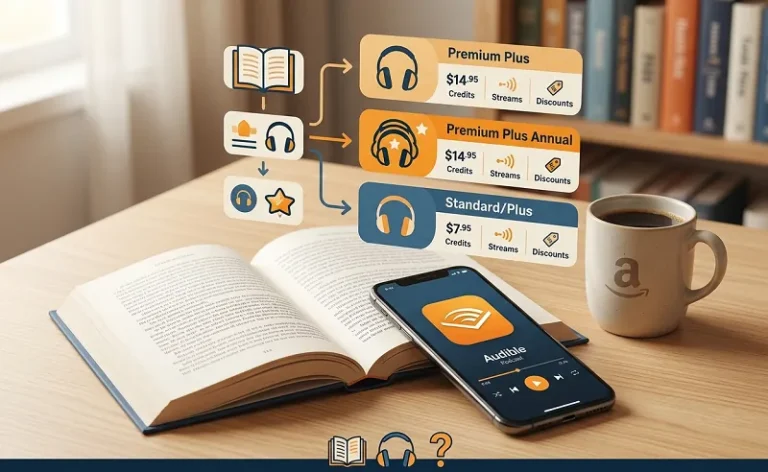
Audible offers three active membership tiers in 2026 — Standard at $8.99/month, Premium Plus at $14.95/month, and Premium Plus with 2 credits at $22.95/month — plus annual prepaid options that lower the effective cost per credit. Choosing the wrong plan means either overpaying for features you won’t use or losing access to every book the moment you cancel. This breakdown covers every plan in detail, what each one actually delivers, and a direct comparison to help pick the right fit.
The audiobook market is growing faster than any other publishing format, and Audible remains its dominant platform with over one million titles across 130+ genres. Amazon launched the new Standard tier in March 2026, expanding the lineup and creating more confusion in the process. The core question most people face is not whether Audible is worth it — it’s which plan extracts the most value from the monthly fee they’re prepared to pay.
The New Audible Standard Plan ($8.99/Month)
Audible launched the Standard plan in March 2026 across the US, UK, Canada, Australia, Germany, and France. At $8.99/month after a 30-day free trial, it positions itself as the entry point for listeners who want access to a major audiobook each month without committing to the higher-priced tiers.
The Standard plan lets subscribers select one audiobook per month from Audible’s complete catalog of over one million titles — including new releases and bestsellers that retail for $25–$40. That selection is accessible as long as membership stays active. Cancel the plan and access to those selected titles disappears entirely. There is no ownership transfer, unlike Premium Plus.
Standard members also get unlimited ad-free access to a curated podcast and Originals library, which includes nearly 200 titles that were previously exclusive to Wondery+, including well-known productions like Dr. Death, American Scandal, and Business Wars. Early access and ad-free listening for Wondery+ content now flows exclusively through this Audible membership tier.
What Standard notably excludes is significant: no access to the broader Plus Catalog (which contains tens of thousands of streaming titles), no member discounts on cash purchases, no exclusive sales access, and no ability to roll over the monthly selection. Miss the month and the pick does not carry forward. The credit system that Premium Plus members rely on is also absent — Standard members who want an additional book pay full retail price.
The Standard plan makes financial sense for a specific listener profile: someone who consistently finishes one audiobook per month, plans to maintain the subscription long-term, and primarily wants access to new releases rather than building a permanent library. For anyone who cancels, pauses, or skips months, the value disappears instantly.
Audible Plus ($7.95/Month)
Audible Plus predates the Standard plan and functions differently. At $7.95/month, it offers no monthly pick from the full catalog. Instead, subscribers get unlimited streaming access to the Plus Catalog — a curated collection of thousands of audiobooks, podcasts, Audible Originals, and sleep audio content.
The Plus Catalog includes classic titles, popular fiction, nonfiction, and original productions. Titles like George Orwell’s 1984 and selections from Audible’s robust romance collection appear here. However, the most in-demand new releases — bestsellers from major publishers, celebrity memoirs, and chart-topping nonfiction — are typically not in the Plus Catalog. Accessing those requires either purchasing them outright at full retail price or upgrading to a credit-based plan.
Plus Catalog content is not owned. Titles stream as long as membership is active and as long as Audible keeps them in the catalog — which is not guaranteed. Titles do get rotated out. For listeners who prefer exploring a wide variety of content without caring about ownership, and who are unlikely to need specific bestsellers, this plan delivers real value at the lowest price point. For anyone regularly craving new releases, it falls short quickly.
Audible Premium Plus — The Core Credit Plan
Premium Plus at $14.95/month is the plan that defined Audible’s model for years. It combines the Plus Catalog streaming access with one credit per month that purchases any single audiobook from Audible’s entire catalog, regardless of retail price. A $40 title and a $10 title both cost exactly one credit.
The ownership distinction is the critical differentiator from every other tier. Audiobooks purchased with credits are permanently tied to the account. Cancel the membership, take a six-month break, or switch to a free account — those purchased titles remain accessible forever through the Audible app. This makes Premium Plus the only plan where money spent directly builds a permanent library.
Premium Plus members also receive a 30% discount on cash purchases, access to members-only sales events (including frequent 2-for-1 credit promotions that effectively double library growth), and the full Plus Catalog at no extra cost. The ability to exchange a book and recover the credit is another exclusive perk — if a title turns out to be disappointing, members can return it through the Audible website and reclaim the credit for a different book.
One operational detail matters: credits issued on monthly Premium Plus plans expire 12 months after their issue date. Hoarding credits for extended periods causes them to lapse. The exception applies to subscribers who sign up through the Apple App Store or Google Play — under those billing arrangements, credits do not expire. For all standard Audible-billed subscriptions, the 12-month window applies strictly.
Premium Plus With 2 Credits ($22.95/Month)
The two-credit monthly plan is structured identically to the standard Premium Plus tier but delivers two credits per billing cycle instead of one. At $22.95/month, each credit effectively costs $11.48 — a meaningful reduction compared to the $14.95 per-credit rate on the single-credit plan.
This plan targets listeners who consistently finish two or more audiobooks per month and want to own those titles permanently. At two credits per month across a year, that’s 24 audiobooks at an effective per-credit cost well below what individual audiobooks retail for. Given that the average retail price of an audiobook on Audible sits around $33, the math strongly favors heavy listeners who regularly choose titles in that price range.
The full Plus Catalog, member discounts, exclusive sales, and exchange privileges all carry over from the standard Premium Plus plan. The two-credit version adds no additional content access — just the doubled monthly credit allocation.
Annual Membership Options and What They Cost Per Credit
Audible offers two annual prepaid plans for Premium Plus subscribers, both of which provide all credits at the start of the billing period rather than month by month. This structure benefits listeners who want to plan their library-building in advance and prefer one annual charge over twelve monthly deductions.
The 12-credit annual plan costs $149.50 per year, bringing the effective monthly rate to $12.45 and the per-credit cost to $12.46. The 24-credit annual plan costs $229.50 per year, dropping the effective monthly cost to $9.56 and each credit to $9.56. Compared to the monthly per-credit cost of $14.95, the annual 24-credit plan delivers roughly a 36% reduction in cost per audiobook.
Annual plans do not include a 30-day free trial, unlike the monthly tiers. Switching between monthly and annual billing is straightforward through the Audible membership settings portal on the website. For members who have been using the service consistently for six months or more, switching to an annual plan at the next renewal date is one of the most direct ways to reduce cost per title without changing listening habits.
There is also a first-year discounted annual option that Audible periodically offers — new Premium Plus annual subscribers have seen introductory pricing as low as $89/year, auto-renewing at $149.50 thereafter. These promotions are not permanent but appear with regularity on the pricing page.
Standard vs. Premium Plus — The Ownership Gap That Changes Everything
The single most consequential difference between Standard and Premium Plus is what happens when membership ends. Standard members lose access to every title they selected the moment their billing lapses. Premium Plus members retain every title they purchased with credits, permanently. For regular listeners who cancel and resubscribe seasonally, or who pause memberships during low-reading periods, the ownership model in Premium Plus provides a tangible financial buffer that Standard simply cannot match.
Consider the math over 24 months. A Standard member at $8.99/month spends $215.76 and owns nothing upon cancellation. A Premium Plus member at $14.95/month spends $358.80 and retains 24 permanently owned audiobooks worth an average of $33 each — a library valued at approximately $792 at retail. The gap in value delivery widens the longer membership continues.
The $6/month difference between the two plans is precisely the cost of the ownership guarantee, the Plus Catalog upgrade, member discounts, and credit flexibility. For listeners who finish at least one audiobook per month, that gap closes within the value of a single retained title.
The Plus Catalog — What’s Actually Inside
The Plus Catalog is included with Premium Plus tiers and is the streaming layer that functions similarly to a Netflix or Spotify for audiobooks. It holds thousands of titles across fiction, nonfiction, self-development, true crime, science, history, and Audible’s original productions. Content in the catalog is available to download for offline listening through the app — not just stream over a connection.
Standout entries in the Plus Catalog include Audible Originals with major talent — productions like Mel Robbins’ personal development series, Jon Hamm-led audio dramas, Kerry Washington’s The Prophecy, and the now-migrated Wondery+ catalog that includes award-winning true crime series. For genres like romance, the catalog runs particularly deep with titles from established authors that would otherwise require individual purchase.
The catalog’s primary limitation is its exclusion of most major publisher new releases, recent bestsellers, and heavily promoted titles at launch. Those sit behind the credit/purchase paywall. The catalog also changes — titles get added and removed on a rolling basis without advance notice, so a title accessible today is not guaranteed to remain available in three months. This makes the catalog most useful as supplementary listening rather than a primary source for must-read titles.
Free Trial Details and How to Maximize Them
Both Standard and Premium Plus monthly plans offer a 30-day free trial for new subscribers. The trial includes the first monthly credit at no cost, which can be redeemed for any title in the catalog and kept permanently even if membership is cancelled before the trial ends. There are no cancellation fees and no commitment to continue after the trial period.
Amazon Prime members receive an enhanced trial that includes two free credits instead of one — effectively providing two permanently owned audiobooks before any charge is incurred. Students with active Amazon Prime Student subscriptions are often eligible for an extended two-month trial of Premium Plus, providing a longer evaluation window and two credits to start a library.
Existing members who have let a previous trial expire more than 12 months ago are sometimes eligible for new trial offers. Navigating to the cancellation page without actually cancelling can also surface retention offers including discounted rates — typically $2–$5/month for two to three months — that Audible extends to members at risk of churning.
Audible vs. Spotify Audiobook Access — Competitive Context
Audible’s March 2026 Standard plan launch was a direct competitive response to Spotify’s Audiobook Access Plan at $9.99/month, which offers 15 hours of audiobook listening time per month rather than a per-title credit system. For heavy readers, Audible’s per-title credit model typically delivers more value — a single 20-hour audiobook would consume all of Spotify’s monthly allowance. For lighter listeners who enjoy shorter titles and also use Spotify for music, the bundled value in Spotify’s premium subscription is a practical consideration.
Other alternatives like Chirp Audiobooks (no subscription, deep discounts on individual titles) and public library apps like Libby (entirely free with a library card) serve different use cases. Libby is particularly strong for popular fiction where wait times are acceptable, but its catalog of audio titles runs narrower than Audible’s and newer releases can have significant waitlists measured in weeks or months. For consistent access to any title on demand, no competitor currently matches Audible’s breadth of streaming and on-demand content across audio formats.
How to Switch Between Plans
Switching membership tiers is handled through Audible’s website under Account Details and Membership. Subscribers who signed up through the Audible website directly can switch at any time — the change typically takes effect at the next billing cycle. Subscribers who joined through the Apple App Store or Google Play must manage membership changes through their respective app store subscription settings, as Audible cannot process those changes directly.
Downgrading from Premium Plus to Standard or Plus does not affect previously purchased titles — owned audiobooks remain accessible. Upgrading mid-cycle does not refund partial billing; the new rate applies at the next renewal date. Members switching from monthly to annual billing receive all annual credits immediately upon the plan change taking effect.
Which Audible Plan Is Right for You
The right plan depends entirely on listening frequency and whether ownership matters. For someone who finishes one audiobook per month and plans to maintain a long-term subscription, Premium Plus at $14.95/month or the annual 12-credit plan at $149.50/year provides the best balance of flexibility, ownership, and catalog access. The $6 premium over Standard buys permanent ownership of every book — a significant return for anyone who re-listens to titles or values a growing library.
Standard at $8.99/month suits a very specific listener: consistent one-book-per-month habits, no interest in owning titles long-term, and a subscription that won’t be paused or cancelled. The moment the subscription lapses, so does every selection. For casual or inconsistent listeners, Audible Plus at $7.95/month or a library-backed alternative like Libby covers basic needs without the risk of losing access to content during inactive periods.
Heavy listeners consuming two or more titles monthly benefit most from the 2-credit monthly plan or the 24-credit annual plan. At $9.56/credit annually, the per-title cost approaches what some short audiobooks retail for individually, making the subscription effectively self-funding through the ownership value it delivers. The key is ensuring credits get used — letting them sit unused until the 12-month expiry forfeits the value the plan is designed to deliver. Those who manage their subscriptions through streaming plan comparisons will find Audible’s annual credit model among the strongest per-title value propositions in audio entertainment.
Frequently Asked Questions
Does Audible come free with Amazon Prime?
No. Audible membership is completely separate from Amazon Prime. The two subscriptions are billed independently. However, active Amazon Prime members who start a free trial of Audible Premium Plus receive two free credits instead of the standard one credit — effectively doubling the trial value. After the trial, the standard monthly rate applies regardless of Prime status.
What happens to my audiobooks if I cancel Audible?
It depends on the plan. Audiobooks purchased with Premium Plus credits are permanently owned and remain accessible through the Audible app even after cancellation. Titles borrowed from the Plus Catalog and selections made under the Standard plan are locked upon cancellation. They can be unlocked again by reactivating a membership, but access does not continue without an active subscription.
Do Audible credits expire?
Credits issued on standard monthly Premium Plus plans expire 12 months after their issue date. Annual plan credits, issued all at once at the start of the billing period, follow the same 12-month rule. The exception applies to subscribers billed through the Apple App Store or Google Play — credits on those accounts do not expire. Complimentary trial credits may have shorter expiry windows.
Can you get Audible at a discount if you’re a student?
Amazon Prime Student members are frequently offered an extended two-month free trial of Audible Premium Plus rather than the standard 30-day trial, providing two credits to start a library without charge. Discount platforms like Student Beans and UNiDAYS periodically feature limited-time Audible promotions with reduced monthly rates for verified students. These offers rotate and require checking each platform for current availability.
Is Audible Standard a good deal compared to Premium Plus?
For most listeners, Premium Plus delivers superior long-term value. The $6/month difference buys permanent ownership of selected titles, Plus Catalog access, 30% member discounts on cash purchases, and exclusive sale access. Standard provides none of these — its monthly selection disappears upon cancellation. Listeners who consistently finish books monthly and never cancel may find Standard acceptable, but anyone with a mixed subscription history is better served by the ownership model in Premium Plus.
How does the Audible book exchange policy work?
Premium Plus members can return an audiobook purchased with a credit and recover the credit for a different title. This is processed through the Audible website — not through the app. Audible allows a reasonable number of returns per membership period; the policy is designed for genuine dissatisfaction rather than serial returning. The recovered credit follows the same 12-month expiry rule as newly issued credits on web-billed accounts.
Conclusion
Audible’s expanded plan lineup in 2026 gives listeners more entry points but doesn’t change the fundamental value calculus. Premium Plus at $14.95/month or the annual equivalent remains the plan that delivers real, compounding value — each credit builds a permanent library that outlasts any subscription status. Standard fills a narrow gap for casual, consistent listeners who will never let their membership lapse and have no interest in long-term ownership.
The annual 24-credit plan at $229.50/year represents the highest efficiency for committed listeners, bringing the effective per-credit cost to $9.56 while delivering all Premium Plus benefits upfront. For anyone who currently pays monthly and consistently uses both credits, the annual switch is worth calculating at the next renewal. The evolution of Amazon’s subscription ecosystem has made understanding what each tier actually delivers more important than ever before committing to a plan.
The most expensive mistake on Audible is not choosing the wrong tier — it’s choosing Standard or Plus while assuming the content is owned, then cancelling and discovering the library was never built. Permanent ownership sits exclusively inside Premium Plus, and for regular listeners, that distinction is worth every cent of the premium.