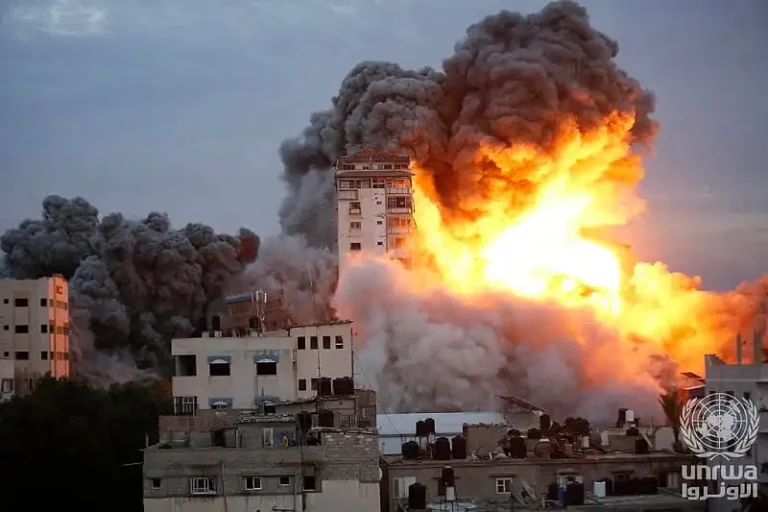
The ongoing war in Gaza has emerged as one of the most volatile and defining foreign policy issues for the Biden-Harris administration. For Vice President Kamala Harris, it presents a profound political challenge that cuts to the core of the Democratic Party’s diverse electoral coalition. As the 2024 presidential election cycle intensifies, the administration’s handling of the conflict and Vice President Harris’s public stance are under intense scrutiny, creating measurable fractures in key voter blocs essential for Democratic success. This analysis examines how sentiments surrounding the Gaza war are directly impacting Harris’s political support, influencing campaign dynamics, and forcing strategic recalculations within her political orbit.
The complexity of the issue lies in its intersection with deep-seated domestic politics. The Democratic coalition, historically a tapestry of progressive activists, minority communities, young voters, and a segment of older, more moderate liberals, is finding itself divided along lines of foreign policy for the first time in a generation. For Harris, who has carefully cultivated an image as a pragmatic progressive and a voice for marginalized communities, navigating the calls for a ceasefire, managing the administration’s steadfast support for Israel’s security, and addressing a worsening humanitarian crisis requires a diplomatic and political balancing act of the highest order. The political repercussions are no longer theoretical; they are manifesting in polling data, primary protest votes, and public demonstrations that have followed the Vice President across the country.
The stakes could not be higher. The erosion of support among Muslim-American, Arab-American, and progressive voters in critical swing states like Michigan, Pennsylvania, and Georgia poses a direct threat to the Democratic ticket’s chances in November. Simultaneously, the administration and Harris must maintain the confidence of centrist voters and a historically supportive majority of Jewish-American voters who prioritize the U.S.-Israel alliance. This electoral tightrope is defining Kamala Harris’s role on the world stage and her political future at home.
The Gaza Conflict and Its Resonance in American Politics
The war in Gaza, triggered by the October 7th attacks and the subsequent Israeli military campaign, has transfixed the global community. In the United States, the conflict has sparked a level of public engagement and activism on foreign policy rarely seen. The graphic nature of the war, disseminated instantly through social media, has made the humanitarian cost viscerally real for many Americans, particularly younger generations. This has moved the issue from the periphery of foreign policy discussions to a central, morally charged domestic debate concerning U.S. complicity, military aid, and human rights.
For voters, the issue transcends traditional left-right divides, creating new political alignments. It pits a longstanding bipartisan consensus on supporting Israel against a rising progressive critique focused on Palestinian rights and self-determination. This shift is powered by a change in generational perspective. Younger Americans, including many young Democrats, are more likely to view the conflict through a lens of power dynamics and collective justice rather than through the historical and Cold War-era frameworks that shaped their parents’ and grandparents’ views. This generational clash is playing out within the Democratic Party itself, placing leaders like Harris in an almost impossible position.
The political language around the conflict has also evolved. Where discussions were once dominated by terms like “peace process” and “two-state solution,” the current discourse is saturated with more urgent and polarized terms: “genocide,” “ceasefire,” “proportionality,” and “unconditional aid.” This linguistic shift reflects a deeper emotional and moral investment from the electorate, making measured, diplomatic responses from politicians seem inadequate or evasive to a passionate segment of their base. The administration’s continued military support for Israel, juxtaposed with scenes of devastation in Gaza, has created a crisis of credibility for many Democratic voters who prioritize a consistent application of human rights principles.
Kamala Harris’s Public Stance and Its Evolution
Vice President Kamala Harris’s public comments on the Gaza war have reflected the administration’s overarching policy while occasionally signaling subtle shifts in tone and emphasis, often interpreted as attempts to address internal party dissent. Initially, her statements closely aligned with President Biden’s unwavering support for Israel’s right to defend itself following the October 7th atrocities. However, as the war progressed and the Palestinian death toll mounted, Harris began to incorporate more forceful language regarding Palestinian civilian suffering and the need for specific outcomes.
A key moment came in a major speech in March 2024, where Harris explicitly called for an “immediate ceasefire” tied to a hostage deal, pressed for a significant increase in humanitarian aid, and warned Israel against a major military operation in Rafah. While the administration framed this as a natural evolution of policy based on circumstances, political observers noted it as a clear effort to mollify growing anger within the Democratic base. Her choice of venue and audience—often speaking at events commemorating multiculturalism or civil rights—has been a strategic tool to communicate empathy and concern to communities feeling alienated by U.S. policy.
This calibrated positioning is a hallmark of Harris’s political challenges:
- Balancing Act: Her statements strive to balance unequivocal support for Israel’s security with urgent humanitarian appeals for Gaza, a duality that often satisfies neither side completely.
- Progressive Credentials: As a politician who rose to prominence with progressive support, she faces intense pressure to leverage her influence to change policy more radically, with activists demanding she use her platform to call for conditions on U.S. military aid.
- Governing Reality: As Vice President, her ability to publicly diverge from the President’s established policy is severely constrained, limiting her to influencing private deliberations and refining the public messaging rather than announcing unilateral shifts.
This delicate dance aims to prevent a permanent rupture with the party’s left wing while maintaining her standing as a loyal and effective governing partner to President Biden. The success of this strategy is measured daily in polls and voter sentiment analyses.
Quantifying the Impact: Polling Data and Electoral Blocs
The political impact of the Gaza war on Kamala Harris is not anecdotal; it is quantified in a steady stream of polling data and electoral results that paint a concerning picture for her and the Democratic ticket. Nationally, Harris’s approval ratings have been affected, but the more telling data is disaggregated by demographic group and geography, revealing targeted erosion in key constituencies.
In critical swing states, the numbers are alarming for Democrats. A compelling example is Michigan, a state with a significant Arab-American and Muslim-American population. Polls from late 2024 showed a dramatic decline in support for President Biden and, by extension, Harris, among these voters. Where Democrats typically enjoyed support exceeding 70% in these communities, some surveys indicated a drop to below 20% intention to vote for the Biden-Harris ticket. This was starkly validated by the Michigan Democratic primary, where over 100,000 voters chose the “uncommitted” option as a protest against the administration’s Gaza policy, a campaign that was explicitly aimed at sending a warning to the President and Vice President.
The fallout extends beyond Muslim and Arab-American voters:
- Young Progressive Voters: Polling consistently shows voters under 35 are significantly more critical of U.S. support for Israel’s military campaign and are more likely to cite the issue as a major factor in their vote. Harris, who has historically polled better with younger voters than Biden, sees this as a particular threat to her coalition-building strength.
- Black Voters: While still a strongly Democratic bloc, polling indicates rising concern and disapproval of the Gaza policy among Black Americans, a community with which Harris has deep political ties. Leaders like Representative Cori Bush have been vocal in their criticism, creating pressure from within the broader Black political community.
- Democratic Donors and Activists: The issue has caused visible tension at high-dollar fundraisers and led some progressive donors to pause contributions or redirect funds to primary challengers of Democratic incumbents perceived as too supportive of Israel.
This data creates a concrete electoral map problem. Losing even a small percentage of these typically reliable voters in tightly contested states like Wisconsin, Pennsylvania, and Georgia could be enough to tip those states and the entire election.
The Coalition Management Challenge for the Harris Campaign
For the Harris political operation, managing this intra-party crisis has become a central, all-consuming task. The campaign’s approach has been multifaceted, involving direct outreach, strategic messaging, and coalition diplomacy. A primary tactic has been deploying high-profile surrogates from affected communities to engage in “listening tours” and private meetings in cities like Dearborn, Michigan, and parts of Minneapolis. The goal is to demonstrate respect for the pain and anger, even if the immediate policy changes demanded are not forthcoming.
Messaging has been carefully tailored. In public speeches to general audiences, Harris emphasizes shared values, the complexity of the situation, and the administration’s diplomatic efforts. In interviews with niche or community-specific media, she and her surrogates more directly acknowledge the humanitarian catastrophe and voice stronger personal conviction. The campaign also highlights Harris’s record on domestic issues important to these same communities—voting rights, economic equity, healthcare—arguing that a break over a single foreign policy issue could lead to the election of an opponent whose entire domestic agenda would be harmful to them.
The campaign faces several specific and persistent challenges in this management effort:
- The Credibility Gap: Many activists simply do not believe the Vice President is using her full power to alter policy behind the scenes, viewing her nuanced statements as political cover rather than genuine advocacy.
- Single-Issue Voting: For a segment of voters, particularly those with direct familial ties to the region, the Gaza war is a non-negotiable, paramount issue that overrides all domestic concerns, making appeals to a broader portfolio ineffective.
- The “Uncommitted” Movement: What began as a protest in Michigan’s primary has evolved into an organized national effort to withhold votes from Biden-Harris in November, providing a structured alternative for disaffected voters rather than letting them drift back reluctantly.
Ultimately, the campaign’s hope is that as the election nears and the stark choice between the Democratic ticket and the likely Republican nominee, Donald Trump, becomes clearer, pragmatic concerns about the Supreme Court, democracy, and civil liberties at home will outweigh foreign policy disagreements. This is a high-risk strategy of calculated deterrence.
Long-Term Implications for Harris’s Political Identity
Beyond the immediate 2024 election, the Gaza war and Harris’s navigation of it are shaping her long-term political identity and future prospects. Whether she runs for president again in 2028 or seeks to solidify her role as a party leader, this period will be a defining chapter in her political biography. How she is perceived in handling this crisis will influence her credibility on the world stage and her trustworthiness with the party’s activist base.
On one potential path, if the administration successfully brokers a lasting ceasefire and initiates a credible peace process, Harris could claim a role in steering U.S. policy toward a more balanced and humane outcome. This would allow her to rebuild bridges with progressives and position herself as a leader who navigated a moral and political crisis with steadiness and eventual success. It could bolster her foreign policy credentials, an area where she has actively sought to build experience and authority.
Conversely, if the war continues with no major policy shift, or if the Democratic ticket loses in 2024 with exit polls highlighting the Gaza issue as a key reason, Harris’s political future could be severely constrained. She could be saddled with blame from the party’s left flank for not doing enough to change course, permanently damaging her relationship with the rising progressive wing of the party. This scenario could limit her appeal in a future Democratic primary, where younger and more ideologically driven voters play an outsized role.
The issue is also reshaping the foreign policy consensus within the Democratic Party itself. Harris is witnessing, and is partly a subject of, a fundamental realignment. The next generation of Democratic leaders—figures like Representative Alexandria Ocasio-Cortez or Senator John Fetterman (who has taken a strongly pro-Israel stance)—are staking out positions that defy old categories. Harris’s long-term influence will depend on her ability to either lead, follow, or successfully channel this new and more contentious party dynamic on international affairs.
Comparative Context: Historical Precedents and Differences
While foreign policy issues have influenced domestic politics before, the current dynamic surrounding Gaza and Kamala Harris has distinct characteristics that make it particularly potent. Historical analogies, such as the Vietnam War’s impact on Lyndon B. Johnson or the Iraq War’s role in the 2006 and 2008 elections, offer some parallels but also highlight key differences.
Like Vietnam, the Gaza war is a distant conflict broadcast vividly into American homes, creating a moral outcry that fractures a ruling political party. However, the political context is different. The anti-Vietnam movement eventually encompassed a broad swath of the American public. The protest against Gaza policy, while significant, is more concentrated within specific demographic and ideological segments of the Democratic coalition. The challenge for Harris is not a nationwide revolt but a targeted erosion of crucial pillars of her electoral base.
The Iraq War protest movement also provides a lesson. That movement culminated in the election of Barack Obama, who had opposed the war from the start. For Harris, who is part of the incumbent administration executing the policy, there is no such clean, oppositional stance available. Her challenge is managerial and corrective, not revolutionary. Furthermore, the domestic political landscape is more polarized now than during the Iraq War debates, making defection to the other party less likely for most disaffected Democrats, but making voter apathy or third-party protest votes a greater threat.
A unique modern factor is the role of social media. Platforms like TikTok, Instagram, and X (formerly Twitter) have bypassed traditional media filters, allowing raw, graphic content and activist narratives to reach millions of Americans, especially young people, directly and instantly. This has accelerated the intensity of sentiment and placed enormous pressure on politicians to respond in real-time. For a Vice President, this 24/7 cycle magnifies every word and gesture, making the traditional tools of private diplomacy and gradual policy evolution harder to employ.
The Path Forward: Scenarios and Strategic Options
As the 2024 campaign enters its final stages, the Kamala Harris campaign and the Biden administration have a narrowing set of strategic options to address the Gaza-related erosion in support. The path they choose will have decisive consequences for the election and for Harris’s political standing.
The first, and most likely, scenario is a continuation of the current strategy: incremental rhetorical adjustments, vigorous humanitarian diplomacy, and a heavy reliance on the “lesser-of-two-evils” argument against Donald Trump. This path bets that the memory of the Trump presidency and fears about his promised agenda on immigration, abortion, and democracy will ultimately prove more motivating in November than discontent over Gaza. Its success hinges on the war not escalating dramatically and on the administration being able to point to some tangible diplomatic achievement, however limited, before Election Day.
A second, riskier scenario would involve a more decisive public break or a major policy shift. This could see Harris giving a speech that explicitly conditions future U.S. military aid on Israeli adherence to strict humanitarian standards or that recognizes Palestinian statehood as an urgent U.S. objective. While this could potentially reclaim some lost progressive support, it would carry enormous risks: alienating pro-Israel voters and donors, creating a visible rift with President Biden, and being branded by Republicans as an abandonment of a key ally. For Harris, such a move would be an unprecedented assertion of independent foreign policy authority from the vice presidency.
A third, defensive scenario involves geographic triage. If internal data shows the Gaza issue is irrevocably costing them states like Michigan, the campaign might choose to reallocate resources away from that state and toward shoring up support in other swing states like Pennsylvania, Wisconsin, and Arizona where the demographic composition is different. This would be a grim acknowledgment of political reality but would allow them to focus on holding a winning Electoral College map without Michigan’s 15 votes. This strategy, however, would be demoralizing and could lead to further defections elsewhere as activists perceive the party is writing off their concerns.
Ultimately, the chosen path will reflect a cold calculation of where the most votes are gained or lost. For Kamala Harris, each option carries a different set of implications for her reputation, her relationship with the President, and her own political destiny beyond 2024.
Conclusion
The war in Gaza has imposed a complex and inescapable electoral dilemma upon Vice President Kamala Harris. It has moved from the realm of foreign policy into the core of domestic coalition politics, testing her ability to unite a Democratic Party that is fundamentally divided over America’s role in the conflict. The data is clear: significant portions of the Muslim-American, Arab-American, and progressive blocs are withholding or reconsidering their support, posing a tangible threat in swing states essential for victory. Harris’s response—a calibrated mix of empathetic rhetoric, humanitarian emphasis, and steadfast alignment with the President’s policy—has so far failed to stem the bleeding, as evidenced by protest votes and sustained activist pressure.
The long-term implications for her political identity are still being written. This crisis presents both danger and opportunity. It threatens to permanently fracture her connection with the rising progressive wing of the party, a key constituency for any future national ambition. Conversely, if she can help steer U.S. policy toward a resolution that addresses both Israeli security and Palestinian suffering, she could emerge with enhanced diplomatic credibility. As the 2024 election reaches its climax, Harris’s challenge is historic. She must convince a disillusioned segment of the electorate that their profound moral outrage over Gaza should not lead them to abdicate their influence over the profound moral and practical battles being fought here at home, from democracy itself to civil rights and economic justice. Her success or failure in this effort will not only help decide the presidency but will also define her own political legacy for years to come.