

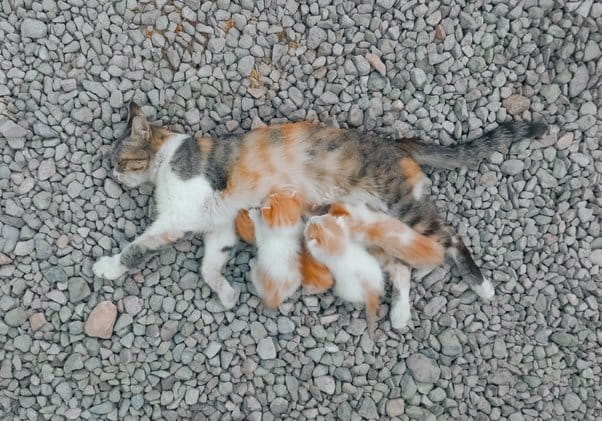
For cat owners and breeders, few moments are as anticipated as the arrival of a new litter. The question “how many kittens will she have?” is often the first to arise upon confirming a pregnancy. While the original article provides a foundational overview, the answer is far more nuanced, influenced by genetics, maternal health, and verifiable world records. This comprehensive guide expands on verified data to provide cat owners with actionable, expert-vetted information on litter size expectations, record-breaking outliers, and advanced care protocols to ensure both queen and kittens thrive.
The Science of Litter Size: Moving Beyond Averages
While the common answer cites an average of four to six kittens, contemporary data from veterinary research refines this figure. A comprehensive 1987 study published in the Journal of Zoology, which observed 71 litters, established a mean litter size of 4.4 kittens . This baseline remains widely accepted, though modern breeders note typical ranges of three to five kittens per litter . However, the spectrum is vast; healthy litters can range from a single kitten to a dozen. Understanding this variability requires examining the specific biological and environmental levers that dictate litter size.
Breed-Specific Genetic Predispositions
Genetics are not merely a minor factor but a primary determinant. Certain pedigrees are genetically predisposed to higher ovulation rates. Siamese, Burmese, and Oriental Shorthairs consistently produce larger litters, often reaching 8 to 12 kittens. Conversely, Persian and Singapura breeds typically trend smaller, averaging two to three kittens . This divergence is attributed to centuries of selective breeding and genetic bottlenecks within breed lines. Mixed-breed cats are highly variable, inheriting reproductive traits from their diverse lineage.
Maternal Age and Parity
A queen’s reproductive history—her parity—directly correlates with litter size. First-time mothers (primiparous queens) almost invariably deliver smaller litters, typically one to three kittens . This physiological restraint suggests the body is “practicing” for larger future litters. Peak fertility usually occurs between the ages of two and five years. As a queen enters her senior years, litter size declines again, with final litters often consisting of a single kitten .
Nutritional Thresholds and Body Condition
A queen’s nutritional status at the time of conception is critical. The academic study referenced in the Journal of Zoology highlights a critical interaction: maternal weight interacts with litter size to determine kitten fate. Lightweight mothers with large litters face the highest risk of kitten mortality and poor growth . Malnutrition during early gestation can result in fetal resorption or low birth weight, which compromises survival rates . An optimal Body Condition Score (BCS) of 4 to 5 on a 9-point scale is recommended prior to breeding .
Record Holders: Quantifying the Upper Limits
To understand the maximum capacity of the feline reproductive system, one must look at verifiable outliers.
The Largest Single Litter
According to Guinness World Records, the largest litter of domestic cats was born on August 7, 1970, to a Burmese/Siamese queen owned by Valerie Gane in Oxfordshire, UK. The litter totaled 19 kittens. Unfortunately, four were stillborn, resulting in a surviving litter of 15 . This record underscores a critical biological reality: while the uterus can accommodate up to 19 fetuses, the queen’s ability to sustain and nourish that many is severely limited.
The Lifetime Achievement Record
The title of most prolific cat belongs to Dusty, a tabby born in Bonham, Texas, in 1935. Over her breeding life, Dusty produced an authenticated total of 420 kittens, delivering her final kitten on June 12, 1952 . This remains the gold standard for lifetime fecundity and has never been challenged.
Biological Constraints on Large Litters
When litters exceed the average range, specific physiological challenges emerge.
The Nipple Limit
A queen typically possesses six to eight nipples, though not all are equally functional for milk production. In extremely large litters (9+ kittens), the mathematics of nursing become fatal. Kittens in large litters often exhibit a behavior known as “nipple fidelity,” where they select and defend a specific teat. When kittens outnumber productive nipples, the smallest or least assertive kittens are at immediate risk of malnutrition and hypothermia .
Maternal Depletion Syndrome
Scientific observation confirms that large litters place a significant burden on the mother. Research indicates that providing milk for a large litter has a detrimental effect on the queen’s health . This depletion manifests as weight loss, decreased bone density (due to calcium mobilization), and increased susceptibility to illness. Small mothers with large litters are “particularly at risk” .
Optimizing Kitten Survival: A Verified Care Protocol
Knowing the potential number of kittens is only half the battle; ensuring they survive is the ultimate goal. Survival rates vary, with data suggesting 75% to 95% of kittens survive to eight weeks, though mortality can reach 20% to 40% by twelve weeks depending on breed and care quality .
Phase 1: Nutritional Priming (Pregnancy)
Standard adult cat food is insufficient for gestating queens. The energy demands of late pregnancy and the extreme demands of lactation require a shift to a growth formula.
- Switch to Kitten Food: Transition the queen to a high-quality commercial kitten food immediately upon confirming pregnancy. These formulas are calorie-dense and rich in protein and fat .
- Critical Nutrients: Ensure adequate taurine (essential for fetal heart and eye development), calcium, and phosphorus. Do not supplement calcium without veterinary guidance, as improper levels can cause eclampsia (milk fever) .
- Feeding Protocol: During lactation, the queen requires two to six times the energy requirements of a healthy adult cat. Food should be available free-choice (ad libitum) to prevent weight loss .
Phase 2: The Birthing Environment
The queen will seek a “nest.” Breeders should provide a whelping box lined with soft, clean bedding in a low-traffic, warm area (ambient temperature around 75-80°F or 24-27°C). Cats can pause labor for 24 to 36 hours between kittens, a phenomenon believed to occur if the queen does not feel completely secure . Disturbing her during this active pause can prolong labor and stress the queen.
Phase 3: Neonatal Intervention Protocols
In litters exceeding eight kittens, or in cases of maternal rejection, immediate human intervention is required.
- Supplemental Feeding: Use a commercial kitten milk replacer (KMR). Never use cow’s milk. Kittens must be fed every 2-3 hours.
- Thermoregulation: Newborn kittens cannot regulate their body temperature for the first 2-3 weeks. Provide a heating pad set on low, placed under only half of the nesting box, allowing the queen and kittens to move off the heat if necessary.
- Elimination Stimulation: Orphaned or rejected kittens must be stimulated to urinate and defecate. Use a warm, damp cotton ball to gently rub the anogenital region after each feeding.
Reproductive Realities: Frequency and Superfecundation
Breeding Frequency and Queen Health
A cat can biologically produce up to three litters per year . However, veterinary consensus strongly advises against this. Multiple veterinary practitioners agree: while a cat can produce 3-4 litters annually, doing so causes severe nutritional depletion, anemia, and shortens the queen’s lifespan. The recommended maximum is one to two litters per year, with adequate recovery time between weaning and re-breeding .
The Phenomenon of Superfecundation
Unlike humans, cats are induced ovulators. The physical act of mating stimulates the release of eggs. If a queen mates with multiple toms during her estrus cycle, she can release multiple eggs that are fertilized by different fathers. This results in a single litter of half-siblings, a condition known as superfecundation . This is not a rare mutation; it is common in free-roaming queens and can result in significant physical variation within one litter.
Pro Tips for Breeders and Owners
Estimating Litter Size Prenatally
Palpation is unreliable. The gold standard for counting kittens pre-birth is ultrasound (to confirm heartbeats and viability) and radiography (X-ray) after day 45, once fetal skeletons have calcified. X-rays provide the most accurate count, allowing owners to prepare for the exact number expected.
Managing the “Singleton” Kitten
Litters of one (singletons) present unique challenges. The single kitten often lacks the competition required to stimulate vigorous nursing and may develop “single kitten syndrome,” where they nurse excessively, fail to learn bite inhibition from littermates, and may exhibit behavioral issues later in life. Breeders should handle singleton kittens frequently and introduce peer play with other litters if possible.
Weight Tracking as a Vital Sign
A kitten should gain weight daily. Weigh kittens at the same time every day using a digital gram scale. Failure to gain weight for 24 hours is the first red flag of fading kitten syndrome and warrants immediate veterinary attention .
Frequently Asked Questions
Can a cat have kittens from two different fathers in one litter?
Yes. This is scientifically termed superfecundation. It is relatively common in cats due to their induced ovulation cycle and multiple matings during heat .
How old is too old for a cat to have kittens?
While cats remain fertile into their senior years, the risk of stillbirth, dystocia (difficult birth), and maternal death increases significantly after age 6-7. Most reputable breeding programs retire queens after age 5-6 to prioritize health over reproduction.
What is the smallest number of kittens a cat can have?
The smallest viable litter size is one. This is often referred to as a “singleton” litter .
My cat is panting and hiding. Is she about to give birth?
Panting, restlessness, nesting, and a drop in body temperature (below 100°F or 37.8°C) are classic signs that stage 1 labor has begun. Provide a quiet, dark space and monitor from a distance.
What should I do if a kitten is stillborn?
Remove the kitten immediately if the mother permits. Wrap it in a towel and place it in a sealed bag. A vet should examine the mother and surviving kittens to rule out infection such as panleukopenia or distemper .
Can stress cause a cat to have a smaller litter?
Yes. High cortisol levels from stress can interfere with implantation or cause fetal resorption early in pregnancy. Environmental stability is crucial for maximizing litter viability .
Conclusion
The capacity of a mother cat is defined by two distinct metrics: biological possibility and biological sustainability. While a queen is physically capable of delivering 19 kittens in a single event or 420 in a lifetime, these extremes represent physiological strain rather than reproductive success. Verified research confirms that the average litter hovers firmly at four to five kittens, with optimal health outcomes achieved through targeted nutrition, genetic awareness, and proactive neonatal care. For the responsible owner, success is not measured by maximizing the number of kittens born, but by ensuring every kitten born—whether one or seven—survives to weaning with a healthy, vigorous queen ready to resume her life as a cherished companion.
