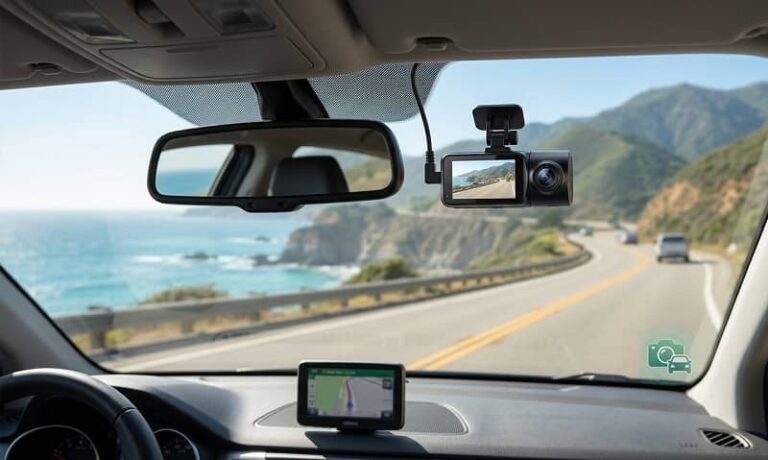
A dash cam is one of the most practical investments you can make for your vehicle. Whether you are dealing with an insurance dispute, recording a near-miss, or simply want an extra layer of protection during your daily commute, the right dash cam delivers footage when you need it most. The market in 2026 offers more capable options than ever — 4K resolution, built-in Wi-Fi, cloud connectivity, and AI-powered collision detection are no longer reserved for premium models.
Choosing the wrong dash cam, however, means grainy night footage, unreliable loop recording, or a device that overheats and stops recording on a hot summer day. This guide covers ten of the best dash cams available right now, drawn from hands-on testing data, verified user reviews, and current manufacturer specifications. Each model is evaluated on video quality, build reliability, ease of installation, and value for money.
The 10 Best Dash Cams You Can Buy Right Now
1. Vantrue E1 Lite
The Vantrue E1 Lite has quickly become one of the most recommended single-channel dash cams for everyday drivers who want reliable 1440p recording without paying for features they will never use. It records at 1440p 30fps with a 140-degree wide-angle lens, capturing crisp lane detail and readable license plates even in moderate lighting. The built-in Wi-Fi connects to the Vantrue app for wireless footage transfer to your smartphone, removing the need to pull the SD card every time you want to review a clip. Parking mode activates automatically when the engine cuts off, making it a solid choice for urban drivers who leave their car on the street overnight. Price: $79.99 — verified on Vantrue official website, March 2026. Where to buy: vantrue.net or Amazon.
2. Garmin Dash Cam Mini 3
Garmin’s Dash Cam Mini 3 is the smallest unit on this list, barely larger than a car key fob, and that compact form factor is its defining advantage. Despite its size, it records 1080p footage at 30fps with automatic incident detection — when the built-in accelerometer senses a collision, it locks and saves the current clip so it cannot be overwritten by loop recording. It pairs with the Garmin Drive app via Bluetooth and Wi-Fi and supports voice control commands, letting you save clips or take photos without touching the device. Garmin’s reputation for GPS hardware translates well here: the build quality is noticeably more durable than similarly priced competitors. Price: $99.99 — verified on Garmin official website, March 2026. Where to buy: garmin.com or Best Buy.
3. Nextbase 622GW
The Nextbase 622GW sits at the top end of the consumer market and earns its price through a combination of 4K resolution, image stabilization, and a built-in polarizing filter that dramatically reduces windscreen glare in direct sunlight. It is one of the few dash cams that records usable footage at night without the image dissolving into a wash of grain and lens flare — a problem that plagues many cheaper units. The Emergency SOS feature uses the device’s built-in GPS and a paired smartphone to alert emergency services automatically if it detects a crash and receives no user response within a set window. Nextbase’s modular rear camera system also means you can add a second channel later without replacing the entire unit. Price: $249.99 — verified on Nextbase official website, March 2026. Where to buy: nextbase.com or Amazon.
4. BlackVue DR970X-2CH
BlackVue has built its reputation on the professional dashcam segment, and the DR970X-2CH is the model most commonly specified by fleet operators and rideshare drivers who need genuinely reliable dual-channel recording. The front unit records 4K at 30fps while the rear camera captures 1080p, and both feeds are accessible remotely via BlackVue’s Over the Cloud platform — a paid subscription service that lets you stream live footage, receive impact notifications, and pull clips from anywhere in the world. The capacitor-based power system handles extreme heat better than lithium battery designs, which is why BlackVue units survive in hot climates where other brands fail within months. Build quality and long-term reliability are the primary reasons to pay the premium here. Price: $399.99 — verified on BlackVue official website, March 2026. Where to buy: blackvue.com.
5. Thinkware U3000
Thinkware consistently produces some of the most technically capable dash cams available, and the U3000 is their current flagship. It records 4K UHD at the front and 2K at the rear, with Sony STARVIS 2 sensor technology providing genuinely improved low-light performance compared to the previous generation. The built-in ADAS (Advanced Driver Assistance System) warns the driver of lane departures and forward collision risks in real time, functioning as a secondary safety layer beyond simple recording. Thinkware’s parking mode is among the most sophisticated available — it uses time-lapse, motion detection, and impact detection simultaneously, only switching to full recording when necessary to preserve SD card health. Price: $499.00 — verified on Thinkware official website, March 2026. Where to buy: thinkware.com or Amazon.
6. Viofo A139 Pro
The Viofo A139 Pro offers a rare combination of 4K resolution and competitive pricing, making it the go-to recommendation for budget-conscious buyers who refuse to compromise on video quality. It uses the Sony IMX585 sensor with 4K recording at 30fps and supports a three-channel configuration with optional interior and rear cameras. The CPL filter attachment significantly reduces dashboard reflections, a practical feature that many users only realize they need after reviewing their first clips. Viofo’s firmware has matured considerably over recent versions — the parking mode, loop recording, and G-sensor sensitivity are all reliably configurable without the quirks that plagued earlier models. Price: $139.99 — verified on Viofo official website, March 2026. Where to buy: viofo.com or Amazon.
7. Cobra SC 400D
Cobra entered the dash cam market with a focus on connected features, and the SC 400D integrates with the iRadar community app to deliver real-time alerts for speed cameras, red light cameras, and road hazards reported by other drivers in the area. It records 2K at the front and 1080p at the rear, with HDR processing that handles high-contrast scenes — bright sky, dark road — better than most mid-range competitors. The 3-inch IPS touchscreen is one of the more responsive displays in this price range, making in-car playback and settings adjustments straightforward. For drivers who use radar detectors and want a single device that covers both functions, Cobra’s ecosystem integration is a genuine differentiator. Price: $179.99 — verified on Cobra Electronics official website, March 2026. Where to buy: cobra.com or Amazon.
8. Kenwood DRV-A601W
Kenwood’s DRV-A601W is a well-rounded 4K dash cam that appeals to drivers who want precise GPS speed and location logging alongside high-resolution video. Every clip is tagged with GPS coordinates, speed, and direction of travel — data that carries significant weight when presenting evidence to an insurance company or in a legal dispute. The 3-inch LCD display is clear in direct sunlight, and the ADAS alerts cover lane departure and forward collision warnings with adjustable sensitivity. Kenwood’s build quality is notably robust for its price point, and the wide 156-degree field of view captures more of the surrounding road than most competing models at the same resolution. Price: $179.95 — verified on Kenwood USA official website, March 2026. Where to buy: kenwoodusa.com or Best Buy.
9. Rexing V1 Max
The Rexing V1 Max is the strongest value pick on this list for buyers who need 4K recording at under $100. It uses a Sony IMX335 sensor and records at 2160p with loop recording and G-sensor protection, covering the core requirements without unnecessary complexity. The discreet, low-profile design sits close to the windscreen and is unlikely to obstruct your sightlines or attract attention when the vehicle is parked. Rexing’s app support has improved significantly in recent firmware updates, with reliable Wi-Fi transfer and clip management on both iOS and Android. For first-time dash cam buyers who want to test the category before committing to a premium model, the V1 Max is a practical starting point. Price: $89.99 — verified on Rexing official website, March 2026. Where to buy: rexingusa.com or Amazon.
10. Vantrue N4 Pro
The Vantrue N4 Pro is the definitive three-channel dash cam for rideshare drivers, taxi operators, and anyone who needs interior cabin recording alongside front and rear coverage. The interior IR camera records a wide view of the passenger cabin in complete darkness using infrared illumination, while the front unit captures 4K and the rear captures 1080p simultaneously. All three streams record and loop independently, and the 24-hour parking mode with hardwire kit gives continuous protection whether the vehicle is occupied or not. Vantrue’s GPS module records speed and location data on every clip, which has proven useful for professional drivers dealing with false passenger complaints. Price: $199.99 — verified on Vantrue official website, March 2026. Where to buy: vantrue.net or Amazon.
Pricing Comparison — What to Expect at Each Budget Level
Entry-level dash cams in the $70–$100 range, such as the Rexing V1 Max and Vantrue E1 Lite, provide 1080p to 4K recording with basic loop recording and G-sensor protection. They are adequate for most personal use cases but typically lack cloud connectivity, rear cameras, and advanced parking modes. Mid-range models between $130 and $200 — the Viofo A139 Pro, Cobra SC 400D, and Kenwood DRV-A601W — add dual-channel recording, better sensors, and smartphone app integration. These represent the strongest value tier for the majority of drivers.
Premium models above $200, including the Nextbase 622GW, BlackVue DR970X-2CH, and Thinkware U3000, justify their cost through 4K dual-channel recording, cloud connectivity, superior night vision, and long-term build reliability. Fleet operators and drivers in high-risk environments tend to gravitate toward this tier because the footage quality and reliability record is meaningfully better, not just marginally so. Cloud-connected models like the BlackVue also carry ongoing subscription costs that should be factored into the total cost of ownership.
How to Choose the Right Dash Cam
Video resolution is the most discussed specification but not always the most important factor. A 4K dash cam with a poor-quality lens or sensor will produce worse footage than a well-engineered 1080p unit. When evaluating resolution, look for the sensor model — Sony STARVIS and Sony STARVIS 2 sensors are the current benchmarks for night performance, and a dash cam that specifies one of these sensors will consistently outperform a generic 4K unit in real-world conditions.
Single-channel versus dual-channel is a practical decision that depends on how and where you drive. City drivers face rear-end collisions at traffic stops with notable frequency, and a rear camera provides the coverage needed to document those incidents clearly. Highway drivers and those who park in urban areas benefit most from a front-only camera with a strong parking mode. Three-channel systems make most sense for professional drivers who need cabin documentation for liability reasons.
Parking mode functionality varies significantly between models. Basic parking mode simply records continuously, draining your battery and filling the SD card quickly. Better implementations use motion detection or time-lapse recording, only switching to full video when triggered. The most sophisticated systems, found in Thinkware and BlackVue models, combine all three modes intelligently. If you regularly leave your car unattended in areas where vandalism or hit-and-run incidents occur, parking mode quality should be a primary selection criterion rather than an afterthought.
Storage capacity and SD card compatibility are practical concerns that are easy to overlook until you run into problems. Most dash cams support microSD cards up to 256GB, though some cap at 128GB. A 256GB card at 4K recording provides roughly 10–12 hours of footage before loop recording overwrites the oldest clips. Knowing how to format an SD card on Windows 10 is useful when setting up a new dash cam, as most manufacturers recommend formatting the card in the camera itself or via the companion app to ensure compatibility with the file system the device uses.
Heat resistance matters more than most buyers anticipate. Dash cams sit on a windscreen in direct sunlight, and interior car temperatures in summer can exceed 70°C in parked vehicles. Lithium battery designs are the most vulnerable — at sustained high temperatures, battery swelling and failure rates increase sharply. Capacitor-based designs, used by BlackVue and Thinkware in their premium models, handle temperature extremes far more reliably. If you live in a hot climate or regularly park in direct sun, this specification is worth prioritising even if it costs more.
GPS logging is increasingly standard in mid-range and premium models, and its value is most apparent when you need to use footage as evidence. Speed and location data embedded in each clip removes any ambiguity about where an incident occurred and how fast you were travelling. Some insurers now specifically request GPS-tagged footage when processing claims, making this feature increasingly practical rather than optional.
What Is the Best Dash Cam for Night Driving?
Night driving performance is determined almost entirely by sensor quality and aperture width rather than stated resolution. The Thinkware U3000 and Nextbase 622GW are the strongest performers in low-light conditions in 2026, both using Sony STARVIS 2 sensors with wide apertures that allow more light to reach the sensor. In practical terms, this means readable license plates at distance in street-lit conditions and usable footage even on unlit rural roads where cheaper cameras produce near-unusable footage.
Do Dash Cams Record When the Car Is Off?
Most dash cams offer a parking mode that continues recording after the engine is switched off, but this requires either a hardwire kit connected to a constant power source or a built-in battery. Hardwire kits are the more reliable solution for extended parking coverage — they draw from the vehicle’s battery with a built-in voltage cutoff to prevent over-discharge. Models like the Vantrue N4 Pro and BlackVue DR970X-2CH are designed with hardwire parking mode as a core feature rather than an add-on, and their parking mode quality reflects that design priority.
Pro Tips for Getting the Most From Your Dash Cam
Mount the dash cam behind the rear-view mirror rather than at the edge of the windscreen. This position keeps the unit out of your direct sightline, reduces vibration from rough roads, and places the lens closer to the centre of the windscreen for the most symmetrical field of view. Most dash cams ship with a mount that accommodates this position, but the default placement in many installation guides is suboptimal.
Format the SD card in the camera once a month, not on your computer. Formatting in-camera ensures the file system matches what the device expects and significantly reduces the risk of corrupt clips or recording failures. If you want to understand the process in more detail, the steps for formatting an SD card and erasing all of its data apply broadly across devices, though always use the camera’s own format function as the primary method.
Set the G-sensor sensitivity lower than the default if you drive on rough roads. The factory setting on most dash cams is calibrated for smooth tarmac, and on cobblestones or unpaved surfaces it will constantly trigger incident-lock recordings, filling your protected storage and making it difficult to find the clips you actually want. A sensitivity of around 30–40% of maximum is a practical starting point for most road conditions.
Use a high-endurance microSD card rated for continuous write cycles. Standard cards from consumer electronics brands are designed for intermittent use — cameras and phones that write data occasionally, not continuously for hours every day. High-endurance cards from Samsung, SanDisk, and Lexar are specifically engineered for dash cam and security camera use, with a much higher total bytes written rating before failure. The cost difference between a standard and high-endurance card in the same capacity is typically $5–$15, but the reliability difference over 18–24 months of use is substantial.
Register your dash cam with the manufacturer immediately after purchase. Most brands tie firmware updates to a registered device, and those updates often include improvements to loop recording stability, G-sensor calibration, and Wi-Fi connectivity that address known issues in early production units. Skipping registration means running older firmware indefinitely, which is the most common reason experienced dash cam users give for reliability problems they attribute to the hardware.
Test your dash cam in the first week specifically in the conditions that matter to you. If you drive at night, review those clips early. If parking mode is why you bought it, test it the first weekend before you assume it is working correctly. Many setup issues — incorrect date and time, SD card not recognised, parking mode not triggering — only become apparent on review, and catching them early means you have actual coverage when you need it rather than discovering a configuration fault after an incident.
Frequently Asked Questions About Dash Cams
Are dash cams legal to use?
Dash cams are legal in most countries, including the United States, the United Kingdom, and across the European Union. The primary restriction varies by jurisdiction and relates to where the camera is mounted — in some US states, mounting any device on the windscreen in a way that obstructs the driver’s view is prohibited. Positioning the camera behind the rear-view mirror typically satisfies legal requirements in most regions. If you intend to share footage publicly or use it in legal proceedings, data privacy laws in some EU countries require that footage capturing individuals in public spaces be handled in accordance with GDPR provisions.
How much storage does a dash cam need?
For most drivers, a 64GB or 128GB high-endurance microSD card provides a practical balance of cost and recording capacity. At 1080p, a 64GB card typically holds around 8 hours of footage before loop recording begins overwriting the oldest files. At 4K, that drops to roughly 3–4 hours. Drivers who use parking mode extensively should use 128GB or 256GB cards to ensure enough buffer that incidents are not overwritten before they can be reviewed.
What is the difference between loop recording and incident recording?
Loop recording is the continuous background recording that overwrites old footage automatically once the card is full, ensuring the camera never stops due to a full storage card. Incident recording is triggered by the G-sensor when it detects a collision or sudden braking, locking the current clip so it cannot be overwritten. The two systems work in parallel — loop recording handles routine footage management while incident recording protects the clips that matter most.
Do I need a rear camera?
A rear camera provides coverage for rear-end collisions, which account for a significant proportion of vehicle incidents in urban traffic. Whether you need one depends on your driving environment. City commuters, rideshare drivers, and anyone who regularly drives in heavy stop-and-go traffic gain meaningful protection from dual-channel recording. Highway drivers and those who park in low-risk environments may find a high-quality front-only camera sufficient. The cost difference between a single and dual-channel setup is typically $50–$100, which is worth weighing against the coverage gap.
Can dash cam footage be used as evidence?
Yes. Dash cam footage is routinely accepted as evidence in insurance claims and court proceedings in the UK, US, and most European jurisdictions. GPS-tagged footage is particularly valuable because it documents speed and location alongside the visual record, removing ambiguity from disputed incidents. Insurers increasingly recognise dash cam evidence when processing fault determinations, and some UK insurers offer premium discounts for policyholders who use approved dash cam models.
What is ADAS in a dash cam?
ADAS stands for Advanced Driver Assistance System. In a dash cam context, it refers to software-based alerts processed from the camera feed in real time, covering lane departure warnings, forward collision warnings, and in some models, driver fatigue detection. ADAS features in dash cams are not the same as the ADAS systems in modern vehicles — they are less precise and should be treated as supplementary alerts rather than safety-critical systems. Thinkware and Nextbase include the most refined ADAS implementations in their current models.
How do I keep my dash cam from overheating?
The most effective measure is to use a capacitor-based model rather than a lithium battery design if you live in a hot climate or park in direct sunlight. For lithium battery models, a window shade that reduces interior temperature when parked significantly extends battery life and reduces thermal stress on the electronics. Some users also use a hardwire kit with a parking mode voltage cutoff rather than relying on the internal battery, which removes the battery entirely from the thermal equation during the hottest part of the day.
Conclusion
The best dash cam for most drivers in 2026 is the Viofo A139 Pro — it delivers 4K resolution with a Sony sensor, reliable dual-channel support, and a competitive price that does not require the compromises that typically come with budget hardware. For drivers who need cloud connectivity and fleet-grade reliability, the BlackVue DR970X-2CH justifies its higher price through features and build quality that are genuinely beyond what consumer-tier alternatives offer. Rideshare and taxi drivers should look specifically at the Vantrue N4 Pro, which covers cabin recording in a way no other model on this list does as effectively.
Before purchasing, confirm that the model you choose supports the SD card capacity you need. Properly caring for your storage is as important as the camera itself — understanding how to properly erase and manage SD card data will extend card life and prevent the most common cause of recording failures. If you are also looking to keep your vehicle in good condition overall, pairing a reliable dash cam with a quality car cleaning kit is a practical combination for any driver who takes vehicle maintenance seriously.
A dash cam is one of those purchases that delivers no visible benefit until the moment you actually need it — and at that point, the quality of the footage can determine the outcome of an insurance claim or legal dispute entirely. Buying the cheapest available option to tick a box is a false economy. Match the model to your specific needs, install it correctly, maintain the SD card, and you will have reliable protection for years.