The history of the video game console is a narrative of relentless innovation, intense market rivalry, and profound cultural impact. Spanning over five decades, this journey transformed a crude, black-and-white television accessory into a highly sophisticated, interconnected home entertainment system. From the earliest dedicated hardware of the 1970s to the powerful, ultra-high-definition machines of today, each console generation has introduced new technologies, redefined interactive entertainment, and shifted the global dynamics of the consumer electronics industry. Understanding this evolution requires dissecting the technological leaps, market forces, and competitive strategies that shaped the gaming landscape we know today.
Generation One (1972–1977): The Dawn of Digital Play
The first generation of video game consoles established the foundational concept of bringing interactive digital entertainment out of the laboratory and the arcade and into the living room. This era was characterized by consoles that were essentially single-purpose analog computing devices, using discrete components rather than complex microprocessors, meaning that the games themselves were hardwired into the system’s circuitry.
The Magnavox Odyssey and the Concept of Home Gaming
The official birthplace of the home video game console is 1972, with the release of the Magnavox Odyssey. Conceived by engineer Ralph H. Baer—often dubbed the “Father of Video Games”—the Odyssey was primitive by modern standards. It could only display three square dots and a vertical line on the screen. Its functionality was limited to simple ball-and-paddle games, such as tennis and hockey simulations, with players physically moving controllers connected via cable. Crucially, the console employed reusable “game cards,” which were essentially jumpers that configured the internal electronic circuits to change the game logic and appearance. Despite its technological limitations and modest commercial success (selling around 350,000 units), the Odyssey proved that a market for home video games existed.
Following the Odyssey, the genre was popularized globally by the successful arcade game Pong, developed by Atari. While Magnavox was first, Atari’s home console version, released through Sears in 1975, became a massive cultural phenomenon. This version of Home Pong was a dedicated console—it could only play one type of game. Its rapid success spurred a wave of “Pong clones” and dedicated systems from manufacturers worldwide, flooding the market with similar units. This first generation, defined by systems like the Coleco Telstar and Magnavox Odyssey, set the precedent for consumer-friendly, television-based gaming, even if the lack of swappable game media meant the lifespan of each unit was inherently limited.
Generation Two (1976–1983): The Rise of Cartridges and the Great Crash
The second generation marked the most significant paradigm shift in console history: the introduction of microprocessor-based systems capable of using interchangeable ROM cartridges. This invention, pioneered by the Fairchild Channel F (1976), allowed consumers to buy new games without buying a new console, transforming the industry from a hardware sales model to a software sales model.
The Atari 2600 and the Establishment of Third-Party Development
The defining console of the second generation was the Atari Video Computer System (VCS), later renamed the Atari 2600, released in 1977. The Atari 2600 was the first console to achieve mass market penetration, selling an estimated 30 million units worldwide. Its success was fueled by licensing popular arcade titles like Space Invaders and Pac-Man for play at home. The system popularized the use of a detachable joystick controller, which would become the standard input method for years to come.
The Atari 2600 also ushered in the controversial practice of third-party game development. Originally, game creation was strictly handled in-house. However, former Atari programmers founded Activision in 1979, becoming the first independent developer to create and sell games for a proprietary console. This move laid the groundwork for the modern video game industry structure, separating game design from console manufacturing. Competitors like Mattel’s Intellivision and Coleco’s ColecoVision followed, offering superior graphics and peripherals, escalating competition and the reliance on licensed content.
The Video Game Crash of 1983: A Necessary Correction
The second generation ended catastrophically with the North American video game crash of 1983. This market collapse, which saw console sales drop sharply and consumer confidence plummet, resulted from several interconnected factors:
- Market Saturation and Fragmentation: Too many consoles (Atari, Coleco, Mattel, and others) were competing for consumer attention, confusing shoppers and diluting the market. This fragmentation meant developers had to split resources across multiple platforms, often creating substandard ports.
- Dilution of Software Quality: The lack of a quality control system for third-party developers led to a massive influx of low-quality, shovelware games. The sheer volume of poor titles, exemplified by the disastrous reception of Atari’s game adaptation of the movie E.T. the Extra-Terrestrial, eroded consumer faith in the cartridge-based system.
- The Rise of Personal Computers: Affordable home computers like the Commodore 64 and the Apple II began offering more advanced graphics, higher memory capacity, and dual functionality (gaming and productivity), presenting a superior value proposition compared to dedicated game consoles.
- Retailer Panic: Overstocking of consoles and poor-selling games led retailers to heavily discount and liquidate inventory, significantly devaluing the perceived price and quality of video game products in the eyes of the public.
- The Myth of the E.T. Cartridge Burial: Although often cited as a cause, the infamous burial of millions of unsold Atari cartridges in a New Mexico landfill was more of a symptom of the crash—a dramatic symbol of the industry’s widespread failure and waste.
This crash effectively wiped out the North American console market, clearing the slate for a new, disciplined approach to console manufacturing and software licensing.
Generation Three (1983–1992): Nintendo Resurrects the Market
While the American market was collapsing, the Japanese market thrived. The third generation is known as the 8-bit era, defined by the rise of two Japanese powerhouses: Nintendo and Sega. This generation is credited with not only reviving the console industry but formalizing the model that would dominate for decades.
The Nintendo Entertainment System (NES) and the Quality Seal
The console that truly rescued home gaming was the Nintendo Entertainment System (NES), released in Japan as the Famicom (Family Computer) in 1983 and in North America in 1985. Nintendo, having learned from Atari’s mistakes, implemented strict control over its software ecosystem. The company famously limited third-party developers to only five game releases per year and required them to adhere to Nintendo’s quality standards, symbolized by the “Official Nintendo Seal of Quality.”
The NES was strategically marketed as a “toy” or entertainment system rather than a “video game console” in North America to avoid the stigma of the 1983 crash. Its success was driven by incredibly influential first-party titles, including Super Mario Bros., The Legend of Zelda, and Metroid. These games introduced deep, complex narratives and innovative gameplay mechanics previously unseen in the home market. The NES’s commercial triumph solidified Nintendo’s position as a global gaming leader and introduced millions to the concept of the Japanese RPG and platformer genres.
Sega’s Initial Challenge: The Master System
Sega, which had entered the market with the SG-1000 in Japan, launched the Master System to compete directly with the NES. While technically superior in some ways, featuring better color palettes and sharper sprites, the Master System struggled to gain traction in the critical North American market due to Nintendo’s aggressive licensing exclusivity and market dominance. However, the Master System found significant success in Europe and Brazil, establishing Sega’s reputation as a formidable hardware manufacturer. The Master System’s competition was the first spark in what would become known as the “Console Wars.”
Generation Four (1987–1996): The 16-Bit Wars and the Rise of “Cool”
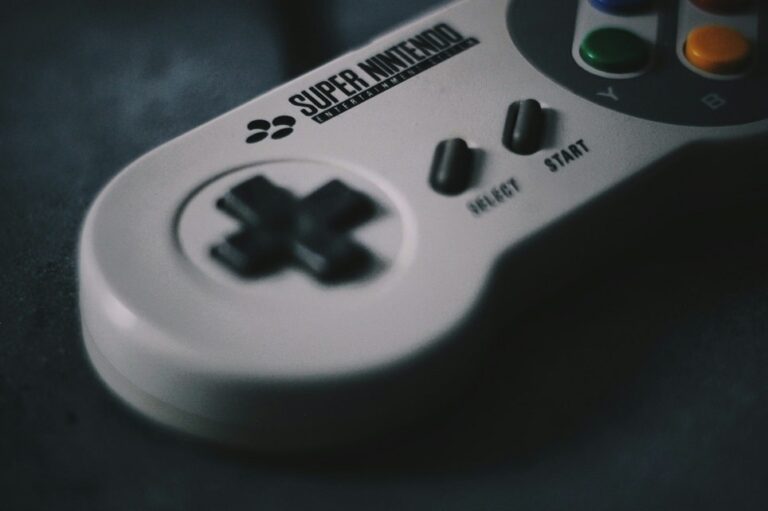
The shift to 16-bit processing power in the fourth generation ushered in enhanced graphics, richer sound, and a fierce marketing rivalry that captured the imagination of gamers worldwide. This era centered on the battle between the Sega Genesis and the Super Nintendo Entertainment System (SNES).
Genesis vs. SNES: Marketing and Technical Rivalry
Sega launched the Genesis (known as the Mega Drive in most territories) in 1989 in North America, capitalizing on the transition to 16-bit technology before Nintendo was ready. Sega positioned the Genesis as the “cooler,” edgier alternative to Nintendo’s family-friendly image. Their aggressive marketing campaigns, often featuring the iconic phrase “Sega does what Nintendon’t,” targeted an older, teenage demographic.
The Genesis was bundled with Sonic the Hedgehog, a title designed specifically to showcase the console’s speed and challenge the dominance of Mario. Nintendo countered with the SNES (1991), which, while slower to market, often boasted superior color depth, graphical scaling (Mode 7), and sound capabilities, which allowed for complex titles like Super Mario World and The Legend of Zelda: A Link to the Past. The competition was brutal and innovative, pushing both companies to develop better technology and stronger software libraries, resulting in one of gaming’s most fondly remembered eras.
The Introduction of CD-ROM Technology
A crucial technological development in this generation was the attempt to introduce CD-ROMs as game media. The CD format offered massive storage capacity compared to expensive cartridges, leading to games with full-motion video (FMV), Red Book audio, and larger worlds. Systems like the TurboGrafx-16 CD and the Sega CD add-on attempted to leverage this technology, but were hampered by high costs and technical limitations. The Philips CD-i also entered the fray, largely focusing on multimedia functionality. However, none of these add-ons achieved mainstream success, demonstrating that the market was not yet ready to abandon the instant loading and simplicity of the cartridge format, though the underlying shift toward optical media had begun.
Generation Five (1993–2002): The 3D Revolution and CD Dominance
The fifth generation, characterized by 32-bit and 64-bit processors, was the watershed moment when gaming transitioned irreversibly from 2D sprites to polygonal 3D graphics. This shift attracted a more mature audience and fundamentally changed game design, storytelling, and hardware configuration. It was also the generation that introduced a new giant who would permanently alter the console landscape: Sony.
Sony PlayStation: A New Market Leader Emerges
The Sony PlayStation (1994) was born out of a failed collaboration between Sony and Nintendo to develop a CD-ROM add-on for the SNES. Sony, seeing an opportunity, developed its own console, embracing the CD-ROM format fully. This decision gave the PlayStation several key advantages: cheaper manufacturing costs (CDs cost less than cartridges), vast storage capacity for complex 3D assets and full-motion videos, and a welcoming approach to third-party developers, many of whom were frustrated by Nintendo’s stringent licensing fees and hardware costs.
Titles like Final Fantasy VII, Metal Gear Solid, and Resident Evil demonstrated the cinematic potential of 3D gaming and attracted a demographic beyond the traditional gaming crowd. The PlayStation’s success—selling over 102 million units—not only established Sony as a market leader but also firmly cemented the CD-ROM as the industry standard for game distribution.
Nintendo 64: Cartridges, Analog Control, and Four-Player Fun
Nintendo’s entry, the Nintendo 64 (1996), maintained the use of cartridges, a decision that gave it faster loading times and mitigated piracy risks, but severely limited game storage capacity and increased production costs. The N64 pioneered the use of a Z-axis trigger and the analog control stick, which was essential for smooth, intuitive navigation in 3D environments. This controller innovation became the industry standard for all subsequent consoles.
While the N64 lacked the third-party support of the PlayStation, its success was driven by generation-defining first-party titles, including the 3D platforming masterpiece Super Mario 64 and the revolutionary action-adventure The Legend of Zelda: Ocarina of Time. The console also popularized four-player competitive local multiplayer with titles like Mario Kart 64 and GoldenEye 007.
The fifth generation also featured the Sega Saturn, which struggled due to its complex hardware architecture and lack of effective 3D rendering capabilities compared to its rivals, ultimately signaling Sega’s decline in the hardware market.
Generation Six (1998–2006): Online Gaming and the Triple Threat
The sixth generation introduced unprecedented technological refinement, embracing optical media (DVDs) and permanently integrating online connectivity into the console experience. This era saw the emergence of a new, major player that would define the next two decades of competition.
Sega Dreamcast: The Pioneer of Built-in Internet
Sega launched the Dreamcast in 1998 as its final attempt to regain market share. It was a console ahead of its time, featuring a built-in modem for internet connectivity and online multiplayer gaming via its proprietary service, SegaNet. Groundbreaking titles like Shenmue and Phantasy Star Online demonstrated the potential of a connected console ecosystem. However, the Dreamcast’s early lead was quickly erased by intense competition, the lingering negative perception from the Saturn’s failure, and the anticipation of Sony’s next machine.
Sega discontinued the Dreamcast in 2001, transitioning entirely to third-party software development and marking the end of its 18-year history as a hardware manufacturer.
PlayStation 2: The Multimedia Juggernaut
The PlayStation 2 (PS2), launched in 2000, is the best-selling video game console of all time, surpassing 155 million units sold. Its success was due not just to its robust games library but also to its strategic inclusion of a DVD player at a time when standalone DVD players were still expensive. This made the PS2 an affordable, dual-purpose entertainment hub, positioning it in the center of the living room and driving adoption far beyond the core gaming audience.
The PS2 era produced some of the most critically acclaimed and commercially successful franchises in history, including Grand Theft Auto III, God of War, and Kingdom Hearts. Its vast library and longevity cemented the console’s place as a cultural icon.
Microsoft Enters the Arena with the Original Xbox
In 2001, software giant Microsoft entered the console market with the Original Xbox. Its strategy was simple: build a machine based on PC architecture, make it technologically powerful (it was the first console to feature an internal hard drive), and leverage the power of the internet.
The Xbox introduced Xbox Live in 2002, a unified, subscription-based online service that standardized voice chat, friend lists, and cross-game matchmaking. Xbox Live professionalized and popularized console online gaming, setting a blueprint that Sony and Nintendo would eventually follow. Its killer app was Halo: Combat Evolved, which proved that a First-Person Shooter (FPS) could be successful and intuitive using a console controller.
Generation Seven (2005–2013): High Definition, Motion, and Innovation
The seventh generation was defined by the widespread adoption of High Definition (HD) graphics, advanced online capabilities, and a dramatic split in design philosophy between the three main competitors: Microsoft, Sony, and Nintendo.
The Xbox 360 and the Digital Ecosystem Foundation
Microsoft launched the Xbox 360 in late 2005, beating Sony and Nintendo to the market and gaining a significant install base lead. The 360 perfected the Xbox Live infrastructure, introducing the Gamerscore and Achievements systems that became central to the modern gaming meta-experience. It pushed high-definition graphics into the mainstream and established itself as the preferred platform for third-party developers, particularly in the FPS genre.
Sony followed in 2006 with the PlayStation 3 (PS3), an expensive machine due to the inclusion of a Blu-ray player (a strategic decision meant to repeat the success of the PS2’s DVD inclusion). Initially hampered by a complex processor architecture (the Cell Broadband Engine) and a delayed start to its online services, the PS3 eventually found its footing. It popularized free online access (PlayStation Network) and boasted a strong library of exclusive titles, making the generation a protracted and closely fought war.
The Unexpected Winner: The Nintendo Wii
Nintendo deviated completely from the HD arms race with the launch of the Wii in 2006. While the PS3 and Xbox 360 pursued technical superiority and core gamers, the Wii focused on accessibility and a revolutionary controller interface. Its motion-sensing Wiimote attracted a massive casual and non-gaming audience, including families and older adults, who were drawn in by the simplicity and novelty of titles like Wii Sports. The Wii became a cultural sensation, outselling both the PS3 and Xbox 360 dramatically and proving that innovation in control and audience reach could triumph over raw graphical power.
Generation Eight (2012–Present): Interconnected Ecosystems and Hybrid Play
The eighth generation marked the maturation of digital distribution and the creation of seamless, living-room ecosystems. The focus shifted from merely selling hardware to retaining users within proprietary service environments and catering to diverse play styles.
PS4 vs. Xbox One: Focusing on the Core Gamer
The rivalry intensified between the PlayStation 4 (PS4) (2013) and the Xbox One (2013). Sony executed a near-perfect launch, emphasizing its focus on games and ease of development. Microsoft initially positioned the Xbox One as a comprehensive home entertainment system requiring always-on internet and restrictive digital rights management, leading to significant consumer backlash. Microsoft quickly reversed course, but the PS4 capitalized on the initial misstep and amassed a massive lead, eventually becoming one of the best-selling consoles ever. This era solidified gaming’s relationship with social media, streaming (via Twitch/YouTube Gaming), and game-as-a-service models.
The Phenomenon of the Nintendo Switch
Nintendo, recovering from the commercial disappointment of the Wii U, launched the Nintendo Switch in 2017. The Switch popularized the concept of the hybrid console, a device that seamlessly transitions between a traditional home console (docked to a TV) and a powerful handheld device (using detachable Joy-Con controllers). This unique selling point allowed gamers to take blockbuster titles like The Legend of Zelda: Breath of the Wild and Animal Crossing: New Horizons anywhere, tapping into the handheld market abandoned by Sony and challenging the rise of mobile gaming. The Switch’s phenomenal success underscored the continued viability of hardware innovation and specialized niche marketing.
Generation Nine (2020–Present): The Age of Velocity and Fidelity
The current generation, starting in 2020 with the launch of the PlayStation 5 and Xbox Series X/S, is defined by an unprecedented focus on performance metrics, particularly loading speed and graphical fidelity. The competition has also intensified in the realm of subscription services and cloud streaming.
PlayStation 5 and Xbox Series X/S: Storage Speed and Ray Tracing
The PlayStation 5 (PS5) and Xbox Series X represent monumental leaps in raw processing power, supporting 4K resolution at high frame rates and introducing Ray Tracing, a technique that simulates the physical behavior of light for highly realistic visuals. However, the most transformative innovation has been the adoption of custom, high-speed Solid State Drives (SSDs). These drives have virtually eliminated loading times, fundamentally changing how developers design games and allowing for vast, seamless worlds. The Xbox Series X and its digital-only counterpart, the Series S, also introduced the Xbox Velocity Architecture, focusing on optimizing storage and I/O performance.
The Expanding Role of Cloud Gaming and Subscription Services
While the hardware is exceptional, the ninth generation battleground is arguably software and services. The growth of massive subscription platforms has created a new competitive dynamic. The services are not just about access; they are about ecosystem lock-in and offering immense value immediately upon purchase. This development marks a significant economic shift in the industry.
- Xbox Game Pass: Often called the “Netflix of Gaming,” Game Pass offers hundreds of titles, including all first-party Xbox games from day one of release, for a single monthly fee. Its success has pushed Microsoft’s strategy toward building a comprehensive, multi-platform gaming ecosystem that includes PC and cloud streaming.
- PlayStation Plus Reimagined: Sony responded by restructuring PlayStation Plus into tiered offerings (Essential, Extra, and Premium). The higher tiers provide access to large catalogs of PS4 and PS5 games, along with a library of classic titles from earlier generations, emphasizing backward compatibility and historical value.
- Cloud Gaming Integration: Services like Xbox Cloud Gaming (xCloud) and PlayStation Plus Premium (streaming capabilities) allow users to stream high-end console games to non-traditional devices like smartphones, tablets, and low-spec PCs. This expands the console experience beyond the dedicated hardware itself, indicating a future where ownership of a physical console may become optional for many.
- Backward Compatibility: Both major platforms now place a strong emphasis on backward compatibility, allowing players to access and often enhance games from the previous generations. This preserves gaming history and adds immediate value to the new hardware purchase.
- Digital-Only Models: Both Sony and Microsoft released digital-only variants of their consoles, recognizing the mass market shift away from physical media and embracing the economic efficiency of digital distribution for both consumers and publishers.
- Cross-Platform Play: The current generation sees an unprecedented acceptance and promotion of cross-platform play (cross-play), allowing gamers on competing consoles and PC to interact in the same game environments, tearing down long-standing walls between communities.
- Variable Refresh Rate (VRR) Technology: This generation has made VRR, previously a PC feature, standard on consoles. VRR synchronizes the screen’s refresh rate with the console’s frame rate, eliminating screen tearing and improving visual fluidity, especially important in high-speed, demanding games.
Technological Milestones That Defined Console Evolution
The progression of consoles is a microcosm of wider computer science history. Key technological milestones were not just features, but revolutionary shifts that propelled the entire medium forward, moving gaming from simple physics simulations to sophisticated digital worlds.
From Dedicated Hardware to Modular Cartridges
The move from Generation One’s dedicated circuitry to Generation Two’s cartridge-based systems changed the economic model of the industry. Dedicated consoles were single-game devices, doomed to obsolescence once the game grew stale. The cartridge, holding the game’s ROM, externalized the software from the hardware. This modularity made the console a platform rather than a product, infinitely extending its commercial lifespan and creating the fundamental model of the video game marketplace that still operates today.
The transition from 8-bit to 16-bit processing, and later to 32/64-bit architectures, drove parallel growth in system memory and graphical complexity. Each jump meant consoles could handle more simultaneous processes, a larger color palette, and more complex physics calculations. The late fourth and early fifth generations saw specialized chips placed directly inside cartridges (like the Super FX chip in Star Fox) to compensate for the base console’s limitations and drive 3D rendering capabilities before truly 3D consoles were commonplace.
The Shift from 2D Sprites to Polygonal 3D Worlds
The jump to 3D graphics in the mid-1990s was the single most defining technological shift after the invention of the cartridge. Prior to this, games relied on 2D sprites—bitmaps that represented characters and objects. The fifth generation introduced polygonal rendering, where characters and environments were built from interconnected geometric shapes (polygons). This shift was not merely visual; it required completely different programming paradigms, moving away from manipulating sprites on a fixed background to rendering a virtual camera’s view of a dynamic, three-dimensional world in real time. This change demanded new input methods, leading directly to the invention and standardization of the analog stick and rumble features for enhanced player immersion and control.
The Economic and Cultural Impact of Console Gaming
Beyond the technological race, the console industry has created an economic powerhouse and shaped global popular culture, influencing everything from cinematic storytelling to music and fashion.
Best-Selling Systems and Market Dynamics
The sales figures for consoles are a testament to effective strategy, technological value, and timing. The PlayStation 2 remains the unrivaled champion, having perfectly timed the introduction of the DVD player while maintaining strong developer relations. More recently, the success of the Nintendo Switch demonstrated that raw power is not the sole determinant of success; market differentiation, portability, and focusing on unique experiential joy can unlock new, massive audiences. The current high investment in subscription services shows that the economic model is shifting from high upfront hardware profit to long-term service revenue and user retention.
Throughout history, the market has often been a contest between technical superiority (e.g., Xbox, PS3/PS4/PS5) and experiential innovation (e.g., Wii, Switch). The ongoing existence of these two differing philosophies ensures a constantly evolving landscape, preventing the market from stagnating and pushing boundaries in every direction, from graphics to accessibility.
Console Gaming’s Influence on Pop Culture
Console gaming has been a primary driver of pop culture trends, transcending its origins as a niche hobby:
- Character Iconography: Iconic characters like Mario, Sonic the Hedgehog, and Master Chief have become globally recognized, rivaling classic cinematic and cartoon figures. Their designs and stories are deeply embedded in the collective cultural consciousness of multiple generations across the globe.
- The Language of Gaming: Terms, actions, and concepts originating on consoles, such as “respawn,” “speedrunning,” “combo attack,” and “boss fight,” have entered the broader lexicon, used in contexts far removed from interactive media to describe real-world competitive or challenging scenarios.
- Interactive Storytelling: Console games pioneered complex, hours-long narratives with branching paths and player agency, influencing linear media formats. Modern games often employ professional screenwriters and Hollywood actors, blending high-end cinematic production with player interaction.
- Music and Sound Design: The 8-bit chiptunes of early systems developed into a recognizable musical genre, and console game scores today are routinely recorded by full orchestras, frequently charting high on popular music lists and driving the industry’s role in music composition.
- Evolving Demographics: The success of the Wii and, more recently, the broad appeal of the Nintendo Switch demonstrated that console gaming is not limited to a single demographic, helping to break down traditional stereotypes associated with gamers and establishing gaming as a truly universal pastime.
- The Birth of Streaming Culture: The eighth generation normalized streaming gameplay, turning gaming from a private hobby into a public, social spectator sport. Platforms like Twitch and YouTube Gaming owe their initial growth largely to the ease of sharing console gameplay clips and livestreams.
- Technological Proliferation: Console innovations, such as the analog stick, force feedback controllers (rumble), and motion controls, often find their way into other consumer electronic interfaces, normalizing complex input methods for the general public.
- Fashion and Merchandise: The visual aesthetics of major franchises are consistently translated into high-demand apparel, collectibles, and collaborations with luxury brands, proving the monetary and cultural value of the intellectual properties born on these platforms.
The Future Trajectory of Home Entertainment
The journey from the Magnavox Odyssey to the ninth generation consoles reveals a clear trajectory toward seamless integration, service-based access, and photorealistic experiences driven by exponential computing power. The future is less about discrete hardware boxes and more about the interconnected ecosystem that the hardware facilitates.
The Convergence of Hardware and Services
The trend established in the ninth generation—where subscription services and cloud infrastructure take precedence—will only accelerate. Console manufacturers are transitioning into Gaming Platform Providers, with the goal of making their software available everywhere, irrespective of the physical device. This convergence means that future console generations may focus less on revolutionary architectural shifts and more on optimizing the flow of data and services, perhaps leaning into modular or upgradeable hardware designs to support continuous performance improvements without requiring complete system resets.
Emerging Trends: VR/AR Integration
Virtual Reality (VR) and Augmented Reality (AR), while currently niche, represent a potentially disruptive force in the evolution of home consoles. With devices like the PlayStation VR 2 demonstrating high-fidelity virtual experiences tethered to a console, the line between traditional gaming and fully immersive environments continues to blur. Future consoles are likely to dedicate significant resources to VR/AR processing, turning the living room console into the central hub for spatial and extended reality entertainment, which will again reshape the user interface and game design philosophies.
Conclusion
The history of video game consoles is a fascinating chronicle of technological competition and market reinvention. Starting with the simple circuits of the Magnavox Odyssey, the industry faced and overcame existential crises, such as the crash of 1983, only to emerge stronger and more defined by the strategic genius of companies like Nintendo, Sony, and Microsoft. Each generation brought crucial innovations—from the cartridge and the analog stick to DVD integration and high-speed SSDs—that redefined entertainment. Today, the console wars have expanded into a contest of services and ecosystems, focusing on how best to deliver boundless, high-fidelity interactive experiences instantly, anywhere. The industry’s evolution demonstrates a consistent pattern: while technology drives potential, true success is achieved by those who best understand and adapt to the changing desires of the global audience, ensuring the console remains the powerful, beating heart of home digital entertainment.