

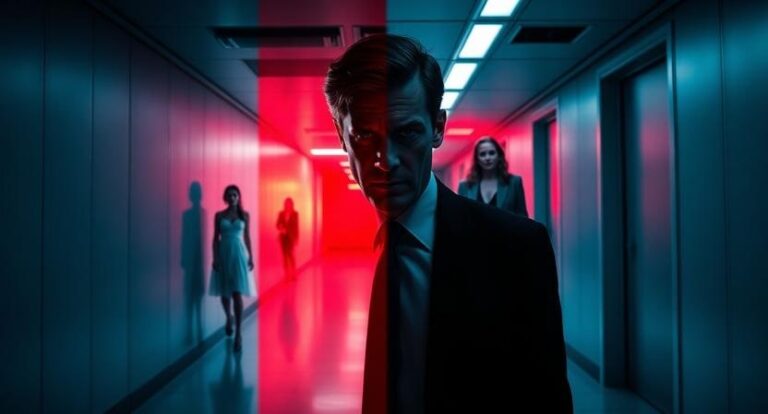
The highly anticipated conclusion to Apple TV Plus’ psychological thriller Severance has left audiences reeling with its explosive revelations and heart-wrenching final moments. The Season 2 finale, titled Cold Harbor, delivered answers to long-standing mysteries while opening entirely new questions about the future of Mark Scout and his fellow severed employees at Lumon Industries. This comprehensive breakdown examines every major plot point, character decision, and narrative twist from the episode that fundamentally changed the trajectory of the series.
The 75-minute finale represents a culmination of story threads woven throughout both seasons, bringing characters to crossroads that will define their futures. From the disturbing truth about the Testing Floor experiments to Mark’s impossible choice between two versions of the woman he loves, the episode maintains relentless tension while exploring profound questions about identity, consciousness, and the nature of selfhood.
Understanding the Cold Harbor File and Gemma’s Torture
Throughout Season 2, Mark’s innie worked diligently on completing the mysterious Cold Harbor file, sorting numbers without comprehending their significance. The finale finally revealed the horrifying truth behind these data refinement tasks. According to Harmony Cobel, the numbers Mark and his Macrodata Refinement team sorted represented the building blocks of Gemma’s consciousness, specifically corresponding to the four tempers in Kier Eagan’s philosophy: woe, frolic, malice, and dread.
Each file Mark completed throughout his time at Lumon created a new innie consciousness for Gemma. These artificial personalities were then subjected to unpleasant experiences in corresponding rooms on the Testing Floor. The Wellington file related to a room where Gemma endured painful dental procedures. The Allentown file connected to an endless Christmas setting where she wrote thank-you notes until her hand cramped. Other rooms simulated turbulent airplane flights and recreated traumatic memories from her past.
The Cold Harbor room itself represented the final and most devastating test. Gemma’s innie entered a space containing only a single crib, which she was instructed to dismantle piece by piece. This cruel experiment directly exploited her deepest psychological wound: the miscarriage she suffered during her marriage to Mark and their subsequent failed fertility treatments. Lumon deliberately designed this test to measure whether the severance barrier could withstand even the most profound emotional trauma.
The True Purpose of Lumon’s Testing Floor Experiments
The revelation about the Testing Floor’s function transforms our understanding of Lumon’s objectives. The company wasn’t simply refining data or conducting abstract research. Instead, they were developing consumer-grade severance technology that would allow ordinary people to avoid experiencing life’s uncomfortable moments. By testing scenarios like dental appointments, turbulent flights, and other everyday stressors, Lumon aimed to create a product where disposable consciousnesses could endure unpleasant situations without the primary personality retaining any memory.
This commercial application explains why Gemma specifically was chosen as the primary test subject. Her connection to Mark provided an additional research opportunity: Could emotional bonds transcend memory barriers? Would Mark’s innie recognize something about the wellness counselor Ms. Casey despite having no conscious memory of their relationship? Harmony Cobel’s fascination with their interactions stemmed from these scientific questions about the limits of severance technology.
The experiments also tested whether Lumon could create multiple distinct innie personalities within a single individual, each activated by specific environmental triggers. Gemma possessed 25 separate innie consciousnesses, with Cold Harbor representing the twenty-fifth and final personality. The significance of this number remains mysterious, though it likely relates to Lumon’s roadmap for commercial severance deployment.
Mark’s Impossible Decision: Choosing Between Two Loves
The finale’s emotional core centered on the conflict between Mark’s two selves and their competing desires. The episode began with an unprecedented conversation between innie Mark and outie Mark, facilitated by a video camera at Lumon’s birthing retreat cabins. This surreal exchange allowed both personalities to communicate directly for the first time, revealing the fundamental incompatibility of their goals.
Outie Mark desperately needed his innie’s cooperation to rescue Gemma from the Testing Floor. His plan required the innie to complete Cold Harbor, descend to the lower levels, and help Gemma reach the severed floor exit. However, outie Mark’s ultimate objective involved ending severance entirely through reintegration, which would effectively erase the innie’s existence. More painfully, it would separate innie Mark from Helly R., the woman he had fallen deeply in love with during his two years of consciousness at Lumon.
The Conversation That Changed Everything
During their video exchange, the tension between Mark’s two selves escalated rapidly. Innie Mark quickly perceived that outie Mark viewed him as a lesser being, a mere tool to achieve his own objectives. When outie Mark mistakenly called Helly by the wrong name, that single error crystallized the innie’s realization that his outie didn’t respect or understand his life, relationships, or autonomy.
This conversation represented more than a disagreement between two aspects of one person. It illuminated the fundamental ethical questions at the heart of severance technology. Does an innie personality deserve the same rights and consideration as an outie? If consciousness is functionally separate, isn’t each personality entitled to pursue their own happiness? These philosophical dilemmas drove the finale’s heartbreaking conclusion.
Despite his reservations, innie Mark initially agreed to help rescue Gemma. His motivations were complex: genuine concern for a woman his outie loved, a desire to thwart Lumon’s plans, and perhaps a hope that some accommodation might be possible. However, circumstances would force him to make an immediate, irrevocable choice.
The Daring Rescue Mission and Its Consequences
Upon returning to Lumon’s severed floor, Mark’s innie faced an elaborate celebration orchestrated by Mr. Milchick. A marching band from the Department of Choreography and Merriment performed in honor of Cold Harbor’s completion, creating both spectacle and distraction. Helly R. seized this opportunity to hide Milchick’s walkie-talkie in the bathroom, while Dylan G. trapped the manager inside by blocking the door with a vending machine.
With Milchick contained, innie Mark followed Irving’s detailed instructions to navigate the dark Exports Hall leading to the Testing Floor elevator. His journey into Lumon’s basement brought him face-to-face with the company’s most disturbing practices. The goats that had mystified viewers throughout the series were revealed to serve a ritualistic purpose: Lumon’s cult-like leadership believed sacrificed goats would guide deceased test subjects’ spirits to Kier Eagan in the afterlife.
Mark witnessed Lorne, the leader of Mammalians Nurturable, preparing to sacrifice a baby goat named Emile as part of this ceremony. Mr. Drummond questioned whether the goat possessed sufficient verve and wiles to serve its spiritual function. This scene confirmed that beneath Lumon’s corporate facade operated a genuine religious cult with deeply unsettling practices.
Violence, Transformation, and Unexpected Allies
Mark’s rescue attempt led to physical confrontation with Mr. Drummond, who attacked him viciously. During this struggle, Mark experienced an involuntary switch to his outie consciousness, a side effect of the incomplete reintegration process he had begun. This transition left him vulnerable, as his outie lacked context for the dangerous situation. Fortunately, Lorne intervened with a nail gun, threatening Drummond and ultimately saving Mark’s life.
In a moment that revealed her humanity despite working for Lumon, Lorne demanded no more killing of humans or animals. Mark convinced her not to shoot Drummond, instead forcing the injured man at gunpoint to lead him to Gemma’s location. When Drummond attempted another attack, Mark accidentally shot him in the neck, an injury that would prove fatal.
Mark’s outie then used Drummond’s blood and body to access the Cold Harbor room where Gemma waited. Their reunion was brief but intensely emotional. For the first time in two years, they embraced as their true selves. They shared passionate kisses in the elevator ascending to the severed floor, savoring a moment both had thought impossible.
The Heartbreaking Final Choice
When the elevator reached the severed floor, the threshold technology reactivated both Mark and Gemma’s chips. He became his innie self again, while Gemma transformed into the emotionless Ms. Casey. Innie Mark guided Ms. Casey to the exit stairwell, where crossing the threshold would return her to Gemma’s consciousness and allow her to escape Lumon entirely.
The moment Ms. Casey stepped through the doorway and became Gemma again, she turned back and desperately called for Mark to follow her. But Mark remained on the severed floor side of the threshold, still his innie self. He stood frozen, looking back and forth between the exit where Gemma pleaded for him to come home, and the opposite end of the hallway where Helly R. had appeared.
Why Innie Mark Chose Helly Over Gemma
After an agonizing pause, innie Mark made his decision. He turned away from Gemma and walked back toward Helly. Together, they clasped hands and began running through the red-lit corridors of Lumon, leaving Gemma behind the exit door, sobbing and screaming for him to return.
This devastating choice stems from multiple factors that the episode carefully established. First, innie Mark recognized that stepping through that exit would likely mean his permanent erasure. If outie Mark successfully completed reintegration and ended severance, the innie consciousness would cease to exist. From his perspective, walking through that door meant choosing nonexistence.
Second, innie Mark genuinely loves Helly R. Their relationship developed over two years of shared experiences, fears, and rebellion against Lumon. These feelings are real and profound, not diminished by being held by a severed consciousness. When faced with choosing between a woman he has no memory of loving and the person who represents his entire emotional world, he chose the relationship he actually knows and experiences.
Third, the trust between Mark’s innie and outie had been irreparably damaged during their cabin conversation. Innie Mark perceived that his outie saw him as expendable, as a means to an end rather than a person with legitimate desires and rights. This recognition of his outie’s willingness to sacrifice him fed into the innie’s justified resentment and desire for self-preservation.
Actor Adam Scott described the choice as emotionally straightforward for the innie, even if logically complex. The innie made a decision to prioritize his own existence and love, asserting his personhood and refusing to be erased for his outie’s benefit. This act represents both selfishness and self-advocacy, depending on one’s philosophical stance regarding the moral status of severed consciousnesses.
Jame Eagan’s Disturbing Interest in Helly
Earlier in the finale, Helly R. received an unexpected and unsettling visit from Jame Eagan, her outie Helena’s elderly father and Lumon’s current chief executive. Their confrontation revealed deeply troubling dynamics within the Eagan family and provided insight into Lumon’s leadership structure.
Jame confessed to Helly that he does not love his daughter Helena. He explained that he used to see the spirit of Kier Eagan in her, but that divine presence departed as she matured. However, when Helly lunged at him with a pen as a weapon, he became pleased, exclaiming that he could see Kier within her innie self. This reaction suggests Jame views Helly as superior to Helena, perhaps even as the true heir to Lumon’s legacy.
This scene adds layers to our understanding of the Eagan family’s cult-like devotion to their ancestor’s ideology. Jame doesn’t value his actual daughter as a person, but rather judges her based on how well she embodies Kier’s principles. His approval of Helly’s violent resistance indicates that he prizes certain qualities—aggression, defiance, strength—over familial bonds or conventional morality.
The implications for future seasons are significant. If Jame genuinely prefers Helly to Helena, he might protect or empower the innie even against his daughter’s wishes. This could provide Helly and Mark with an unexpected advantage in their conflict against Lumon and their own outies. Alternatively, Jame’s interest might be more sinister, viewing Helly as a tool for achieving his own mysterious objectives regarding Kier’s resurrection or legacy.
The Mystery Surrounding Harmony Cobel’s Role
Harmony Cobel emerged as a surprisingly sympathetic figure in the finale, despite her long history of deception and manipulation. Season 2 revealed that Cobel actually invented the severance technology, not the Eagan family as previously believed. Young Harmony worked brutal shifts at a Lumon ether factory as a child, where chemical numbing provided her only escape from suffering. This traumatic background inspired her to develop severance as a technological solution to emotional and physical pain.
In the finale, Cobel demonstrated genuine concern for both Mark and Gemma’s welfare. She provided crucial information to innie Mark about the nature of his work and Gemma’s location. Her motivations remain complex and somewhat ambiguous. Devon, Mark’s sister, chose to trust Cobel despite knowing about her extensive deception, recognizing moments of authentic vulnerability and humanity beneath the masks.
The question of Cobel’s ultimate allegiance persists heading into Season 3. She clearly possesses maternal feelings toward certain employees, particularly Mark. However, she also remains deeply connected to Lumon’s ideology and Kier’s philosophy. The tension between her protective instincts and her commitment to severance technology will likely drive significant plot developments in future episodes.
What Happened to Irving and Burt
Notably absent from the finale were Irving Bailiff and Burt Goodman, whose storyline concluded in the penultimate episode. After Lumon discovered the extent of Irving’s investigation into the company, Mr. Drummond searched his apartment, clearly intending to neutralize the threat Irving posed. However, Burt intervened to save Irving’s life.
Burt revealed himself as a former Lumon driver who had delivered countless people to unknown fates on the company’s behalf. Though he claimed never to have directly harmed anyone, he acknowledged complicity in Lumon’s darker operations. In what appeared to be an act of redemption, Burt drove Irving to a train station and purchased him a one-way ticket, instructing him to travel as far from the town of Kier as possible and never return.
The Emotional Farewell and Its Implications
The goodbye between Burt and Irving carried profound emotional weight. Irving desperately wanted to begin a relationship with Burt, repeatedly stating he was ready to start a life together. However, Burt rejected this possibility, citing his marriage to Fields and the complications of their situation. When Irving leaned in for a kiss, Burt pulled away, offering only a handshake and the words goodbye, buddy.
This scene paralleled an intimate moment between their innies in Season 1, suggesting that emotional connections can transcend the severance barrier in ways Lumon doesn’t fully understand or control. The parallel also highlighted what severance steals from people: the ability to know and build upon their own emotional history.
Ben Stiller confirmed that this farewell represents the end of Burt and Irving’s story for the immediate future. Whether Irving will return in Season 3 remains uncertain. His innie has been permanently terminated, and his outie faces potential danger from Lumon despite his exile. The mysterious phone call Irving made earlier in the season suggests he might be connected to a larger resistance movement, which could bring him back into the narrative despite Burt’s warnings.
The Fate of Dylan and His Family
Dylan G.’s arc in Season 2 explored the painful complications that arise when an innie becomes aware of their outie’s life. After learning that his outie has a wife named Gretchen and young children, innie Dylan became obsessed with connecting to this family. He attempted to build a relationship with Gretchen, who found herself attracted to this different version of her husband.
However, Gretchen ultimately couldn’t accept the situation. The ethical and emotional complexities of having a relationship with her husband’s innie proved too much. This rejection devastated Dylan, who had invested his hopes in the possibility of sharing his outie’s family life. The finale showed Dylan’s continued loyalty to his MDR colleagues, particularly in his defiant confrontation with Mr. Milchick and his assistance in Mark’s rescue attempt.
Dylan’s story illustrates one of severance’s cruelest aspects: innies can become aware that their outies have rich, full lives with relationships and responsibilities, but they cannot truly participate in or benefit from those lives. This knowledge without access creates a unique form of suffering that Lumon’s marketing carefully obscures.
Season 3 Questions and Theories
The finale’s explosive conclusion sets up numerous narrative threads for the already-confirmed third season. The most immediate question concerns what Mark and Helly will do now. They ran deeper into Lumon’s building with no clear plan or escape route. The red alarm lights suggest the facility has entered lockdown mode, making exit nearly impossible. They face capture by Lumon security forces, potential harm from company enforcers, and the ongoing conflict with their own outies.
The Reintegration Process and Its Complications
Mark remains in the early stages of reintegration, experiencing glimpses of his outie’s memories and occasionally switching between consciousnesses involuntarily. Season 3 will likely explore whether this process can be completed or reversed. The reintegration might offer possibilities for compromise between innie and outie Mark, or it might lead to one consciousness dominating or eliminating the other.
The incomplete reintegration also raises questions about consent and medical ethics. Mark’s outie began this procedure without his innie’s knowledge or permission, effectively subjecting another consciousness to experimental brain surgery. If reintegration progresses, will it destroy innie Mark’s distinct personality, or will it create a hybrid consciousness that incorporates both selves?
Gemma’s Next Move
Gemma escaped the Cold Harbor room and the Testing Floor, but she remains traumatized and heartbroken. Her husband chose another woman over her, even though that woman is functionally his own alternate personality’s romantic interest. How will Gemma process this betrayal? Will she work with Devon and possibly Cobel to rescue Mark from Lumon, or will her pain and anger lead her in a different direction?
Additionally, Gemma still possesses 25 distinct innie personalities within her mind. What happens to these consciousnesses now that she has escaped? Can they be erased, or will Gemma experience intrusive thoughts, memories, or personality shifts related to these implanted identities? Her psychological state and recovery will likely form a significant storyline in Season 3.
The Broader Implications of Lumon’s Plans
The finale hinted that Lumon’s experiments serve a larger purpose beyond consumer convenience. Doctor Mauer screamed that Mark would kill them all as he and Gemma escaped, suggesting catastrophic consequences if the Testing Floor research doesn’t continue. This cryptic warning might reference:
- Kier Eagan’s potential resurrection: Fans have theorized that Lumon’s ultimate goal involves bringing their founder back to life, possibly by constructing a perfect consciousness to host his personality. Gemma’s 25 innies might represent steps toward creating this receptacle.
- Global severance deployment: If Lumon successfully perfects consumer severance technology, they could transform human society by eliminating pain, trauma, and negative emotions on a massive scale. This dystopian future might be what Mauer referenced.
- The collapse of severance technology: Alternatively, Mauer might have meant that stopping the experiments would cause existing severance chips to fail, potentially killing or severely harming millions of severed employees worldwide.
- Economic and corporate collapse: Lumon’s power and influence span the globe. Disrupting their core research might trigger economic catastrophe or corporate warfare with unpredictable consequences.
Milchick’s Evolution and Potential Betrayal
Seth Milchick underwent significant character development in Season 2. Initially promoted to manage the severed floor after Cobel’s demotion, he appeared to be a loyal Lumon company man. However, subtle moments suggested growing doubts about his allegiance. The unsettling paintings given to him as gifts from Lumon leadership seemed designed to remind him of his place and obligations.
In the finale, Milchick reverted to supporting Lumon, but his ultimate trajectory remains uncertain. Will he continue serving the company, or will his evolving consciousness lead him to join Mark and Helly’s uprising? His unique position as a non-severed employee with extensive knowledge of floor operations makes him valuable to either side.
The Symbolism of the Final Scene
The finale’s last shot features Mark and Helly running hand-in-hand through Lumon’s corridors, bathed in red warning lights, as Mel Tormé’s rendition of The Windmills of Your Mind plays. This song choice carries significant meaning. The track is best known from the 1968 film The Thomas Crown Affair, where it underscores themes of impossible love, pursuit, and characters trapped by their own natures.
In that film, Steve McQueen’s bank robber and Faye Dunaway’s investigator fall in love despite being on opposite sides of the law. Their relationship is doomed by their fundamental identities and conflicting obligations. The parallel to Mark and Helly’s situation is clear: they love each other deeply, but forces beyond their control threaten to tear them apart permanently.
The red lighting that bathes the running couple also carries symbolic weight. Production designer Jeremy Hindle explained that red light appears rarely in Severance, reserved for moments involving genuine love. The alarm system’s red hue transforms the typically sterile white hallways into a space colored by passion, desperation, and the characters’ fierce determination to remain together despite impossible odds.
The slow-motion running sequence evokes The Graduate’s famous final scene, where Dustin Hoffman and Katharine Ross’s characters sit on a bus after disrupting her wedding, their elation gradually giving way to uncertainty about what comes next. Mark and Helly’s sprint through Lumon captures that same emotional arc: the triumph of choosing love followed immediately by the terrifying question of what happens now.
Production and Directorial Excellence
The Season 2 finale showcased the exceptional craft that has made Severance one of television’s most critically acclaimed series. Ben Stiller’s direction maintained relentless tension throughout the 75-minute runtime, balancing action sequences, emotional confrontations, and quiet character moments with masterful pacing.
The episode’s technical achievements deserve recognition. The sequence where innie and outie Mark converse via video camera required Adam Scott to perform opposite himself, recording dummy tracks on his phone to practice the timing and emotional beats. The seamless integration of these performances creates a genuinely unsettling conversation between two aspects of one person.
The Testing Floor’s production design, overseen by Jeremy Hindle, built complete ceilings on set, an unusual choice for television that dramatically enhanced the sense of claustrophobia and realism. The Cold Harbor room’s minimal design, containing only a crib against stark white walls, created maximum emotional impact with minimal elements.
Theodore Shapiro’s score continued to drive the narrative’s emotional and suspenseful moments. The music distinguishes between the severed floor’s oppressive corporate environment and the Testing Floor’s more clinical horror, while the finale’s climactic scenes benefit from carefully chosen pre-existing tracks that add layers of meaning.
Thematic Depth and Philosophical Questions
Beyond its thriller elements, the Season 2 finale grappled with profound philosophical questions about identity, consciousness, and autonomy. The central conflict between innie and outie Mark forces viewers to consider: If we separate a person’s consciousness into two distinct identities, which one is the real person? Do both deserve equal moral consideration? Can one version ethically sacrifice the other for their own benefit?
The show presents these questions without offering easy answers. Viewers might sympathize with outie Mark’s desperate desire to reunite with his wife, while simultaneously recognizing innie Mark’s right to preserve his own existence and pursue his own happiness. The fact that both positions carry legitimacy makes the conflict genuinely tragic rather than simply dramatic.
Severance also explores themes of corporate exploitation and the commodification of human consciousness. Lumon’s business model literally involves creating and destroying human minds for profit. The innies exist purely to serve corporate objectives, their lives and relationships considered disposable by the company and often by their own outies. This mirrors real-world concerns about how corporations extract value from workers’ lives while maintaining legal and social structures that minimize workers’ power and humanity.
The cult-like aspects of Lumon’s culture, particularly the ritual sacrifice of goats and the religious devotion to Kier Eagan’s teachings, comment on how corporations often demand ideological commitment from employees. The boundary between legitimate workplace culture and cult behavior grows disturbingly thin within Lumon’s walls.
Conclusion
The Severance Season 2 finale delivered a masterclass in serialized storytelling, answering long-standing mysteries while establishing compelling conflicts for future seasons. The revelation of the Testing Floor’s true purpose, Mark’s devastating choice between Gemma and Helly, and the various character trajectories combine to create one of television’s most gripping and thought-provoking episodes in recent years.
Mark’s decision to stay with Helly represents both a victory and a tragedy. He asserted his personhood and refused erasure, but in doing so, he abandoned a woman who had suffered unspeakable trauma while waiting for rescue. Gemma’s heartbreak, Helly and Mark’s uncertain future, Irving’s exile, Dylan’s loneliness, and the unresolved questions about Lumon’s ultimate plans ensure that Season 3 will have rich material to explore.
The finale’s success lies in its refusal to provide neat resolutions. The characters remain trapped in impossible situations without clear paths forward. Mark and Helly run toward an uncertain fate, pursued by forces that vastly outmatch them. Gemma must somehow rebuild a life after her ordeal. The moral questions raised by severance technology grow more complex rather than simpler as the series progresses.
As viewers await Season 3, the finale’s final image lingers: two people running through red-lit corridors, hands clasped, choosing love and existence in defiance of systems designed to deny them both. It’s a powerful statement about human resilience and the fundamental need for connection, even as it acknowledges the devastating costs of such defiance. The journey ahead promises more revelations, conflicts, and ethical dilemmas as Severance continues exploring what it means to be human in a world where consciousness itself has become a corporate commodity.

English Literature graduate from Manarat International University, Bangladesh. Currently works as a freelance Website Manager. Interests include gaming and being an enthusiast for movies, TV shows, and anime binge-watching.