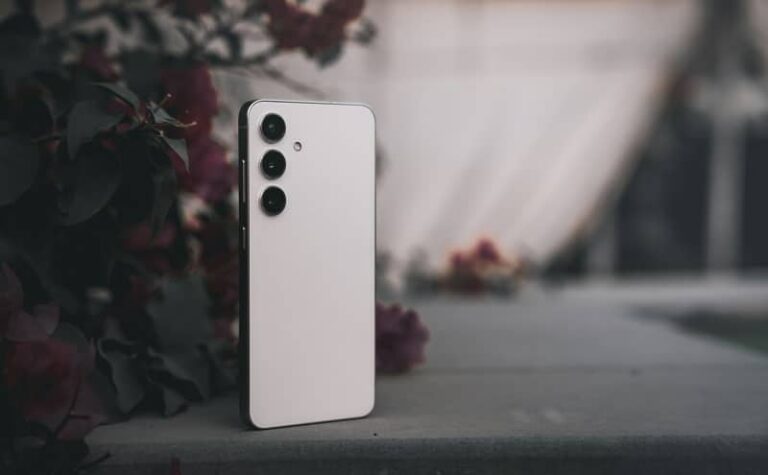
The Samsung Galaxy S24, released in early 2024, has cemented itself as a cornerstone of the modern flagship smartphone market. As we analyze its performance and relevance in March 2026, it is clear that this device was engineered with longevity and computational efficiency at its core. Unlike its predecessors, which often relied on brute-force hardware scaling, the S24 represents a shift toward intelligent, software-driven optimization. This article provides an exhaustive technical deep dive into the S24, evaluating its architecture, camera performance, market position, and long-term viability for professional and power users alike.
Architectural Foundation: The Engine Room
At the heart of the Galaxy S24 lies a bifurcated strategy regarding its processing units, a detail that remains critical for users evaluating the device in the secondary market. The US, Canadian, and Chinese markets received the Qualcomm Snapdragon 8 Gen 3 for Galaxy, an overclocked variant of the standard 8 Gen 3, designed specifically for high-intensity multitasking and gaming. Conversely, international markets were equipped with Samsung’s proprietary Exynos 2400 chipset.
Both platforms utilize a 4nm manufacturing process that significantly reduces thermal output while maximizing peak clock speeds. The Snapdragon 8 Gen 3 boasts a primary Cortex-X4 core clocked at 3.4 GHz, complemented by a sophisticated arrangement of performance and efficiency cores. The Exynos 2400, on the other hand, utilizes a Deca-core architecture, delivering competitive multi-threaded performance that frequently matches the Snapdragon in synthetic benchmarks and real-world application handling.
For the user, this means that regardless of the regional variant, the S24 provides a seamless experience. Thermal management in the S24 has been significantly improved through a larger vapor chamber system compared to the S23, ensuring that even under sustained loads—such as 8K video rendering or high-frame-rate mobile gaming—the device maintains performance stability without aggressive throttling.
Display Mastery: Visual Fidelity
The 6.2-inch Dynamic LTPO AMOLED 2X display on the S24 remains one of the finest in the industry. With a resolution of 2340 x 1080 pixels (FHD+), the screen offers a pixel density of approximately 416 ppi, which is more than sufficient for razor-sharp text and media playback. The integration of LTPO technology is the true highlight here; the display can dynamically adjust its refresh rate between 1Hz and 120Hz.
This adaptive refresh rate is essential for battery conservation. When reading static text, the screen drops to 1Hz, whereas in gaming or UI navigation, it instantly ramps up to 120Hz. The peak brightness, rated at a staggering 2600 nits, ensures that the display remains perfectly legible under direct, harsh sunlight, a feature that distinguishes the S24 from many mid-range competitors that struggle in outdoor visibility. Furthermore, the use of Corning Gorilla Glass Victus 2 provides a level of scratch and drop resistance that has proven its worth over two years of widespread consumer usage.
Camera System: Computational Excellence
The camera array on the S24 is a testament to the refinement of existing sensor technology through advanced image signal processing. The triple-camera system comprises:
- 50MP Primary Wide: Featuring an f/1.8 aperture, OIS, and Dual Pixel PDAF. This sensor is the workhorse of the device, delivering highly detailed images in varying lighting scenarios.
- 10MP Telephoto: Offering 3x optical zoom and OIS. This lens is specifically tuned for portrait photography and distant subjects, maintaining color consistency with the primary sensor.
- 12MP Ultra-Wide: Featuring a 120-degree field of view, ideal for architectural and landscape shots.
While the raw hardware may look familiar, the 2026 performance of these cameras is bolstered by refined AI algorithms. Samsung has integrated “ProVisual Engine” technology, which enhances texture detail, improves low-light noise reduction, and optimizes dynamic range. For creators, the ability to record 8K video at 30 fps remains a flagship-grade feature, though it is the software-level stabilization and object-aware editing tools that truly make the S24 an effective mobile studio.
Software Lifecycle and Future-Proofing
One of the most compelling arguments for the S24 in 2026 is Samsung’s aggressive software support policy. With a commitment of up to seven major Android OS upgrades, the S24 is supported until 2031. This is a radical departure from older generations like the S21, which have already reached the end of their primary update life. For corporate users, data-conscious individuals, and those who plan to keep their device for five or more years, this support cycle is the most significant value-add.
One UI 6.1, and subsequent iterations, have transformed the user experience. The integration of advanced AI features—such as real-time language translation in calls, AI-assisted note summarization, and generative photo editing—means that the device feels more capable today than it did at launch.
Market Positioning and Value Analysis
In the 2026 smartphone market, the S24 occupies a unique “compact premium” niche. While many manufacturers have pivoted to “phablet” sizing (6.7 inches and above), the S24 provides a flagship experience in a 6.2-inch chassis. This size is increasingly rare, catering specifically to users who value one-handed ergonomics.
Economically, the S24 has hit a sweet spot. With original MSRPs now in the past, the secondary market offers high-quality units at prices that undercut many new mid-range devices. When choosing a model, the 256GB storage option is widely recommended as the “gold standard” for most users, given that 128GB fills rapidly due to high-resolution video files and pre-installed AI assets, and the lack of a microSD slot makes storage choices permanent.
Technical Maintenance and Longevity
Maintaining the S24 in peak condition involves standard best practices, though its premium build necessitates some care. The battery, rated at 4000mAh, is optimized for all-day usage under moderate conditions. To extend the health of this cell, power users often utilize the ‘Protect Battery’ feature, which caps charging at 80% or 85% to mitigate the chemical degradation associated with high-voltage charging.
Physically, the ‘Enhanced Armor Aluminum’ frame is robust, but like all glass-backed devices, a case is recommended to protect the integrity of the rear panel. Furthermore, the IP68 rating remains a benchmark for water and dust resistance, allowing for operation in adverse environments. However, users should be aware that such seals can degrade slightly after years of thermal cycling; therefore, it is advisable to keep the device away from prolonged submersion.
Comparative Context: S24 vs. The Competition
When compared to its predecessor, the S23, the S24 offers a more refined display, a more efficient chipset, and significantly better software support. Compared to the S24 Ultra, the base S24 sacrifices the 200MP sensor, the 5x periscope zoom, and the integrated S-Pen, as well as the more durable titanium frame.
However, for the majority of users—who perform tasks like communication, high-speed mobile browsing, professional document editing, and casual to semi-pro photography—the base S24 offers a higher utility-to-cost ratio. The “Ultra” models are excellent for those whose professional workflow demands a desktop-like experience in their pocket, but the S24 provides the pure, unadulterated flagship feel that the original S-series was built upon.
Frequently Asked Questions (Expanded)
1. Does the S24 still perform well in intensive gaming?
Yes. The Snapdragon 8 Gen 3 and Exynos 2400 are exceptionally capable of running modern mobile titles at high graphics settings. Because of the optimized cooling and efficient architecture, frame drops are minimal even during extended sessions.
2. Why is the 8GB RAM configuration sufficient?
While some competitors offer 12GB or 16GB of RAM, Samsung’s memory management and the optimized nature of One UI mean that 8GB is sufficient for nearly all tasks. Advanced AI background processing is handled by the dedicated NPU on the chipset, which reduces the reliance on raw RAM for these operations.
3. Is the Exynos 2400 really a disadvantage?
In 2026, the performance gap between Exynos and Snapdragon has narrowed to the point of being negligible for the average user. Modern optimization has ensured that both chips provide a consistent, high-performance experience.
4. What is the biggest limitation of the S24?
The primary limitation remains the lack of expandable storage. Without a microSD slot, power users must be intentional about their storage tier selection at the point of purchase.
5. Is the camera zoom usable for professional work?
The 3x optical zoom is excellent for portraits and architecture, but for specialized long-range photography (e.g., wildlife or concert photography), it is not a substitute for the periscope lenses found on the Ultra series.
Conclusion
The Samsung Galaxy S24 stands as a testament to mature mobile engineering. It does not chase trends for the sake of novelty; instead, it refines the fundamental pillars of the smartphone experience: speed, display quality, camera reliability, and longevity.
For the professional in 2026, the S24 offers a device that is as compact as it is powerful. Its future-proof software policy, combined with a chipset that handles modern AI workloads with ease, ensures that it will remain a relevant, high-functioning tool for years to come. By choosing the S24, users are investing in a proven platform that minimizes the need for frequent upgrades while maximizing the utility of a top-tier flagship. As the market continues to evolve, the S24 serves as a reliable anchor, demonstrating that the best technology is often that which consistently performs exactly as needed.