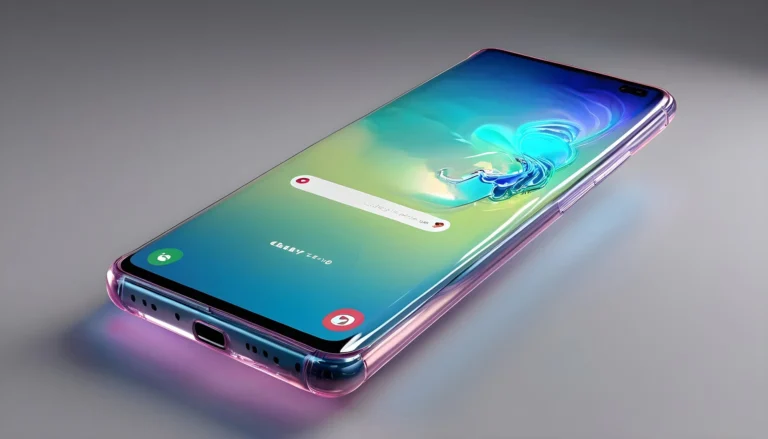
The Samsung Galaxy S10 remains one of the most popular and well-rounded smartphones ever released by Samsung. In this in-depth guide, we walk you through every major specification, highlight its strengths and limitations in 2025, and offer insights to help you decide whether the S10 still makes sense today. From display and hardware to cameras, battery life, connectivity, and longevity — by the end you’ll have a complete, up-to-date picture of what this phone can (and can’t) do.
Hardware & Build Quality
The Galaxy S10 was launched in early 2019, yet its physical build and internal hardware remain impressively capable even years later. The device measures 149.9 × 70.4 × 7.8 mm and weighs about 157 g — a size and weight that still feel compact and manageable compared with many bulky modern smartphones. The build uses a glass front and back (with Gorilla Glass protection) along with an aluminum frame, giving a premium feel while remaining reasonably sturdy.
Under the hood are two main chipset variants — depending on region — which power practically every task you throw at the phone: the Exynos 9820 chipset (primarily for EMEA, LATAM) and the Qualcomm Snapdragon 855 (for USA, China, and some other regions) — both built on advanced 7–8 nm fabrication processes and paired with an octa-core CPU and capable GPUs.
The phone typically ships with 8 GB of RAM and either 128 GB or 512 GB internal storage. It also retains a microSD card slot (on dual-SIM variants) for expandable storage up to 512 GB — a rare feature that many modern flagships have already dropped.
In terms of durability and convenience, the S10 offers IP68 dust and water resistance (making it resistant to dust ingress and submersion up to 1.5 m for 30 minutes), which remains valuable for everyday use.
Performance & Responsiveness
Thanks to its flagship-class chipset and modern RAM/storage configuration, the Galaxy S10 is perfectly capable of handling everyday smartphone tasks even in 2025: multitasking, media consumption, social media, light-to-moderate gaming, photography, and more. The Snapdragon 855 — in particular — has proven to be resilient over time and remains capable for many users.
Although newer phones may have more powerful processors, higher RAM capacities, or more advanced AI capabilities, the balance of CPU/GPU performance, storage speed, and memory gives the S10 enough breathing room for smooth general usage — often without noticeable lag for regular tasks.
However, as with any older flagship, there are trade-offs: for heavy 3D gaming or very intensive multitasking workflows, you may notice longer load times and occasional stutters compared with modern flagship hardware. Users looking for high-end gaming or intensive video editing may find S10 less future-proof than newer models.
Display & Screen Experience
The S10 features a 6.1-inch “Dynamic AMOLED” display with a 1440 × 3040 pixel resolution and roughly 550 pixels per inch (ppi). The screen is curved along the edges (on the S10 and S10+ models), contributing to a modern “edge-to-edge” feel that remains visually appealing.
This display supports HDR10+, which allows for richer color reproduction and better contrast — ideal for watching HDR-enabled videos or streaming content. The panel is protected by Corning Gorilla Glass 6 on the front, enhancing scratch and impact resistance.
In practical usage, the screen remains bright enough for outdoor / daylight viewing and vibrant for photos, videos, or gaming. While it lacks higher refresh rates (common on more recent phones), it still offers a solid and responsive touchscreen experience, with wide viewing angles and accurate color reproduction.
Cameras & Photography Capabilities
One of the highlights of the Galaxy S10 — both at launch and today — is its versatile triple-camera setup. The rear configuration includes:
- A 12 MP “wide” camera with dual-aperture (f/1.5-2.4), Dual Pixel autofocus, and optical image stabilization (OIS). This serves as the main workhorse for everyday photography, low-light shots, and balanced exposures.
- A 12 MP “telephoto” camera (f/2.4) with OIS and 2× optical zoom — useful for portraits, close-ups, or compressed perspective shots without digital zoom degradation.
- A 16 MP “ultrawide” camera (f/2.2), ideal for landscape shots, wide group photos, or architectural scenes where you need a broader field of view.
On the front, the S10 has a 10 MP selfie camera, suitable for selfies, video calls, and casual content creation.
For video, the S10 supports 4K UHD recording at 60 fps, enabling relatively high-quality video capture suitable for social media, travel vlogs, or everyday filming. It also supports slow motion — 1080p at 240 fps and 720p at up to 960 fps — which remains handy for creative video effects.
Overall, while camera hardware has advanced significantly since 2019, the S10’s combination of wide, ultrawide, and telephoto lenses — along with decent video capability — still provides a balanced photography experience for many users today.
Battery, Charging & Everyday Use
The S10 is powered by a 3400 mAh Li-Ion battery. At the time of release, this provided reliable all-day battery life for typical use: browsing, calls, messaging, social media, light gaming, and media playback.
It supports multiple charging options including Samsung Adaptive Fast Charging, USB Power Delivery, and wireless charging. Importantly — especially for users with multiple devices — it also includes “reverse wireless charging,” allowing the S10 to act as a wireless charger for compatible devices (like earbuds or smaller phones).
However, in 2025 terms, battery capacity might feel modest: prolonged heavy use (such as gaming or video streaming) may drain faster compared with newer phones with larger batteries and more power-efficient hardware. Many users report that battery life has degraded over time, which is expected after several years of charging cycles.
Still, for standard daily tasks — calls, messaging, navigation, web browsing — the S10 remains functional, especially if you manage background apps and avoid overly heavy power-draining workloads.
Software Experience and Longevity
At launch, the Galaxy S10 shipped with Android 9.0 (Pie) and Samsung’s custom user interface. Over time, it has received updates that improved stability, features, and performance.
Because of its strong hardware foundation, the S10 remains capable of running modern apps, social media platforms, streaming services, and everyday productivity tools without significant slowdowns — even six years after its launch. For many users, this makes it a viable phone if they’re on a budget or don’t need cutting-edge features.
But there are trade-offs in 2025: the S10 may not support the latest OS features indefinitely, and future major upgrades might be limited. Additionally, some newer apps optimized for high-refresh displays, AI-based features, or advanced camera processing may perform better on newer devices.
Connectivity, Extras & Useful Features
The Galaxy S10 covers all major connectivity essentials: 4G LTE, Wi-Fi, Bluetooth, GPS, NFC — ensuring compatibility with modern networks and services. It also retains a microSD card slot (on dual-SIM variants) and a 3.5 mm headphone jack — two features that many users still value but newer phones often omit.
The inclusion of in-display biometric unlocking (ultrasonic fingerprint sensor) was a significant advance at the time of release. The S10’s screen-based fingerprint sensor offers more security and a sleeker design compared with traditional rear-mounted sensors. However, this may be sensitive to certain screen protectors, and some users report occasional reliability issues depending on aftermarket accessories.
The S10’s display design with minimal bezels and “Infinity-O” punch-hole for the selfie camera also helps maximize screen real estate — a benefit that remains visually and ergonomically relevant in 2025.
Is It Worth Using Galaxy S10 in 2025?
The decision of whether to keep (or buy) a Galaxy S10 in 2025 depends largely on what you expect from your phone. Here are strong cases for why it still makes sense — and when it might no longer be ideal.
Reasons to Keep or Buy an S10
- Balanced all-rounder capabilities: The S10 remains a well-rounded smartphone, offering good performance, a quality display, versatile cameras, and essential features that cover everyday needs without major compromises.
- Compact size & ergonomic build: Its manageable size and relatively lightweight design are rare among modern “phablet”-sized phones — ideal if you prefer a more pocket-friendly device.
- Features often dropped by newer phones: Expandable storage via microSD, 3.5 mm headphone jack, and a compact curved AMOLED screen are features many contemporary devices omit.
- Cost-effective option: If you find a used or refurbished unit (or if you’ve owned one since release), the S10 can still serve reliably for calls, social apps, streaming, navigation, and moderate photography — often for a fraction of the cost of new flagships.
- Proven reliability and longevity: The hardware has stood the test of time; many users still report satisfactory daily performance several years later.
When It Might Not Be Ideal
- Battery concerns: The original battery capacity (3400 mAh) is modest by 2025 standards. Older units may show degraded battery life — a potential pain point if you rely on heavy usage throughout the day.
- Lacking modern features: No high-refresh-rate display, no advanced AI-enhanced photography processing, and likely limited future software updates — making it less future-proof for power users.
- Performance limitations for heavy tasks: For high-end gaming, video editing, or resource-intensive apps, newer hardware will outperform the S10 noticeably.
- Security and feature updates may slow or stop: As the device ages, official support will dwindle, which might become a concern for users needing latest OS security patches or feature upgrades.
Who Should Still Consider the Galaxy S10 in 2025?
The S10 is still a strong candidate for several use cases — but perhaps not all.
- Budget-conscious users: If you want a solid smartphone experience without spending on one of the latest flagships, a used or refurbished S10 can offer substantial value for the money.
- Casual users: For social media, messaging, calls, navigation, streaming, and general photography, the S10 remains more than capable.
- Users needing compact phones: If you dislike large “phablet” devices, the S10 offers a manageable size that balances screen real estate and ergonomics.
- People who still value removable storage and headphone jack: If these features matter to you (for music, storage flexibility, older accessories), the S10 retains them when many newer phones don’t.
- Secondary / backup device holders: As a secondary phone — for travel, backup, or occasional use — S10 remains a decent and cost-effective option.
Tips for Owning & Using an Old Samsung Galaxy S10 in 2025
If you decide to keep or buy an S10 now, these practical tips can help you make the most out of it and extend its useful life:
- Replace the battery if degraded: After several years, battery capacity may significantly drop. Installing a quality replacement can restore usable battery life closer to original specs.
- Manage background apps and updates: Disable or limit background processes and unnecessary apps to reduce battery drain and keep performance smooth.
- Use a lightweight launcher or optimized settings: If the UI slows down, consider using lighter Android launchers or disabling heavy animations for snappier performance.
- Be selective with accessories: Use screen protectors and cases designed for ultrasonic fingerprint sensors to avoid compatibility or responsiveness issues.
- Leverage the microSD slot: Use external storage for photos, videos, and media files to free up internal storage and keep performance stable over time.
Final Verdict
Years after its launch, the Galaxy S10 continues to stand as a testament to what a balanced, well-designed smartphone can be. It may no longer compete with the newest flagships on raw performance, battery endurance, or cutting-edge software features — but for many users, it still delivers reliable, versatile performance that covers the essentials and then some.
For those who prioritize a compact form factor, expandable storage, headphone-jack support, and a solid AMOLED display — or who simply want a dependable device for everyday use without overspending — the S10 remains a compelling choice in 2025. With proper care (especially battery and storage management), it can still serve faithfully as a main phone, a backup device, or a secondary phone for travel or media.
Whether you’re sticking with your existing S10 or considering acquiring one used or refurbished, it remains one of Samsung’s “sweet spot” phones — combining flagship-level features with practical, long-term usefulness.
Conclusion
Even though the smartphone landscape has evolved rapidly since 2019, the Galaxy S10 remains relevant to this day thanks to its balanced hardware, versatile cameras, solid display, and user-friendly design. While it doesn’t match modern flagships in raw power or battery longevity, it continues to offer strong value and dependable performance — particularly for users who care about storage flexibility, compact form, and a well-rounded, all-around smartphone experience. For many, it remains a “sweet spot” phone that still holds up remarkably well in 2025.
Whether you use it as a primary device, a backup, or simply appreciate the balance it offers, the S10 remains worthy of consideration — provided you’re aware of its limitations and optimize accordingly. With proper care and realistic expectations, it can continue to serve effectively for years to come.

Full-stack developer at Scylla Technologies (USA), working remotely from Bangladesh. Adobe Certified Magento Developer.