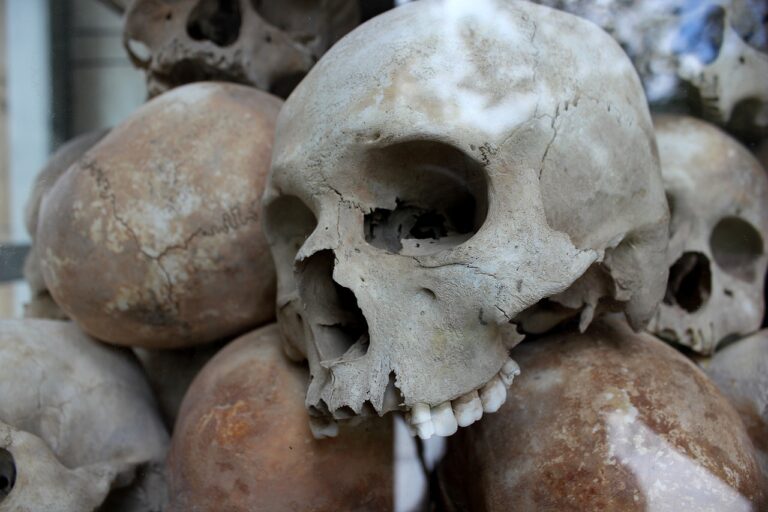
The Rwandan genocide of 1994 stands as one of the most devastating humanitarian catastrophes of the 20th century. Between April 7 and July 19, 1994, approximately 800,000 to one million people were systematically murdered in just 100 days. The victims were primarily members of the Tutsi ethnic minority, along with moderate Hutus who opposed the violence and members of the Twa ethnic group. This mass atrocity unfolded with shocking speed and brutality in the small East African nation of Rwanda, leaving an indelible mark on human history and raising critical questions about international responsibility and intervention.
The genocide was not a spontaneous outbreak of violence but rather a carefully orchestrated campaign executed by extremist elements within the Hutu majority population. Government forces, militia groups, and ordinary civilians participated in the massacres, which were characterized by extreme brutality and neighbor-against-neighbor violence. The international community’s failure to intervene effectively during this period has become a source of profound regret and has shaped subsequent approaches to genocide prevention worldwide.
Historical Background and Colonial Legacy
To understand the 1994 genocide, one must examine Rwanda’s colonial history and the artificial ethnic divisions that European powers imposed on the nation. Prior to European colonization, Rwanda’s social structure included three main groups: the Hutu, who comprised approximately 85 percent of the population; the Tutsi, who made up about 14 percent; and the Twa, a small minority representing less than 1 percent. These identities were originally more fluid and based on social status and wealth rather than rigid ethnic categories.
Germany initially colonized Rwanda in the late 19th century, and after World War I, Belgium assumed control through a League of Nations mandate. Belgian colonial administrators fundamentally altered Rwandan society by implementing racist policies that favored the Tutsi minority over the Hutu majority. The Belgians believed that Tutsis possessed superior physical characteristics and were more closely related to European ancestry, a pseudoscientific theory that had no basis in fact but nonetheless shaped colonial policy for decades.
The introduction of mandatory ethnic identity cards by Belgian authorities in the 1930s transformed what had been flexible social categories into fixed racial identities. These cards would later become instruments of death during the genocide, as militia members used them at roadblocks to identify and murder Tutsis. The colonial practice of granting Tutsis privileged access to education, administrative positions, and economic opportunities created deep resentment among the Hutu majority and laid the groundwork for future ethnic tensions.
The Hutu Revolution and Independence Era
As decolonization movements gained momentum across Africa in the late 1950s, Belgium reversed its support for the Tutsi minority and backed the Hutu majority. This policy shift contributed to the Hutu Revolution of 1959, which resulted in widespread violence against Tutsis and forced thousands to flee to neighboring countries, particularly Uganda and Burundi. The revolution established Hutu political dominance, and when Rwanda gained independence in 1962, a Hutu-led government took power.
Under Hutu leadership, Rwanda witnessed recurring waves of anti-Tutsi violence and systematic discrimination throughout the 1960s and 1970s. The government reinforced ethnic divisions through quota systems that limited Tutsi access to education and employment opportunities. By the early 1990s, more than 400,000 Tutsis had become refugees in neighboring countries, where they faced statelessness and discrimination. This refugee population would eventually form the core of the Rwandan Patriotic Front, a rebel group that sought to return to Rwanda and challenge the exclusionary policies of the Hutu-dominated government.
Immediate Precursors to the Genocide
The Rwandan Civil War, which began in October 1990, set the stage for the 1994 genocide. The Rwandan Patriotic Front, led by current President Paul Kagame and composed primarily of Tutsi exiles from Uganda, invaded Rwanda and demanded the right to return and participate in governance. The civil war intensified ethnic tensions and provided Hutu extremists with a pretext to portray all Tutsis as enemy combatants and foreign invaders, despite the fact that most Tutsis had lived in Rwanda for generations.
International pressure led to the Arusha Accords in August 1993, a peace agreement that called for power-sharing between the Hutu-led government and the Rwandan Patriotic Front. The United Nations deployed peacekeeping forces under the UN Assistance Mission for Rwanda, commanded by Canadian General Romeo Dallaire. However, Hutu extremists strongly opposed the power-sharing arrangements and began planning a genocidal campaign to eliminate the Tutsi population entirely.
Propaganda and Preparation for Mass Murder
In the months leading up to the genocide, extremist media outlets, particularly Radio Television Libre des Mille Collines, broadcast inflammatory propaganda that dehumanized Tutsis and characterized them as cockroaches and dangerous enemies. The radio station, which earned the nickname “Radio Machete,” played a significant role in inciting violence. Research has estimated that approximately 10 percent of the overall violence during the genocide can be attributed to this propaganda campaign, which primed the Hutu population for participation in mass murder.
Meanwhile, the government and military were stockpiling weapons, including tens of thousands of machetes, and training youth militias known as the Interahamwe and Impuzamugambi. These groups received weapons, ideological indoctrination, and tactical training in preparation for coordinated attacks against the Tutsi population. Lists of prominent Tutsis and moderate Hutus were compiled as primary targets for assassination when the violence began.
The Outbreak of Genocide: April 6, 1994
On the evening of April 6, 1994, a plane carrying Rwandan President Juvenal Habyarimana and Burundian President Cyprien Ntaryamira was shot down as it approached Kigali International Airport, killing everyone on board. The perpetrators of this attack have never been definitively identified, with various theories attributing responsibility to Hutu extremists seeking a pretext for genocide or to the Rwandan Patriotic Front. Regardless of who fired the missiles, extremist Hutu leaders immediately blamed the Rwandan Patriotic Front and used the presidential assassination as a trigger to launch their long-planned extermination campaign.
Within hours of the plane crash, Presidential Guard units, regular army forces, and militia groups established roadblocks throughout Kigali and began systematically murdering Tutsis and moderate Hutus. Among the first victims were Prime Minister Agathe Uwilingiyimana, a moderate Hutu who supported the peace process, and ten Belgian peacekeepers assigned to protect her. The killing of the Belgian soldiers was a calculated move designed to discourage international intervention, and it succeeded in prompting Belgium to withdraw its remaining peacekeeping forces from Rwanda.
The Mechanics of Mass Murder
The genocide spread with terrifying speed from Kigali to rural areas throughout Rwanda. Local government officials, including mayors and prefects, played crucial roles in organizing and directing the massacres in their jurisdictions. Radio broadcasts instructed Hutus to “go to work,” a chilling euphemism for murdering Tutsis. The killings were methodical and systematic, with militia members going house to house, searching for Tutsis and establishing roadblocks where identity cards were checked and Tutsis were immediately executed.
The genocide was characterized by extreme brutality, with victims often murdered using machetes, clubs, and other rudimentary weapons. Sexual violence was widespread, with estimates suggesting that between 250,000 and 500,000 women and girls were raped during the hundred-day period. Many survivors suffered severe physical injuries and contracted HIV as a result of these attacks. Churches, schools, and hospitals that traditionally served as sanctuaries during times of violence became sites of mass slaughter, as perpetrators showed no respect for traditional safe havens.
Neighbors turned against neighbors, colleagues against colleagues, and in some horrific cases, family members participated in killing their own relatives. The genocide destroyed the social fabric of Rwandan society and created trauma that continues to affect survivors and their descendants today. The speed and intensity of the violence overwhelmed the small UN peacekeeping force, which lacked both the mandate and resources to intervene effectively.
International Response and Failure to Intervene
The international community’s response to the Rwandan genocide has been widely criticized as one of the greatest failures of humanitarian intervention in modern history. Despite warnings from UN Commander General Romeo Dallaire about stockpiled weapons and planned violence, the UN Security Council failed to strengthen the peacekeeping mission or authorize the use of force to protect civilians. When the genocide began, the Security Council actually voted to reduce the peacekeeping force from 2,500 to just 450 troops, leaving General Dallaire with inadequate resources to save lives.
Major world powers, including the United States, France, and the United Kingdom, avoided using the term “genocide” during the early weeks of the massacres, as such a designation would have created a legal obligation to intervene under the Genocide Convention. Media coverage of the atrocities was limited, and international attention focused primarily on the evacuation of foreign nationals rather than protection of Rwandan civilians. When the UN Security Council eventually authorized a more robust peacekeeping force in mid-May, the deployment was delayed, and by the time troops arrived in full strength, the genocide had largely ended.
French Intervention and Controversy
France launched Operation Turquoise in late June 1994, establishing a humanitarian zone in southwestern Rwanda. While this intervention saved tens of thousands of Tutsi lives, it also enabled some genocide perpetrators to escape justice by fleeing through the French-protected zone. France’s relationship with the Hutu-led government before the genocide, including military support and training, has been the subject of significant controversy. In 2021, following a report commissioned by French President Emmanuel Macron, France officially acknowledged its failure to prevent the genocide and its responsibilities in the tragedy.
The End of the Genocide and Immediate Aftermath
The Rwandan Patriotic Front steadily advanced during the genocide, gradually gaining control of territory despite being significantly outnumbered by government forces. The genocidal regime focused more resources on killing civilians than on fighting the advancing rebels, allowing the Rwandan Patriotic Front to make strategic gains. The genocide ended on July 4, 1994, when the Rwandan Patriotic Front captured Kigali, and it concluded entirely on July 18 when rebel forces took control of Gisenyi and the northwestern regions, forcing the interim government to flee into neighboring Zaire.
The immediate aftermath of the genocide created a massive humanitarian crisis. Approximately two million people, primarily Hutus fearing reprisals from the victorious Rwandan Patriotic Front, fled to refugee camps in Zaire, Tanzania, and other neighboring countries. These camps housed both innocent civilians and genocide perpetrators, including political leaders, military officers, and militia members who had orchestrated and carried out the massacres. Thousands of refugees died from cholera, dysentery, and other diseases in overcrowded, unsanitary camp conditions.
The refugee camps in eastern Zaire became militarized zones where former genocidal forces regrouped, rearmed, and launched cross-border attacks into Rwanda. This situation contributed to the outbreak of the First Congo War in 1996, which eventually evolved into the deadliest conflict in modern African history, with an estimated five million casualties over the following years. The violence in the Democratic Republic of Congo continues to affect the region today, demonstrating how the consequences of the Rwandan genocide extended far beyond Rwanda’s borders.
Justice and Accountability Mechanisms
Pursuing justice for the Rwandan genocide presented unprecedented challenges. The sheer scale of participation, with hundreds of thousands of perpetrators, overwhelmed Rwanda’s judicial system, which had been decimated by the genocide. Many judges, lawyers, and court personnel had been killed, and infrastructure was destroyed. The new government had to develop innovative approaches to address both the need for justice and the practical limitations of traditional legal systems.
International Criminal Tribunal for Rwanda
In November 1994, the UN Security Council established the International Criminal Tribunal for Rwanda, headquartered in Arusha, Tanzania. The tribunal was mandated to prosecute individuals responsible for genocide and serious violations of international humanitarian law committed in Rwanda and neighboring countries during 1994. Between its establishment and its closure in 2015, the International Criminal Tribunal for Rwanda indicted 93 individuals, including high-ranking government officials, military leaders, politicians, businessmen, and media figures who played key roles in planning and executing the genocide.
The tribunal achieved several landmark convictions, including Jean Kambanda, prime minister during the genocide, who received a life sentence. In a groundbreaking case, the tribunal convicted Jean-Paul Akayesu for genocide and crimes against humanity, including sexual violence as an act of genocide. This marked the first time an international court recognized rape and sexual violence as constituent elements of genocide. The tribunal also prosecuted three media executives for using radio broadcasts to incite genocide, establishing important precedents regarding media responsibility and hate speech.
Gacaca Community Courts
To address the backlog of cases and provide a mechanism for community healing, Rwanda implemented an innovative system called Gacaca courts, named after the Kinyarwanda word for grass, where communities traditionally gathered to resolve disputes. Beginning in 2001 and operating until 2012, more than 12,000 community-based Gacaca courts tried approximately 1.2 million cases throughout the country. These courts handled cases involving genocide participation except for those accused of planning the genocide or committing rape, which were tried in conventional courts.
The Gacaca system emphasized restorative justice principles, allowing victims to learn the truth about what happened to their loved ones and providing perpetrators the opportunity to confess, express remorse, and seek forgiveness from their communities. Those who confessed and showed genuine remorse received reduced sentences, with many performing community service rather than serving prison time. While the Gacaca courts have been praised for their innovative approach to transitional justice and their contribution to reconciliation, they have also faced criticism for procedural irregularities and concerns about due process.
Rwanda’s Journey Toward Reconciliation
Under the leadership of President Paul Kagame and the Rwandan Patriotic Front, Rwanda has pursued an ambitious national program of unity and reconciliation. The government banned the public use of ethnic identities Hutu and Tutsi, removing ethnic designations from national identity cards and making it illegal to use ethnic terms in political discourse. The official position emphasizes a unified Rwandan identity rather than ethnic divisions, with the goal of preventing future ethnic-based violence.
The government established the National Unity and Reconciliation Commission to oversee various programs aimed at healing the nation’s wounds and preventing future conflict. These initiatives include Ingando solidarity camps, where more than 90,000 Rwandans have participated in peace education programs that address the historical origins of ethnic divisions and promote patriotism. The government also created Itorero programs to promote traditional Rwandan values and develop community leaders committed to national unity and development.
Reconciliation Villages: Living Together After Genocide
One of the most remarkable aspects of Rwanda’s reconciliation efforts is the establishment of reconciliation villages, where genocide survivors and perpetrators live side by side as neighbors. These communities, such as the Rweru Reconciliation Village in the Bugesera district, represent extraordinary examples of forgiveness and human resilience. Survivors and perpetrators work together in communal fields, share resources, and participate in collective activities aimed at rebuilding trust and social cohesion.
The stories emerging from these villages are profound testimonies to the possibility of reconciliation even after unimaginable violence. Survivors have chosen to forgive individuals who murdered their family members, not as an act of condoning past atrocities but as a means of liberation from hatred and a path toward personal peace. Perpetrators have confronted their guilt, expressed genuine remorse, and sought to make amends through their actions and changed behavior. While the reconciliation process remains ongoing and deeply personal, these villages demonstrate that even societies fractured by genocide can find paths toward healing and coexistence.
Economic Development and Social Progress
Rwanda has achieved remarkable economic and social development in the three decades since the genocide. The country has maintained an average annual economic growth rate of approximately 8 percent over the past twenty years, making it one of Africa’s fastest-growing economies. This growth has been driven by agricultural exports, including coffee and tea, mineral extraction, tourism focused on mountain gorillas and genocide memorials, and increasingly, a thriving technology sector that has earned Kigali recognition as an emerging tech hub.
Social welfare indicators have improved dramatically, with significant advances in literacy rates, public health outcomes, and gender equality. Rwanda leads the world in female parliamentary representation, with women holding more than 60 percent of seats in the Chamber of Deputies. The government has implemented universal healthcare coverage and made substantial investments in education infrastructure and access. Poverty rates have declined substantially, and life expectancy has increased significantly compared to the immediate post-genocide period.
The capital city, Kigali, has been transformed through urban planning initiatives that emphasize cleanliness, environmental sustainability, and modern infrastructure. The government has implemented policies banning plastic bags, promoting renewable energy, and requiring monthly community service days where citizens participate in collective cleaning and community development projects. These efforts have contributed to Rwanda’s reputation as one of Africa’s cleanest and most efficiently governed nations.
Ongoing Challenges and Criticisms
Despite Rwanda’s achievements in reconciliation and development, the country faces significant challenges and criticisms regarding political freedoms and human rights. President Paul Kagame has led Rwanda since the end of the genocide, first as vice president and minister of defense, and then as president since 2000. Constitutional amendments in 2015 extended presidential term limits, effectively allowing Kagame to remain in power until 2034. Critics argue that Rwanda has become an authoritarian state where political opposition is suppressed and dissent is not tolerated.
Human rights organizations have documented cases of political opponents being imprisoned, intimidated, or forced into exile. Journalists and civil society activists report restrictions on freedom of expression and concerns about surveillance and intimidation. Laws prohibiting genocide ideology and divisionism, while intended to prevent hate speech and ethnic incitement, have been criticized for being overly broad and used to silence legitimate political criticism and debate.
Regional Security Concerns
Rwanda’s involvement in conflicts in the neighboring Democratic Republic of Congo remains a source of regional tension and international concern. The Rwandan government has been accused of supporting rebel groups in eastern Congo, contributing to ongoing violence and instability that has resulted in millions of deaths and displaced persons. Rwanda maintains that its security concerns are legitimate, citing the presence of former genocidal forces in Congo who continue to pose a threat to Rwanda’s security and to Tutsi populations living in eastern Congo.
The question of how to balance security concerns with respect for sovereignty and international law continues to challenge regional diplomacy. Mass graves containing genocide victims are still being discovered in Rwanda, with the most recent findings in 2024 revealing remains of 119 victims in the Huye District. These discoveries serve as painful reminders that the process of accounting for all genocide victims remains incomplete, and many families continue to search for information about loved ones who disappeared during the massacres.
Memorialization and Education
Rwanda has established numerous genocide memorial sites throughout the country to ensure that the atrocities of 1994 are never forgotten and to educate future generations about the dangers of hatred and division. The Kigali Genocide Memorial, which serves as the final resting place for more than 250,000 victims, includes extensive exhibitions documenting the genocide’s causes, execution, and consequences. Other significant memorial sites include Nyamata, Murambi, Bisesero, and Ntarama, where churches and schools that became sites of mass murder have been preserved as places of remembrance and reflection.
In 2023, UNESCO designated four genocide memorial sites as World Heritage Sites, recognizing their universal importance as testimonies to one of humanity’s darkest chapters and as places of learning and commemoration. These memorials serve multiple purposes: providing dignified burial places for victims, offering spaces for survivors and families to mourn and remember, educating visitors about the genocide, and challenging people worldwide to confront the consequences of hatred, discrimination, and indifference.
The Rwandan government has made genocide education mandatory in schools, ensuring that young Rwandans learn about the genocide’s history, causes, and lessons. This educational emphasis aims to prevent future generations from repeating the mistakes of the past and to foster a national commitment to unity and peaceful coexistence. International organizations, including the USC Shoah Foundation and various universities, have documented hundreds of testimonies from genocide survivors and witnesses, creating permanent archives that preserve firsthand accounts for historical research and educational purposes.
International Lessons and Legacy
The Rwandan genocide has profoundly influenced international approaches to genocide prevention and humanitarian intervention. The failure of the international community to respond effectively in 1994 led to significant reforms in UN peacekeeping operations and the development of the Responsibility to Protect doctrine, which holds that the international community has an obligation to intervene when states fail to protect their populations from mass atrocities.
Organizations such as the United States Holocaust Memorial Museum have established early warning systems and research programs focused on identifying and monitoring situations that could lead to genocide or mass atrocities. The International Day of Reflection on the Genocide against the Tutsi in Rwanda, observed annually on April 7, serves as a global reminder of the importance of vigilance against hatred and the need for early intervention to prevent mass violence.
The Rwandan genocide demonstrated that genocide can occur with shocking speed in the modern era and that the international community must develop more effective mechanisms for rapid response to emerging crises. The atrocity also highlighted the dangerous role that media can play in inciting violence and the importance of responsible journalism and countering hate speech. Legal precedents established by the International Criminal Tribunal for Rwanda, particularly regarding sexual violence as an element of genocide and media incitement as a crime, have influenced subsequent international criminal prosecutions and the development of international humanitarian law.
The Perspective of Young Rwandans
Three decades after the genocide, more than 60 percent of Rwanda’s population was born after 1994. This generation, which did not experience the genocide firsthand, faces the challenge of inheriting a traumatic history while building a future based on unity and shared national identity. Young Rwandans grow up learning about the genocide in school and participating in annual commemoration activities, but they also live in a country that emphasizes looking forward rather than dwelling on ethnic divisions.
Many young Rwandans express frustration with restrictions on political freedom and economic opportunities, even as they acknowledge the progress their country has made in development and stability. Some observers suggest that this generation, which lacks the direct trauma of the genocide, may eventually demand greater political openness and democratic participation. The government faces the challenge of maintaining national unity and preventing ethnic tensions from re-emerging while also allowing space for legitimate political discourse and opposition.
The question of how Rwanda’s political system will evolve as the genocide generation ages and eventually passes remains open. Will the emphasis on unity and controlled reconciliation give way to greater pluralism and democratic competition? Or will concerns about stability and preventing renewed ethnic conflict continue to justify restrictions on political freedoms? These questions will shape Rwanda’s trajectory in the coming decades.
Conclusion
The Rwandan genocide of 1994 represents one of history’s most devastating examples of how quickly societies can descend into mass violence when hatred is systematically cultivated and international safeguards fail. The murder of approximately 800,000 to one million people in just 100 days stands as a stark reminder of humanity’s capacity for evil and the devastating consequences of ethnic hatred, political extremism, and international indifference. The genocide’s roots in colonial policies that artificially created and reinforced ethnic divisions demonstrate how external interventions can have lasting destructive impacts on societies.
Rwanda’s journey over the past thirty years has been remarkable in many respects. The country has achieved significant economic growth, improved social welfare outcomes, and pursued an ambitious program of reconciliation that has brought survivors and perpetrators together in extraordinary acts of forgiveness and community rebuilding. The Gacaca courts and reconciliation villages represent innovative approaches to transitional justice that have attracted international attention and study. Rwanda’s success in reducing poverty, improving healthcare and education, and promoting gender equality provides important lessons for other post-conflict societies.
However, this progress has come alongside concerns about political freedoms, human rights, and the concentration of power in the hands of a single leader and party. The balance between maintaining stability and allowing democratic participation remains contentious, with critics arguing that genuine reconciliation requires space for dissent and open discussion of difficult issues, while supporters of the current system contend that political restrictions are necessary to prevent renewed ethnic conflict and ensure continued development.
The international community’s failure to prevent or halt the genocide continues to generate reflection and debate about the responsibility to protect vulnerable populations from mass atrocities. The lessons of Rwanda have influenced international policy, legal frameworks, and institutional reforms, but subsequent conflicts in Darfur, Syria, and elsewhere demonstrate that the world has not fully resolved how to respond effectively to emerging genocides and mass atrocities.
As Rwanda continues its journey of healing and development, the country serves as both a warning about the catastrophic consequences of hatred and division and a testament to the human capacity for forgiveness, reconciliation, and renewal. The ongoing discovery of mass graves, the continued trauma experienced by survivors, and the regional instability connected to the genocide remind us that the legacy of 1994 remains active and unresolved in many ways. Yet the stories of survivors and perpetrators living together peacefully, of a nation that has rebuilt itself from devastation, and of a society committed to ensuring “never again” offer hope that even the deepest wounds can eventually heal.
The Rwandan genocide challenges each generation to confront difficult questions about human nature, moral responsibility, and the requirements of justice and reconciliation. It demands that we remain vigilant against hatred and dehumanization in all their forms, that we act decisively when vulnerable populations face existential threats, and that we work to build societies based on equality, respect for human dignity, and peaceful coexistence. The memory of the 800,000 lives lost in 1994 obligates us to honor their memory not only through commemoration but through concrete action to prevent future genocides and to create a world where such atrocities become impossible.