

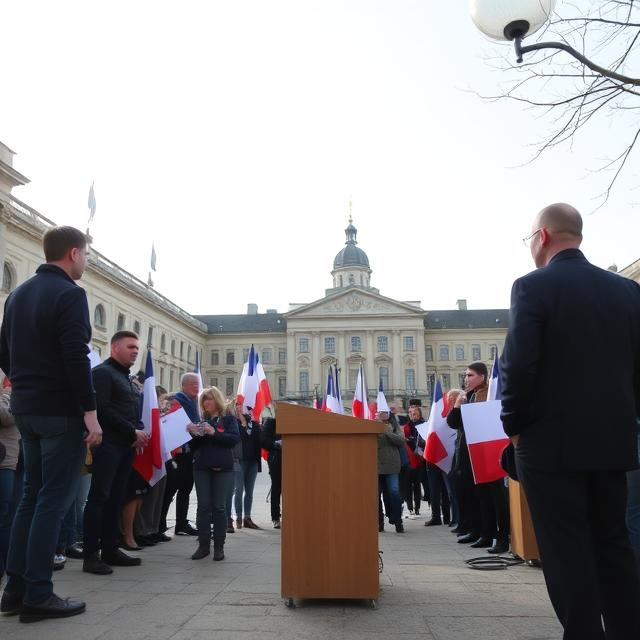
Poland’s 2025 presidential election marked a historic moment in the country’s political landscape, culminating in a razor-thin victory for conservative historian Karol Nawrocki, who secured 50.89% of the vote in the second round. His opponent, progressive-liberal Warsaw Mayor Rafał Trzaskowski, received 49.11%, making this one of the closest presidential races in Poland’s history. The election, held on May 18 and June 1, 2025, saw , reflecting deep societal divides and the high stakes for Poland’s future direction.
The election was not only a contest between two candidates but also a , its stance on social issues, and its approach to national security and economic policy. The campaign was marred by , all of which were scrutinized by international observers and domestic institutions.
The Road to the Second Round
The first round of voting, held on May 18, 2025, saw Rafał Trzaskowski emerge as the frontrunner with 31.36% of the vote, closely followed by Karol Nawrocki at 29.54%. The high turnout of 67.31% underscored the electorate’s engagement and the significance of the election. Trzaskowski, backed by the centrist Civic Coalition (KO), campaigned on a platform of closer EU integration, progressive social policies, and economic reform. Nawrocki, supported by the national-conservative Law and Justice (PiS) party, focused on traditional values, national sovereignty, and security.
The second round, held on June 1, 2025, saw turnout surge to a record 71.63%, the highest in Poland’s presidential election history. The final results, certified by the Supreme Court on July 1, 2025, confirmed Nawrocki’s victory by a margin of just 369,591 votes out of over 20.8 million cast. The narrowness of the result led to calls for recounts in some districts, but the Supreme Court ultimately upheld the outcome, despite controversies surrounding the independence of the judicial body.
Key Contenders and Their Campaigns
- Karol Nawrocki
Nawrocki, a 42-year-old historian and director of the Institute of National Remembrance, ran as an independent candidate backed by PiS. His campaign emphasized traditional Catholic values, national security, and a eurosceptic approach to EU integration. Nawrocki’s platform resonated with conservative and rural voters, who were concerned about immigration, national identity, and Poland’s sovereignty. His campaign also faced scrutiny over allegations of negative campaigning, including the use of social media to amplify divisive messages. - Rafał Trzaskowski
Trzaskowski, the 53-year-old Mayor of Warsaw and candidate of the Civic Coalition, positioned himself as a pro-EU, progressive reformer. His campaign focused on social issues such as abortion rights, LGBTQ+ rights, and environmental policies. Trzaskowski’s appeal was strongest among urban, younger, and progressive voters. However, his association with the ruling coalition, which had struggled to deliver on key reforms, may have cost him support among centrist and undecided voters. - Sławomir Mentzen
Mentzen, a far-right entrepreneur and leader of the New Hope party, secured 11.3% of the vote in the first round. His campaign, which targeted younger voters with promises of tax cuts and deregulation, played a pivotal role in the second round. , and the subsequent shift of his voters to the conservative candidate, was a decisive factor in the final outcome.
Election Process and Controversies
The election was managed by the National Electoral Commission (PKW), which oversaw the establishment of 31,627 polling stations in Poland and 511 abroad. The campaign period was marked by intense polarization, with both candidates leveraging social media and traditional media to mobilize their bases. However, the election was not without controversy:
- Media Bias and Polarization
International observers, including the OSCE, noted that limited voters’ access to impartial information. Public broadcaster TVP and private outlet TV Republika were accused of favoring Nawrocki, while Trzaskowski received more positive coverage from independent and progressive media. - Election Interference and Disinformation
Poland’s National Research Institute for Cybersecurity (NASK) identified foreign-funded political ads on Facebook, raising concerns about external interference. The government’s efforts to counter disinformation were criticized for lack of coordination and transparency. - Judicial Independence
The , given its perceived lack of independence. The Court’s Chamber for Exceptional Control and Public Affairs, which validated the results, has been the subject of ongoing legal disputes and criticism from the EU. - Voting Irregularities
Allegations of irregularities, including vote miscounts and improper handling of ballots, were reported in several districts. While these incidents did not affect the overall outcome, they fueled distrust in the electoral process among some voters.
Voter Turnout and Demographics
The 2025 election saw unprecedented voter engagement, with turnout reaching 71.63% in the second round. This high participation reflected the electorate’s recognition of the election’s significance for Poland’s future. Key demographic trends included:
- Urban vs. Rural Divide
Trzaskowski dominated in urban centers, particularly Warsaw, Kraków, and Wrocław, where progressive and pro-EU sentiments are strongest. Nawrocki, meanwhile, secured overwhelming support in rural and small-town Poland, where traditional values and euroscepticism prevail. - Youth Vote
Younger voters, particularly those under 30, were a key battleground. Mentzen’s far-right New Hope party attracted significant youth support, with nearly 44% of young voters backing him in the first round. In the second round, many of these voters shifted to Nawrocki, contributing to his victory. - Gender and Social Issues
Trzaskowski’s progressive stance on abortion and LGBTQ+ rights mobilized female and progressive voters, but also alienated conservative and religious voters, who turned out in force for Nawrocki.
International Reaction and Implications
The election results were closely watched by Poland’s international partners, particularly within the EU and NATO. government, which had sought to strengthen Poland’s role in European institutions. Key international reactions included:
- European Union
EU officials expressed concern about Nawrocki’s eurosceptic rhetoric and his party’s history of clashes with Brussels over rule-of-law issues. However, Nawrocki’s post-election statements emphasized continuity in Poland’s EU membership and support for Ukraine, easing some fears of a radical shift in foreign policy. - United States
The U.S. administration, which had endorsed Nawrocki during the campaign, welcomed his victory as a sign of continued transatlantic cooperation. , particularly on defense and security, aligns with U.S. interests in the region. - Russia and Ukraine
Both candidates supported continued aid to Ukraine, but Nawrocki’s victory was viewed with caution by Kyiv, given PiS’s past tensions with the Ukrainian government. Russia, meanwhile, saw Nawrocki’s win as an opportunity to exploit divisions within the EU.
Post-Election Analysis and Future Outlook
The 2025 presidential election has reshaped Poland’s political landscape, with Nawrocki’s victory signaling a shift toward conservative and nationalist policies. Key takeaways include:
- End of the KO-PiS Duopoly?
Analysts suggest that the election may mark the beginning of a new political era, with the challenging the dominance of KO and PiS. The fragmentation of the electorate and the emergence of new political forces could lead to a more pluralistic but also more polarized political environment. - Impact on Domestic Policy
, national security, and economic sovereignty. His administration will likely face challenges in balancing these priorities with the need for EU cooperation and social cohesion. - Lessons for Future Elections
The 2025 election highlighted the importance of voter mobilization, media literacy, and electoral integrity. The record turnout and close result underscore the need for transparent and inclusive electoral processes to maintain public trust in democracy.
Conclusion
The 2025 Polish presidential election was a watershed moment, reflecting the country’s deep political and social divisions. Karol Nawrocki’s narrow victory over Rafał Trzaskowski underscored the electorate’s polarization and the high stakes for Poland’s future. The election process, while competitive and well-managed, was not without controversy, as allegations of media bias, foreign interference, and judicial independence cast a shadow over the results.
As Nawrocki assumes office, Poland faces a critical juncture. His presidency will shape the country’s relationship with the EU, its approach to social and economic policy, and its role in regional and global affairs. The lessons from this election—about the power of voter mobilization, the challenges of media polarization, and the importance of electoral integrity—will resonate far beyond Poland’s borders, offering insights into the future of democracy in an increasingly divided world.

