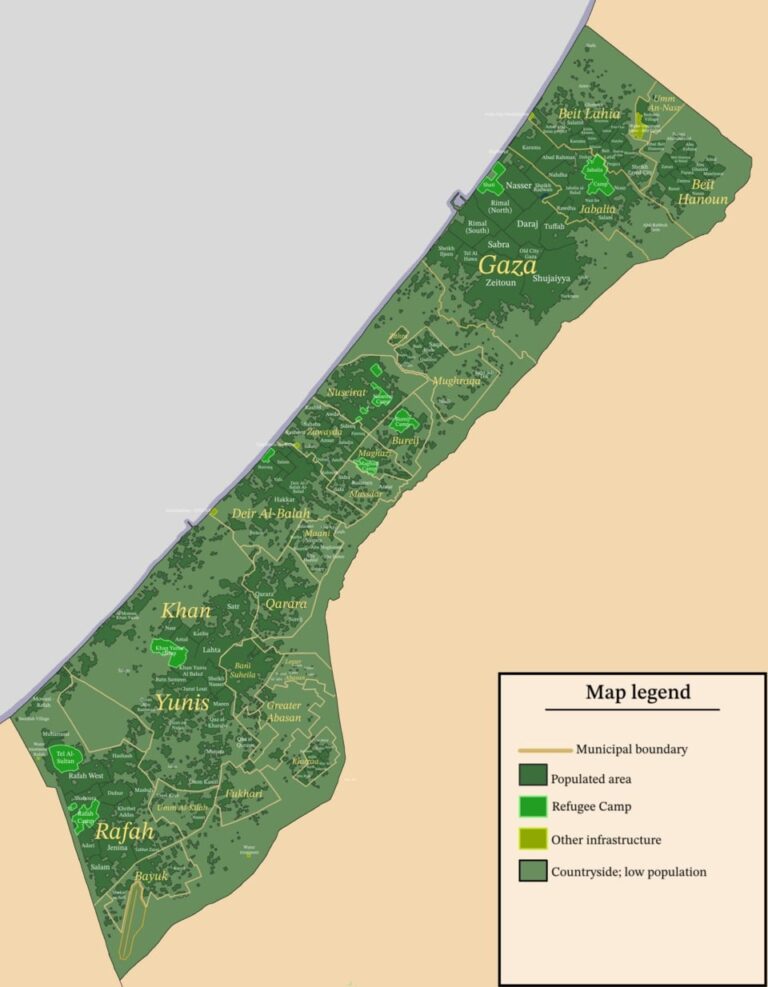
The Gaza Strip faces an unprecedented humanitarian catastrophe as the food security crisis intensifies following more than two years of conflict. According to the Integrated Food Security Phase Classification, approximately 1.6 million people continue to face crisis-level or worse acute food insecurity through April 2026, despite recent improvements following a ceasefire. The situation represents one of the most severe humanitarian emergencies of the modern era, with international organizations warning that the risk of famine persists across the entire territory.
The crisis has evolved through multiple phases since October 2023, with humanitarian access severely restricted and essential services collapsed. Food production systems have been decimated, with approximately 70 percent of crop fields destroyed and livestock populations drastically reduced. The convergence of ongoing conflict, restricted humanitarian access, and the destruction of agricultural infrastructure has created a perfect storm that continues to threaten the lives of Gaza’s 2.2 million residents.
Understanding the Scope of Acute Food Insecurity in Gaza
The magnitude of the Gaza food crisis becomes apparent when examining the classification systems used by international food security experts. The IPC acute food insecurity analysis classifies populations into five phases, ranging from minimal food insecurity to famine. Throughout 2024 and into early 2026, the Gaza Strip has experienced conditions at the most severe end of this scale, with the entire population affected by crisis levels or worse.
Between September and October 2024, approximately 1.84 million people across Gaza experienced high levels of acute food insecurity classified as IPC Phase 3 or above. This included nearly 133,000 people facing catastrophic food insecurity and 664,000 in emergency conditions. The projections for November 2024 through April 2025 painted an even grimmer picture, with estimates suggesting that 345,000 people would face catastrophic conditions, representing 16 percent of the entire population.
The recent December 2025 IPC analysis showed some improvement following reduced hostilities and increased humanitarian access during a ceasefire period. Current estimates indicate that approximately 571,000 people remain in emergency conditions, while roughly 1,900 people continue to experience catastrophic food insecurity. However, experts emphasize that these figures, while representing progress, still describe a population facing severe deprivation and ongoing risk.
The Evolution of Famine Risk Throughout the Conflict
The threat of famine in Gaza has been a persistent concern since the early months of the conflict. In March 2024, the IPC Famine Review Committee concluded that famine was imminent in the northern governorates of Gaza, with projections indicating it would occur between mid-March and May 2024. This marked one of the first times in recent history that an urban area with such a large population faced confirmed famine conditions.
The northern governorates, including North Gaza and Gaza City, experienced the most severe conditions. Data from early 2024 showed that 70 percent of the population in these areas fell into IPC Phase 5, the catastrophe category. The near-complete lack of humanitarian access to northern Gaza, combined with continued conflict and the systematic destruction of infrastructure, created conditions where starvation became a daily reality for hundreds of thousands of people.
By August 2025, the situation had reached a critical threshold. The IPC officially confirmed famine conditions in Gaza City governorate, making it the first confirmed urban famine declaration in decades. All three core famine indicators had been surpassed: catastrophic hunger, acute malnutrition levels exceeding emergency thresholds, and increased mortality rates linked to starvation and malnutrition. This confirmation came after an 11-week total siege that severely restricted all humanitarian and commercial supplies entering the territory.
The ceasefire that began in October 2025 brought some relief, allowing for increased humanitarian access and a temporary improvement in food security indicators. The December 2025 IPC analysis noted that famine conditions had been alleviated in previously affected areas. However, experts caution that the underlying vulnerabilities remain, and any resumption of severe restrictions or intensified conflict could rapidly reverse these gains.
Child Malnutrition Crisis: Statistics and Long-term Impacts
The impact of the food security crisis on children’s nutrition in Gaza represents one of the most alarming aspects of the humanitarian emergency. A groundbreaking study published in The Lancet by UNRWA and Johns Hopkins Bloomberg School of Public Health documented the dramatic fluctuations in child malnutrition rates throughout the conflict, providing the clearest evidence yet of how restrictions on humanitarian aid directly correlate with malnutrition levels among young children.
Between January 2024 and August 2025, UNRWA health staff conducted more than 265,000 mid-upper arm circumference screenings at 16 health centers and 78 medical points across Gaza. These screenings revealed disturbing patterns in acute malnutrition rates among children aged 6 to 59 months. When humanitarian supplies were relatively available in early 2024, approximately 6 percent of screened children showed signs of acute malnutrition. However, following four months of particularly tight aid restrictions in late 2024, this rate more than doubled to 14 percent by January 2025.
The six-week ceasefire in early 2025 demonstrated the direct relationship between aid access and child nutrition. As humanitarian supplies increased during this period, malnutrition rates dropped back to 6 percent by March 2025. This improvement proved short-lived. An 11-week total siege beginning in March 2025, followed by continued severe restrictions, caused acute malnutrition rates to surge to nearly 16 percent by mid-August 2025. This prevalence translated to approximately 54,600 acutely malnourished children across the Gaza Strip, including nearly 12,800 with severe acute malnutrition.
Children suffering from severe acute malnutrition face a dramatically elevated risk of death, estimated at three to five times higher than well-nourished children. The youngest are particularly vulnerable. Screening data showed that children aged 6 to 23 months experienced the highest rates of malnutrition, with prevalence reaching 20 percent during the worst periods. No children in this age group met minimum dietary diversity standards, highlighting the complete absence of adequate nutritious food for the most vulnerable population.
Documented Deaths from Malnutrition and Starvation
The human toll of the food security crisis extends beyond statistics to documented deaths directly attributable to malnutrition and starvation. Throughout 2024 and 2025, Gaza’s Ministry of Health, along with international humanitarian organizations, tracked increasing numbers of deaths linked to severe food deprivation, particularly among children.
In March 2024, UNICEF reported that at least 23 children in northern Gaza had died from malnutrition and dehydration. These early deaths served as tragic harbingers of the crisis to come. By July 2024, UN experts issued a statement declaring that the death of children from malnutrition had made it irrefutable that famine had taken hold in Gaza, noting that when even one child dies from malnutrition and dehydration, famine conditions exist.
The Gaza Ministry of Health reported that by July 2025, 101 deaths from malnutrition had been documented, including 80 children. In a single 24-hour period in late July, four children and 11 adults died in hospitals from complications related to severe malnutrition. Since the March 2025 aid blockade began, the Ministry of Health documented 57 children who died specifically from the effects of malnutrition.
Save the Children conducted screenings in early 2024 that found nearly 20 percent of children under five suffering from moderate acute malnutrition and nearly 4 percent with severe acute malnutrition. Staff reported witnessing children scouring through rubbish and debris searching for food, a devastating indicator of the desperation facing families. Organizations documented that 80 percent of all reported deaths by starvation in Gaza were children, reflecting their particular vulnerability to nutritional deprivation.
The Destruction of Food Production and Agricultural Systems
Beyond the immediate crisis of food distribution, Gaza faces long-term food security challenges due to the systematic destruction of its agricultural infrastructure. The Food and Agriculture Organization conducted detailed assessments documenting the extensive damage to farming systems, which will take years to rebuild even under optimal conditions.
Approximately 70 percent of Gaza’s crop fields sustained damage or destruction during the conflict. This included not only the loss of current crops but also damage to the land itself, making immediate replanting impossible in many areas. The destruction extended to essential agricultural infrastructure, including irrigation systems, greenhouses, storage facilities, and processing equipment. FAO assessments identified damage to thousands of agricultural wells, cutting off farmers’ access to water for irrigation.
The livestock sector experienced catastrophic losses. Before the conflict, Gaza’s agricultural economy depended significantly on sheep, goats, cattle, and poultry. During Operation Cast Lead in 2009, Israel destroyed around half a million trees and over 35,750 livestock animals. The current conflict has resulted in even more extensive losses, with the remaining livestock population facing severe threats from lack of fodder, water, and veterinary care. FAO programs attempting to sustain approximately 30,000 sheep and goats, representing about 40 percent of remaining livestock, face enormous challenges due to access restrictions and supply shortages.
The fishing industry, historically an important source of protein and livelihoods for coastal communities, has been effectively destroyed. Israeli blockade measures have long restricted Palestinian access to Gaza’s territorial waters. During the current conflict, fishing boats and equipment have been destroyed, and security conditions make fishing operations impossible. This eliminates a traditional protein source and removes economic opportunities for thousands of families who depended on fishing for their income.
Humanitarian Aid Access: Barriers and Challenges
The ability to address the food security crisis depends fundamentally on humanitarian aid access to Gaza, which has faced unprecedented challenges throughout the conflict. Multiple factors combine to restrict the flow of assistance, from border crossing closures to bureaucratic impediments to direct attacks on humanitarian operations.
The timeline of aid access reveals the severity of restrictions. In early 2024, humanitarian organizations reported that only a fraction of needed supplies entered Gaza. In January 2024, nine out of ten people in northern Gaza ate less than one meal per day due to the near-total absence of food aid reaching that area. The few convoys that did make it to northern Gaza faced extreme risks, including looting, violence, and military actions that killed or injured humanitarian workers.
Border crossing operations remained highly problematic throughout 2024 and 2025. The Rafah and Kerem Shalom crossings, the primary entry points for aid in southern Gaza, experienced repeated closures. In May 2024, both crossings closed simultaneously, cutting off the main channels for humanitarian supplies. Even when crossings operated, Israeli approval processes created significant delays, with aid trucks waiting for days or weeks for clearance to enter.
The October 2025 ceasefire agreement stipulated that Israel must allow hundreds of aid trucks into Gaza daily. Data from OCHA showed that humanitarian access improved somewhat following the ceasefire, with a 67 percent increase in aid collected at border crossings in the two months after the ceasefire compared to the preceding two months. However, this still fell far short of meeting the population’s needs, and access remained constrained by multiple factors including insecurity, customs clearance challenges, and limited routes for transporting supplies.
The situation deteriorated again in late 2024 and early 2025. Between October 2024 and March 2025, September 2024 saw the lowest volume of commercial and humanitarian supplies entering Gaza since March 2024. This sharp decline directly contributed to the surge in malnutrition rates documented in early 2025. From March 2 to May 18, 2025, a total aid blockade prevented virtually all humanitarian and commercial supplies from entering Gaza, creating conditions that led to the August famine declaration.
Israeli legislation passed in October 2024 imposed additional restrictions on humanitarian operations. The Knesset enacted laws that purported to prohibit UNRWA’s operations in areas Israel considers its sovereign territory and banned all contact between Israeli officials and UNRWA. Since these laws took effect, UNRWA has been blocked from directly bringing humanitarian personnel and aid into Gaza. All UNRWA international staff have been prevented from entering since late January 2025, forcing the agency to rely entirely on its Palestinian local staff to maintain operations.
In late 2025 and early 2026, Israel introduced new registration requirements for international non-governmental organizations operating in Gaza. These requirements included providing detailed personal information about staff members, which humanitarian organizations argued violated fundamental humanitarian principles and endangered their workers. By January 2026, Israel moved to suspend operations of multiple major aid organizations, including Doctors Without Borders, that failed to comply with these requirements. More than 50 international NGOs warned that these restrictions would impede critical humanitarian action precisely when needs remained most acute.
The Human Cost: Living Conditions and Daily Survival
Behind the statistics lie the daily realities of survival for ordinary Palestinians struggling with the Gaza humanitarian crisis. Nearly 90 percent of Gaza’s population has been displaced, many multiple times, as military operations and evacuation orders forced families to flee their homes repeatedly. Most displaced people live in overcrowded tent encampments or damaged buildings at risk of collapse.
The density of displacement sites creates dangerous living conditions. Some areas house approximately 40,000 people per square kilometer, far exceeding any reasonable standard for temporary settlements. These overcrowded conditions facilitate the spread of disease, create sanitation challenges, and make the distribution of aid extremely difficult. Families lack access to adequate shelter, clean water, sanitation facilities, and basic privacy.
Winter conditions in late 2025 and early 2026 added another layer of suffering. Heavy rains and storms battered makeshift shelters, flooding tents and collapsing damaged structures. OCHA reported that severe weather affected over 13,000 households in November 2025, with hundreds of tents and shelters damaged across the Strip. By December 2025 and January 2026, winter storms caused widespread destruction, with estimates suggesting that more than 42,000 tents or makeshift shelters sustained full or partial damage, affecting at least 235,000 people. The Site Management Cluster reported that 17 buildings collapsed during severe weather events, and flooding incidents affected nearly 55,000 households.
Despite humanitarian efforts to provide winter supplies, the response remained grossly inadequate. Since the October ceasefire, agencies distributed thousands of tents and hundreds of thousands of tarpaulins. However, partners estimated that more than one million people still urgently needed shelter assistance as of January 2026. Families lacked blankets, winter clothing, heating fuel, and waterproof shelter materials. Multiple children died from exposure to cold temperatures and inadequate shelter, highlighting the lethal consequences of unmet basic needs.
Water and sanitation conditions deteriorated catastrophically. The conflict damaged or destroyed water treatment facilities, distribution networks, and sewage systems. Heavy rains overwhelmed remaining infrastructure, raising water levels in lagoons and creating flooding risks. Humanitarian partners struggled to maintain de-watering operations, requiring specialized equipment that Israeli authorities often delayed or denied entry. Waste management collapsed in many areas, particularly in northern Gaza, where collection rates covered only about 60 percent of generated waste. Uncollected garbage accumulated in densely populated residential areas, creating serious public health risks and contributing to disease outbreaks.
Health System Collapse and Disease Threats
The Gaza health system collapse compounds the food security crisis by eliminating the infrastructure needed to treat malnutrition and related medical conditions. Before October 2023, Gaza had 36 hospitals providing comprehensive health services. By mid-2025, only 17 hospitals remained partially functional, operating at severely reduced capacity with limited supplies, no electricity for extended periods, and insufficient staff.
UNRWA health services, which provided primary care to much of Gaza’s population before the conflict, faced severe constraints. Only four out of 22 UNRWA health centers remained operational as of mid-2025, supplemented by two additional temporary facilities. The agency established 116 mobile medical teams and 21 medical points to provide services in displacement sites, but these operated under extremely difficult conditions with limited equipment and supplies. UNRWA reported running out of nearly 60 percent of essential medicines, severely limiting treatment options for common conditions.
The treatment of severe acute malnutrition requires specialized facilities and supplies. Stabilization centers must provide intensive therapeutic feeding, medical monitoring, and treatment of complications. At the peak of the crisis in mid-2025, only 127 of 236 nutrition treatment centers remained functional due to displacement orders and bombardments. Ready-to-Use Therapeutic Food, the essential nutritional supplement for treating severe malnutrition, ran critically low, with WHO reporting enough supplies to treat only 500 children against a need measured in tens of thousands.
The combination of malnutrition and collapsed health services created a deadly cycle. Malnourished children become highly vulnerable to common infectious diseases. Gaza faced outbreaks of acute diarrhea, respiratory infections, and other communicable diseases that spread rapidly in overcrowded displacement sites with inadequate sanitation. Children weakened by malnutrition lacked the immune function to fight these infections, leading to a spiral of deteriorating health. WHO officials described people trapped in a vicious cycle where lack of diversified food, malnutrition, and disease fuel each other, with each factor worsening the others.
International Response and Humanitarian Appeals
The international community has mobilized substantial resources to address the crisis, though these efforts remain inadequate relative to the scale of need. In December 2025, the United Nations and humanitarian partners launched a Flash Appeal for 4.06 billion dollars to address humanitarian needs in Gaza and the West Bank during 2026. Nearly 92 percent of requested funds targeted Gaza specifically, reflecting the catastrophic conditions there.
Major humanitarian organizations scaled up operations despite enormous challenges. The World Food Programme increased food distributions during periods of improved access, reaching more than 330,000 people with food boxes, hot meals, and cash assistance in the first week of the January 2025 ceasefire. WFP supported bakeries across Gaza, providing flour to produce bread for distribution. However, when aid access closed again in March 2025, WFP’s food stocks depleted rapidly, with all 25 WFP-supported bakeries shutting down due to lack of flour and fuel by late April 2025.
UNICEF focused particularly on nutrition services for children. The organization supported nutrition screening and treatment centers across Gaza, admitting thousands of children for malnutrition treatment each month. In May 2025 alone, 5,119 children between 6 months and 5 years of age received treatment for acute malnutrition, representing a 150 percent increase from February when the ceasefire allowed more aid to enter. Despite these efforts, UNICEF consistently reported that supplies remained wholly inadequate compared to the tremendous needs.
The international humanitarian response faced not only access restrictions but also direct threats to aid workers. Gaza became the most dangerous place in the world for humanitarian personnel during 2024 and 2025. Between October 2023 and December 2025, at least 578 aid workers were killed in Gaza, including 387 UN personnel. This death toll exceeded that of any other modern conflict by a significant margin. The April 2024 killing of seven World Central Kitchen humanitarian workers by an Israeli airstrike shocked the international community and highlighted the extreme risks facing aid operations.
Long-term Development Impacts and Recovery Challenges
Beyond the immediate humanitarian emergency, the food security crisis will have lasting impacts on Gaza’s population and development prospects. The effects of child malnutrition extend far beyond the period of acute crisis. Children who experience severe malnutrition during critical developmental periods face lifelong consequences including stunted growth, impaired cognitive development, weakened immune systems, and increased susceptibility to chronic diseases.
WHO experts emphasized that malnutrition during early childhood can last a lifetime. The current generation of Gaza’s youngest children is experiencing malnutrition at the most critical stages of brain and physical development. Research shows that severe acute malnutrition in children under two years leads to permanent deficits in height, reduced intellectual capacity, and diminished economic productivity in adulthood. With tens of thousands of children affected, Gaza faces a lost generation whose reduced capacity will impact the territory’s development for decades.
The destruction of agricultural systems will take years to rebuild. Restoring damaged cropland requires not only clearing rubble and unexploded ordnance but also rehabilitating soil quality, rebuilding irrigation infrastructure, and replacing lost equipment. The loss of perennial crops like olive trees and citrus groves represents a particularly severe setback, as these crops take years to mature and produce. The decimation of livestock populations means rebuilding herds from minimal breeding stock, a process that could take a decade or more under favorable conditions.
Economic recovery faces enormous obstacles. The conflict destroyed much of Gaza’s commercial infrastructure, including markets, shops, storage facilities, and transportation networks. The small business sector, which provided livelihoods for thousands of families, suffered devastating losses. Bakeries, food processing facilities, and distribution networks will need complete reconstruction. Even when physical infrastructure can be rebuilt, restoring supply chains, securing working capital, and reestablishing customer bases will require substantial time and resources.
The psychological trauma of prolonged hunger and deprivation will affect mental health and social cohesion for years. UNRWA mental health teams provided over 340,000 psychosocial support sessions to approximately 730,000 displaced persons, including more than 520,000 children, between October 2023 and late 2025. The experience of starvation, watching family members suffer from hunger, and losing loved ones to malnutrition-related causes creates deep psychological wounds that require long-term support to address.
Current Status and Future Projections
As of January 2026, the food security situation in Gaza remains precarious despite some improvements following the October 2025 ceasefire. The December 2025 IPC analysis provided the most current assessment, showing that while famine conditions have been alleviated in previously affected areas, the overall situation remains severe. Approximately 1.6 million people continue to face crisis level or worse acute food insecurity through April 2026, including about 571,000 people in emergency conditions.
Child malnutrition remains a critical concern. Projections indicate that at least 101,000 children between six and 59 months will suffer from acute malnutrition through October 2026, including more than 31,000 severe cases. Nearly 37,000 pregnant and breastfeeding women are expected to require urgent nutrition support during the same period. These figures, while representing improvement from mid-2025 peaks, still describe a population of children facing grave nutritional deprivation with associated elevated mortality risks.
The latest data on food consumption patterns reveals the ongoing severity of the crisis. Dietary diversity remains severely limited, with no children aged 6 to 23 months meeting minimum dietary diversity standards. More than 71 percent of young children experience severe food poverty, consuming two or fewer out of eight food groups per day. While this represents improvement from the 92 percent recorded in September 2025, it demonstrates that the vast majority of Gaza’s youngest children still lack access to adequate nutrition for healthy development.
Winter conditions continue to exacerbate the humanitarian situation. As of early January 2026, humanitarian agencies struggled to provide adequate shelter, blankets, and weatherproofing materials to families living in tents and damaged buildings. The combination of cold temperatures, flooding, and inadequate shelter contributed to deaths, particularly among children and elderly people. The UN and aid partners repeatedly called for immediate lifting of restrictions on the entry of winterization supplies.
Aid access remains constrained despite the ceasefire. The new registration requirements for international NGOs threatened to further reduce the humanitarian response capacity precisely when sustained assistance was most needed. Multiple major aid organizations faced suspension of operations starting January 2026, potentially eliminating services reaching hundreds of thousands of people. The international community, including the European Union and multiple countries, strongly protested these restrictions as fundamentally undermining humanitarian principles and endangering civilian lives.
Conclusion
The Gaza food security crisis represents one of the most severe humanitarian catastrophes in recent history, characterized by prolonged acute food insecurity, documented famine conditions, widespread child malnutrition, and systematic destruction of food production systems. From October 2023 through early 2026, the crisis evolved through multiple phases, with conditions varying based on the level of humanitarian access permitted and the intensity of ongoing conflict.
The documented evidence demonstrates clear correlations between restrictions on humanitarian aid and deterioration in food security indicators, particularly child malnutrition rates. The IPC famine confirmation for Gaza City in August 2025 marked a historic and tragic milestone, representing the first confirmed urban famine in decades. While the October 2025 ceasefire brought some relief and improved access allowed for reduction in the most severe indicators, the underlying crisis persists with more than 1.6 million people continuing to face severe food insecurity.
Children have borne a disproportionate burden, with tens of thousands suffering from acute malnutrition during critical developmental periods. The long-term consequences of this nutritional deprivation will affect Gaza’s population for generations, with impaired physical and cognitive development limiting the potential of children who survived the crisis. The death of hundreds of children from starvation and malnutrition represents an immeasurable tragedy and a failure of the international community to protect the most vulnerable.
The destruction of agricultural infrastructure, loss of livestock, and decimation of food production capacity mean that Gaza will depend on humanitarian assistance for years even after active conflict ends. Rebuilding food systems will require sustained international support, predictable access for humanitarian operations, and substantial investment in agricultural rehabilitation. The recovery timeline extends over decades rather than months or years.
Looking forward, preventing further deterioration requires sustained humanitarian access with sufficient supplies entering regularly through all available crossing points. The international community must ensure that aid organizations can operate without arbitrary restrictions that endanger staff and compromise humanitarian principles. Commercial food imports must resume alongside humanitarian assistance to restore market function and provide families with purchasing options beyond aid distributions.
The Gaza food security crisis stands as a stark reminder of how quickly humanitarian disasters can develop in conflict zones and how devastating the impact becomes when access restrictions prevent timely response. The path to recovery will be long and challenging, requiring sustained commitment from the international community, respect for humanitarian principles, and ultimately, lasting peace that allows Gaza’s population to rebuild their lives, livelihoods, and food systems. The children who have suffered malnutrition during this crisis deserve comprehensive support to mitigate long-term consequences and maximize their potential for recovery and development.

Full-stack developer at Scylla Technologies (USA), working remotely from Bangladesh. Adobe Certified Magento Developer.