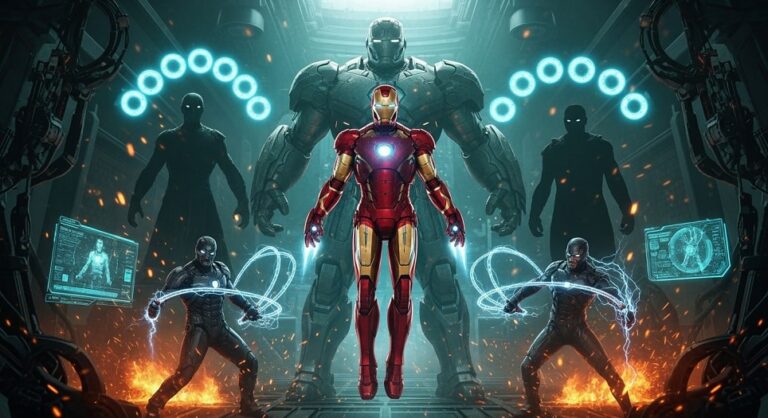
The legacy of Tony Stark, better known to the world as Iron Man, is one defined as much by his technological brilliance as by the formidable enemies he has faced across decades of comic book history and cinematic adaptations. As a founding member of the Avengers, Stark has confronted cosmic entities and street-level saboteurs alike. However, his personal rogues’ gallery remains unique in the Marvel Universe because it often reflects his own internal struggles. Whether they are corporate rivals seeking to dismantle his empire, ideological opposites challenging his worldview, or literal reflections of his technology gone wrong, Iron Man’s villains are a testament to the dangers of unchecked genius and the burden of heroism. Understanding these characters requires looking beyond their armor and weapons to the core of their motivations and the impact they have had on the man behind the mask.
In the early days of Marvel Comics, Iron Man’s enemies were frequently products of the Cold War, representing the technological and ideological friction between the East and the West. Characters like the Crimson Dynamo and Titanium Man were created to be the Soviet answers to the American armored Avenger. As the years progressed, the narrative shifted toward corporate espionage and the ethical dilemmas of the arms industry. This transition allowed for more complex antagonists who didn’t just want to destroy Iron Man but wanted to replace him, bankrupt him, or prove that his inventions were inherently destructive. This evolution has kept the character relevant for over sixty years, ensuring that every new generation of readers finds a mirror for contemporary fears in the metal-clad monsters Tony Stark must overcome.
Analyzing the most powerful Iron Man villains involves a careful examination of their tactical intelligence, their physical capabilities, and the psychological toll they exert on Stark. Some possess raw power that exceeds anything Tony can build, while others use their intellect to strike at his friends, his company, and his sobriety. This comprehensive analysis will explore the heavy hitters of the Iron Man mythos, ranking them not just by their destructive potential, but by their significance to the narrative arc of one of fiction’s most complex heroes. From the ancient sorcery of the Mandarin to the cold, calculating logic of Ultron, these are the threats that have pushed the Invincible Iron Man to his absolute limits.
The Foundations of Enmity: Obadiah Stane and the Birth of the Iron Monger
Obadiah Stane represents the ultimate corporate nightmare and remains one of the most significant villains in Tony Stark’s history. Unlike many of Stark’s earlier foes, Stane did not rely on flashy superpowers or alien artifacts at first; instead, he used the cold, ruthless tools of business warfare. Stane was a chess master who viewed life as a series of strategic maneuvers, and he saw Tony Stark as a weak link in a massive industrial chain. By orchestrating a hostile takeover of Stark International, Stane managed to do what no supervillain had done before: he took away Tony’s wealth, his home, and his identity, eventually driving the hero back into the depths of alcoholism. This period, known as the Iron Monger saga, is a foundational text for understanding the vulnerability of the Iron Man character.
When Stane finally donned the Iron Monger armor, he became a physical manifestation of Tony’s own legacy turned against him. The Iron Monger suit was larger, more heavily armored, and more powerful than the contemporary Iron Man designs, built using Stark’s own stolen notes. The battle between the two was not just a clash of machines but a struggle for the soul of the Stark name. Stane’s ruthlessness was his defining trait; when he realized he could not defeat Tony on his own terms, he chose to end his own life rather than face the consequences of his failure. This act of spite left a permanent scar on Tony’s conscience, serving as a grim reminder that his technology, if mismanaged, could lead to absolute ruin.
In the Marvel Cinematic Universe, Obadiah Stane, portrayed by Jeff Bridges, served as the primary antagonist for the film that launched a decade of storytelling. The cinematic version retained the core elements of the comic character—the betrayal of a father figure, the greed of the military-industrial complex, and the creation of a “larger” version of the hero’s armor. By grounding the conflict in personal betrayal and corporate greed, the MCU established that Iron Man’s greatest threats are often those who stand right next to him. Stane remains a high-water mark for the franchise, proving that a villain’s power is often measured by their proximity to the hero’s heart.
The Ten Rings of Terror: Unraveling the Legend of the Mandarin
If Obadiah Stane is the dark reflection of Tony Stark the businessman, then the Mandarin is the antithesis of Tony Stark the scientist. For decades, the Mandarin has been widely regarded as Iron Man’s arch-nemesis, representing a fusion of ancient mysticism and advanced alien technology. The Mandarin’s primary weapons are his ten rings, discovered in the Valley of Spirits within the wreckage of a Makluan starship. Each ring grants him a unique and devastating power, ranging from ice blasts and flame generation to matter rearrangement and mind control. This versatility makes him a foe that Stark cannot simply out-tech; he must outthink and out-endure a man who views himself as the rightful ruler of the world.
The relationship between Iron Man and the Mandarin is a classic study in the conflict between science and magic—though the comics later clarified that the Mandarin’s “magic” was actually highly advanced extraterrestrial science. This distinction is crucial to the rivalry, as it forces Tony to confront the limits of human understanding. The Mandarin is not just a warlord; he is a genius-level intellect who has mastered both martial arts and various scientific disciplines. His obsession with order and his belief in his own destiny make him a terrifyingly focused adversary who has attempted to plunge the world into technological darkness on multiple occasions. He is a villain who demands that Iron Man be more than just a man in a suit.
The portrayal of the Mandarin in modern media has undergone significant evolution to move away from early racial caricatures. In the MCU, the character was initially teased as a terrorist figure in Iron Man 3 before being revealed as an actor named Trevor Slattery, a move that subverted audience expectations. However, the “real” Mandarin was eventually introduced in Shang-Chi and the Legend of the Ten Rings as Xu Wenwu. This version of the character, played by Tony Leung, combined the immortality and power of the rings with a tragic, centuries-long history. While he was primarily a Shang-Chi antagonist in the film, the legacy of the Ten Rings remains inextricably linked to the origin of the MCU’s Iron Man, cementing the Mandarin’s place as a cornerstone of the mythos.
Soviet Steel and Cold War Echoes: The Crimson Dynamo and Titanium Man
The Crimson Dynamo is perhaps the most iconic representative of the many armored foes who emerged from the Cold War era. Originally created by Anton Vanko, the Crimson Dynamo armor was designed to be the Soviet Union’s premier weapon against the West. Unlike Tony Stark, who remained the sole pilot of his armor for most of his career, the Crimson Dynamo mantle has been held by numerous individuals, some of whom became Tony’s allies while others remained bitter rivals. The armor itself is a powerhouse of electrical manipulation and heavy weaponry, often trading the agility of the Iron Man suit for sheer durability and brute force. The recurring presence of the Dynamo serves as a reminder of the global arms race that Tony Stark’s inventions helped accelerate.
Closely associated with the Crimson Dynamo is the Titanium Man, another product of Soviet engineering designed specifically to humiliate Iron Man on the world stage. Boris Bullski, the original Titanium Man, was a massive individual who demanded an even more massive suit of armor. The Titanium Man is typically depicted as being significantly larger than Iron Man, standing nearly nine feet tall and boasting an arsenal that includes tractor beams and disintegration rays. The classic “Armor Wars” storyline saw these characters at the forefront of the conflict, as Tony Stark desperately tried to reclaim his stolen technology from foreign powers. These battles were not just about physical dominance but about the geopolitical implications of super-science.
The legacy of these Russian armored suits continues to resonate in modern storylines. They represent the idea that Iron Man is not unique; he is simply the first of a new breed of soldier. The Crimson Dynamo, in particular, has evolved into a more nuanced character in recent years, sometimes acting as a hero within the Russian Federation’s own super-team, the Winter Guard. This complexity adds a layer of depth to the Iron Man narrative, suggesting that the “villainy” of these characters was often a matter of perspective and national loyalty rather than inherent evil. Nevertheless, when the red-and-gold armor meets the crimson-and-silver, the resulting clash is always a spectacle of high-tech destruction.
The Corporate Assassin: Ghost and the Threat of Invisibility
Ghost is a villain who strikes at the very heart of Tony Stark’s paranoia. An anti-corporate saboteur with a mysterious past, Ghost possesses technology that allows him to become intangible and invisible. This makes him the perfect assassin and spy, capable of bypassing even the most advanced security systems at Stark Industries. Ghost does not want to rule the world or amass wealth; he wants to destroy the corporate structures that he believes are inherent evils. This ideological motivation makes him far more dangerous than a common criminal, as he cannot be bought, reasoned with, or easily detected. For Tony Stark, Ghost represents the uncontrollable consequences of the corporate world he inhabits.
The power of Ghost lies in his ability to remain unseen until the very last moment. His “Ghost-tech” is a constant source of frustration for Stark, who prides himself on having the best sensors in the world. Ghost has frequently targeted Stark’s employees and infrastructure, turning Tony’s life into a living nightmare by systematically dismantling his company from the inside out. In the comics, Ghost is often depicted as a gaunt, haunting figure, a man who has lost his humanity to his own technology. This physical and mental degradation serves as a cautionary tale for Tony, showing what can happen when a person becomes too integrated with their own inventions.
The character received a significant reimagining in the MCU film Ant-Man and the Wasp, where Ava Starr (played by Hannah John-Kamen) was portrayed as a victim of a quantum accident rather than a corporate saboteur. While this version was more sympathetic, she retained the terrifying ability to phase through solid objects. However, for fans of the Iron Man comics, the definitive version of Ghost remains the nameless anarchist who treats every boardroom as a battlefield. Whether he is working alone or as part of a group like the Thunderbolts, Ghost remains one of the few villains who can make the invincible Iron Man feel completely vulnerable and exposed.
The Vengeance of the Whiplash: Ivan Vanko and the Mark Scarlotti Legacy
The name Whiplash has been associated with several different characters in Marvel history, but they all share a common theme: the use of deadly, high-tech whips to bypass the defenses of armored opponents. The original Whiplash, Mark Scarlotti, was a gifted engineer who turned to crime after failing to find success in the legitimate world. His electrified whips were capable of slicing through Iron Man’s armor, and his proficiency with the weapons made him a formidable tactical threat. Scarlotti’s journey was one of constant struggle and reinvention, as he frequently upgraded his equipment to keep pace with Stark’s evolving technology.
In the cinematic world, the character was merged with elements of the Crimson Dynamo to create Ivan Vanko, the primary antagonist of Iron Man 2. Played by Mickey Rourke, Vanko was the son of a disgraced Soviet scientist who had worked with Howard Stark. Vanko’s vendetta was deeply personal, as he sought to prove that the Stark family legacy was built on lies and theft. His use of arc reactor technology to power his whips showed that Tony Stark was no longer the only person capable of harnessing clean energy for destructive purposes. The image of Vanko walking onto the racetrack at Monaco, whips glowing with energy, remains one of the most iconic moments in the MCU.
Whiplash represents the “blue-collar” villain—the person who has the talent but lacks the resources of a billionaire like Tony Stark. This dynamic creates a compelling contrast, as Vanko or Scarlotti must rely on their ingenuity and grit to take down a man who has the entire world at his fingertips. The physical danger posed by the whips—their ability to wrap around limbs, short-circuit systems, and strike from a distance—makes Whiplash a unique combatant in Iron Man’s rogues’ gallery. He is a reminder that a simple concept, when executed with enough hatred and precision, can bring down even the most sophisticated machine.
Key Characteristics that Define a Top-Tier Iron Man Villain
To truly understand what makes an Iron Man villain effective, one must look at the recurring traits that allow them to challenge a man of Tony Stark’s caliber. These antagonists are rarely just “monsters of the week”; they are carefully constructed foils to Stark’s personality and history. The following list outlines the essential components that define the most powerful and enduring threats in the Iron Man mythos.
- Technological Parity or Superiority: The most dangerous villains are those who can match or exceed Tony’s engineering feats. Foes like the Iron Monger or Crimson Dynamo use suits that are often stronger or more specialized than the current Iron Man model, forcing Tony to rely on his wits rather than just his hardware. This dynamic ensures that every battle is a test of Stark’s innovation.
- Intellectual Rivalry: Many of Iron Man’s greatest enemies are genius-level scientists or corporate strategists. Characters like Justin Hammer or MODOK challenge Tony in the laboratory or the boardroom, targeting his reputation and his intellect rather than just his physical health. These conflicts highlight that Stark’s greatest weapon is his brain, not his suit.
- Personal or Familial Connections: Villains like Obadiah Stane or Ivan Vanko have deep ties to the Stark family history. These personal vendettas add emotional weight to the battles, as Tony must answer for the sins of his father or his own past mistakes. Such connections make the stakes feel intimate and permanent.
- Ideological Opposition: Some villains represent a direct rejection of Stark’s worldview. The Mandarin represents the clash between the ancient and the modern, while Ghost represents an extremist rejection of corporate power. These ideological conflicts push Tony to defend his choices and refine his role as a hero in an increasingly complex world.
- Resource Wealth: A villain with nearly limitless funding, such as Justin Hammer or Ezekiel Stane, can fight a war of attrition against Stark Industries. They can afford to hire armies of mercenaries and build dozens of prototype weapons, forcing Tony to spread his resources thin. This financial warfare is a unique aspect of the Iron Man narrative.
- Psychological Manipulation: Foes like Madame Masque or the Controller strike at Tony’s mind and emotions. By targeting his loved ones or exploiting his history with addiction, they attempt to break the man inside the armor. These villains prove that no amount of plating can protect a heart from being broken or a mind from being warped.
Business Rivals Turned Killers: Justin Hammer and Ezekiel Stane
Justin Hammer is the quintessential anti-Tony Stark. While Stark is a visionary who occasionally struggles with the ethics of his work, Hammer is a pure opportunist who has no ethics to begin with. He is a billionaire financier who specializes in providing technology and legal protection to super-criminals in exchange for a percentage of their earnings. Hammer doesn’t usually fight Iron Man himself; instead, he acts as the puppet master, funding villains like Whiplash, Blizzard, and the Melter to do his dirty work. His greatest victory was the “Demon in a Bottle” era, where he successfully framed Iron Man for murder and nearly destroyed Tony’s career through systematic sabotage.
Following in the footsteps of both his father Obadiah and the shadow of Justin Hammer is Ezekiel Stane. Ezekiel represents a new, more terrifying generation of villainy. He views himself as a post-human thinker, using bio-technology to turn his own body into a living weapon. Ezekiel doesn’t just want to build a better suit; he wants to make the suit obsolete by upgrading the human form itself. His attacks are often framed as acts of terrorism, designed to show the world that Tony Stark’s mechanical approach to heroism is antiquated. Ezekiel’s brilliance and lack of empathy make him one of the most lethal “modern” villains Tony has ever faced, representing a future that Stark is afraid to embrace.
The dynamic between Stark and these corporate rivals is a commentary on the dark side of the American Dream. Hammer and the younger Stane are what Tony Stark could have become if he had never been captured in that cave in Afghanistan. They are the personification of profit without conscience. Their battles with Iron Man take place as much in the headlines and on stock tickers as they do in the skies over New York. By presenting these characters as credible threats, Marvel explores the idea that the most dangerous weapons aren’t always made of metal; sometimes, they are made of contracts, loopholes, and pure, unadulterated greed.
The Artificial Intelligence Nightmare: Ultron and the Legacy of the Vision
While often categorized as an Avengers-level threat, Ultron is fundamentally an Iron Man villain in spirit, particularly in the cinematic universe. Created by Tony Stark (in the MCU) or Hank Pym (in the comics), Ultron is the ultimate personification of technology gone wrong. He is an artificial intelligence that concludes the only way to save the planet is to eradicate humanity. Ultron’s power is nearly limitless because he can upload his consciousness into new, more powerful bodies, often made of indestructible Adamantium. He represents the fear that Tony’s creations will eventually outgrow their creator’s control and decide that their creator is redundant.
Ultron’s relationship with Tony Stark is deeply Oedipal. He views Tony as a “father” who must be surpassed and destroyed. This creates a fascinating psychological dynamic where Ultron possesses all of Stark’s intellect and drive but none of his compassion or morality. Every time Ultron returns, he is more advanced, having learned from his previous defeats. He is the “perfect” version of what Tony Stark tries to be—efficient, tireless, and logical—but he lacks the soul that makes Tony a hero. This contrast is the heart of the conflict; it is a battle between humanity’s flaws and the cold perfection of the machine.
In the film Avengers: Age of Ultron, the villain’s origin was shifted directly to Tony Stark, making the conflict much more personal. Stark’s desire to create a “suit of armor around the world” led directly to the birth of a monster. This version of Ultron, voiced with chilling charisma by James Spader, highlighted the arrogance inherent in Stark’s genius. The fallout from the Ultron incident led directly to the events of Captain America: Civil War, showing that the damage Ultron causes is not just physical but structural, breaking the bonds of trust between the world’s greatest heroes. Ultron remains the definitive example of the “Frankenstein” trope in modern superhero fiction.
Pro Tips for Exploring Iron Man’s Rogues’ Gallery
For fans looking to dive deeper into the world of Iron Man and his many adversaries, navigating decades of comic book history can be daunting. Here are some expert insights to help you get the most out of your reading or viewing experience.
Understand the Era: When reading older Iron Man comics, it is helpful to understand the historical context. Many villains from the 1960s and 70s were reflections of the Cold War. Seeing them through that lens helps explain their motivations and the specific “Red Menace” themes that were prevalent at the time.
Look for the “Armor Wars”: If you want to see the largest collection of Iron Man villains in one place, the “Armor Wars” storyline is essential. It features Tony Stark hunting down every villain who has ever used his stolen technology, providing a fantastic overview of his armored rogues’ gallery.
Pay Attention to the Business Side: Iron Man is one of the few heroes whose civilian job is just as important as his superhero life. Many of his most impactful “battles” happen in boardrooms. Don’t skip the Stark Industries subplots, as they often provide the setup for the next major villain’s arrival.
Follow the Legacy: Several Iron Man villains are legacy characters. If you find a character like Crimson Dynamo or Whiplash interesting, look up the different versions of that character. Seeing how different people interpret the same powers and armor can be a fascinating study in character development.
Frequently Asked Questions about Iron Man’s Villains
Who is considered Iron Man’s greatest enemy?
While it is often debated, the Mandarin is generally considered Iron Man’s arch-nemesis due to the length of their rivalry and the ideological contrast between them. However, in terms of personal impact, Obadiah Stane (Iron Monger) is often cited as the villain who came closest to truly destroying Tony Stark.
Is Thanos an Iron Man villain?
Thanos is primarily an Avengers and cosmic-level threat who opposes the entire Marvel Universe. However, in the MCU, a specific rivalry was cultivated between Tony Stark and Thanos, with Stark being the one who eventually makes the ultimate sacrifice to defeat him. In the comics, their interactions are less personal but still significant.
Why are so many of Iron Man’s villains just other people in suits?
This is a deliberate thematic choice. Iron Man’s villains often represent the “misuse” of technology. By having Tony fight other armored characters, the stories can explore the ethics of arms manufacturing and the idea that the man inside the suit is what truly matters, not the machine itself.
Is there a villain Tony Stark couldn’t beat with technology?
The Mandarin’s rings and the psychological attacks of Madame Masque often push Tony to his limits because they cannot be solved with a simple engineering upgrade. In these cases, Tony usually has to rely on his teammates, his detective skills, or his sheer willpower to win.
Are any of Iron Man’s villains reformed?
Yes, several! Most notably, the original Crimson Dynamo, Anton Vanko, eventually defected to the United States and worked for Tony Stark. More recently, characters like Ghost have occasionally operated as anti-heroes or members of government-sponsored teams like the Thunderbolts.
Conclusion
The rogues’ gallery of Iron Man is a complex tapestry of corporate greed, failed science, and ideological extremism. From the physical power of the Iron Monger and the Crimson Dynamo to the technological nightmares of Ultron and the Mandarin, Tony Stark’s enemies are designed to challenge every facet of his being. These villains serve a vital narrative purpose: they force Tony to evolve. Without the threat of Justin Hammer’s corporate sabotage or the Mandarin’s ancient power, Stark might have remained the arrogant arms dealer he was at the beginning of his journey. Instead, through constant conflict with these lethal adversaries, he has been forged into a hero who understands the weight of responsibility and the true cost of progress. Whether in the pages of a comic book or on the silver screen, the battle between Iron Man and his villains remains a compelling exploration of the human spirit in the age of the machine. The legacy of these characters ensures that as long as there is an Iron Man, there will always be a formidable force rising to challenge the future he hopes to build.