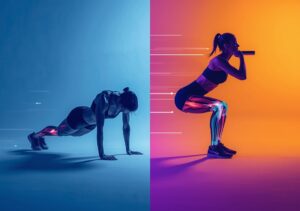
Understanding Muscle Contraction Types in Strength Training
The world of strength training encompasses numerous exercise modalities, but understanding the fundamental differences between isometric and isotonic exercises provides the foundation for building an effective, well-rounded fitness program. These two categories of muscle contraction represent distinct approaches to building strength, endurance, and overall physical fitness. While both engage muscles to generate force, they differ significantly in how muscles respond, how joints move during execution, and what specific benefits each provides to practitioners. Grasping these differences empowers fitness enthusiasts, athletes, and beginners alike to make informed decisions about which exercises to incorporate based on individual goals, physical limitations, and desired outcomes.
Isometric exercises involve muscle contractions where muscles generate tension without changing length and joints remain stationary throughout the movement. The term derives from Greek words meaning equal measure, reflecting how muscle length stays constant despite active engagement. Classic examples include planks, wall sits, and static holds at specific points during weight-bearing exercises. During isometric contractions, muscles work hard to resist external forces or maintain body positions against gravity, creating substantial tension without visible movement. This static nature makes isometric training particularly valuable for rehabilitation, joint stabilization, and building foundational strength in specific positions.
Isotonic exercises, conversely, feature muscle contractions accompanied by joint movement through a range of motion while resisting constant load or tension. The Greek origin translates to same tension, indicating how resistance remains relatively consistent as muscles lengthen and shorten throughout exercise execution. Most traditional strength training movements qualify as isotonic, including squats, bicep curls, push-ups, deadlifts, and running. These dynamic exercises involve both concentric contractions, where muscles shorten while generating force, and eccentric contractions, where muscles lengthen while resisting force. Understanding when and how to implement each contraction type creates opportunities to maximize training effectiveness for specific fitness objectives.
Deep Dive Into Isometric Exercise Mechanics and Benefits
How Isometric Muscle Contractions Work
Isometric muscle contractions occur when muscles generate force without changing length, resulting in no visible joint movement. During these static holds, muscle fibers activate and create tension to resist external forces or maintain specific body positions against gravity. The absence of joint movement distinguishes isometric from isotonic contractions, though muscles work intensely throughout the hold duration. When performing a plank, for example, core muscles contract forcefully to keep the body rigid and prevent sagging toward the floor, yet the torso maintains the same position without flexing or extending. Similarly, wall sits require quadriceps muscles to contract intensely to hold the seated position against the wall without knee joint movement.
The physiological mechanisms underlying isometric exercise involve high levels of neural recruitment, meaning specialized neurons in the brain and spinal cord that control voluntary and involuntary movements become highly activated. This substantial neural activation recruits more muscle fibers simultaneously compared to many dynamic movements, generating significant force production despite the lack of motion. The sustained contraction creates metabolic demands within muscle tissue, depleting stored glycogen for energy and producing metabolic byproducts including hydrogen ions and lactate. The accumulation of hydrogen ions increases blood acidity, creating the characteristic burning sensation many people experience during prolonged isometric holds.
Isometric exercises can be performed with or without additional resistance beyond body weight. Unweighted isometric movements rely solely on body mass or self-generated force for resistance, such as pressing hands together or holding plank positions. Weighted isometric exercises incorporate external resistance from dumbbells, resistance bands, barbells, or cable machines held at fixed positions. For instance, holding a dumbbell with the elbow bent at ninety degrees creates an isometric bicep contraction, or pausing at the bottom of a squat while holding a barbell generates isometric quadriceps activation. Both approaches effectively build strength, though weighted versions allow progressive overload by incrementally increasing resistance over time.
Key Benefits of Isometric Training
Isometric exercises provide numerous advantages that make them valuable components of comprehensive fitness programs. Joint-friendly strength building represents perhaps the most significant benefit, as static holds minimize stress on joints compared to dynamic movements requiring repeated flexion and extension. This characteristic makes isometric training particularly beneficial for individuals with arthritis, joint pain, or those recovering from injuries where dynamic movement might cause discomfort or exacerbate existing conditions. Physical therapists frequently prescribe isometric exercises as first-line interventions for rehabilitation, allowing patients to maintain and build strength without aggravating injured or weakened joints.
Enhanced joint stability emerges naturally from isometric training, as these exercises strengthen muscles in specific positions where joint support is most critical. Stabilizing muscles around major joints including shoulders, knees, hips, and spine benefit substantially from isometric work, improving overall joint integrity and reducing injury risk during daily activities and athletic pursuits. The sustained muscle activation required to maintain static positions develops muscular endurance within stabilizer muscles, creating more robust joint support systems. This stability foundation proves essential before progressing to more demanding dynamic movements, establishing safe movement patterns and building confidence in joint capabilities.
Recent research has revealed unexpected cardiovascular benefits from isometric exercise, particularly regarding blood pressure management. Studies comparing various exercise modalities found that isometric training produced the most significant reductions in both systolic and diastolic blood pressure among adults with hypertension. A comprehensive review examining over fifteen thousand participants across two hundred seventy trials demonstrated that isometric exercises outperformed high-intensity interval training, aerobic exercise, and traditional resistance training for blood pressure reduction. The mechanism involves sustained muscle contractions temporarily restricting blood flow, followed by reactive hyperemia when muscles relax, promoting improved vascular function and lower resting blood pressure over time.
Common Isometric Exercises and Proper Execution
The plank stands as the most recognized isometric exercise, effectively targeting core muscles including rectus abdominis, transverse abdominis, obliques, and erector spinae while also engaging shoulders, chest, and legs. Proper plank execution requires maintaining a straight line from head to heels, with elbows beneath shoulders, forearms parallel, core braced tightly, and glutes engaged. Common mistakes include allowing hips to sag toward the floor, raising hips too high creating a pike position, or failing to engage the core properly. Beginners might start with ten to twenty second holds, gradually extending duration as strength improves, while advanced practitioners can hold planks for sixty seconds or longer, or progress to variations including side planks, extended arm planks, or weighted planks.
Wall sits provide excellent isometric training for lower body muscles, primarily targeting quadriceps while also engaging glutes, hamstrings, and calves. To perform wall sits correctly, stand with back against a wall, step feet forward approximately two feet, then slide down the wall while keeping core engaged until thighs reach parallel to the floor with knees bent at ninety degrees. Weight should distribute evenly across both feet with heels firmly planted, and the back should maintain full contact with the wall without arching. Hold this position for twenty to sixty seconds, breathing steadily throughout rather than holding breath. As strength develops, duration can extend, or difficulty can increase by elevating heels, narrowing stance, or adding weight across the thighs.
Additional valuable isometric exercises include hollow body holds which strengthen the entire core by lying supine with arms extended overhead, lifting shoulders and legs slightly off the ground while pressing the lower back into the floor, and bridge holds which target glutes, hamstrings, and lower back by lying supine with knees bent and feet flat, then lifting hips until the body forms a straight line from knees to shoulders. Static squat holds performed at various depths build tremendous leg strength, while overhead holds with weights strengthen shoulders and upper back. Each exercise can be modified for different fitness levels, making isometric training accessible to virtually everyone regardless of current capabilities.
Comprehensive Look at Isotonic Exercise Dynamics and Advantages
Understanding Isotonic Muscle Contractions
Isotonic muscle contractions involve muscles changing length while generating force against relatively constant resistance, accompanied by visible joint movement through a range of motion. The term encompasses two distinct phases occurring during most dynamic exercises. Concentric contractions happen when muscles shorten while producing force to overcome external resistance, such as lifting a dumbbell during a bicep curl or rising from the bottom position of a squat. During concentric phases, muscle fibers actively pull on tendons to move bones and create joint motion, representing the primary force-producing phase most people associate with strength training.
Eccentric contractions occur when muscles lengthen while still generating force to control movement against resistance, such as lowering a dumbbell back down during a bicep curl or descending into a squat. Despite muscles lengthening during eccentric phases, they remain actively contracted to resist the pull of gravity and control the rate of descent. Eccentric contractions can generate greater force than concentric contractions, making them particularly effective for building muscle strength and size. The controlled lengthening creates substantial mechanical tension within muscle fibers, triggering adaptive responses that lead to increased strength and hypertrophy. Both phases work together during most isotonic exercises, creating complete movements that build functional strength through full ranges of motion.
The constant tension characteristic of isotonic exercise refers to resistance remaining relatively stable throughout the movement, though actual mechanical load on muscles varies depending on joint angles and leverage. During a bicep curl, for example, the weight of the dumbbell stays constant, but the actual challenge to bicep muscles increases as the forearm approaches horizontal due to changes in leverage and moment arm length. This variable resistance throughout different points in the range of motion creates comprehensive strength development across all joint angles, contrasting with isometric training which builds strength primarily at the specific angle where holds occur.
Primary Benefits of Isotonic Training
Isotonic exercises deliver extensive benefits that establish them as cornerstone components of most strength training programs. Comprehensive muscle development occurs through isotonic training as muscles work through complete ranges of motion, building strength across all joint angles rather than just specific positions. This full-range strength proves more functional for real-world activities and athletic movements, which rarely involve holding static positions but instead require dynamic strength throughout motion. The combination of concentric and eccentric contractions stimulates muscle growth effectively, with eccentric phases particularly potent for triggering hypertrophy responses due to high mechanical tension and muscle damage that prompts adaptive rebuilding.
Improved cardiovascular fitness naturally accompanies many isotonic exercises, particularly when performed with moderate to high repetitions or as part of circuit training protocols. Dynamic movements increase oxygen consumption, elevate heart rate, boost stroke volume and cardiac output, and improve overall cardiovascular endurance. Activities like running, swimming, cycling, and rowing qualify as isotonic cardiovascular exercises that strengthen both heart and skeletal muscles simultaneously. Even resistance-based isotonic exercises including squats, deadlifts, and kettlebell swings elevate heart rate substantially when performed with appropriate intensity, providing cardiovascular benefits alongside strength gains.
Enhanced bone density results from regular isotonic training due to mechanical stress applied to bones during dynamic loading. Weight-bearing isotonic exercises create forces that stimulate osteoblast activity, promoting new bone formation and increasing bone mineral density over time. This adaptation proves particularly important for preventing osteoporosis and maintaining skeletal health throughout aging. Research demonstrates that athletes who regularly perform weight-lifting and other isotonic exercises exhibit significantly higher bone mass and density compared to sedentary individuals or athletes who primarily engage in non-weight-bearing activities. The progressive nature of isotonic training allows continuous increases in resistance, providing ongoing stimulus for bone adaptation.
Essential Isotonic Exercises for Complete Development
Fundamental lower body isotonic exercises include squats, which target quadriceps, glutes, hamstrings, and core while teaching essential movement patterns used daily. Proper squat execution involves standing with feet shoulder-width apart, initiating movement by pushing hips back while bending knees, descending until thighs reach parallel to the floor or lower if mobility allows, then driving through heels to return to standing. Variations including goblet squats, front squats, back squats, and Bulgarian split squats provide different challenges and emphases. Deadlifts represent another foundational isotonic movement, developing posterior chain muscles including hamstrings, glutes, lower back, and traps through hip hinge patterns that translate directly to real-world lifting tasks.
Upper body pushing movements form crucial isotonic exercise categories. Push-ups develop chest, shoulders, and triceps through horizontal pushing patterns, with variations from knee push-ups for beginners to decline, diamond, or explosive plyometric push-ups for advanced practitioners. Overhead presses using dumbbells, barbells, or kettlebells build shoulder strength through vertical pushing patterns essential for overhead activities. Upper body pulling exercises including pull-ups, chin-ups, and rows strengthen back muscles, biceps, and posterior shoulders, creating balanced development that prevents muscular imbalances and postural problems from excessive pushing without adequate pulling work.
Isotonic exercises extend beyond formal gym movements to include everyday activities that build functional fitness. Walking, running, hiking, swimming, cycling, and dancing all involve rhythmic, repeated muscle contractions moving joints through ranges of motion, qualifying as isotonic cardiovascular activities. Household tasks including cleaning, gardening, yard work, and carrying groceries provide isotonic training stimuli that maintain functional strength for daily living. This accessibility makes isotonic exercise highly practical, as people can accumulate beneficial training volume through normal activities without requiring gym equipment or formal exercise sessions, though structured training programs provide superior progressive overload and systematic development.
Comparing Isometric and Isotonic Exercise Applications
Strength and Muscle Development Considerations
When comparing strength-building capabilities, isotonic exercises generally prove superior for developing maximum strength and muscle mass due to several factors. The dynamic nature of isotonic training allows progressive overload through increased resistance, more repetitions, additional sets, or varied tempos, providing continuous adaptation stimulus as fitness improves. The combination of concentric and eccentric contractions creates greater overall muscle damage and metabolic stress compared to isometric holds, triggering robust hypertrophy responses. Additionally, isotonic exercises build strength throughout complete ranges of motion rather than just specific angles, creating more functional strength applicable to athletic performance and daily activities requiring dynamic movement.
However, isometric training provides unique strength benefits, particularly regarding maximum voluntary contraction capacity and stabilization strength. The sustained muscle activation during isometric holds can generate extremely high force production, approaching or even exceeding forces produced during dynamic movements. Time under tension, a critical variable for muscle growth, can be effectively manipulated through isometric training by extending hold durations, potentially creating metabolic environments conducive to hypertrophy. Research suggests that isometric training at longer muscle lengths produces greater muscle growth compared to shorter length holds, as increased stretch under tension stimulates hypertrophy mechanisms. Strategic incorporation of isometric holds within isotonic training programs can enhance strength at specific sticking points where leverage is poorest.
The most effective approach for maximizing strength and muscle development involves combining both isometric and isotonic training methods within comprehensive programs. Isotonic exercises provide the foundation through progressive resistance training moving through full ranges of motion, while isometric components add specificity for weak points, enhance mind-muscle connection, extend time under tension, and build stability. For example, adding a three-second isometric hold at the bottom of squats increases difficulty and strengthens the most challenging position, while incorporating isometric core exercises like planks complements dynamic core work from compound lifts, creating well-rounded development that addresses both dynamic strength and static stability.
Rehabilitation and Injury Recovery Applications
Isometric exercises excel in rehabilitation contexts, typically serving as first-line interventions when recovering from injuries affecting muscles, tendons, ligaments, or joints. The absence of joint movement minimizes stress on healing tissues while allowing strength maintenance and gradual rebuilding. Physical therapists prescribe isometric exercises immediately following many injuries when dynamic movement might cause pain, inflammation, or tissue damage. For instance, someone recovering from knee surgery might perform isometric quadriceps contractions by tightening thigh muscles without bending the knee, maintaining muscle tone without stressing the healing joint. This approach prevents the significant strength loss and muscle atrophy that would otherwise occur during complete rest periods.
As healing progresses and tolerance improves, rehabilitation programs gradually transition from purely isometric work toward controlled isotonic exercises through limited ranges of motion, eventually progressing to full range dynamic movements. This progression respects tissue healing timelines while systematically restoring function. The stable, predictable nature of isometric exercise allows precise control over force production and positioning, reducing re-injury risk during vulnerable recovery phases. Patients can perform isometric exercises at home with minimal or no equipment, facilitating consistent adherence to rehabilitation protocols that determine recovery success. The low skill requirement compared to complex dynamic exercises makes isometric training accessible even for individuals with limited exercise experience.
Isotonic exercises become primary rehabilitation tools during intermediate and advanced recovery stages when joints can safely move through ranges of motion and tissues can tolerate dynamic loading. Controlled isotonic movements restore movement patterns, rebuild strength functionally across complete ranges, improve coordination and proprioception, and prepare injured areas for real-world demands. The progressive nature of isotonic training allows gradual increases in resistance and complexity, systematically advancing from simple movements like leg slides or arm raises through more complex functional movements that mimic sport-specific or occupation-specific demands. This comprehensive approach utilizing both isometric and isotonic methods at appropriate stages optimizes recovery outcomes and minimizes re-injury risk upon return to full activity.
Pro Tips for Maximizing Results With Both Exercise Types
Experienced coaches and trainers have developed practical strategies for optimizing both isometric and isotonic training effectiveness. One crucial tip emphasizes maintaining proper form throughout all exercises, whether static or dynamic. During isometric holds, actively engage target muscles rather than simply holding position passively, as conscious muscle activation maximizes strength development and neural recruitment. For isotonic exercises, prioritize controlled movement through complete ranges of motion over using excessive weight with compromised technique, as proper form ensures appropriate muscles receive training stimulus while minimizing injury risk. Quality repetitions with appropriate resistance produce better results than heavy loads with poor execution.
Breathing technique requires careful attention during both exercise types. A common misconception suggests holding breath during isometric exercises, but this Valsalva maneuver dangerously elevates blood pressure and reduces oxygen delivery to working muscles. Instead, breathe steadily and continuously during isometric holds, inhaling and exhaling rhythmically to maintain oxygen supply and cardiovascular stability. During isotonic exercises, coordinate breathing with movement phases, typically exhaling during exertion phases like lifting or pushing and inhaling during easier phases like lowering or returning to start positions. Proper breathing supports performance, prevents blood pressure spikes, and reduces dizziness or lightheadedness during training.
Strategic programming integration of both exercise types creates synergistic benefits exceeding results from either approach alone. Begin workouts with dynamic warm-ups including light isotonic movements that raise core temperature, increase blood flow, and rehearse movement patterns for upcoming exercises. Incorporate isometric exercises at multiple points including as activation drills before main lifts, as holds within compound movements at challenging positions, or as finishers that extend time under tension after completing prescribed repetitions. For example, perform a thirty-second wall sit before squats to activate quadriceps, add three-second pauses at the bottom of each squat repetition, then finish leg training with isometric leg extension holds. This multifaceted approach addresses different strength qualities comprehensively.
Understanding that adaptation is specific helps set realistic expectations for transfer between exercise types. Isometric strength gains occur primarily at the specific joint angles trained, with limited transfer to angles more than fifteen to twenty degrees away from training positions. To build comprehensive strength across ranges of motion, either perform isometric holds at multiple angles or prioritize isotonic training moving through complete ranges. Conversely, isotonic training may not maximally strengthen specific positions where biomechanical advantage is poor, making targeted isometric work at these sticking points valuable. Recognize these specificity principles when designing programs, selecting exercise types aligned with specific goals whether maximal strength at particular positions, dynamic power throughout ranges of motion, or balanced capability across multiple strength qualities.
Frequently Asked Questions
Which is better for building muscle, isometric or isotonic exercises?
Isotonic exercises generally prove more effective for building muscle mass due to several physiological advantages. Dynamic movements involving both concentric and eccentric contractions create greater mechanical tension and muscle damage compared to static holds, triggering more robust hypertrophy responses. The progressive overload principle applies more readily to isotonic training, as resistance can systematically increase through heavier weights, while isometric progression primarily involves extending hold duration or adding modest weight. Additionally, isotonic exercises build muscle across complete ranges of motion rather than specific positions, creating more comprehensive development.
However, isometric training can contribute to muscle growth, particularly when performed at longer muscle lengths where stretch under tension stimulates hypertrophy mechanisms. Time under tension, a key factor in muscle development, can be effectively manipulated through extended isometric holds. The most effective approach combines both methods, using isotonic exercises as the foundation for muscle building while incorporating strategic isometric holds to target weak points, extend sets beyond concentric failure, or enhance mind-muscle connection. This integrated approach delivers superior results compared to exclusively focusing on either modality alone.
Can isometric exercises help lower blood pressure?
Yes, research demonstrates that isometric exercises effectively reduce blood pressure, potentially more so than other exercise types. A comprehensive review examining over fifteen thousand participants found that isometric training produced the most significant reductions in both systolic and diastolic blood pressure compared to high-intensity interval training, aerobic exercise, and traditional resistance training. The mechanism involves sustained muscle contractions temporarily restricting blood flow, followed by reactive hyperemia when muscles relax, promoting improved vascular function and endothelial health over time.
To use isometric exercise for blood pressure management, perform any isometric contraction for approximately two minutes at around thirty to fifty percent of maximum effort. Begin with four two-minute holds daily, three to five times weekly, focusing on the same exercise initially. As adaptation occurs, vary exercises, add light weights, or include multiple different isometric movements. Good starting exercises include wall sits, planks, or static squats. Always breathe steadily during holds rather than holding breath, as breath-holding dangerously spikes blood pressure. Individuals with existing high blood pressure should consult physicians before beginning isometric training programs, as blood pressure may temporarily elevate during exercises even though long-term effects prove beneficial.
Are isometric exercises good for beginners?
Isometric exercises provide excellent entry points for fitness beginners due to their simplicity, low injury risk, and minimal equipment requirements. The static nature eliminates coordination challenges associated with learning complex dynamic movement patterns, allowing beginners to focus solely on engaging muscles properly and maintaining positions. Many isometric exercises use only body weight, making them accessible without gym memberships or purchasing equipment. The lower impact compared to dynamic movements reduces injury risk, particularly important for deconditioned individuals whose joints, tendons, and ligaments may not yet tolerate high-force dynamic loading.
Isometric training helps beginners develop fundamental strength and stability that facilitates progression to more demanding isotonic exercises. Building core strength through planks, leg strength through wall sits, and upper body strength through static holds creates foundation capabilities necessary for safely executing complex movements like squats, deadlifts, and presses. As confidence and strength improve, beginners can gradually transition toward incorporating more isotonic movements while maintaining isometric exercises as valuable program components. The key involves starting conservatively with short hold durations, focusing on proper form, and progressively increasing difficulty as adaptation occurs rather than attempting overly challenging positions prematurely.
How long should I hold isometric exercises?
Optimal hold durations for isometric exercises depend on training goals, current fitness level, and specific exercises being performed. For general strength and stability development, holds lasting twenty to sixty seconds effectively build muscular endurance and promote adaptation. Beginners should start with shorter durations around ten to twenty seconds, gradually extending holds as strength improves and exercises feel more manageable. Advanced practitioners might extend holds to sixty seconds or longer, though excessively long holds beyond ninety seconds may shift emphasis more toward muscular endurance than strength development.
For blood pressure management specifically, research suggests holds of approximately two minutes at submaximal effort provide optimal benefits. When using isometric training for rehabilitation purposes, physical therapists typically prescribe shorter holds of five to fifteen seconds repeated multiple times, allowing adequate rest between repetitions. For incorporating isometric holds within isotonic exercises, brief pauses of two to five seconds at challenging positions create additional time under tension without excessively prolonging workouts. Quality matters more than duration, so maintain proper form and active muscle engagement throughout holds. Once form breaks down or position cannot be maintained properly, the exercise should end regardless of target duration. Progressive overload with isometric training comes primarily from extending hold durations gradually over time, though adding resistance provides alternative progression methods.
Should I do isometric or isotonic exercises first in my workout?
The optimal sequencing of isometric and isotonic exercises depends on workout goals and specific exercises being performed. For most general fitness programs, begin with dynamic warm-up activities including light isotonic movements that raise body temperature, increase blood flow, and rehearse movement patterns for upcoming exercises. This preparation reduces injury risk and optimizes performance for main workout components. Following warm-up, perform primary isotonic exercises like squats, deadlifts, or presses while fresh, as these compound movements require significant technical skill, coordination, and energy, demanding optimal neural and physical resources.
Incorporate brief isometric exercises after warming but before main lifts as activation drills that prime target muscles for upcoming work. For example, perform twenty to thirty second planks before pressing movements to activate core stabilizers, or execute static squat holds before dynamic squatting to engage quadriceps and establish proper positioning. Within individual exercises, isometric holds can occur at specific points during isotonic movements, such as pausing at bottom positions. Near workout conclusions, include longer duration isometric exercises as finishers that extend time under tension after completing prescribed isotonic work, maximizing metabolic stress and thoroughly exhausting target muscles. This comprehensive sequencing leverages strengths of both exercise types while managing fatigue appropriately throughout training sessions.
Conclusion
Understanding the fundamental differences between isometric and isotonic exercises empowers individuals to design comprehensive training programs that address diverse fitness goals. Isometric exercises involve static muscle contractions without joint movement, building strength at specific positions while offering unique benefits including joint-friendly strengthening, enhanced stability, cardiovascular health improvements, and accessibility for rehabilitation contexts. Isotonic exercises feature dynamic muscle contractions through ranges of motion, providing superior overall strength and muscle development, cardiovascular fitness enhancement, improved bone density, and functional strength applicable to daily activities and athletic performance. Neither approach is inherently superior, as each offers distinct advantages suited to different situations, goals, and individual needs.
The most effective training programs strategically combine both isometric and isotonic exercises to create balanced development addressing multiple strength qualities. Isotonic movements should form the foundation of most programs, building dynamic strength across complete ranges of motion through progressive resistance training. Isometric components complement this foundation by targeting weak points at specific joint angles, extending time under tension to maximize metabolic stress, building stability that supports dynamic performance, and providing low-impact options for active recovery or rehabilitation phases. This integrated approach delivers superior results compared to exclusively focusing on either modality, addressing both static strength capabilities and dynamic functional power.
Practical application requires understanding when each exercise type proves most beneficial. Isometric training excels during injury rehabilitation when dynamic movement might aggravate healing tissues, for individuals with joint pain or arthritis seeking strength maintenance with minimal joint stress, when targeting specific weak points in movement patterns, or for developing maximum voluntary contraction capacity. Isotonic training proves optimal for building maximum muscle mass and overall strength, improving cardiovascular fitness and metabolic health, enhancing athletic performance through sport-specific movement patterns, and developing functional strength for real-world activities requiring dynamic movement. Beginners benefit from starting with simple isometric exercises before progressing to more complex isotonic movements, while advanced athletes strategically employ both to maximize performance across diverse physical demands.
Success with either training approach requires attention to proper technique, breathing mechanics, progressive overload principles, and recovery management. Maintain active muscle engagement during isometric holds rather than passively holding positions, breathe steadily throughout exercises rather than holding breath, and progress gradually by extending hold durations or adding resistance as adaptation occurs. For isotonic training, prioritize movement quality over excessive loading, coordinate breathing with movement phases, and systematically increase resistance to drive continued adaptation. Whether goals involve general fitness, athletic performance, rehabilitation from injury, body composition improvement, or longevity and functional independence, thoughtfully combining isometric and isotonic exercises creates comprehensive programs supporting long-term success and sustainable progress toward individual objectives.
Recommended For You