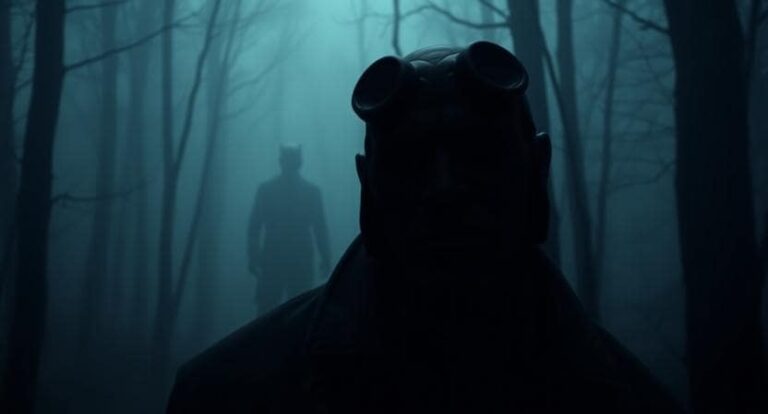
Hellboy: The Crooked Man arrived quietly in 2024, a direct-to-video release that sought to reboot a beloved comic book franchise with a fraction of the budget and a radically different tone. Rather than the bombastic, big-budget action of its predecessors, this film promised a return to the horror roots of Mike Mignola’s original stories, setting its tale in the eerie folklore of the Appalachian Mountains. The film’s journey, from its announcement to its eventual, muted release, tells a broader story about the modern challenges of adapting niche comic book properties, the shifting economics of film distribution, and the high expectations of a dedicated fanbase.
The critical and audience reception was swift and overwhelmingly negative, with many branding it one of the weakest comic book adaptations in recent memory. This article provides a comprehensive analysis of Hellboy: The Crooked Man, examining its failed execution, the creative decisions behind it, and what its outcome signifies for the future of the Hellboy franchise and mid-budget genre filmmaking as a whole.
From Page to Screen: The Promise and Pitfalls of “The Crooked Man”
The choice to adapt “The Crooked Man” story arc was, on paper, a promising creative reset. Following the underwhelming performance of the 2019 big-budget reboot, the producers aimed for a more intimate, folk-horror approach. The original comic story is a self-contained tale where Hellboy, stranded in 1950s Appalachia, investigates a community terrorized by a local devil to whom desperate souls bargain. The setting and tone offered a chance to distinguish the film from previous cinematic iterations and delve deeper into the gothic Americana that defines much of Mignola’s best work.
A Creative Team with a Mixed Pedigree
The involvement of Hellboy creator Mike Mignola as a co-writer was a significant selling point, meant to assure fans of the adaptation’s authenticity. He was joined by his frequent collaborator Christopher Golden and director Brian Taylor. Taylor’s background, however, raised immediate questions. While he co-directed the stylistically frenetic but critically panned Ghost Rider: Spirit of Vengeance, his filmography lacked a project with the slow-burn, atmospheric dread required for “The Crooked Man.” This mismatch between the source material’s needs and the director’s established style became a fundamental flaw in the final product.
The casting of Jack Kesy as the new Hellboy was another major gamble. Stepping into a role defined by Ron Perlman’s charismatic, world-weary performance and later inhabited by David Harbour, Kesy faced an immense challenge. The film provided him with neither the compelling dialogue of the del Toro era nor the sophisticated prosthetic makeup needed to emote effectively. The result was a performance that critics and fans found flat, failing to capture the character’s signature blend of brute strength, dry wit, and melancholic destiny.
A Technical and Narrative Breakdown: Where the Film Fails
The criticisms of Hellboy: The Crooked Man are extensive, touching on nearly every aspect of filmmaking. The issues are not isolated but compound each other, creating an experience widely described as tedious and amateurish.
Production Value and Visual Effects
Despite a reported budget in the range of $20 million, the film exhibits a shockingly low production quality. The problems are evident from the first scenes:
- Makeup and Prosthetics: Jack Kesy’s Hellboy makeup is widely criticized for being stiff, rubbery, and lacking detail. It significantly hinders facial expression, making the character feel lifeless compared to the practical yet emotive work in the earlier films.
- Location and Set Design: The story is rooted in the specific, oppressive atmosphere of Appalachia. However, the film was shot in Belgium, and the European countryside fails to convincingly double for the American South. The locations feel generic and lack the immersive, folkloric texture the story requires.
- CGI and Visual Effects: The digital effects, particularly for the Crooked Man and other supernatural elements, are distractingly poor. They lack weight, texture, and integration with the live-action footage, often resembling early-2000s direct-to-video quality, which shatters any sense of horror or believability.
Storytelling, Pacing, and Character Development
Beyond its visual shortcomings, the film suffers from fundamental narrative failures. The script, despite Mignola’s involvement, feels like a clumsy condensation of the comic that loses its soul.
- Pacing and Structure: The plot moves in a lethargic, disjointed manner. Scenes that should build tension or develop character instead feel like a checklist of events. The central journey lacks urgency, even though the stakes involve the damnation of a man’s soul.
- Underwritten Characters: Hellboy is reduced to a passive observer. Tom Ferrell’s tragic backstory and internal conflict are told rather than felt, and the newly invented character Bobbie Jo Song serves little narrative purpose. Her potential subplot about facing prejudice in the 1950s rural South is introduced and immediately dropped.
- Tonal Confusion: The film cannot decide between horror, adventure, and dark comedy. It lacks the deliberate, creepy atmosphere of a true horror film and the energetic pulp fun of an adventure. The result is a joyless, monotonous tone that offers neither scares nor thrilling action.
The Broader Context: A Franchise in Crisis
The failure of The Crooked Man cannot be viewed in isolation. It is the latest symptom of a franchise that has struggled to find a sustainable cinematic identity since Guillermo del Toro’s departure.
The Shadow of Guillermo del Toro
Guillermo del Toro’s Hellboy (2004) and Hellboy II: The Golden Army (2008) succeeded by expertly blending the source material with the director’s unique sensibilities. They were not straight adaptations but vibrant, gothic-fantasy films that captured the spirit of the characters. Ron Perlman’s iconic performance cemented a specific, beloved version of Hellboy in the public consciousness. Every subsequent attempt has lived in the shadow of this duo’s achievement, with The Crooked Man suffering most from the comparison due to its stark contrast in quality, vision, and heart.
The 2019 Reboot and Market Fatigue
The 2019 R-rated reboot, starring David Harbour, attempted a darker, more violent take but was criticized for its messy plot and over-reliance on generic CGI action. Its commercial failure demonstrated that simply making a bigger, edgier film was not the answer. By the time The Crooked Man was announced, general audience goodwill for the property was low. The decision to go ultra-low-budget and direct-to-VOD suggested the rights holders, Millennium Media, saw it less as a creative revival and more as a way to monetize the IP with minimal risk—a strategy that ultimately backfired by damaging the brand further.
Audience and Critical Reception: A Consensus of Disappointment
The response to Hellboy: The Crooked Man was notably uniform across both professional critics and general audiences. It holds an abysmal 0% critic score on Rotten Tomatoes, with reviews highlighting its technical incompetence and narrative failures. Audience scores on platforms like IMDb are similarly poor, averaging around 3 out of 10.
The fan reaction within the Hellboy community has been one of profound disappointment. Longtime readers who were excited for a faithful, horror-focused adaptation felt particularly let down. Discussions on forums and social media centered not on the film’s merits, but on dissecting its myriad flaws and expressing frustration that a story with such potential was handled so poorly. The film failed to attract new fans and actively alienated a portion of the existing base.
Industry Implications and the Future of Mid-Budget Genre Films
The trajectory of Hellboy: The Crooked Man reflects larger trends in the film industry. The mid-budget genre film—once a staple of theaters—has increasingly migrated to streaming platforms or direct-to-video releases. This project seems to be a case study in the pitfalls of this model when executed without care.
The assumption that a known IP can carry a film with diminished resources is risky. While it may guarantee some initial interest from core fans, as it did here, the final product must still meet a basic threshold of quality. The Crooked Man failed to do so, resulting in negative word-of-mouth that likely stifled even its VOD performance. It demonstrates that in the crowded content landscape, a poorly made film based on a comic book has no inherent advantage and can actually do long-term harm to the property’s value.
What Comes Next for Hellboy?
In the wake of this failure, the future of Hellboy on screen is uncertain. The character remains popular in comics, but his cinematic prospects appear damaged. Several potential paths forward exist, though all come with challenges:
- A Streaming Series: Many fans and commentators believe the episodic format of a premium streaming series (e.g., on Netflix or Amazon) would better suit Hellboy’s monster-of-the-week style and allow for deeper character and world-building. This would require a significant financial commitment and a showrunner with a clear, powerful vision.
- A Creative Hiatus: The franchise may need to lie dormant for several years to allow the memory of the recent failures to fade before a new, high-integrity attempt can be made.
- An Animated Adaptation: Given the stylized nature of Mike Mignola’s art, a high-quality animated film or series could bypass the budgetary constraints of live-action and achieve a truer visual representation of the comics. This would appeal directly to the core fanbase.
Any successful revival will require a return to first principles: a profound respect for the source material’s unique tone, a compelling creative lead with a distinct vision, and a budget appropriate to the project’s scale and ambitions.
Conclusion
Hellboy: The Crooked Man stands as a cautionary tale in modern franchise filmmaking. It is a film that failed on virtually every level—technically, narratively, and as a faithful adaptation. Its flaws were so comprehensive that they sparked a rare consensus in calling it one of the worst comic book movies of its era. More than just a bad film, its release signifies a troubling misuse of a valuable intellectual property, attempting to exploit brand recognition without investing in the quality necessary to sustain it.
The disappointment surrounding this film is rooted in the squandered potential of its excellent source material and the enduring affection for the character. For the Hellboy franchise to have a viable future on screen, stakeholders must learn the clear lessons this failure provides: that authenticity matters more than mere ownership, that scale must match resources, and that fans can instantly discern the difference between a labor of love and a mere financial exercise. Until then, the cinematic world of Hellboy remains, sadly, in hell.