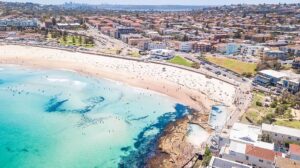
The serene shores of Bondi Beach, a vibrant hub of celebration and community spirit, transformed into a scene of unimaginable horror on December 14, 2025. As families and friends gathered for the annual Chanukah by the Sea event organized by the Chabad of Bondi, gunfire erupted, shattering the festive atmosphere. Australian authorities have classified the incident as a deliberate terrorist attack targeting the Jewish community, marking one of the deadliest assaults in the nation’s recent history.
Emergency responders descended upon the iconic eastern Sydney suburb shortly after 6:30 p.m. local time, following reports of multiple gunshots echoing across the beachfront. Hundreds of attendees, many carrying beach towels and enjoying the summer evening, fled in panic as the assault unfolded. New South Wales Police swiftly locked down the area, urging residents to shelter in place while specialized units combed the vicinity for threats.
The attack’s ferocity left a profound scar on the community, with initial chaos giving way to a grim tally of devastation. Medical teams transported dozens of wounded individuals to nearby hospitals, where surgeons worked tirelessly through the night. As dawn broke on December 15, the full scope of the tragedy began to emerge, prompting national mourning and a unified call for justice.
The Unfolding Horror: A Detailed Timeline
The evening commenced with joyous anticipation. The Chabad of Bondi had promoted the event as a beacon of Jewish life, featuring music, games for children, and the lighting of the menorah against the backdrop of the Pacific Ocean. Around 5:00 p.m., participants arrived at Archer Park adjacent to the beach, their laughter mingling with the crash of waves.
By 6:47 p.m., the first distress calls flooded emergency lines. Witnesses later recounted hearing a barrage of shots—described as relentless and methodical—originating near the Bondi Pavilion. The gunfire persisted for approximately 10 to 20 minutes, with assailants reloading amid the pandemonium. Beachgoers, caught off guard, scrambled for cover behind lifeguard towers, sand dunes, and parked vehicles.
Police vehicles streamed into the area within minutes, their sirens piercing the air. Officers engaged the perpetrators directly, resulting in a fierce exchange of fire. One gunman succumbed to wounds inflicted by responding forces, while the second was subdued and rushed to medical care in critical condition. Concurrently, bomb disposal experts neutralized suspicious devices found in a nearby vehicle, averting further peril.
By 8:00 p.m., the immediate threat had been contained, though the beach remained a cordoned-off crime scene. Forensic teams illuminated the sands with floodlights, meticulously documenting evidence under the starry sky. This methodical response underscored Australia’s robust counter-terrorism framework, honed since stringent reforms post-1996.
The official death toll stands at 12, encompassing 11 victims and one assailant. Among the fallen was Rabbi Eli Schlanger, assistant rabbi at the Chabad of Bondi, a devoted community leader known for his outreach programs. His presence at the event symbolized the inclusive spirit of the gathering, now marred by profound loss.
In addition to fatalities, 29 individuals sustained injuries ranging from gunshot wounds to trauma from the frantic evacuation. Hospitals in Sydney’s eastern suburbs, including St. Vincent’s and Prince of Wales, reported overwhelming influxes, with operating rooms active well into the early hours. Families gathered in waiting areas, their vigil a testament to resilience amid grief.
One poignant narrative emerged from the Russell family, whose 21-year-old nephew suffered a shoulder wound while shielding a child. Outside the hospital, relatives expressed relief at his survival, yet decried the senseless targeting of innocents. Such accounts humanize the statistics, revealing the ripple effects on loved ones left behind.
Children, integral to the festival’s family-oriented design, were particularly vulnerable. Eyewitnesses described parents scooping up toddlers and sprinting toward safety, their cries lost in the din. Psychological support teams have since mobilized, offering counseling to mitigate long-term trauma in the youngest survivors.
In the midst of unrelenting gunfire, acts of extraordinary bravery surfaced, none more compelling than that of Ahmed al-Ahmed, a 43-year-old fruit shop owner and father of two. Captured on bystander video, al-Ahmed charged toward one of the gunmen, tackling him to the ground and wresting away a shotgun. His intervention provided precious seconds for others to flee, potentially saving numerous lives.
Al-Ahmed, a Muslim resident of the local area, sustained two gunshot wounds during the confrontation and underwent surgery overnight. Medical updates indicate he is stable, though recovery will be arduous. Community leaders from diverse faiths have lauded his selflessness, framing it as a powerful rebuke to division.
The footage, shared widely on social media, depicts al-Ahmed’s unyielding determination: he advances undeterred, locking the assailant in a headlock before securing the weapon. Bystanders assisted in restraining the man until police arrival, their collective action a microcosm of communal solidarity.
Photographer Danny Ridley, positioned about 100 feet from the fray, credited al-Ahmed’s boldness with halting the shooter’s advance. Ridley himself escaped with a minor rib gash from a stray bullet, hiding behind a parking meter as chaos reigned. Such testimonies amplify the bystander’s role, transforming a moment of terror into one of inspiration.
Prime Minister Anthony Albanese addressed the nation from Parliament House in Canberra shortly after midnight, his voice steady yet laced with indignation. He denounced the attack as an “evil antisemitic assault,” vowing to eradicate hate from Australia’s social fabric. Albanese extended federal resources to bolster security at religious sites nationwide, emphasizing that “violence has no place in our democracy.”
New South Wales Premier Chris Minns echoed this sentiment during a press conference at the scene, describing the beach as “hell on earth.” He praised first responders for their swift action, noting that their intervention likely prevented a higher casualty count. Minns also announced enhanced patrols in Jewish neighborhoods, signaling a proactive stance against potential reprisals.
Police Commissioner Mal Lanyon provided operational insights, confirming the incident’s terrorist designation based on preliminary intelligence. One perpetrator, identified as 24-year-old Naveed Akram of Pakistani descent residing in Sydney’s southwest, had been on peripheral watch lists but posed no imminent threat. Investigations into motives continue, with federal agencies like ASIO leading the probe.
International solidarity poured in swiftly. UK Prime Minister Keir Starmer termed the event “sickening,” pledging unwavering support for Australia’s Jewish community. Similar condemnations came from leaders in the United States, Israel, and beyond, underscoring the global scourge of antisemitism.
This tragedy unfolds against a backdrop of escalating antisemitic incidents across Australia. Since October 2023, reports to the Executive Council of Australian Jewry have surged by over 300 percent, fueled by geopolitical tensions. Synagogues and schools have fortified entrances, while community vigils have multiplied in response to vandalism and harassment.
The Australian Jewish Association’s CEO highlighted the foreseeability of such violence, citing repeated warnings to authorities about rising threats. Despite robust gun laws enacted after the 1996 Port Arthur massacre— which claimed 35 lives—the persistence of imported ideologies challenges national defenses. Experts note that while domestic firearms access is tightly controlled, illicit acquisitions remain a vulnerability.
Bondi Beach itself carries echoes of prior violence; an April 2024 stabbing at nearby Bondi Junction claimed six lives, prompting soul-searching on public safety. That event, perpetrated by a lone individual, spurred mental health reforms, yet today’s targeted assault demands a reevaluation of extremism monitoring.
ASIO Director-General Mike Burgess affirmed the national threat level at “probable,” urging vigilance without panic. Collaborative efforts with international partners aim to dismantle networks propagating hate, blending intelligence with community engagement.
To elucidate the multifaceted nature of these challenges, consider the following key factors contributing to the heightened climate:
- Rising Online Radicalization: Social media platforms have amplified extremist rhetoric, with algorithms inadvertently boosting divisive content. In the months preceding the attack, Australian authorities identified spikes in antisemitic posts, prompting calls for stricter content moderation. This digital undercurrent not only radicalizes isolated individuals but also fosters echo chambers that normalize violence against minorities.
- Geopolitical Spillover Effects: Global conflicts, particularly in the Middle East, have reverberated locally, intertwining international narratives with domestic tensions. Jewish institutions report increased scrutiny and protests near their premises, straining interfaith relations. Policymakers advocate for dialogue initiatives to bridge divides exacerbated by overseas events.
- Institutional Response Gaps: While federal funding for security enhancements has grown, implementation lags in under-resourced areas. Community leaders stress the need for proactive threat assessments tailored to religious gatherings, arguing that early interventions could avert escalations. Recent audits reveal disparities in protection levels across states, highlighting the urgency for uniform standards.
- Community Resilience Initiatives: Grassroots efforts, including interfaith alliances and youth education programs, counter hate through shared experiences. Organizations like the Australia/Israel & Jewish Affairs Council facilitate workshops on tolerance, fostering networks that transcend cultural boundaries. These bottom-up approaches complement top-down policies, empowering affected groups to reclaim public spaces.
- Legislative Hurdles: Debates over hate speech laws intensify post-incident, balancing free expression with safeguards against incitement. Proposed amendments to the Racial Discrimination Act aim to criminalize targeted harassment more effectively, yet face resistance over enforcement ambiguities. Legal scholars emphasize evidence-based reforms to deter perpetrators without eroding civil liberties.
- Surveillance and Privacy Tensions: Expanded monitoring tools raise ethical concerns, pitting security imperatives against individual rights. Oversight mechanisms, such as independent reviews, are crucial to maintain public trust. Balancing these elements ensures that counter-terrorism measures enhance safety without alienating communities.
- International Cooperation Imperatives: Cross-border intelligence sharing has proven vital, as seen in prior foiled plots. Bilateral agreements with allies streamline data exchange, targeting transnational threats. This collaborative paradigm strengthens Australia’s position in a interconnected world of risks.
- Long-Term Mental Health Integration: Trauma from such events necessitates sustained psychological support, integrating it into national health frameworks. Programs addressing collective grief promote healing, preventing secondary radicalization born of unresolved anger. Holistic strategies thus address both immediate wounds and enduring societal fractures.
These elements collectively illustrate the intricate web confronting Australian society, demanding a nuanced, multifaceted response.
Forensic analysis at the scene has yielded critical leads, including spent casings and digital footprints from the assailants’ devices. Authorities raided Akram’s Bonnyrigg residence, uncovering materials suggestive of ideological motivation. While no group has claimed responsibility, patterns align with lone-wolf profiles influenced by online manifestos.
The second suspect, yet unidentified publicly, underwent emergency surgery for multiple injuries. Interrogations, pending his stabilization, will probe accomplices or planning stages. Counter-terrorism units have expanded searches to associated networks, detaining several for questioning.
Video evidence from security cameras and mobile phones has been pivotal, reconstructing the gunmen’s path from a vehicle parked near Campbell Parade. Explosive remnants in the car—later confirmed as pipe bombs—underscore the plot’s lethality. Experts anticipate a comprehensive report within weeks, informing preventive protocols.
Public appeals for tips have generated hundreds of submissions, aiding in victim identification and witness corroboration. This community involvement exemplifies the social contract in crisis, where collective memory aids justice.
Australia’s stringent firearm regulations, credited with curbing mass shootings since Port Arthur, face renewed scrutiny. The 1996 reforms banned semi-automatic weapons and implemented buybacks, reducing gun deaths by over 50 percent. Yet, today’s incident—facilitated by smuggled arms—exposes gaps in border controls and black-market oversight.
Advocacy groups like Gun Control Australia decry the event as a clarion call for tighter import scrutiny, while sporting shooters defend existing balances. Parliamentary debates loom, potentially revisiting licensing for high-risk profiles. Public opinion polls post-attack reveal 72 percent favoring enhanced measures, signaling bipartisan momentum.
Beyond legislation, the assault catalyzes discourse on social cohesion. Educational campaigns against prejudice gain traction, with schools incorporating modules on empathy and history. Philanthropic pledges from figures like Atlassian co-founder Mike Cannon-Brookes fund resilience programs, channeling grief into action.
The Jewish community’s fortitude shines through, with impromptu memorials at Bondi Pavilion adorned in blue and white candles. Interfaith services planned for coming days will honor the lost, weaving threads of unity from tragedy’s loom.
Condolences from world capitals have flooded Canberra, with U.S. President Joe Biden labeling the attack a “cowardly strike at freedom’s heart.” Israeli Prime Minister Benjamin Netanyahu offered logistical aid, dispatching experts in trauma care. These gestures reinforce alliances forged in shared values.
In Europe, heightened alerts at Jewish sites reflect transnational fears, prompting EU-wide briefings. London’s Metropolitan Police augmented patrols in response, a precautionary nod to interconnected threats. Such vigilance underscores the borderless nature of extremism.
Media coverage worldwide has spotlighted Australia’s response, contrasting it with fragmented approaches elsewhere. Analysts praise the integrated federal-state coordination, a model for emulation. Yet, they caution against complacency, advocating sustained investment in intelligence fusion centers.
As investigations deepen, the international community watches closely, ready to support Australia’s pursuit of accountability. This global embrace not only consoles but fortifies, reminding that isolation yields to collective resolve.
The Bondi Beach terror attack of December 14, 2025, stands as a stark reminder of vulnerability’s shadow over even the most idyllic settings. Twelve souls lost, 29 scarred, and a community forever altered—these figures encapsulate a profound rupture in Australia’s narrative of tranquility. From the selfless charge of Ahmed al-Ahmed to the resolute declarations of leaders like Anthony Albanese and Chris Minns, moments of heroism and resolve have pierced the darkness.
The investigation’s trajectory promises revelations that will refine safeguards against antisemitism and extremism, building on lessons from past tragedies like Port Arthur. Amid rising tensions, the imperative for education, legislation, and interfaith bonds grows ever clearer, ensuring that hate finds no fertile ground. As dawn illuminates the sands once more, Bondi emerges not defeated, but determined—a testament to endurance, where grief fuels a fiercer commitment to harmony and justice for all.