After the resounding success of Matt Reeves’ dark and gritty interpretation of Gotham City in 2022, fans have been eagerly awaiting the next chapter in Robert Pattinson’s journey as the Caped Crusader. The Batman Part II has faced numerous production delays, script rewrites, and scheduling challenges, but the highly anticipated sequel is finally moving forward with concrete production plans. With filming scheduled to commence in spring 2026 and a confirmed theatrical release date of October 1, 2027, the wait for this dark detective thriller is almost over.
The original film grossed over 772 million dollars worldwide and established a unique cinematic universe that prioritizes grounded storytelling, noir aesthetics, and psychological depth over traditional superhero spectacle. This approach resonated with audiences and critics alike, making The Batman one of Warner Bros.’ most successful pandemic-era releases. Now, with the script completed and pre-production underway, Matt Reeves is preparing to push the boundaries even further with a sequel that promises to explore Bruce Wayne’s character in unprecedented ways while introducing villains that have never been seen in a live-action Batman film before.
Confirmed Release Date and Production Timeline
The Batman Part II will arrive in theaters on October 1, 2027, marking a five-year gap between the original film and its sequel. This extended timeline has sparked considerable discussion among fans, though DC Studios co-CEO James Gunn has repeatedly defended the delay by pointing out that lengthy gaps between sequels are quite common in Hollywood. He cited examples such as the seven years between Alien and Aliens, fourteen years between The Incredibles films, and six years between Guardians of the Galaxy Vol. 2 and Vol. 3.
The production journey has been anything but straightforward. Originally slated for an October 2025 release, the film was first pushed to October 2026, and then delayed again to its current 2027 date. These postponements stemmed primarily from the 2023 Hollywood writers’ and actors’ strikes, which halted script development for several months. Additionally, Matt Reeves has taken considerable time to craft a screenplay that meets his exacting standards, refusing to rush the creative process despite mounting pressure from eager fans.
Spring 2026 Filming Commencement
Warner Bros. Discovery officially confirmed in a letter to shareholders that The Batman Part II will begin filming in spring 2026. Matt Reeves himself provided more specific details during the Emmy Awards red carpet in September 2025, stating that cameras would likely start rolling around April or early May 2026. The production will primarily take place at Warner Bros. Studios Leavesden in England, with additional location shooting expected in Glasgow, Scotland, which will once again serve as a stand-in for Gotham City.
Production designer Luke Hull has already been conducting location scouts, sharing images that suggest Glasgow’s architecture will play a significant role in creating the dark, atmospheric Gotham that fans experienced in the first film. Some reports have indicated that pre-production could begin even earlier, potentially as soon as January 2026, allowing the technical crew to prepare sets, finalize visual effects plans, and coordinate the complex logistics of a major superhero production.
The Completed Script and Story Direction
After months of speculation about the screenplay’s status, Matt Reeves and co-writer Mattson Tomlin officially announced on June 27, 2025, that they had completed the script for The Batman Part II. The announcement came with a carefully curated photo showing the finished manuscript with the first page strategically blurred to prevent any plot details from leaking. James Gunn confirmed that he had received and read the finished draft, describing it simply as great without elaborating on specific story elements.
Robert Pattinson has also reportedly read the screenplay and expressed tremendous excitement about the direction of the sequel. During the Emmy Awards, Reeves revealed that the script had been delivered to Pattinson in a specially locked pouch with a security code, demonstrating the extreme measures taken to maintain secrecy around plot details. The director emphasized that this sequel will reach farther and accomplish even more than the first film, suggesting an expansion of scope and ambition.
Deeper Exploration of Bruce Wayne
Matt Reeves has consistently stated that The Batman Part II will delve deeper into the character of Bruce Wayne himself, rather than focusing exclusively on his Batman persona. The director told reporters that selecting the right villain was crucial because it needed to be someone who digs into Bruce’s past and personal life, creating a more intimate and psychologically complex narrative. This approach aligns with Reeves’ overall vision of creating a trilogy that progressively reveals more about Bruce Wayne’s inner world and the traumas that shaped him into Batman.
Colin Farrell, who returns as Oswald Oz Cobb, described the script as extraordinary and noted that his character will appear in approximately five or six scenes. He explained that the sequel picks up just a few weeks after the conclusion of HBO’s The Penguin series, which chronicled Oz’s rise to power in Gotham’s criminal underworld. However, Reeves has assured audiences that viewing The Penguin is not a prerequisite for understanding The Batman Part II, as the film will stand on its own while being enriched by the events of the series.
Confirmed Returning Cast Members
Robert Pattinson will reprise his role as Bruce Wayne and Batman, continuing his portrayal of the Dark Knight in his early years of crime-fighting. Pattinson brought a unique intensity and vulnerability to the character in the first film, emphasizing Batman’s detective skills and psychological complexity rather than relying solely on action sequences. The actor has joked about potentially becoming old Batman by the time the sequel arrives, but at 38 years old, he remains perfectly suited to portray a Batman still finding his way in Gotham.
Colin Farrell returns as Oswald Oz Cobb, also known as The Penguin. After his memorable performance in the first film and his central role in the HBO Max spinoff series, Farrell has confirmed his involvement in the sequel, though his screen time will be more limited. He revealed that he signed a contract for three Batman films, ensuring his continued presence in Matt Reeves’ cinematic universe. Farrell’s Penguin has become one of the most compelling elements of this Batman iteration, with his transformation into a major crime boss providing a crucial throughline between the films.
Supporting Cast Confirmations
Jeffrey Wright returns as Lieutenant James Gordon, Batman’s crucial ally within the Gotham City Police Department. Wright’s portrayal emphasized the partnership between Batman and Gordon as they work together to solve crimes, drawing comparisons to detective duos from classic crime thrillers. The character’s evolution from skeptical law enforcement officer to trusted collaborator will likely continue in the sequel.
Andy Serkis has been confirmed to return as Alfred Pennyworth, Bruce Wayne’s loyal butler and surrogate father figure. Matt Reeves announced Serkis’s return in a profile piece published in GQ, and the actor’s nuanced performance in the first film provided emotional depth to Bruce’s personal life outside the cowl.
Scarlett Johansson’s Mysterious Role
One of the most significant casting announcements for The Batman Part II came in December 2025 when multiple trade publications confirmed that Scarlett Johansson is in final negotiations to join the cast in a key role. This marks a major crossover from Marvel to DC, as Johansson famously portrayed Natasha Romanoff, also known as Black Widow, across nine films in the Marvel Cinematic Universe. Her potential involvement in The Batman Part II has generated tremendous speculation about which character she might portray.
According to insider reports from The InSneider, Johansson is rumored to be playing Gilda Gold, who is best known in DC Comics as the wife of Harvey Dent, the district attorney who eventually becomes the villainous Two-Face. In the acclaimed comic storyline Batman: The Long Halloween, Gilda is revealed to be the Holiday Killer, a serial murderer who targets members of Gotham’s organized crime families on major holidays. This casting would align perfectly with the film’s October 2027 release date, potentially indicating a Halloween-themed narrative.
Additional Casting Rumors and Speculation
If the Gilda Gold casting proves accurate, it suggests that The Batman Part II is also in the process of casting Harvey Dent and his father, Christopher Dent. Reports indicated that Brad Pitt was approached for the role of Christopher Dent, though The Hollywood Reporter later confirmed that Pitt would not be participating in the film. The search for actors to portray these crucial roles continues, with speculation pointing toward performers in their forties for Harvey Dent and in their sixties for his father.
Some industry insiders have also mentioned that Doctor Arkham may appear in a smaller capacity, which could potentially introduce Astrid Arkham, a character who becomes the Arkham Knight in the comics. Astrid blames Batman for her mother’s death and dedicates herself to destroying the Dark Knight, making her a psychologically complex antagonist who would fit perfectly within Matt Reeves’ grounded approach to Batman villains.
The Mystery Villain: Court of Owls or Someone Else?
Matt Reeves has repeatedly teased that The Batman Part II will feature a villain who has never really been done in a movie before. This statement has sparked endless speculation among fans, with the Court of Owls emerging as the most popular theory. The Court of Owls is a secret criminal organization comprised of Gotham’s wealthiest and most influential citizens, first introduced in Scott Snyder and Greg Capullo’s acclaimed 2012 Batman comic run. The group has existed since Gotham’s founding and maintains a legion of highly trained assassins called Talons who execute the Court’s orders.
The thematic elements established in The Batman make the Court of Owls seem like a natural progression for the sequel. The first film explored corruption within Gotham’s elite and governmental institutions, revealing that Bruce Wayne’s own family had complicated connections to the city’s criminal underworld. The Court of Owls would amplify these themes by revealing that a shadow organization has been manipulating Gotham’s development for centuries, potentially implicating the Wayne family in ways Bruce never imagined.
Evidence Supporting the Court of Owls Theory
HBO’s The Penguin series has strengthened the case for the Court of Owls appearing in The Batman Part II. The show prominently featured the divide between Gotham’s wealthy elite and its struggling working class, with Oz Cobb explicitly referring to politicians as a cabal that can get away with anything. Episode six, titled Gold Summit, showcased power struggles among Gotham’s upper echelon in ways that mirror the Court of Owls’ influence in the comics.
Robert Pattinson himself expressed interest in adapting the Court of Owls storyline during a 2022 interview with Den of Geek, stating that elements of The Batman already have a horror quality and that the Court of Owls would feel quite new for Batman films. Matt Reeves has refused to confirm or deny the Court’s involvement, cryptically stating that he cannot comment on the movie because doing so would reveal what kind of movie he is making.
Alternative Villain Theories
While the Court of Owls dominates speculation, other potential antagonists have been discussed extensively within fan communities. Hush, whose real name is Thomas Elliot, represents another compelling option. As Bruce Wayne’s childhood friend turned bitter enemy, Hush creates a deeply personal conflict that explores Bruce’s past in intimate ways. Hush has never been adapted for live-action cinema, satisfying Reeves’ criterion of using a villain that hasn’t been done in movies before.
However, Matt Reeves may have inadvertently ruled out Hush during a 2022 interview when he specifically mentioned the character by name as one he would like to include in his Batman universe. Some analysts believe that publicly acknowledging Hush makes it less likely he will appear in The Batman Part II, as Reeves seems committed to maintaining secrecy about the sequel’s villain. The director’s comments at the 2025 Golden Globes suggested he finds speculation about rumored villains interesting, implying that the actual antagonist might be someone audiences are not currently discussing.
The Penguin Series Connection
The Penguin, an eight-episode limited series that premiered on HBO Max in late 2024, serves as a crucial bridge between The Batman and The Batman Part II. The series takes place approximately one week after the events of the first film, chronicling Oz Cobb’s ruthless ascent to power within Gotham’s fractured criminal underworld following the death of crime boss Carmine Falcone. Cristin Milioti delivers a standout performance as Sofia Falcone, Carmine’s daughter, who becomes one of Oz’s primary adversaries throughout the series.
The finale of The Penguin established several plot threads that will likely carry over into The Batman Part II. Sofia Falcone receives a letter from her half-sister Selina Kyle, hinting at connections that could resurface in the sequel. The series ends with the Bat-Signal being activated, directly connecting to Batman’s continued presence in Gotham. Most significantly, Oz successfully consolidates power and secures a politician in his pocket, demonstrating the depth of corruption that Batman must confront.
Standalone Story with Enriched Context
Matt Reeves has emphasized that while The Penguin and The Batman Part II exist within the same continuity, audiences will not need to watch the series to understand the sequel. The film will stand on its own, introducing viewers to the current state of Gotham and Oz Cobb’s position within it through natural exposition. However, those who have watched The Penguin will experience additional layers of meaning and recognize how various plot threads and character relationships developed between the two films.
This approach differs significantly from recent superhero franchises that have required extensive homework to fully appreciate new installments. By ensuring that The Batman Part II functions as a complete, self-contained story, Reeves is making his universe more accessible to casual viewers while rewarding dedicated fans who engage with the full scope of the Batman Epic Crime Saga.
Winter Setting and Visual Approach
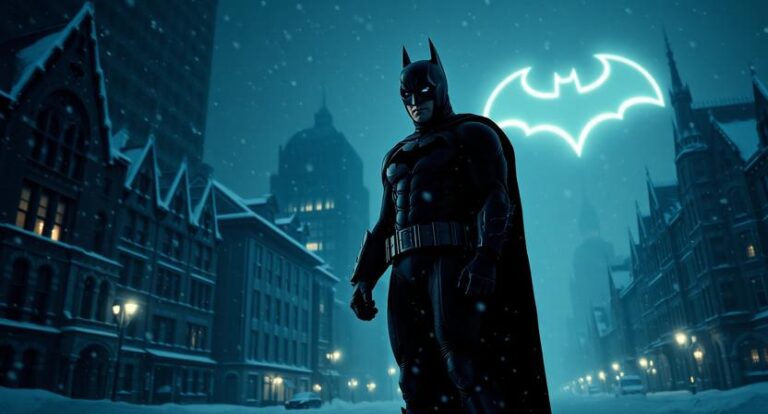
Matt Reeves has confirmed that The Batman Part II will be set during winter, suggesting audiences will experience a snow-covered Gotham City that contrasts dramatically with the rainy, noir atmosphere of the first film. This seasonal change could provide striking visual opportunities for cinematographer Erik Messerschmidt, who returns to photograph the sequel after his acclaimed work on the original. A winter setting would create a colder, more isolated tone that could emphasize Bruce Wayne’s emotional state and the city’s deteriorating conditions.
The first film drew heavily from classic detective noir and 1970s crime thrillers, with Greig Fraser’s cinematography creating a perpetually rain-soaked Gotham that felt oppressive and claustrophobic. For the sequel, Messerschmidt will likely build upon this foundation while incorporating the stark beauty and harsh conditions of winter. Snow-covered streets, frozen landscapes, and the biting cold could serve as visual metaphors for Gotham’s moral decay and Bruce’s increasingly difficult battle against corruption.
Expanded Scope and Production Design
Production designer Luke Hull returns for The Batman Part II, bringing his expertise in creating the lived-in, gritty Gotham that defined the first film’s aesthetic. His location scouting in Glasgow indicates that the sequel will continue using real-world architecture to ground the fictional city in tangible reality. However, Matt Reeves has suggested that the sequel will reach farther than the first film, implying an expansion of scale that could introduce new locations within Gotham or reveal previously unseen aspects of the city’s geography.
The Court of Owls storyline, if utilized, would necessitate showcasing Gotham’s hidden spaces and secret architecture. In the comics, the Court maintains hideouts concealed within buildings throughout the city, sometimes in plain sight but accessible only to those who know where to look. Translating this concept to the screen would require intricate production design that reveals Gotham’s secret history while maintaining the grounded, realistic tone that distinguishes Reeves’ Batman universe from more fantastical superhero films.
Separate from the DC Universe
When James Gunn and Peter Safran took control of DC Studios in late 2022, they announced a comprehensive ten-year plan for a new DC Universe that would unify films and television series within a shared continuity. However, The Batman Part II and all related projects exist under the Elseworlds label, indicating that they are separate from Gunn’s main DCU timeline. This creative decision allows Matt Reeves complete freedom to tell his Batman story without worrying about franchise crossovers, cameo appearances, or connections to other superhero properties.
Gunn and Safran briefly considered integrating Robert Pattinson’s Batman into the primary DCU but ultimately decided that Reeves’ vision worked best as a standalone universe. This means audiences will eventually see two different Batman franchises operating simultaneously: Pattinson’s more grounded detective thriller series and a separate Batman reboot within the main DCU, titled Batman: The Brave and the Bold, which Andy Muschietti will direct. The role of Batman in that film will be recast with a different actor.
Impact on Scheduling and Release Strategy
DC Studios co-CEOs have stated that Batman: The Brave and the Bold will not release within six months of The Batman Part II, ensuring that the two distinct Batman projects do not compete with each other at the box office. The October 2027 release date for The Batman Part II creates space from James Gunn’s Superman, which premiered in July 2025, and from the planned Supergirl: Woman of Tomorrow and Clayface films scheduled for 2026. This strategic positioning allows Warner Bros. to maintain a steady stream of superhero content without oversaturating the market or confusing audiences about which Batman universe they are watching.
The separation from the main DCU also means that characters and storylines from The Batman universe cannot be repurposed for Gunn’s projects and vice versa. For example, Clayface was originally rumored to play a significant role in The Batman Part II, but when Gunn announced a standalone Clayface film as part of the DCU, that villain became unavailable for Reeves’ universe. This arrangement requires careful coordination between the creative teams to avoid duplicating characters and storylines across the two separate continuities.
The Long Halloween Adaptation Possibilities
The reported involvement of Scarlett Johansson as Gilda Gold and the rumored casting of Harvey Dent strongly suggests that The Batman Part II could be adapting elements from Batman: The Long Halloween, one of the most celebrated storylines in Batman comic history. Written by Jeph Loeb and illustrated by Tim Sale, The Long Halloween follows Batman, Jim Gordon, and District Attorney Harvey Dent as they investigate a serial killer known as Holiday, who murders members of Gotham’s crime families on major holidays throughout the year.
The October 2027 release date for The Batman Part II lends additional credence to this theory, as releasing a Halloween-themed Batman film in October would provide perfect synergy between content and timing. The Long Halloween’s noir detective structure aligns perfectly with Matt Reeves’ approach to Batman storytelling, emphasizing mystery-solving and character development over spectacle. The storyline also features the transformation of Harvey Dent into Two-Face, providing a tragic character arc that could serve as an emotional centerpiece for the film.
Adapting Holiday and Gilda’s Story
In The Long Halloween comic, the identity of the Holiday Killer remains a mystery throughout most of the narrative, with multiple characters emerging as potential suspects. The revelation that Gilda Gold, Harvey Dent’s wife, was responsible for some or all of the Holiday murders provides a shocking twist that examines themes of morality, justice, and the corrupting influence of Gotham City. If The Batman Part II follows this storyline, Scarlett Johansson would portray a character who initially appears to be an innocent bystander but gradually reveals herself as someone pushed to extreme actions by the violence and corruption surrounding her.
This adaptation could also explore how Batman’s presence in Gotham inadvertently inspires both heroes and villains, a theme that Matt Reeves introduced in the first film when the Riddler claims he was inspired by Batman’s example. Gilda’s potential transformation into the Holiday Killer would demonstrate that even well-intentioned people can be driven to violence when confronted with a city that seems beyond redemption, creating moral complexity that extends beyond simple hero-versus-villain dynamics.
Potential for Barry Keoghan’s Joker
The final scene of The Batman featured a brief but memorable appearance by Barry Keoghan as the Joker, who befriends the Riddler in Arkham State Hospital. A deleted scene released on YouTube expanded this interaction to approximately five minutes, revealing a scarred and unsettling interpretation of the Clown Prince of Crime. Keoghan’s Joker represents one of the most disturbing versions of the character ever put to screen, with visible facial deformities and an unnerving demeanor that suggests a profoundly damaged psyche.
Matt Reeves has been careful to manage expectations about the Joker’s role in future films, explaining that the Arkham scene was meant as a tease rather than a confirmation that Joker would be the main antagonist of The Batman Part II. During an interview with Digital Spy, Reeves stated that the scene was designed to acknowledge the Joker’s existence within this universe while leaving his future involvement ambiguous. This approach allows flexibility for incorporating the character when the story demands it rather than forcing his inclusion prematurely.
Joker’s Potential Timeline
Barry Keoghan himself has expressed enthusiasm about reprising the role if given the opportunity, though he confirmed in late 2024 that he had not yet been contacted about The Batman Part II. Some industry speculation suggests that the Joker might be reserved for the third and final film in Matt Reeves’ planned trilogy, allowing sufficient time to pass before returning to a character who has been featured extensively in recent Batman media. This approach would prevent The Batman universe from retreading familiar ground too quickly while building anticipation for an eventual confrontation between Pattinson’s Batman and Keoghan’s Joker.
If the Court of Owls or Harvey Dent serve as the primary antagonists of The Batman Part II, saving the Joker for Part III would create a natural escalation of stakes and psychological intensity. The Joker represents chaos and nihilism in their purest forms, potentially serving as the ultimate test of Batman’s moral code and his commitment to hope rather than vengeance. After two films exploring Gotham’s institutional corruption and personal betrayals, a final confrontation with the Joker would provide an appropriately climactic conclusion to the trilogy.
Expected Trailer and Marketing Timeline
With filming scheduled to begin in spring 2026 and the release date set for October 2027, audiences can anticipate a carefully orchestrated marketing campaign that builds anticipation over approximately eighteen months. Based on recent superhero film promotion strategies, the first teaser trailer for The Batman Part II will likely debut in mid to late 2026, potentially around July or August when major comic conventions like San Diego Comic-Con provide platforms for high-profile reveals.
The first trailer for the original Batman was released at DC FanDome in August 2020, approximately seven months after production began and nineteen months before the film’s theatrical release. If The Batman Part II follows a similar marketing schedule, fans could see initial footage around November or December 2026, followed by additional trailers and promotional materials throughout the first half of 2027. The final trailer would typically arrive approximately two to three months before release, potentially in July or August 2027.
Set Photos and Production Leaks
Once filming commences in Glasgow and other locations, set photographers and entertainment journalists will inevitably capture images from the production. These leaked photos traditionally provide the first real-world glimpses of costumes, vehicles, and set designs, generating significant buzz on social media and entertainment websites. Matt Reeves and Warner Bros. will need to balance the desire for secrecy with the reality that modern film productions are virtually impossible to keep entirely under wraps, especially when shooting in public locations.
The production team’s use of locked security pouches to deliver the script to cast members indicates a strong commitment to preventing major plot details from leaking prematurely. However, some information will inevitably emerge through casting announcements, location scouting reports, and carefully managed press releases. This controlled flow of information keeps fans engaged during the long wait between films while preserving key surprises for the theatrical experience.
Box Office Expectations and Industry Impact
The original Batman grossed 772 million dollars worldwide despite releasing during the pandemic era when many markets still had capacity restrictions and audiences remained cautious about returning to theaters. This impressive financial performance demonstrated that Matt Reeves’ darker, more mature take on Batman resonated with audiences seeking superhero stories that prioritize character development and atmosphere over spectacle. The Batman Part II, releasing in a fully recovered theatrical market, has the potential to significantly exceed its predecessor’s box office total.
Industry analysts expect The Batman Part II to open with domestic earnings between 150 and 200 million dollars during its opening weekend, assuming positive reviews and strong audience interest. The October 2027 release date positions the film in a traditionally strong box office window that has proven successful for Warner Bros. in the past. October releases like Joker in 2019, which ultimately grossed over one billion dollars worldwide, demonstrate the month’s viability for darker superhero films aimed at adult audiences.
Competition and Market Positioning
By October 2027, The Batman Part II will be competing in a superhero landscape that includes James Gunn’s new DC Universe films, continuing Marvel Cinematic Universe projects, and potentially other genre offerings from various studios. The film’s separation from the main DCU actually provides a competitive advantage, as it offers audiences an alternative to interconnected franchise storytelling. Viewers who might feel overwhelmed by the continuity requirements of shared universes can experience The Batman Part II as a relatively self-contained story that respects their time and intelligence.
The five-year gap between films also means that audiences will have had sufficient time to forget specific plot details from the first movie while retaining positive associations with Robert Pattinson’s performance and Matt Reeves’ directorial style. This interval prevents franchise fatigue while maintaining brand recognition, potentially attracting both returning fans and newcomers who missed the original theatrical release but discovered the film through streaming on HBO Max.
Technical Crew and Behind-the-Scenes Talent
Beyond the confirmed cast members and director, The Batman Part II brings back several key creative personnel who contributed to the first film’s distinctive look and feel. Erik Messerschmidt returns as director of photography after previously working with David Fincher on films like Mank and The Killer. Messerschmidt’s cinematography will be crucial in establishing the winter atmosphere while maintaining visual continuity with the first film’s rain-soaked aesthetic.
Luke Hull reprises his role as production designer, ensuring consistency in Gotham’s architectural language and physical spaces. Hull’s work on the first film created a Gotham that felt lived-in and authentic rather than like an obvious sound stage construction, grounding the superhero fantasy in recognizable urban environments. His return guarantees that the sequel’s expanded scope will still feel connected to the world established in 2022.
Score and Musical Direction
While not officially confirmed, composer Michael Giacchino is expected to return to score The Batman Part II after his acclaimed work on the first film. Giacchino’s main Batman theme, with its ominous four-note motif, became one of the most memorable musical elements of recent superhero cinema. His score balanced orchestral grandeur with intimate emotional moments, supporting the film’s detective noir atmosphere without overwhelming the performances or visuals.
If Giacchino returns for the sequel, he will have the opportunity to develop and expand the musical themes established in the first film while potentially introducing new leitmotifs for characters like Harvey Dent, Gilda Gold, and whatever villains ultimately appear. The winter setting could inspire a colder, more austere sound palette that reflects Gotham’s deteriorating conditions and Bruce Wayne’s evolving psychological state.
Conclusion
The Batman Part II represents one of the most anticipated superhero sequels in recent memory, combining Matt Reeves’ proven directorial vision with an expanded cast and mysterious plot elements that have generated intense speculation within fan communities. The confirmed October 1, 2027 release date provides a clear target for audiences who have been waiting five years to return to Robert Pattinson’s Gotham City. With filming scheduled to commence in spring 2026, the long development period is finally transitioning into active production.
The involvement of Scarlett Johansson in a potentially game-changing role, the strong possibility of adapting elements from The Long Halloween, and Matt Reeves’ promise of villains who have never been done in a movie before all suggest that the sequel will offer fresh perspectives on Batman mythology while maintaining the grounded, character-driven approach that distinguished the first film. The winter setting, snow-covered Gotham, and the aftermath of The Penguin series create new narrative opportunities that allow Reeves to explore different facets of Bruce Wayne’s psychology and his relationship with the city he has sworn to protect.
Whether the Court of Owls, Harvey Dent, Hush, or an entirely unexpected antagonist emerges as the primary villain, The Batman Part II has been positioned to deliver a worthy follow-up to one of the most critically and commercially successful Batman films ever made. The commitment to standalone storytelling within the Elseworlds label frees Matt Reeves from franchise obligations, allowing him to focus exclusively on crafting the best possible film rather than servicing a larger cinematic universe. As production ramps up throughout 2026 and marketing materials begin to emerge, fans will finally get answers to questions that have been circulating since the first film’s conclusion nearly five years earlier. Until then, the wait continues for what promises to be a darker, deeper, and more ambitious chapter in Robert Pattinson’s journey as the Dark Knight.

English Literature graduate from Manarat International University, Bangladesh. Currently works as a freelance Website Manager. Interests include gaming and being an enthusiast for movies, TV shows, and anime binge-watching.