The Apple iPhone 12 Pro Max remains—years after launch—one of the most capable and feature-rich smartphones in the iPhone lineup. This article delivers a full 2025-era overview of its hardware, software, and real-world performance, helping you understand whether it still makes sense in a modern usage scenario.
Comprehensive Hardware Overview
Display: Large, High-Quality OLED Panel
The phone features a 6.7-inch Super Retina XDR OLED display with a resolution of 2778 × 1284 pixels (~458 ppi). The panel supports HDR, True Tone, wide color (P3), and peaks at 1200 nits brightness under HDR scenarios, with 800 nits typical brightness. Rounded corners follow a curved design, though the “standard rectangle” diagonal measurement is 6.68 inches. The display is protected by Ceramic Shield and is treated with an oleophobic coating resistant to fingerprints. The screen-to-body ratio is roughly 87–88%, giving the device a very immersive feel for media consumption and browsing.
Performance: Apple A14 Bionic & 6 GB RAM
Under the hood lies Apple’s A14 Bionic chipset manufactured on the 5 nm process. The CPU is a hexa-core arrangement (2 high-performance “Firestorm” cores + 4 efficiency “Icestorm” cores). The GPU is Apple’s own multi-core graphics engine, and the device pairs this with 6 GB of RAM. Storage options include 128 GB, 256 GB, or 512 GB—though there is no external storage slot. This configuration ensures smooth performance for everyday tasks, heavy multitasking, and resource-intensive apps, even years after release.
Battery & Charging
The battery capacity is rated at 3,687 mAh (non-removable lithium-ion). The device supports wired fast charging via USB Power Delivery (up to 20 W), offering roughly 50 % charge in 30 minutes (with compatible charger). It also supports wireless charging — including MagSafe magnetic charging (15 W) and standard Qi wireless (7.5 W). For many users, this translates into a full day of usage under mixed workloads (social media, browsing, some gaming, video). The battery longevity and charging flexibility remain competitive even in 2025.
Camera System: Pro-Grade Triple Setup + LiDAR
Rear Cameras: Wide, Ultra-Wide & Telephoto + LiDAR
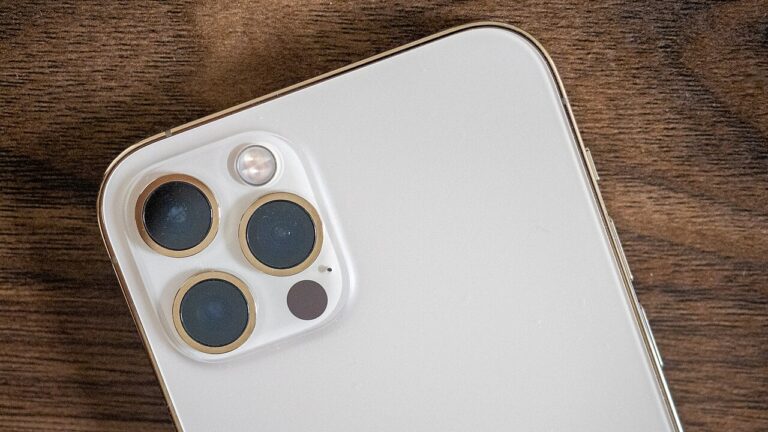
The rear module consists of a triple 12 MP camera system plus a LiDAR depth scanner. The cameras are:
- Wide camera (ƒ/1.6 aperture, 26 mm equivalent, 1.7 µm pixel size) with sensor-shift optical image stabilization and dual-pixel PDAF — ideal for low-light shots and stable video.
- Ultra-wide camera (ƒ/2.4, 120° field of view) — great for landscapes, architecture, and large group photos.
- Telephoto camera (ƒ/2.2, 65 mm equivalent) enabling 2.5× optical zoom–in, and overall up to 5× optical zoom range; digital zoom goes up to 12×.
Thanks to the LiDAR scanner, the camera system gains advantages in autofocus speed — especially in low light — and enables Night Mode portraits with improved depth sensing. Portrait mode benefits from advanced bokeh and depth control, and Portrait Lighting offers six effects (Natural, Studio, Contour, Stage, Stage Mono, High-Key Mono). The phone also supports Apple ProRAW format, burst mode, panorama (up to ~63 MP), and lens-correction for the ultra-wide lens.
Video & Front Camera Capabilities
Video recording supports up to 4K UHD at 24/30/60 fps, with HDR video and Dolby Vision support—making it capable for professional-grade content creation even now. Slow-motion video at 1080p up to 240 fps is supported as well. The front TrueDepth camera is 12 MP and supports Face ID, portrait selfies, Night Mode, and 4K video recording — making the device suitable for vlogging, content creation, and video calls.
Build, Design & Durability
Materials, Dimensions & Weight
The body uses a stainless steel frame, with glass front (Ceramic Shield) and a textured matte glass back. It measures 160.8 mm in height, 78.1 mm in width, and 7.4 mm in thickness, with a weight of 228 grams — substantial, but still refined. Though it’s a large phone, the build quality feels premium, and the squared edges hark back to a classic, solid iPhone design language.
Water, Dust Resistance & Other Physical Features
The device carries an IP68 rating, meaning it can withstand submersion in up to 6 meters of water for 30 minutes — a useful assurance for everyday accidental exposure. Other features include a Gorilla-glass / scratch-resistant glass back, oleophobic coating, and a robust stainless-steel frame. While not rugged like a dedicated heavy-duty phone, it balances premium aesthetics with real-world durability.
Software & Connectivity Features
The iPhone 12 Pro Max originally shipped with iOS 14 and continues to receive updates through Apple’s ecosystem. It supports modern wireless standards like Wi-Fi 6 (dual-band), Bluetooth 5.0, NFC (for Apple Pay and other uses), GPS with multiple satellite systems support, and dual SIM (nano-SIM + eSIM, or dual nano-SIM depending on model). The device does not support expandable storage, but the storage variants (128/256/512 GB) are generous enough for typical users, even those creating a lot of media.
Sensors & Security
Key sensors include Face ID (TrueDepth), LiDAR depth sensor (for camera and AR), accelerometer, gyroscope, proximity sensor, compass, barometer, and ambient light sensor. Face ID remains secure and fast for biometric unlocking, and the LiDAR technology enhances camera focus speed and depth-aware photography as well as potential AR applications. For many users, the combination of Apple’s ecosystem updates, security, and sensor suite makes the phone still highly relevant.
Real-World Performance in 2025: Strengths & Limitations
What Still Works Impressively Well
- Camera and video for content creators: The triple-camera + LiDAR + 4K Dolby Vision video still competes well for social media creators, vloggers, or casual filmmakers. Night Mode, portrait lighting, sensor-shift stabilization, and multi-lens versatility ensure strong photo/video capability even today.
- Large, vibrant display: For streaming, browsing, reading, or gaming — the 6.7-inch OLED remains one of the best among older smartphones. Brightness, color accuracy, and HDR support give a premium media experience.
- Performance longevity: With A14 Bionic + 6 GB RAM and continued iOS updates, the phone handles modern apps and multitasking smoothly despite being several generations old.
- Battery life with flexible charging: A 3,687 mAh battery complemented with fast wired and wireless (MagSafe) charging ensures reliable daily use and convenient recharging options.
- Build quality and durability: Stainless steel frame, ceramic glass, water and dust resistance — for users mindful of lifetime value, the device remains solid and premium-feeling.
Where It Feels Dated or Compromised
- 60Hz refresh rate: Modern phones increasingly ship with 90Hz or 120Hz displays — the 12 Pro Max remains at 60 Hz, which may feel less fluid during scrolling or gaming.
- No expandable storage: Users who shoot a lot of 4K video or store large media libraries might hit storage limits and need to rely on cloud storage or external drives.
- Heavy and large for one-handed use: Its size and weight (228 grams) can feel unwieldy for small-handed users or those accustomed to lighter phones.
- Battery may show wear with age: For phones bought used or several years old, battery health degradation could impact endurance — often requiring battery replacement if high performance is desired long-term.
- No 120Hz or modern display enhancements: Lack of ProMotion or variable refresh displays can make it less appealing for power users wanting the smoothest possible experience.
Who Should Consider Buying or Keeping iPhone 12 Pro Max in 2025?
The iPhone 12 Pro Max remains a strong candidate for several types of users even in 2025 — especially those who value camera quality, large displays, performance stability, and premium build. Below are user profiles for whom this phone still makes sense:
- Content creators & social-media users: If you take photos, shoot videos, or vlogging, the triple-camera + LiDAR + 4K HDR video is hard to beat among older phones.
- Frequent media consumers: For watching movies, streaming, reading or browsing — the large OLED screen enhances the experience significantly.
- Professionals seeking longevity: With iOS updates and strong performance, it remains suitable for many years of use for work and communication.
- Users upgrading from much older devices: If you were using an iPhone from several years back (or a mid-range Android), the 12 Pro Max marks a big leap in camera, screen, and performance quality.
- Cost-conscious buyers of used devices: A well-kept used (or refurbished) 12 Pro Max can offer great value — often far cheaper than newer models but with many premium features intact.
The iPhone 12 Pro Max: Still Worth It in 2025?
For many users, yes — the iPhone 12 Pro Max remains a compelling choice. Its combination of high-end cameras, large and bright OLED display, reliable battery and charging, and strong build quality give it a longevity that few smartphones sustain over multiple years. While it lacks newer hardware advantages like a high refresh-rate display or expandable storage, it continues to deliver a premium smartphone experience at a likely lower cost than brand-new flagship devices.
That said, if your priorities are cutting-edge performance, highest refresh-rate displays, ultra-fast charging, or future-proof hardware, newer models may offer better long-term value. But for many, the 12 Pro Max balances price and performance in a way that remains hard to beat.
Conclusion
As of 2025, the iPhone 12 Pro Max remains a strong, practical, and often sensible choice — especially for those who value camera versatility, display quality, build premium-ness, and longevity over chasing every latest spec. Its combination of a large Super Retina XDR OLED, capable triple-lens + LiDAR camera system, A14 Bionic performance, and mature iOS support makes it relevant for daily users, content creators, and anyone upgrading from older devices. While it lacks some of the modern bells and whistles of more recent iPhones, it remains a balanced and capable flagship that delivers real value — particularly on the used or refurbished market.

Full-stack developer at Scylla Technologies (USA), working remotely from Bangladesh. Adobe Certified Magento Developer.