The 2026 Milan-Cortina Winter Olympics reached a fever pitch on Thursday, February 12, as the Games moved into their second week of high-stakes competition. With the Italian Alps providing a breathtaking backdrop, the day was defined by historic performances in snowboarding, the long-awaited debut of NHL stars on the Olympic ice, and grueling endurance tests in cross-country skiing. Fans across the globe tuned in to witness whether established legends could maintain their dominance or if a new generation of winter athletes would seize the spotlight in northern Italy.
Thursday’s schedule was packed with medal events and critical preliminary rounds that shifted the momentum of the overall medal table. From the sleek ice rinks of Milan to the steep, snow-packed slopes of Cortina d’Ampezzo, the atmosphere was electric. Host nation Italy continued to show its strength in sliding sports, while traditional winter powerhouses like Norway and the United States engaged in a fierce battle for the top spot in the standings. The events of February 12 provided a perfect snapshot of why the Winter Games remain a pinnacle of human athletic achievement and international camaraderie.
In the snowboarding halfpipe, all eyes were on the women’s final, where the pursuit of an unprecedented “three-peat” dominated the narrative. Meanwhile, the men’s hockey tournament saw the entry of some of the world’s most recognizable professional athletes, bringing a level of intensity and skill to the Santagiulia Arena that has been missing from the last two Olympic cycles. As the sun set over the Dolomites, the day’s results left an indelible mark on Olympic history, setting the stage for an even more explosive final week of competition.
Top Athletic Moments and Milestone Victories
One of the most significant headlines of the day came from the snow park in Livigno, where the women’s snowboard halfpipe final took place. Chloe Kim of the United States entered the event as the heavy favorite, seeking her third consecutive gold medal in the discipline. Having already won gold in PyeongChang 2018 and Beijing 2022, Kim faced stiff competition from a talented Japanese contingent and an emerging Australian star. The technicality of the runs on Thursday was historic, with multiple riders attempting 1080s and 1260s in a high-altitude battle for the podium.
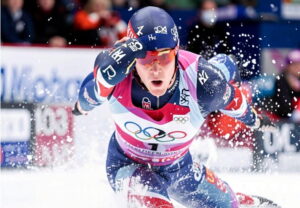
In cross-country skiing, the women’s 10km individual classic was a test of pure stamina and technique. The course, known for its punishing climbs and rapid descents, favored athletes with high aerobic capacity and precise wax selection. Jessie Diggins, the most decorated American cross-country skier, led a strong field against the formidable Scandinavians. The race was decided by mere seconds, highlighting the incredible margins of error at this level of elite sport. The cheering crowds along the tracks in Val di Fiemme added to the legendary atmosphere of the day.
On the ice, the short track speed skating 500m events provided the usual chaotic and thrilling spectacles. With skaters reaching speeds of over 30 miles per hour in a confined space, collisions and photo finishes were the order of the day. Kristen Santos-Griswold of the United States and Italy’s own Arianna Fontana were among the key figures battling for position. Fontana, competing in her sixth Olympic Games, continued to defy age and expectations, much to the delight of the local Italian supporters who have embraced her as a national icon.
Snowboard Halfpipe: The Quest for the Three-Peat
The women’s snowboard halfpipe final on Thursday was a showcase of progression and nerves. The 2026 pipe was constructed to exacting standards, allowing for maximum amplitude and height. Competitors were judged on their variety of tricks, the difficulty of their maneuvers, and the style of their execution. This event has long been a flagship of the Winter Games, and the 2026 iteration did not disappoint, as the level of riding has increased significantly since the last Olympic cycle.
- Feature 1: Riders performed in a standard 22-foot superpipe designed for maximum air time.
- Feature 2: The scoring system utilized five judges focusing on overall impression and technical difficulty.
- Feature 3: Top competitors successfully landed back-to-back 1080s, a rarity in past Olympic finals.
- Feature 4: The event was held at the Livigno Snow Park, a premier venue for freestyle skiing and snowboarding.
Pricing and Access: Ticket prices for the final ranged from 80 to 250 Euros, depending on the viewing area. High-demand seating near the base of the pipe sold out months in advance.
Best Use Case: Ideal for fans of extreme sports who appreciate high-flying acrobatics and technical precision under pressure.
Pros: High entertainment value, historic significance of the three-peat attempt, and incredible spectator atmosphere.
Cons: Highly dependent on weather conditions; visibility can be an issue if mountain fog rolls into the valley.
Men’s Ice Hockey: The NHL Returns
Thursday marked a pivotal shift in the men’s ice hockey tournament with the United States facing off against Latvia and Switzerland taking on France. The return of NHL players to the Olympic stage has fundamentally changed the caliber of play, bringing elite speed and tactical depth back to the tournament. Team USA, led by a mix of veteran stars and explosive young talent, aimed to assert dominance early in the preliminary round to secure a favorable seed for the knockout stages.
- Feature 1: Full participation of NHL players for the first time since the 2014 Sochi Games.
- Feature 2: Games played on international-sized rinks, which are wider than North American rinks.
- Feature 3: Highly sophisticated video review systems for offsides and goaltender interference.
- Feature 4: Roster sizes expanded to include a “taxi squad” to mitigate potential injury issues.
Pricing and Access: Primary market tickets for marquee matchups like USA vs. Latvia started at 120 Euros, with premium hospitality packages reaching over 1,000 Euros.
Best Use Case: Essential viewing for sports fans who enjoy physical, high-speed team competition at the world-class level.
Pros: Best-on-best competition ensures the highest quality of hockey; intense national rivalries add emotional weight.
Cons: High ticket prices and limited availability due to the smaller capacity of the Milan arenas compared to NHL venues.
Medal Table Analysis and Standings
As of the conclusion of events on February 12, the medal table reflects a highly competitive landscape. Norway remains the team to beat, largely due to their historical dominance in skiing and biathlon. However, the United States has made significant gains in the second week, bolstered by strong performances in freestyle skiing and speed skating. Italy, the host nation, sits comfortably in the top five, having secured several key medals in luge and short track, much to the joy of the local population.
The distribution of medals on Thursday was notably diverse, with countries like France and Switzerland also picking up gold. This variety underscores the growing global reach of winter sports, as more nations invest in specialized training facilities and coaching. Germany, traditionally a powerhouse in sliding sports like bobsleigh and skeleton, also saw success as those competitions began their early heats. The battle for the overall medal count is expected to remain tight until the final day of the Games.
One of the most surprising elements of the 2026 medal race has been the emergence of smaller nations in disciplines they haven’t historically dominated. For instance, athletes from nations with less traditional winter infrastructure have been making finals in snowboarding and freestyle skiing. This trend highlights the “X Games” influence on the Winter Olympics, where individual talent and creativity can sometimes overcome the massive institutional advantages of larger sporting federations.
Women’s 10km Cross-Country Classic
The 10km individual classic is one of the most prestigious events in cross-country skiing. Unlike the freestyle technique, the classic style requires athletes to keep their skis within prepared tracks, demanding exceptional upper-body strength and a rhythmic “kick and glide” motion. Thursday’s race was held in the Val di Fiemme, a valley with a long history of hosting world-class Nordic events. The altitude and the complexity of the waxing conditions played a major role in the final results.
- Feature 1: Interval start format, where skiers depart every 30 seconds to race against the clock.
- Feature 2: A course profile featuring three major climbs totaling over 350 meters of vertical gain.
- Feature 3: Strict rules regarding the “classic” technique to prevent illegal skating maneuvers.
- Feature 4: Live telemetry provided real-time heart rate and speed data for broadcast viewers.
Pricing and Access: Spectator areas along the course were free in certain sections, while grandstand seating at the finish line cost between 40 and 100 Euros.
Best Use Case: Perfect for fans of endurance sports who appreciate the “man vs. nature” aspect of outdoor racing.
Pros: Stunning alpine scenery, free viewing options for budget-conscious fans, and a deep sense of Olympic tradition.
Cons: Long periods of standing in cold temperatures; difficult to see the entire race from a single vantage point.
Men’s Curling Round Robin
Curling continued its round-robin phase on Thursday, with several high-stakes matches that determined the playoff trajectory. Often called “chess on ice,” curling requires immense focus, strategy, and precision. The 2026 Games have seen a surge in popularity for the sport, particularly in the mixed doubles and traditional team formats. The Italian team has been a surprise contender, drawing large, vocal crowds to the Cortina Curling Olympic Center.
- Feature 1: Ten ends of play per match, with each team throwing eight stones per end.
- Feature 2: Use of high-tech “smart” stones that detect hog-line violations automatically.
- Feature 3: Microphones on players allow fans to hear the tactical discussions and sweeping calls.
- Feature 4: Specialized ice maintenance involving “pebble” application for controlled stone friction.
Pricing and Access: Tickets for round-robin sessions were relatively affordable, typically priced between 30 and 70 Euros.
Best Use Case: Best for spectators who enjoy tactical depth, calm environments, and accessible sporting rules.
Pros: Indoor comfort (relative to the mountains), clear view of the action from all seats, and high strategic engagement.
Cons: Matches can last over three hours, which may be too long for casual viewers; tickets for Italy matches are very hard to find.
How to Choose Which Olympic Events to Watch
With dozens of events happening simultaneously, spectators often find it difficult to decide which competitions to prioritize. The 2026 Winter Olympics offers a mix of traditional stadium-based sports and expansive mountain-based disciplines. To make the most of the experience, fans should consider several factors including venue location, the importance of the event (medal vs. preliminary), and their own personal interest in technical versus endurance sports.
If you prefer high-speed thrills and immediate results, sliding sports like luge and skeleton or short track speed skating are excellent choices. These events are held in contained environments where you can see the entire race from start to finish. On the other hand, if you appreciate the majesty of the mountains and the grueling nature of outdoor competition, alpine skiing and biathlon offer a more expansive and traditional “winter” experience. It is also wise to check the local weather forecast, as outdoor events are frequently delayed or rescheduled due to wind or visibility issues.
Another factor to consider is the “host nation effect.” Attending or watching an event where an Italian athlete is a medal favorite—such as Arianna Fontana in short track or Dominik Paris in alpine skiing—provides an unmatched atmosphere. The passion of the home crowd can elevate the experience from a simple sporting event to a cultural phenomenon. For those watching from home, the time difference between Italy and your local region will also play a significant role in which live events are accessible.
Selection Criteria for Top Olympic Moments
Identifying the “best” moments of any given day at the Olympics involves a set of specific criteria used by sports analysts and journalists. We evaluate these moments based on their historic impact, the level of athletic difficulty, and the emotional narrative surrounding the athlete. A routine victory by a favorite is impressive, but a come-from-behind win by an underdog often ranks higher in the public’s memory.
Historical Significance: Did the event result in a world record, an Olympic record, or a multi-medal milestone? For example, Chloe Kim’s pursuit of a third gold medal is a primary selection because it represents a feat never before achieved in her sport. Athletic Difficulty: We look at the technical complexity of the performance. This includes the height achieved in snowboarding or the shooting accuracy maintained under physical exhaustion in biathlon. Emotional Weight: Personal stories, such as an athlete returning from a career-threatening injury or competing in memory of a loved one, add a layer of depth that resonates with audiences beyond the statistics.
Venue Atmosphere: The setting can also contribute to the greatness of a moment. A victory achieved in front of a roaring, capacity crowd in Milan carries a different weight than a preliminary heat with fewer spectators. By combining these factors, we can create a comprehensive list that truly reflects the spirit of the Games on February 12.
Selection Criteria and Buying Guide for Fans
For those planning to attend future Winter Olympic Games or simply looking to buy official merchandise and equipment, understanding the landscape is vital. Olympic tourism requires early planning, especially regarding accommodation in mountain towns where space is limited. When buying gear inspired by Olympic athletes, it is important to distinguish between “fan-grade” apparel and the “pro-grade” equipment used on the slopes.
1. Accommodation Logistics: Stay in the host cities or along major transit lines. For Milan-Cortina, many fans chose to stay in towns between the two hubs to manage costs. 2. Official Merchandise: Only purchase from official Olympic stores to ensure quality and that a portion of the proceeds supports the Olympic movement. Look for the holographic security stickers on all authentic products. 3. Equipment Upgrades: If you are inspired to take up a winter sport, start with rental equipment before investing in expensive skis or snowboards. The gear used by Olympians is often highly customized and too stiff for intermediate enthusiasts.
4. Ticket Strategies: Use the official resale platform if you missed the initial ticket window. Many fans list tickets they can no longer use, often at face value. 5. Transportation: Utilize the “Olympic Green” shuttle systems provided by the organizers. Driving to mountain venues is often restricted or impossible due to security cordons and limited parking at high altitudes.
Frequently Asked Questions
Who won the most medals on Thursday, February 12?
As of the late-night tallies, Norway and the United States were the most successful nations on Thursday, each picking up multiple medals across skiing and sliding events. The official medal table is updated in real-time by the International Olympic Committee.
Is NHL participation confirmed for all teams in the 2026 Games?
Yes, an agreement between the NHL, the NHLPA, and the IIHF ensured that all qualified nations could use their best professional players for the 2026 Milan-Cortina tournament, marking a return to the “best-on-best” format.
Where are the snowboarding events being held?
The freestyle skiing and snowboarding events are primarily held at the Livigno Snow Park, which is part of the Valtellina cluster. This area is renowned for its high-altitude terrain and world-class park facilities.
What makes the 2026 Winter Olympics unique compared to previous years?
This is the first Winter Olympics to be officially co-hosted by two major cities—Milan and Cortina d’Ampezzo. It also marks a return to traditional European winter sports heartlands, with many venues having a long history in World Cup competition.
How can I watch the highlights if I missed the live broadcast?
Official highlights are available through the Olympic Channel, as well as licensed broadcasters in each country (such as NBC in the USA, BBC in the UK, and Eurosport in Europe). Most highlights are posted within an hour of the event’s conclusion.
Are there any new sports in the 2026 Winter Olympics?
Ski Mountaineering (Skimo) makes its Olympic debut in 2026. While it didn’t have a final on Thursday, the sport has been a major point of interest for its combination of uphill climbing and downhill racing.
What is the weather like in Cortina during the Games?
February in the Dolomites typically sees cold temperatures ranging from -10 to 5 degrees Celsius. While sunny “bluebird” days are common, mountain storms can occur, leading to event delays.
Conclusion
The events of Thursday, February 12, at the 2026 Milan-Cortina Winter Olympics provided a masterclass in athletic excellence and competitive spirit. From the history-making runs in the snowboarding halfpipe to the high-intensity return of professional hockey stars, the day was a testament to the enduring appeal of winter sports. As the athletes continue to push the boundaries of what is possible on snow and ice, the world remains captivated by the stories of triumph, heartbreak, and resilience unfolding in Italy. Whether you are a casual observer or a dedicated winter sports enthusiast, the 2026 Games have already established themselves as a landmark event in Olympic history, promising even more drama as the final week approaches.