

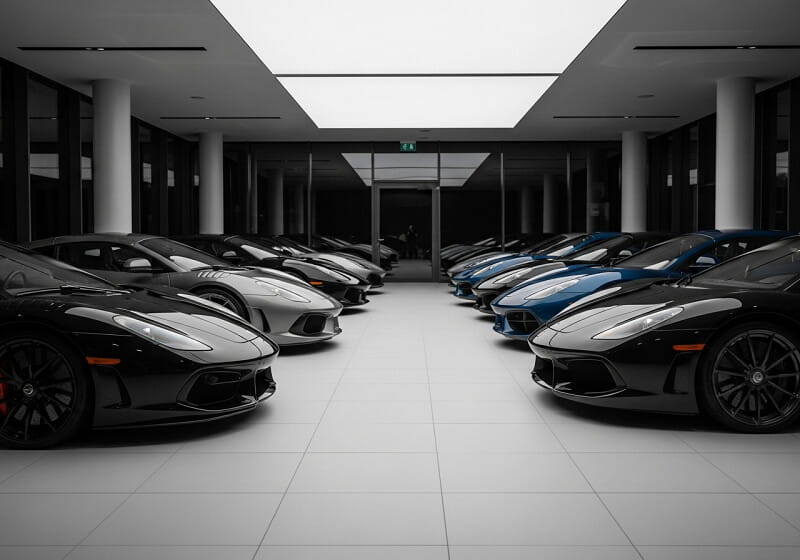
The global ultra-luxury automotive market has entered a new era where price is no longer driven by performance alone. In 2026, the most expensive cars on the market reflect a convergence of extreme engineering, bespoke craftsmanship, historical legacy, and scarcity that appeals to a very small but powerful buyer demographic. These vehicles are not transportation tools; they are rolling assets, brand statements, and in some cases, appreciating investments.
Manufacturers at the pinnacle of the industry continue to push beyond conventional limits, introducing limited-production hypercars and ultra-exclusive grand tourers that routinely exceed seven-figure price tags. The rising demand for personalization, electrification at the high end, and collector-driven value has reshaped how automakers price and position their most elite offerings.
In the United States, interest in ultra-expensive vehicles has grown steadily despite broader economic uncertainty. Buyers in this segment tend to be insulated from macroeconomic swings and are increasingly motivated by exclusivity, customization, and long-term brand prestige rather than practicality or resale alone.
What Defines an Ultra-Expensive Car in 2026
The most expensive cars available today share several defining characteristics that go far beyond horsepower figures or luxury interiors. Price at this level is driven by a combination of tangible engineering achievements and intangible brand value.
Limited production is the most critical factor. Many of the vehicles commanding the highest prices are produced in quantities ranging from fewer than 10 units to no more than a few dozen worldwide. Scarcity alone can add millions to a vehicle’s value before customization is even considered.
Customization is another key driver. Buyers at this level often work directly with factory design teams to specify unique materials, colors, trims, and even mechanical configurations. In some cases, no two examples of the same model are identical.
- Ultra-low production numbers that ensure exclusivity and long-term collectibility, often with fewer than 50 units produced globally.
- Hand-built construction using artisanal techniques, including hand-stitched interiors and coachbuilt body panels.
- Proprietary materials such as carbon composites, titanium components, and rare leathers not used in mass production.
- Direct factory involvement where buyers collaborate with designers and engineers during the build process.
- Heritage branding tied to motorsport success or historic automotive milestones.
- Investment potential driven by scarcity, brand strength, and historical resale performance.
The Most Expensive Cars Available in 2026
Rolls-Royce Droptail
The Rolls-Royce Droptail stands as one of the most expensive production cars ever offered to the public. Designed as an ultra-bespoke coachbuilt model, each Droptail is commissioned individually and tailored entirely to the client’s vision.
Powered by a twin-turbocharged V12 engine, the Droptail prioritizes effortless performance and refinement over outright speed. The real value lies in the craftsmanship, with interiors featuring rare woods, custom metalwork, and timepieces integrated directly into the dashboard.
Pricing varies significantly depending on customization, but reported figures place the Droptail well above the $30 million mark, making it a symbol of modern automotive opulence.
Bugatti Mistral
The Bugatti Mistral represents the final chapter of Bugatti’s legendary W16 engine era. As the last roadster to feature the quad-turbocharged powerplant, it has already secured its place in automotive history.
With nearly 1,600 horsepower and a top speed exceeding 260 miles per hour, the Mistral combines extreme performance with open-top driving. All units were sold before production began, highlighting the intense demand among collectors.
Base pricing exceeded $5 million before taxes and customization, with final transaction prices often climbing much higher depending on specification.
Pagani Huayra Codalunga
Pagani’s Huayra Codalunga is a tribute to long-tail race cars of the past, blending minimalist design with cutting-edge engineering. Produced in extremely limited numbers, the Codalunga emphasizes purity and aesthetic balance over excess.
Each vehicle is assembled by hand in Italy, featuring a bespoke interior and extensive use of carbon-titanium materials. The naturally aspirated design philosophy appeals to purists seeking an analog driving experience.
Prices exceed $7 million, reflecting both craftsmanship and exclusivity.
Current Market Prices and Availability
The market for ultra-expensive vehicles operates very differently from traditional automotive retail. Most of these cars are sold through private invitations, long-term brand relationships, or closed allocation systems rather than public showrooms.
Prices are rarely fixed. Final transaction values depend heavily on customization, regional taxes, and delivery specifications. In many cases, buyers must commit significant deposits years in advance.
- Rolls-Royce Droptail often exceeds $30 million depending on bespoke requirements.
- Bugatti Mistral transactions typically range between $5–7 million.
- Pagani Huayra Codalunga prices commonly exceed $7 million.
- Limited allocations mean most vehicles are sold before public unveiling.
- Secondary market premiums may apply immediately after delivery.
Pros and Cons of Owning the World’s Most Expensive Cars
Pros
- Unmatched exclusivity that guarantees rarity and social distinction.
- Superior craftsmanship unavailable in mass-produced vehicles.
- Strong collector demand that can support long-term value retention.
- Direct factory relationships offering premium service and personalization.
- Cutting-edge engineering often debuting new technologies.
Cons
- Extremely high acquisition costs beyond the vehicle itself.
- Limited usability due to rarity and maintenance considerations.
- High insurance and storage expenses required to protect the asset.
- Restricted resale markets limited to elite collectors.
- Long wait times between order and delivery.
Pro Tips for Buyers in the Ultra-Luxury Segment
Purchasing one of the most expensive cars in the world requires more than financial capability. Strategic planning and brand knowledge play a crucial role in securing the right vehicle.
- Build brand relationships early to gain access to limited allocations.
- Work with experienced automotive advisors who understand ultra-luxury transactions.
- Consider long-term storage solutions with climate control and security.
- Document customization choices carefully to preserve provenance.
- Insure through specialty providers familiar with high-value assets.
Frequently Asked Questions
Are these cars legal to drive in the United States?
Most are fully road legal, though some may require special registration depending on emissions and safety regulations.
Do ultra-expensive cars appreciate in value?
Some models appreciate due to rarity and demand, but appreciation is never guaranteed and depends on market conditions.
Can anyone buy these vehicles?
Many manufacturers restrict purchases to existing clients with established brand relationships.
How long does delivery take?
Delivery timelines often range from one to three years depending on customization complexity.
The Role of Technology and Sustainability
While traditional internal combustion engines still dominate the ultra-expensive segment, sustainability has become an increasingly important consideration. Manufacturers are investing in synthetic fuels, lightweight materials, and hybrid systems to meet evolving regulatory and consumer expectations.
Advanced digital customization tools now allow buyers to visualize their vehicles in real time, further enhancing the bespoke experience. These technological advancements add value while maintaining the exclusivity buyers expect.
Conclusion
The most expensive cars on the market in 2026 represent the absolute pinnacle of automotive achievement. They combine heritage, innovation, and exclusivity in ways no other consumer products can match. For those who can access them, these vehicles are more than machines; they are enduring symbols of craftsmanship, status, and personal expression in an era where true rarity has become the ultimate luxury.

Loading comments…