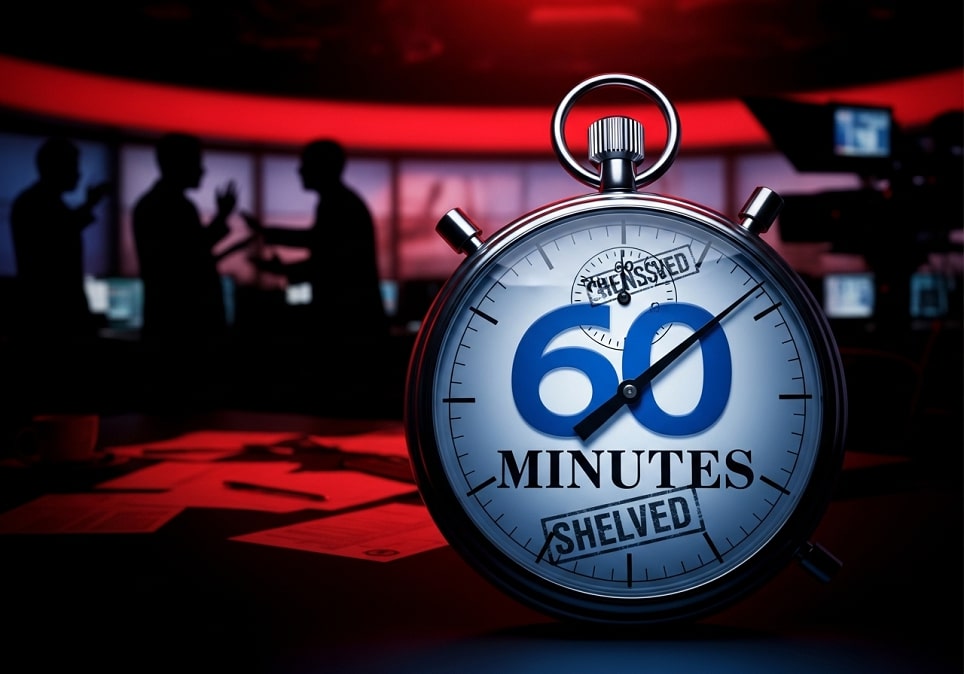
CBS News has found itself at the center of a major journalism ethics controversy after its editor-in-chief Bari Weiss abruptly pulled a scheduled 60 Minutes segment just hours before it was set to air on December 21, 2025. The decision to shelve the investigative report about Venezuelan deportees sent to El Salvador’s notorious CECOT prison has sparked widespread criticism, prompted internal dissent, and raised serious questions about editorial independence at one of America’s most prestigious news organizations.
The controversial segment, titled Inside CECOT, was set to expose the harsh conditions faced by hundreds of Venezuelan migrants who were deported by the Trump administration to the Terrorism Confinement Center in El Salvador. According to multiple sources within CBS, the story had undergone rigorous fact-checking, received legal clearance, and was promoted by the network’s publicity team before Weiss intervened on Saturday morning, approximately 36 hours before broadcast.
Sharyn Alfonsi’s Internal Memo Condemns Decision as Political Censorship
The decision to spike the segment has created an unprecedented rift within CBS News, with 60 Minutes correspondent Sharyn Alfonsi issuing a scathing internal memo to her colleagues that was subsequently obtained by multiple news organizations. In the memo, Alfonsi explicitly characterized the decision as corporate censorship rather than a legitimate editorial concern.
Alfonsi revealed that she learned on Saturday that Weiss had completely pulled the story after Trump administration officials declined to participate in interviews. The correspondent argued that the story had been meticulously prepared and vetted through proper channels before being canceled at the last moment.
According to Alfonsi’s memo, the investigative piece was screened five times and cleared by both CBS attorneys and the network’s Standards and Practices division. She stated unequivocally that the story was factually correct and met every journalistic standard required for broadcast. The unusually high number of screenings five separate reviews suggests the story underwent exceptional scrutiny even before Weiss’s intervention.
Government Silence Should Not Equal Story Veto Power
One of the most compelling arguments in Alfonsi’s internal communication addressed the fundamental issue of government accountability and press freedom. She wrote that the Trump administration’s refusal to engage with CBS reporters represented a tactical maneuver designed specifically to kill unfavorable stories. The correspondent warned that allowing an administration’s silence to become grounds for spiking critical reporting would effectively hand government officials a kill switch for any journalism they find inconvenient.
Alfonsi emphasized that CBS had made multiple attempts to secure official responses, requesting interviews and statements from the Department of Homeland Security, the White House, and the State Department. When these agencies declined to participate, Weiss reportedly suggested that the program should attempt to secure an interview with Stephen Miller, the White House deputy chief of staff and homeland security adviser, even providing Miller’s contact information to the production team.
The veteran journalist argued that government silence is itself a statement, not a veto over journalism. She contended that if the administration’s refusal to participate becomes a valid reason to spike stories, CBS News would transform from an investigative powerhouse into merely a stenographer for the state, abandoning its crucial watchdog role in democracy.
Inside CECOT: The Story CBS Chose Not to Tell
The suppressed segment focused on one of the most controversial aspects of the Trump administration’s immigration enforcement strategy. In March 2025, the administration invoked the Alien Enemies Act of 1798, a wartime law that has only been used three times in American history, to deport approximately 280 individuals to El Salvador’s maximum-security Terrorism Confinement Center.
The Trump administration claimed these deportees were members of Tren de Aragua, a Venezuelan gang, though it has never publicly provided evidence to substantiate these allegations. Among those deported were individuals with pending asylum cases in the United States, long-term residents with American citizen family members, and at least one person, Kilmar Abrego Garcia, who was sent to CECOT due to what officials later acknowledged was an administrative error.
Conditions Inside the Notorious Mega-Prison
CECOT, officially known as the Centro de Confinamiento del Terrorismo, represents one of the harshest detention facilities in the Western Hemisphere. Built in 2022 during El Salvador’s aggressive anti-gang crackdown under President Nayib Bukele, the facility can house up to 40,000 inmates, making it the largest prison in Latin America by capacity. Currently, between 15,000 and 20,000 prisoners are detained there, according to prison director Belarmino García.
The conditions within CECOT are deliberately austere and punishing. Inmates are confined to overcrowded communal cells for 23 and a half hours per day, with cells designed for approximately 80 inmates but often holding more. The cells contain only tiered metal bunks with no mattresses, sheets, or pillows. Prisoners have no personal possessions, must use open toilets, and have access only to a cement basin for washing and a large jug for drinking water.
Human rights organizations have documented severe abuses within CECOT’s walls. In a comprehensive report released in 2025, Human Rights Watch and Cristosal documented testimonies from 40 Venezuelan prisoners who were deported to CECOT and later released in a prisoner exchange. These individuals reported systematic beatings from the moment they arrived in El Salvador, including abuse during daily cell searches, in solitary confinement areas known as the Island, and for minor infractions such as speaking loudly or showering at incorrect times.
The 60 Minutes segment that was pulled would have featured interviews with recently released deportees who described what they characterized as brutal and torturous conditions. According to promotional materials released by CBS before the segment was canceled, correspondent Alfonsi asked one deportee whether he thought he would die in CECOT. His response captured the psychological terror of the experience: We thought we were already the living dead.
Bari Weiss and the Transformation of CBS News
The controversy over the shelved segment cannot be separated from the broader context of leadership changes at CBS News. Bari Weiss was appointed editor-in-chief of CBS News in October 2025 after Paramount’s new owner, David Ellison, acquired her digital media company The Free Press for approximately 150 million dollars.
Weiss’s appointment represented a significant departure from traditional broadcast journalism leadership. At 41 years old, she brought no television or traditional broadcast news experience to the position. Her background consisted primarily of opinion journalism and commentary, having previously worked as an opinion editor at The Wall Street Journal and as an op-ed staff editor at The New York Times before her controversial departure from that institution in 2020.
The Free Press Philosophy and CBS Editorial Direction
Weiss founded The Free Press in 2021, originally as a Substack newsletter called Common Sense, positioning it as an alternative to what she characterized as the reflexively liberal mainstream media. The publication has become known for criticizing woke culture, questioning diversity, equity and inclusion programs, and providing what Weiss describes as intellectual reassurance to anti-anti-Trump readers and sophisticated conservatives who feel underserved by traditional news organizations.
When announcing Weiss’s appointment, Paramount CEO David Ellison stated that he believed the majority of the country longs for news that is balanced and fact-based, and expressed confidence that Weiss’s entrepreneurial drive and editorial vision would invigorate CBS News. Ellison emphasized that Weiss would report directly to him, not to CBS News president Tom Cibrowski or other traditional news division leadership.
The unconventional reporting structure has raised concerns among journalism observers about the independence of CBS’s news operation. Rather than following the standard model where an editor-in-chief reports to the news division president, Weiss’s direct line to the corporate CEO suggests a different priority structure that could potentially subordinate journalistic judgment to business or political considerations.
Trump, Paramount, and the Shadow of Legal Pressure
The decision to pull the CECOT segment occurs against a backdrop of significant legal and political pressure involving President Trump and CBS News. Understanding this context is essential to grasping why CBS staffers and media observers view Weiss’s intervention with such alarm.
The Kamala Harris Interview Lawsuit and Settlement
In late 2024, Donald Trump sued CBS and its then-parent company Paramount, alleging that 60 Minutes had deceptively edited an interview with Kamala Harris to benefit her presidential campaign. Legal experts widely considered the lawsuit to have little merit, yet it created substantial pressure on the network as Paramount’s ownership was changing hands.
In July 2025, Paramount’s previous owners agreed to pay 16 million dollars to Trump’s presidential library to settle the lawsuit, despite the settlement including no apology or admission of wrongdoing. Legal observers noted that the settlement appeared motivated by business considerations rather than the lawsuit’s legal merits. The agreement helped facilitate regulatory approval for the sale of Paramount to the Ellison family’s Skydance Media corporation.
As part of the settlement, CBS agreed that in the future, 60 Minutes would release full transcripts of interviews with eligible presidential candidates after such interviews have aired, subject to redactions for legal or national security concerns. This commitment represented an unusual concession that altered the program’s traditional editorial practices.
Trump’s Ongoing Attacks on 60 Minutes
Despite the settlement and the appointment of Weiss, whom Trump has praised indirectly, the president has continued to attack 60 Minutes on his Truth Social platform. In multiple posts throughout December 2025, Trump complained that the show has treated him worse under the new ownership than under previous management.
On December 16, just five days before the CECOT segment was scheduled to air, Trump posted that 60 Minutes has actually gotten worse since the ownership change. He wrote: For those people that think I am close with the new owners of CBS, please understand that 60 Minutes has treated me far worse since the so-called takeover, than they have ever treated me before. If they are friends, I’d hate to see my enemies.
The timing of these complaints, followed immediately by the cancellation of a segment critical of his administration’s deportation policies, has fueled speculation about whether CBS is attempting to mollify the president. This interpretation is strengthened by Paramount’s concurrent efforts to gain regulatory approval for a hostile takeover bid of Warner Bros. Discovery, CNN’s parent company, a transaction that requires Trump administration approval.
Internal Revolt and Threats to Resign
The controversy has created what multiple sources describe as a crisis atmosphere within 60 Minutes and CBS News more broadly. According to CNN media analyst Brian Stelter, who obtained and published Alfonsi’s full memo, multiple CBS News employees are threatening to quit over the incident.
Stelter reported that inside 60 Minutes, where journalistic independence is considered sacrosanct, people are threatening to quit over this decision. The level of internal dissent appears unprecedented for the venerable news program, which has cultivated a reputation for editorial independence over more than five decades on the air.
Comparisons to Historic CBS News Controversies
In her internal memo, Alfonsi drew an explicit parallel between the current situation and one of the darkest moments in CBS News history. She referenced the 1995 controversy when CBS corporate leadership pressured 60 Minutes to delay broadcasting an interview with tobacco industry whistleblower Jeffrey Wigand due to legal concerns about a potential lawsuit.
That decision, which was later chronicled in the 1999 film The Insider starring Al Pacino and Russell Crowe, nearly destroyed the credibility of 60 Minutes and took years for the program to recover its reputation. The controversy ultimately led to congressional hearings and became a cautionary tale about corporate interference in journalism.
Alfonsi wrote that by pulling the CECOT story to shield an administration, CBS is repeating that history, but for political optics rather than legal concerns. She argued that the network is trading 50 years of gold standard reputation for a single week of political quiet.
CBS’s Official Response and Weiss’s Statement
CBS News has maintained that the decision to hold the segment was based purely on editorial considerations. A network spokesperson stated simply that the broadcast determined it needed additional reporting and that the segment would air at a later date when ready.
Bari Weiss issued a statement to The New York Times on Sunday evening defending her decision. She said: My job is to make sure that all stories we publish are the best they can be. Holding stories that aren’t ready for whatever reason that they lack sufficient context, say, or that they are missing critical voices happens every day in every newsroom. I look forward to airing this important piece when it’s ready.
However, multiple CBS sources disputed this characterization, with one well-placed source telling Puck News that the story did not need additional reporting. These sources emphasized that the segment had already undergone extraordinarily thorough vetting, including five separate screenings and clearance from both the legal department and Standards and Practices division.
The Stephen Miller Factor
According to reports from CNN and The New York Times, Weiss specifically suggested that the segment should include an interview with Stephen Miller, President Trump’s deputy chief of staff and homeland security adviser. Miller has been one of the primary architects of the administration’s hardline immigration policies, including the controversial use of the Alien Enemies Act to facilitate deportations to CECOT.
Weiss reportedly provided Miller’s contact information to the 60 Minutes production team, suggesting she viewed an interview with him as potentially salvaging the segment. This intervention has drawn particular criticism because Miller is known as a vehement proponent of the brutal immigration enforcement tactics that the segment was investigating.
Critics have questioned why Weiss believed Miller’s participation was necessary when the story already included extensive documentation, legal vetting, and interviews with the actual victims of the policies in question. The suggestion appeared to some observers as an attempt to provide political balance to a factual investigation of documented human rights concerns.
Broader Implications for Press Freedom and Editorial Independence
The controversy extends beyond a single canceled television segment to raise fundamental questions about the relationship between corporate media ownership, political pressure, and journalistic independence in contemporary America. Media ethics experts and journalism organizations have expressed concern about what they view as a troubling precedent.
The Chilling Effect on Investigative Journalism
Alfonsi’s warning about handing the government a kill switch for inconvenient reporting resonates with broader concerns about how government officials might exploit reluctance to cover their policies. If news organizations establish a precedent that stories cannot run without official government participation or comment, it creates a powerful tool for suppression of critical coverage.
This is particularly concerning given the Trump administration’s well-documented pattern of refusing to engage with media outlets that produce unfavorable coverage. If such refusals become grounds for spiking stories, it effectively allows the government to veto critical journalism simply by declining to comment.
Former CBS News anchor Dan Rather, who himself experienced controversial corporate pressure during his tenure, commented on the situation to The Associated Press. While noting that he did not personally know Weiss, Rather stated: No one has to send a memo to everyone down the line at CBS News about what is going on with journalism and this presidency. It is obvious that there is tremendous pressure to bend the knee to the Trump administration. The fear is that this appointment is part of that overall play.
The Resignation of Bill Owens
The current controversy follows the April 2025 resignation of Bill Owens, the previous executive producer of 60 Minutes. Owens stated upon leaving that he was no longer able to run the show as he had always run it and to make independent decisions based on what was right for 60 Minutes, right for the audience.
Owens’s departure, which occurred as Paramount was exploring settlement talks with Trump’s legal team, was widely interpreted as a response to increasing pressure to alter the program’s editorial approach. His resignation letter suggested that traditional journalistic independence was being compromised by external pressures.
The Role of Corporate Ownership in News Media
The CBS situation exemplifies broader tensions in American media about the relationship between corporate ownership and editorial independence. When David Ellison’s Skydance Media acquired Paramount, it brought new ownership with explicit political connections and business interests that intersect with government regulatory approval.
Larry Ellison, David’s father and the Oracle Corporation founder, is one of the world’s wealthiest individuals and a prominent Trump ally. The president has publicly described the Ellisons as friends and big supporters who will do the right thing. This creates an inherent conflict between the news division’s responsibility to report critically on government actions and the corporate parent’s interest in maintaining favorable relationships with political leaders who control regulatory decisions.
The Warner Bros. Discovery Factor
Paramount’s ongoing hostile bid to acquire Warner Bros. Discovery, which owns CNN and other major media properties, adds another layer of complexity to the situation. This proposed merger requires approval from Trump administration regulators, and the president has indicated he intends to personally involve himself in the review process, breaking with traditional norms about maintaining distance from regulatory decisions.
The prospect of this regulatory approval hanging over CBS’s editorial decisions creates obvious conflicts of interest. Decisions about coverage of the administration could potentially be influenced, consciously or unconsciously, by concerns about jeopardizing the massive corporate transaction.
Historical Context: Journalism Under Pressure
The current situation at CBS News fits within a longer pattern of tension between corporate media ownership and journalistic independence. Throughout American history, major news organizations have periodically faced pressure to soften or suppress critical coverage to protect business interests or maintain access to powerful figures.
The Wigand tobacco whistleblower case at CBS in the 1990s demonstrated how corporate legal and financial concerns could override journalistic judgment, even at institutions with strong traditions of independence. The resolution of that controversy, which eventually saw the story broadcast despite initial corporate resistance, established important principles about the primacy of journalistic integrity.
Similarly, major newspapers and networks have faced challenges during times of war, economic crisis, or political pressure when their coverage conflicted with corporate interests or government preferences. The current situation differs in its explicitness the direct intervention by a corporate-appointed editor-in-chief with limited traditional journalism experience and clear ideological positioning.
What Happens Next: The Future of the CECOT Story
As of December 22, 2025, the fate of the Inside CECOT segment remains uncertain. CBS has stated that the story will air at a later date, but has not provided a specific timeline or explained what additional reporting it believes is necessary.
Multiple questions remain unanswered. Will CBS continue to seek Trump administration participation in the segment, potentially giving officials months to craft messaging and counter-narratives? Will the story be substantially recut or reframed to address Weiss’s concerns about balance or context? Will the Venezuelan deportees who spoke to 60 Minutes on camera continue to be willing to participate if the story is significantly delayed?
Implications for Future Reporting
Beyond the immediate fate of this particular segment, the controversy will likely influence how CBS News approaches similar stories in the future. If reporters and producers internalize the message that stories critical of the administration require extraordinary vetting and official government participation, it could lead to self-censorship that never reaches the level of formal intervention.
Alfonsi’s memo explicitly warned about this chilling effect, noting that the Venezuelan men who risked their lives to speak with CBS had been betrayed and that the network has abandoned its moral and professional obligation to the sources who entrusted us with their stories. This concern about protecting sources and honoring commitments to vulnerable interviewees represents a core journalistic principle that extends far beyond this single story.
Conclusion
The decision by Bari Weiss to pull the 60 Minutes segment on CECOT deportees represents a critical moment for CBS News and American journalism more broadly. What began as a straightforward investigative report about Trump administration immigration policies has evolved into a fundamental test of editorial independence, press freedom, and the ability of news organizations to hold powerful institutions accountable.
The unprecedented level of internal dissent within CBS News, including Sharyn Alfonsi’s extraordinary public memo and reports of staff threatening to resign, demonstrates that many journalists view this not as a routine editorial disagreement but as a watershed moment that could define the network’s journalistic integrity for years to come. The parallel Alfonsi drew to the Jeffrey Wigand tobacco scandal suggests she and other CBS veterans recognize the potential for lasting damage to the institution’s credibility.
At its core, the controversy raises questions that extend beyond CBS to the entire American media ecosystem. Can corporate-owned news organizations maintain editorial independence when their parent companies have significant business interests that depend on government regulatory approval? Does the appointment of ideologically aligned editors who lack traditional journalism experience represent a legitimate evolution of news leadership or a troubling politicization of editorial decision-making? Can investigative journalism survive if government officials learn they can kill unfavorable stories simply by refusing to participate?
The answers to these questions will have implications not just for 60 Minutes or CBS News, but for the role of journalism in American democracy. As Alfonsi wrote in her memo, the public will correctly identify this as corporate censorship. Whether CBS can rebuild trust and restore its reputation as an independent journalistic institution will depend on how it handles not just the CECOT story, but the broader issues of editorial independence and accountability that this controversy has brought to the surface.
For now, the Inside CECOT segment remains in limbo, its broadcast date uncertain and its content potentially subject to revision. The Venezuelan deportees who spoke to 60 Minutes about their experiences in one of the Western Hemisphere’s harshest prisons await to see whether their stories will be told. And journalists at CBS News and beyond watch carefully to see whether one of television’s most respected news programs will maintain its gold standard reputation or succumb to what many perceive as political pressure from both corporate ownership and government power.
The coming weeks and months will reveal whether this incident represents an aberration that CBS can recover from, or a fundamental transformation in how the network approaches its core mission of holding power accountable. What is already clear is that the controversy has exposed deep tensions within American media about the boundaries between editorial judgment and corporate influence, and about journalism’s ability to function independently in an era of consolidated media ownership and intense political pressure. The resolution of these tensions will help determine not just the future of 60 Minutes, but the health of investigative journalism in America.