Over 150 million Muslims worldwide are living with diabetes, and each Ramadan, a significant number choose to fast despite their condition — sometimes against medical advice. The question of whether fasting is safe with diabetes does not have a single answer. It depends on the type of diabetes, how well it is controlled, which medications are in use, and whether the person has existing complications. The medical consensus, reflected in the latest IDF-DAR–ADA guidelines updated in 2026, is clear: many people with diabetes can fast safely, but only with proper pre-Ramadan assessment, medication adjustment, and glucose monitoring throughout the month.
Ramadan fasting is one of the five pillars of Islam. It requires abstaining from all food, drink, and oral medication from dawn (Fajr) to sunset (Maghrib) for 29 to 30 consecutive days. Islamic law does grant exemptions to those with serious illness, and most scholars confirm that people with diabetes are not obligated to fast if it endangers their health. Yet the spiritual significance of Ramadan means many choose to fast regardless. Understanding the real medical risks — and how to manage them — is what allows that choice to be made safely.
What Happens to Blood Sugar During a Fast
During fasting hours, the body depletes its glucose stores and shifts to burning fat for energy. In people without diabetes, insulin and glucagon regulate this transition smoothly. In people with diabetes, that regulatory system is impaired, creating two primary dangers that run in opposite directions.
Hypoglycemia — dangerously low blood sugar — is the most immediate risk, particularly for people taking insulin or sulfonylurea medications that continue working even without food intake. Prolonged fasting pushes blood glucose lower while the medication keeps driving it down further. Hyperglycemia runs the opposite risk: large, carbohydrate-heavy Iftar meals can cause a rapid glucose spike, and the physiological stress of fasting itself increases gluconeogenesis and glycogenolysis, meaning the liver releases more glucose into the bloodstream. Dehydration — from going without water during hot or long fasting days — compounds both risks by concentrating the blood and impairing kidney function. In severe cases, diabetic ketoacidosis (DKA) can develop, particularly in Type 1 diabetes.
Who Should Not Fast: High-Risk Categories
The IDF-DAR framework classifies people with diabetes into risk tiers using a traffic light system, assessing factors including diabetes type and duration, current medications, history of hypoglycemia, presence of complications, and comorbidities. The following groups are considered high-risk and are generally advised against fasting without strict specialist supervision — and in some cases advised against fasting at all:
- Type 1 diabetes with unstable or poorly controlled glucose levels
- Any person with a history of severe hypoglycemia or hypoglycemia unawareness in the past three months
- Recent diabetic ketoacidosis (within the past three months)
- Advanced or end-stage chronic kidney disease
- Pregnant women with any type of diabetes
- Elderly patients with multiple diabetic complications
- Those performing physically demanding manual labor throughout the day
Even within Type 1 diabetes, the picture is not absolute. The DARMENA T1D study found that nearly half of Type 1 patients who fasted during Ramadan did so without experiencing serious complications — but only under careful medical supervision with continuous glucose monitoring. The 2026 IDF-DAR Risk Calculator update, published in the Journal of Diabetes Endocrine Practice, now incorporates automated insulin delivery (AID) systems, GLP-1 receptor agonist use, and LADA (Latent Autoimmune Diabetes in Adults) as specific variables in its assessment — reflecting how diabetes management has evolved.
Who Can Fast: Moderate and Low-Risk Profiles
People with well-controlled Type 2 diabetes managed through lifestyle changes alone, or on metformin only, are generally considered low-risk candidates for fasting. Those on DPP-4 inhibitors, SGLT2 inhibitors, or GLP-1 receptor agonists also tend to carry lower hypoglycemia risk than those on sulfonylureas or insulin, making them better candidates for fasting with appropriate monitoring.
The critical qualification in every case is “well-controlled.” An HbA1c below 8% (64 mmol/mol) and no recent episodes of significant high or low blood sugar are baseline indicators of stability. Anyone above that threshold, or with fluctuating glucose readings in the weeks before Ramadan, should consult a diabetologist or endocrinologist before committing to fasting. Those managing early-stage or newly diagnosed diabetes should be especially cautious and seek individual assessment rather than applying general guidance.
Pre-Ramadan Medical Consultation: What to Do and When
The IDF-DAR guidelines recommend scheduling a medical consultation 6 to 8 weeks before Ramadan begins. This window allows enough time to complete a full risk assessment, adjust medications, conduct any necessary blood tests, and trial short fasting periods to gauge tolerance before the month starts. Leaving this to the week before Ramadan is not sufficient.
At the consultation, the healthcare provider should review the current medication regimen and propose adjustments for fasting hours, assess HbA1c and recent glucose trends, check kidney function and any existing complications, and provide structured education on recognizing and responding to hypoglycemia and hyperglycemia. Participation in a dedicated Ramadan diabetes education session — now available through the DAR Academy and the DAR SAFA mobile app — significantly improves fasting outcomes.
Medication Adjustments During Ramadan
One of the most important and most frequently mismanaged aspects of Ramadan fasting with diabetes is medication timing and dosing. Taking the same doses at the same times as during non-fasting months is dangerous. Every medication class requires a specific adjustment strategy.
Metformin
Metformin does not directly cause hypoglycemia and is generally safe during Ramadan. The typical adjustment shifts the larger dose to Iftar and the smaller dose to Suhoor. If the person is on a once-daily extended-release formulation, it is usually moved to Iftar. No dose reduction is typically required, but kidney function should be confirmed as adequate before continuing, particularly given the dehydration risk.
Sulfonylureas
Sulfonylureas carry a significant hypoglycemia risk during fasting because they stimulate insulin secretion regardless of food intake. Shorter-acting agents like gliclazide are preferable to longer-acting ones during Ramadan. Doses are typically reduced, and switching the timing to Iftar rather than Suhoor reduces mid-day hypoglycemia risk. Some clinicians recommend switching away from sulfonylureas entirely during Ramadan in favor of lower-risk alternatives where possible.
SGLT2 Inhibitors
SGLT2 inhibitors (such as empagliflozin and dapagliflozin) can generally be continued during Ramadan, but dehydration is a particular concern since these medications promote fluid excretion through urine. Adequate hydration during non-fasting hours is essential. There is also a small but real risk of euglycemic DKA — a form of ketoacidosis that can occur even without very high blood glucose levels — which requires awareness and prompt response if symptoms of nausea or fatigue appear.
GLP-1 Receptor Agonists
GLP-1 receptor agonists are well-suited to Ramadan fasting. They promote satiety, reduce post-meal glucose spikes, and carry a low intrinsic hypoglycemia risk. Timing adjustments for injectable forms should be coordinated with meal times — typically Iftar for once-daily injections and continuing on schedule for once-weekly formulations.
Insulin
Insulin management is the most complex area. Basal insulin doses typically require a reduction of 15 to 30% during fasting days. Prandial (mealtime) insulin doses should be adjusted to align with Iftar and Suhoor, not the original three-meal schedule. Anyone on a complex insulin regimen — particularly mixed insulins or intensive basal-bolus therapy — should work directly with a diabetologist rather than adjusting independently. Users of automated insulin delivery (AID) systems should inform their care team, as the 2026 IDF-DAR update now specifically addresses AID management during Ramadan.
Blood Glucose Monitoring During Ramadan
A common and medically incorrect belief holds that finger-prick blood glucose testing breaks the fast. It does not. Islamic scholarly consensus and the IDF-DAR guidelines both confirm that checking blood glucose with a finger prick during fasting hours is permitted and does not invalidate the fast.
The recommended monitoring schedule for people with diabetes fasting during Ramadan includes checks before Suhoor, in the mid-morning, in the mid-to-late afternoon, before Iftar, and any time symptoms occur. People on insulin or sulfonylureas should monitor more frequently. Continuous glucose monitoring (CGM) devices are permissible during fasting and significantly improve safety by alerting users to glucose trends before levels become dangerous.
Two glucose thresholds require immediate fast-breaking:
- Blood glucose below 70 mg/dL (3.9 mmol/L) — break the fast immediately, treat with 15g of fast-acting carbohydrate (glucose tablets, juice, or regular soda), recheck after 15 minutes
- Blood glucose above 300 mg/dL (16.7 mmol/L) — break the fast, hydrate, and seek medical attention if levels do not fall
Breaking the fast is not a spiritual failure. The Islamic principle of preserving life (hifz al-nafs) takes precedence, and most scholars are explicit that a person must break the fast when their health is in genuine danger.
Suhoor and Iftar: What to Eat
Meal composition at both Suhoor and Iftar directly affects glucose stability throughout the fasting day. The choices made at these two meals can significantly reduce the risk of both hypoglycemia during the fast and hyperglycemia at the break.
Suhoor (Pre-dawn meal)
Suhoor should be eaten as late as possible — ideally in the 30 minutes before the Fajr call to prayer. The goal is to slow glucose release and sustain energy across the full fasting period. Effective Suhoor foods include oats, whole grain bread, lentils, and other complex carbohydrates combined with protein sources such as eggs, yogurt, or legumes, and high-fiber vegetables. Sugary cereals, white bread, and fruit juices should be avoided at Suhoor — they produce fast glucose spikes followed by rapid drops. Drinking the maximum amount of water possible at Suhoor reduces dehydration risk during the fasting hours.
Iftar (Breaking the fast)
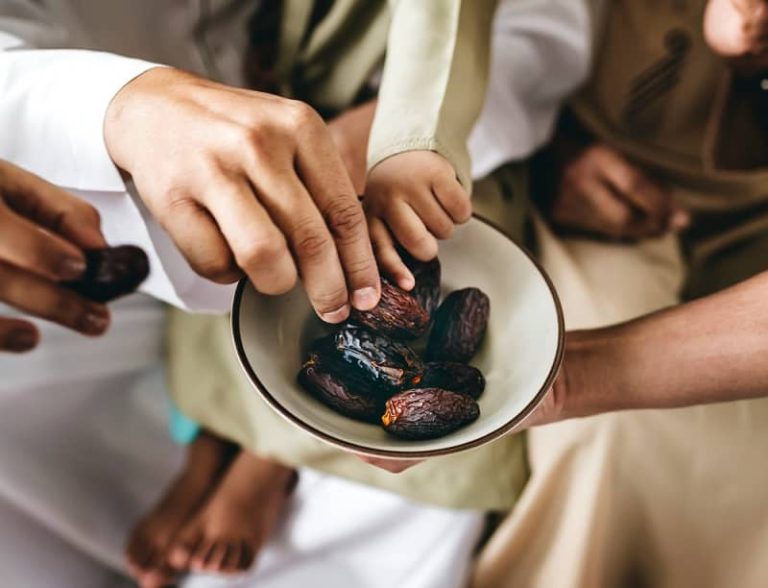
The traditional way to break the fast — with dates and water — is medically sound. Dates provide a moderate glucose rise that begins correcting any late-day hypoglycemia without triggering an extreme spike. After the initial break, the full Iftar meal should emphasize vegetables, lean protein, and whole grains. Large portions of rice, fried foods, and sweet desserts consumed rapidly are a primary driver of dangerous post-Iftar hyperglycemia in people with diabetes. Eating more slowly, spacing Iftar and any additional evening meal by an hour, and avoiding second servings of starchy foods all contribute meaningfully to better glucose control.
Hydration During Non-Fasting Hours
Dehydration is an underestimated risk in diabetes during Ramadan, particularly in countries with long fasting hours or high ambient temperatures. Dehydration reduces blood volume, concentrates glucose, impairs kidney clearance of glucose and medications, and increases the risk of DKA in those on SGLT2 inhibitors. The target during non-fasting hours is 8 to 10 glasses of water between Iftar and Suhoor. Caffeinated drinks — tea, coffee, energy drinks — accelerate fluid loss and should be limited. Sugary sodas and juices raise glucose without providing meaningful hydration benefit and should be avoided. Those managing multiple chronic conditions alongside diabetes should discuss their specific fluid and medication needs with their care team.
Physical Activity During Ramadan
Physical activity does not need to stop during Ramadan, but its timing and intensity require adjustment. Strenuous exercise during fasting hours accelerates glucose consumption and dehydration simultaneously — a combination that sharply increases hypoglycemia risk. Light to moderate activity is generally safe after Iftar, once the person has eaten and allowed glucose levels to stabilize. Tarawih prayers, which involve repeated standing, bowing, and prostrating over 20 to 30 minutes, count as light physical activity and are generally safe for most people with well-controlled diabetes.
Avoiding any vigorous exercise in the 1 to 2 hours before Iftar is a practical guideline that reduces the risk of severe hypoglycemia at the end of the fasting day when glucose reserves are at their lowest.
Warning Signs That Require Breaking the Fast
Every person with diabetes who fasts during Ramadan should know these warning signs and be prepared to act on them immediately:
- Hypoglycemia: shakiness, sweating, dizziness, rapid heartbeat, confusion, blurred vision, inability to concentrate
- Hyperglycemia: excessive thirst, frequent urination, fatigue, headache, nausea
- DKA warning signs: fruity-smelling breath, persistent nausea and vomiting, rapid breathing, severe abdominal pain — requires emergency medical attention
- Dehydration: dizziness on standing, dark urine, very low urine output, fainting
Family members and close companions should be aware of these signs too, since hypoglycemia can impair a person’s own ability to recognize and respond to it in time. Anyone who breaks the fast for medical reasons should not attempt to resume fasting that day and should contact their healthcare provider before fasting again.
Post-Ramadan Follow-Up
A medical review after Ramadan ends is an important step that is frequently skipped. During the month, medications have been adjusted and dosing schedules shifted. Once normal eating patterns resume, those adjusted doses may no longer be appropriate — and continuing them without review creates a new risk of hypoglycemia or suboptimal glucose control. An HbA1c test and a review of any glucose monitoring data from the fasting month give the healthcare team the information needed to recalibrate the treatment plan and assess how the body responded to fasting.
FAQ
Is it haram for a diabetic to fast during Ramadan?
Islamic law does not require people with serious illness to fast, and diabetes qualifies as a valid exemption. Most scholars hold that a person with diabetes is permitted — and in situations of genuine health risk, obligated — to break or skip the fast. Those who cannot fast may fulfill their obligation through fidya (charitable feeding of those in need) for each day missed.
Does checking blood sugar break the fast?
No. Finger-prick glucose testing does not break the Islamic fast. Both Islamic scholarly consensus and the IDF-DAR medical guidelines confirm this clearly. People with diabetes should monitor their blood glucose as frequently as their condition requires during fasting hours without concern that doing so invalidates the fast.
Can Type 1 diabetics fast during Ramadan?
Type 1 diabetes is classified as high-risk for Ramadan fasting due to the unpredictable nature of insulin requirements and the elevated risk of hypoglycemia and DKA. Fasting is not recommended for those with unstable Type 1 diabetes. Some with well-controlled Type 1 diabetes have fasted safely under close specialist supervision with continuous glucose monitoring, but this requires individual medical assessment and cannot be generalized.
Can Type 2 diabetics fast during Ramadan?
Many people with well-controlled Type 2 diabetes can fast safely with proper preparation, medication adjustment, and blood glucose monitoring. Those managed on metformin alone carry the lowest risk. Those on sulfonylureas or insulin require dose adjustments and more frequent monitoring. Pre-Ramadan consultation with a doctor 6 to 8 weeks in advance is essential for anyone in this group.
What blood sugar level means I should break the fast?
Break the fast immediately if blood glucose drops below 70 mg/dL (3.9 mmol/L) or rises above 300 mg/dL (16.7 mmol/L). Treat low blood sugar with 15 grams of fast-acting carbohydrate and recheck after 15 minutes. For very high readings, hydrate, take any prescribed corrective medication, and seek medical attention if glucose does not come down.
Does Ramadan fasting affect diabetes medications?
Yes, significantly. Fasting changes when and how much of most diabetes medications should be taken. Timing must shift to align with Suhoor and Iftar rather than regular mealtimes. Doses of insulin and sulfonylureas typically need reduction to prevent hypoglycemia during fasting hours. No medication change should be made without consulting a healthcare provider first.
Fasting during Ramadan with diabetes is medically possible for many people — but it is not something to approach without preparation. The difference between a safe fast and a dangerous one comes down almost entirely to three things: a pre-Ramadan medical consultation with proper risk assessment, appropriate medication adjustments made in advance, and consistent glucose monitoring throughout the month. The IDF-DAR guidelines, now updated for 2026 with refined risk stratification and modern therapy considerations, give both patients and healthcare providers a clear and evidence-based framework for making that decision well. Those managing other forms of therapeutic fasting alongside Ramadan should discuss the combined effects on glucose metabolism with their specialist before proceeding.
Breaking the fast when the body demands it is not a failure of faith — it is the correct medical and religious response to a body in need. The goal is to observe Ramadan in a way that honors both spiritual commitment and the basic obligation to preserve health.