

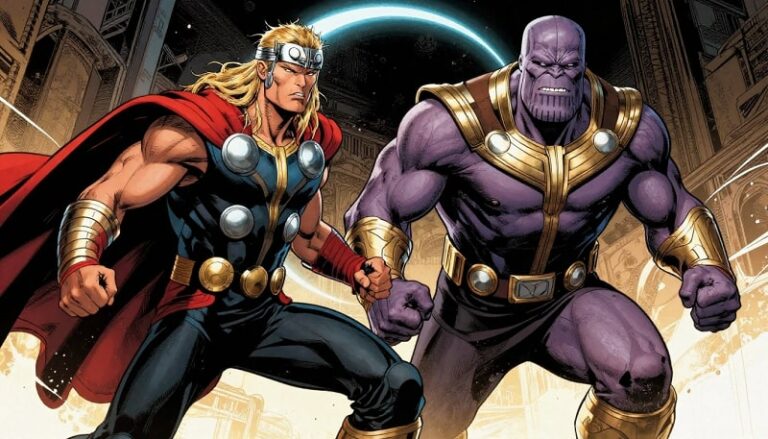
In the climactic moments of one of the most anticipated films in cinematic history, the battle between the Avengers and their ultimate foe reaches a fever pitch. The scene unfolds on a devastated battlefield where heroes from across the universe unite against a singular threat. Amid the chaos, questions arise about strategic choices made by key characters, particularly those wielding legendary artifacts.
The narrative builds on years of interconnected storytelling, culminating in a showdown that tests alliances, strengths, and resolves. Viewers witness intense hand-to-hand combat, energy blasts, and the deployment of advanced technology. Yet, certain possibilities seem overlooked, sparking debates among audiences worldwide.
As the fight intensifies, the God of Thunder emerges as a central figure, armed with tools forged in the heart of a dying star. His actions reflect a journey marked by loss, redemption, and unyielding determination. This sets the stage for examining specific tactics employed during the encounter.
The film’s directors have shared insights into the creative decisions behind these sequences, emphasizing character motivations and narrative flow. These elements contribute to the overall impact of the story, ensuring that every move aligns with established lore and emotional arcs.
Background on Thor’s Arsenal and Powers
Thor’s weaponry has evolved significantly throughout his appearances in the Marvel Cinematic Universe. Initially introduced with a hammer that only the worthy can lift, his capabilities expanded to include control over lightning and enhanced durability. These attributes make him a formidable opponent in any conflict.
The hammer, known for its indestructible nature, carries an enchantment placed by a powerful ruler. This spell ensures that it remains immovable to those deemed unworthy, regardless of their physical prowess. Such a feature has been demonstrated in various scenarios, pinning down adversaries effectively.
In later developments, Thor acquires a new axe capable of summoning the Bifrost and inflicting severe damage on even the mightiest beings. This weapon lacks the worthiness requirement, allowing for different tactical applications. Its design focuses on raw power and precision strikes.
Thor’s personal growth influences how he utilizes these tools. From a brash warrior to a more reflective leader, his experiences shape his combat style. Losses suffered along the way add layers to his decision-making process during high-stakes engagements.
The History of Mjolnir in the MCU
Crafted from Uru metal in the forges of Nidavellir, the hammer serves as a symbol of Asgardian might. It first appears as Thor’s primary weapon, enabling flight and elemental manipulation. Over time, it becomes a test of character for potential wielders.
In early encounters, the hammer is used to subdue threats by placing it upon them, rendering them immobile. This tactic proves effective against lesser foes but is rarely employed against equals in battle. The enchantment’s magical properties defy conventional physics.
Following its destruction, Thor adapts to fighting without it, discovering innate abilities within himself. This period of growth highlights his resilience and adaptability. When the hammer returns from the past, it reignites old strategies while introducing new dynamics.
The reintroduction of the hammer in the final chapter allows for dual-wielding opportunities. Thor alternates between offensive strikes and defensive maneuvers. This versatility adds depth to his role in team-based assaults.
Analyzing the Final Battle Sequence
The confrontation begins with a surprise attack, setting a tone of desperation and urgency. Heroes coordinate their efforts, each bringing unique skills to bear against the enemy. The terrain, scarred by previous explosions, provides both obstacles and opportunities.
Thor’s entrance involves channeling electricity through his weapons, illuminating the battlefield. He engages directly, trading blows with precision and force. His strategy focuses on overwhelming the opponent through sustained pressure.
As the fight progresses, allies join, creating moments of synergy. Shields clash with blades, and energy weapons fire in rapid succession. The pace accelerates, leaving little room for elaborate setups or traps.
The antagonist demonstrates exceptional combat prowess, countering multiple attackers simultaneously. This resilience forces the heroes to adapt on the fly, prioritizing immediate threats over long-term immobilization tactics.
Key Moments in the Thor-Thanos Clash
Early in the skirmish, Thor attempts a decapitating strike, aiming to end the threat swiftly. The move reflects lessons learned from prior failures. However, the foe’s armor and agility prevent a clean hit.
Subsequent exchanges involve grappling and weapon clashes. Thor utilizes both his hammer and axe, switching between them for maximum effect. The dual armament allows for complex combinations, but also complicates simpler approaches.
A pivotal instant occurs when the hammer is thrown, only to be deflected. This highlights the opponent’s awareness and preparedness. Recovery becomes a priority, diverting attention from alternative uses.
Later, assistance from comrades shifts the dynamics, enabling brief respites. Yet, the constant motion precludes static placements. The battle’s fluidity demands constant vigilance and quick reactions.
Reasons Why Pinning Wasn’t Feasible
The primary obstacle stems from the opponent’s unyielding offensive. Constant aggression leaves no window for deliberate placement of the hammer. Any attempt would expose vulnerabilities to counterattacks.
Physical proximity plays a crucial role; maintaining distance while trying to position the weapon accurately proves challenging. Close-quarters combat favors direct strikes over manipulative tactics. The environment further complicates such maneuvers.
Team coordination, while beneficial, introduces variables. Allies’ actions might interfere with planned setups, requiring split-second adjustments. Synchronization becomes essential but difficult under duress.
The hammer’s recall ability, while useful, means it’s often in motion rather than stationary. Relying on it as a restraint tool shifts focus from its offensive potential. Strategic priorities lean toward elimination over containment.
Detailed Factors Influencing the Decision
- The antagonist’s superior strength allows him to manipulate the battlefield, preventing heroes from gaining positional advantage. In previous films, similar foes have shown the ability to overpower magical constraints through sheer force. This uncertainty deters reliance on the enchantment alone.
- Thor’s emotional state, driven by past traumas, pushes him toward aggressive, finishing blows rather than restraining methods. His journey emphasizes redemption through decisive action. Pinning might prolong the conflict, contradicting his intent to end it quickly.
- The presence of multiple threats on the field diverts attention. Armies clash around the central duel, requiring Thor to address immediate dangers. A pinning attempt could leave him open to flanking maneuvers from supporting forces.
- Weapon compatibility issues arise with dual-wielding. Balancing two powerful artifacts demands focus on synergy rather than singular use. The axe’s design complements direct assaults, influencing overall strategy toward offense.
- Time constraints in the heat of battle limit complex tactics. Simple, effective strikes take precedence over innovative restraints. Historical precedents show that pinning works best on subdued or surprised opponents, not active combatants.
- Allied interventions create unpredictable variables. When others join the fray, their attacks might dislodge any attempted placement. Coordination challenges amplify in large-scale engagements.
- The enchantment’s specifics require direct contact and intent. Rushed applications might fail if not properly executed. Precision becomes impossible amid dodging and parrying.
- Strategic oversight from leadership focuses on the primary objective: preventing a catastrophic event. Secondary tactics like immobilization take a backseat to direct confrontation and disarmament efforts.
Insights from Filmmakers and Cast
Directors have emphasized character-driven choices in interviews, highlighting how personal histories inform actions. These decisions enhance relatability and depth. Emotional authenticity trumps tactical perfection.
Actors portraying the heroes discuss physical demands of the scenes, noting how choreography influences possibilities. Stunt coordination prioritizes safety and realism. This shapes what appears feasible on screen.
Visual effects teams contribute to depicting magical elements accurately. Enchantments are visualized to convey power without overshadowing the human elements. Balance ensures narrative coherence.
Storyboarding processes reveal early considerations of various tactics, ultimately selecting those that serve the plot. Rejected ideas often inform fan discussions. This iterative approach refines the final product.
Official Explanations on Character Motivations
Thor’s arc centers on overcoming self-doubt, leading to empowered choices. Directors note that his confidence peaks during the battle, favoring bold strikes. Restraint tactics contradict this growth.
The antagonist’s portrayal as an unstoppable force necessitates adaptive strategies. Filmmakers intended to showcase his dominance, limiting hero options. This builds tension and stakes.
Collaborative scripting incorporates input from multiple stakeholders, ensuring consistency with broader universe rules. Magical artifacts follow established precedents. Deviations would undermine credibility.
Post-production refinements adjust pacing, eliminating lingering setups. Focus remains on emotional beats over logistical details. Audience engagement drives these choices.
Comparisons to Comic Book Lore
Source material provides rich context for adaptations, with hammers featuring prominently in Asgardian tales. Enchantments vary across storylines, offering flexibility. Cinematic versions streamline for accessibility.
Villains in comics often counter magical items through cunning or power. This mirrors film depictions, emphasizing intellectual battles. Adaptations honor origins while innovating.
Hero evolutions in print influence screen portrayals, with worthiness themes recurring. Tests of character define key moments. These elements resonate universally.
Crossovers in comics inspire ensemble dynamics, where individual tactics integrate into group efforts. Solo strategies yield to collective needs. This enhances epic scale.
Differences in Weapon Usage Across Media
Comic panels allow for exaggerated feats, unconstrained by physics. Films ground actions in pseudo-realism. This affects how restraints are depicted.
Alternate universes explore “what if” scenarios, including unused tactics. These provide fodder for speculation. Main continuities prioritize canon events.
Artist interpretations vary enchantment visuals, from glowing runes to weight manifestations. Screen effects standardize for consistency. Audience expectations guide these choices.
Narrative pacing in books permits detailed explanations, while movies condense. Subtext conveys complexities efficiently. This maintains momentum.
Impact on the Marvel Cinematic Universe
The battle’s outcome shapes subsequent stories, influencing character trajectories. Survivors carry lessons forward. New alliances form from shared experiences.
Thematic elements of sacrifice and resilience echo throughout the saga. Individual choices ripple across timelines. This interconnectedness defines the universe.
Fan engagement spikes post-release, with analyses dissecting every frame. Community discussions enrich the experience. Official content responds to popular queries.
Merchandising and spin-offs capitalize on iconic moments, extending the narrative. Collectibles commemorate weapons and battles. Cultural impact endures.
Legacy of the Confrontation
Future installments reference past events, building continuity. Character developments stem from these trials. Evolution continues.
Cross-media adaptations expand lore, incorporating film elements into games and animations. Consistency maintains immersion. Fans appreciate depth.
Awards and recognitions highlight technical achievements, from effects to performances. Critical acclaim validates choices. Box office success affirms appeal.
Societal reflections emerge, with themes of heroism inspiring real-world actions. Stories transcend entertainment. Influence persists.
Fan Reactions and Theories
Audiences worldwide dissect the sequence, proposing alternatives. Online forums buzz with debates. Constructive critiques enhance appreciation.
Theories posit hidden meanings behind actions, tying into larger arcs. Evidence from prior films supports claims. Diversity of views enriches discourse.
Conventions feature panels exploring unanswered questions. Experts share insights. Community bonds strengthen.
Social media amplifies voices, trending topics related to the film. Memes capture humorous takes. Engagement sustains interest.
Popular Speculations Explored
Some suggest the enchantment’s limits against certain beings, based on comic precedents. Films clarify through demonstrations. Speculation fuels creativity.
Others argue tactical oversights reflect human error, adding realism. Perfect heroes lack relatability. Flaws endear.
Timeline implications spark discussions on alternate outcomes. Butterfly effects intrigue. Narrative possibilities abound.
Character psychology underpins many theories, linking actions to backstories. Depth rewards rewatches. Layers reveal gradually.
Conclusion
The intense battle in Avengers: Endgame showcases the complexities of heroic confrontations, where strategic choices are influenced by emotion, circumstance, and narrative necessity. Thor’s decision not to attempt pinning Thanos with Mjolnir stems from the fast-paced nature of the fight, the opponent’s relentless aggression, and a focus on decisive strikes rather than restraint. Insights from filmmakers reveal that character growth and storytelling priorities guided these moments, ensuring an emotionally resonant climax. Fan theories and discussions continue to highlight the film’s depth, while its impact on the Marvel Cinematic Universe endures through ongoing stories and cultural significance. Ultimately, the sequence reinforces themes of resilience and teamwork, leaving a lasting legacy in superhero cinema.


