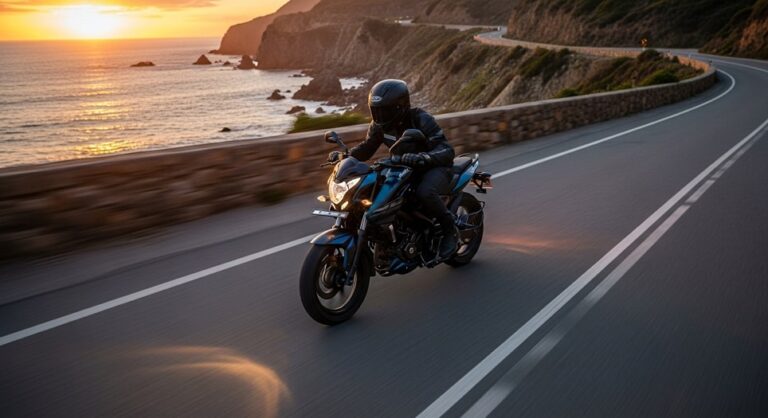
The Indian commuter motorcycle segment continues to evolve as manufacturers refine proven models to meet changing regulations and rider expectations. Bajaj Auto has officially introduced the updated 2026 iteration of its long-running Pulsar 150, one of the most recognizable motorcycles on Indian roads. The new version arrives with compliance-focused updates, subtle refinements, and a revised ex-showroom price that reflects current market conditions.
Positioned as a balance between everyday practicality and sporty appeal, the Pulsar 150 has historically attracted a wide demographic of riders, from first-time buyers to experienced commuters. The 2026 update builds on this legacy by retaining the core mechanical formula while incorporating updates aimed at durability, safety, and regulatory alignment.
This report examines the launch details, mechanical specifications, design elements, real-world usability, pricing context, and ownership considerations of the updated 2026 Bajaj Pulsar 150, offering a comprehensive and factual overview for prospective buyers and industry observers.
Launch Overview and Market Positioning
The updated Pulsar 150 for the 2026 model year has been launched in India with an ex-showroom price starting at approximately ₹1.08 lakh, depending on the variant and region. Bajaj Auto has positioned this update as a continuity-focused refresh rather than a full generational change, targeting commuters who value reliability and established brand trust.
Within Bajaj’s lineup, the Pulsar 150 sits above entry-level commuter motorcycles and below more performance-oriented Pulsar models. Its role is to serve as a versatile daily rider that delivers adequate power for urban and semi-urban use while maintaining manageable running costs.
The Indian 150cc segment remains highly competitive, and Bajaj’s strategy with this update emphasizes refinement and compliance rather than radical redesign. This approach reflects buyer preferences in this category, where durability, fuel efficiency, and service accessibility are often prioritized.
Engine and Mechanical Specifications
Proven 149.5cc Powertrain
The updated 2026 Pulsar 150 continues to use the well-established 149.5cc, single-cylinder, air-cooled engine that has powered previous iterations. This engine is known for its smooth delivery and long-term reliability, characteristics that have contributed to the model’s enduring popularity.
The motor produces power and torque figures consistent with earlier versions, ensuring familiarity for existing owners upgrading to the latest model. Power delivery remains linear, making the motorcycle suitable for stop-and-go traffic as well as steady highway cruising.
Transmission and Ride Characteristics
A five-speed manual gearbox handles power transmission, calibrated to balance acceleration and fuel economy. Gear ratios are tuned for urban commuting, allowing riders to maintain low engine stress at typical city speeds.
Ride quality benefits from a suspension setup that prioritizes comfort over aggressive handling. The front telescopic forks and rear twin shock absorbers are designed to absorb uneven road surfaces, a critical factor for Indian riding conditions.
Design and Visual Updates
Signature Pulsar Styling Retained
The 2026 update preserves the iconic Pulsar design language, including the muscular fuel tank, sharp tank extensions, and sporty stance. Bajaj has chosen to maintain visual continuity to ensure instant recognition on the road.
Minor cosmetic refinements may include updated graphics, refreshed color options, and subtle detailing changes. These updates aim to keep the motorcycle visually relevant without alienating long-time Pulsar enthusiasts.
Lighting and Instrumentation
The lighting setup continues to feature a halogen headlamp with twin pilot lamps, maintaining the model’s distinctive front profile. Rear lighting remains functional and visibility-focused, adhering to regulatory standards.
The instrument cluster provides essential information such as speed, fuel level, and trip data. While not overly advanced, it is designed for clarity and durability, aligning with the motorcycle’s commuter-oriented purpose.
Safety and Compliance Updates
Braking and Control Systems
Safety remains a key consideration in the updated Pulsar 150. The motorcycle is equipped with disc braking at the front, with rear braking options depending on the variant. These brakes are tuned for predictable stopping power under everyday riding conditions.
Single-channel ABS is included to meet current safety regulations, providing added confidence during emergency braking scenarios. This system helps prevent wheel lock-up and improves stability on slippery surfaces.
Emission and Regulatory Compliance
The 2026 model complies with the latest emission norms applicable in India, ensuring reduced environmental impact compared to older iterations. Bajaj has optimized engine tuning to meet these standards without compromising performance.
Compliance updates also extend to noise regulations and onboard diagnostics, contributing to a more refined ownership experience and easier long-term maintenance.
Fuel Efficiency and Real-World Usability
Fuel efficiency has always been a strong selling point of the Pulsar 150. The updated 2026 version continues this tradition, offering mileage figures suitable for daily commuting. Actual fuel economy may vary based on riding style, traffic conditions, and maintenance.
The fuel tank capacity supports extended riding intervals between refueling, making the motorcycle practical for both city commutes and occasional longer trips. Combined with its comfortable seating position, the Pulsar 150 remains a dependable everyday companion.
Ergonomics are designed to accommodate a wide range of rider heights, with a neutral riding posture that reduces fatigue during longer rides.
Current Market Price and Deals
The updated 2026 Bajaj Pulsar 150 is priced starting at around ₹1.08 lakh ex-showroom, with final on-road prices varying by state due to taxes and registration costs. This pricing positions it competitively within the 150cc segment.
Dealerships may offer seasonal promotions, exchange bonuses, or finance schemes depending on location and time of purchase. Buyers are advised to check with authorized Bajaj dealers for the most accurate and current offers.
Despite incremental price adjustments over previous years, the Pulsar 150 continues to be viewed as a value-oriented option given its brand reputation and proven mechanicals.
Pros and Cons
Key Advantages
- Proven Reliability: The long-standing engine platform has a strong track record for durability, making it a trusted choice for daily riders.
- Comfort-Oriented Ride: Suspension tuning and ergonomics are optimized for Indian road conditions and extended commuting.
- Brand Support: Extensive service network and readily available spare parts enhance ownership convenience.
- Balanced Performance: Adequate power for city and highway use without excessive fuel consumption.
- Regulatory Compliance: Updated to meet current safety and emission norms.
Potential Limitations
- Limited Feature Upgrades: The update focuses on refinement rather than introducing advanced digital features.
- Conservative Design: Riders seeking a radical new look may find the styling familiar.
- Segment Competition: Faces strong rivals offering more modern equipment in some cases.
- No Major Power Increase: Performance remains similar to previous models.
- Basic Instrumentation: Lacks connectivity or advanced rider aids.
Pro Tips for Buyers
- Test Ride Thoroughly: Always take a test ride to assess comfort, clutch feel, and braking response in real conditions.
- Compare Variants: Evaluate disc and brake configurations to match your riding needs and budget.
- Check Service Plans: Inquire about maintenance packages that can reduce long-term ownership costs.
- Consider Insurance Options: Comprehensive coverage can offer peace of mind, especially for daily commuting.
- Verify On-Road Price: Factor in all local charges before finalizing the purchase.
Frequently Asked Questions
Is the 2026 Bajaj Pulsar 150 a new generation model?
No, the 2026 version is an updated iteration that focuses on compliance and refinement rather than a complete generational overhaul.
Does the updated model offer better mileage?
Mileage remains comparable to previous versions, with efficiency influenced by riding conditions and maintenance.
Is ABS standard across all variants?
Single-channel ABS is included to meet safety regulations, though availability may vary by specific variant.
Who is the Pulsar 150 best suited for?
It is ideal for riders seeking a reliable, comfortable, and balanced motorcycle for daily commuting and occasional longer rides.
How does it compare to newer rivals?
While some competitors offer more advanced features, the Pulsar 150 stands out for its proven reliability and widespread service support.
Conclusion
The updated 2026 Bajaj Pulsar 150 reinforces the model’s long-standing position in the Indian motorcycle market by focusing on reliability, regulatory compliance, and everyday usability. Rather than pursuing dramatic changes, Bajaj Auto has refined a trusted formula that continues to resonate with a broad audience. With its balanced performance, comfortable ride quality, and competitive pricing, the Pulsar 150 remains a practical and dependable choice for riders seeking a no-nonsense 150cc motorcycle in 2026.

Full-stack developer at Scylla Technologies (USA), working remotely from Bangladesh. Adobe Certified Magento Developer.