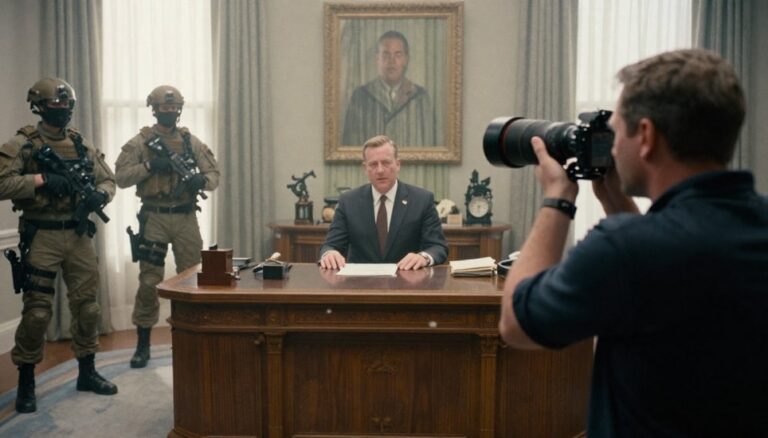
The explosive ending of Alex Garland‘s critically acclaimed film Civil War has captivated audiences and sparked intense discussion since its release. The movie’s final, harrowing scenes in the White House, culminating in the death of the President, are not a simple victory for one side but a profound, unsettling statement on the nature of conflict, journalism, and the human cost of ideological collapse. To fully understand the weight of this conclusion, it is essential to move beyond a simple plot summary and examine the deliberate choices Garland makes in framing the narrative, the film’s thematic resonance with real-world journalism, and the complex, morally ambiguous journey of its central characters.
Deconstructing the Final Sequence: More Than an Assassination
The climax of Civil War is a masterclass in building tension and subverting expectations. As the Western Forces breach the White House, the film strips away the grand political narratives to focus on raw, terrifying humanity. The sequence is presented almost entirely through the lenses of the journalists, Lee and Jessie, framing the historic event not as a triumphant military operation but as a chaotic, intimate tragedy. The cold, transactional killing of the Press Secretary immediately establishes that no old rules apply, shattering any hope for diplomatic resolution or preserved dignity.
The discovery of the President, a figure audiences have heard throughout the film as a defiant voice on the radio, cowering under a desk, is a powerful visual metaphor for the complete collapse of institutional authority. He is not a commanding leader but a terrified man. Joel’s demand for a “final quote” is a chilling moment that exposes the journalist’s paradoxical role: he is simultaneously a witness to history and a participant seeking to shape its narrative, even at this most grotesque moment. The President’s desperate, begging whimpers—a far cry from a historic final speech—and his subsequent execution are filmed with a brutal, unceremonial matter-of-factness. The screen then cuts to black, denying the audience any catharsis, resolution, or glimpse of the “new America.” This abrupt ending is Garland’s most critical point: the story is not about who wins, but about what is lost in the winning.
The Intentional Political Vacuum: Why the “Why” Doesn’t Matter
One of the most discussed and controversial aspects of Civil War is its steadfast refusal to explain the political causes of the conflict. The alliance between the seemingly incongruent states of California and Texas in the “Western Forces” is a clear signal from Garland that traditional political logic is not the film’s concern. This deliberate omission serves several crucial narrative purposes:
- Universalizing the Experience: By not aligning the conflict with contemporary left-right divides, the film becomes a broader parable about societal fracture that can resonate across different political contexts. It asks the viewer to project their own understandings of division onto the scenario.
- Focusing on the Human Condition: The film argues that when societal collapse reaches the point of armed soldiers in the streets, the original ideological arguments become secondary to the primal struggle for survival, power, and dominance. The “why” is buried under the immediate, brutal “how.”
- Critiquing Spectatorship: The audience, like the journalists, is placed in a position of observing violence without a clear moral framework for who to support. This forces a discomforting self-reflection on how we consume conflict media when the familiar partisan labels are removed.
- Emphasizing the Role of the Journalist: In the absence of clear political messaging, the purpose and ethics of the journalists themselves become the central ideological battleground of the film.
This approach has drawn both praise and criticism. Some viewers find the political ambiguity to be a intellectually provocative strength, while others see it as an evasion of responsibility in a politically charged era. However, within the film’s own logic, this vacuum is essential for maintaining its core focus: a relentless examination of the psychology of war and those who document it.
The Protagonists’ Arc: From Detached Observers to Complicit Participants
The emotional journey of the journalists—Lee, Joel, and Jessie—is the true backbone of Civil War. They begin the film as archetypes of war correspondence: Lee is the legendary, emotionally closed-off photojournalist; Joel is the charismatic reporter chasing the story; Jessie is the naive, ambitious rookie. Their stated goal is professional, not patriotic: to get to Washington to document the fall of the regime for career advancement and journalistic legacy.
Their professional detachment is a survival mechanism, a theme Garland explores through their interactions with the violence around them. They are repeatedly advised and shown not to take sides, to simply “record so it can be remembered.” However, the film systematically dismantates this facade of neutrality. Key moments, like Lee and Joel’s tense, silent reaction to encountering a mass grave or their haunted faces after a firefight with a psychotic militiaman, reveal the deep, cumulative psychological toll. The American setting makes the trauma inescapable; this is not a foreign conflict they can eventually leave behind.
Lee’s Sacrifice: The Collapse of Professional Distance
The turning point for the group, and the film’s most poignant character moment, is Lee’s death. When Jessie freezes in terror during the final assault on DC, Lee instinctively pushes her to safety and is fatally shot. This act is profoundly significant. For the entire film, Lee has preached emotional distance, telling Jessie not to help people but to photograph them. In her final moment, she completely violates this core tenet of her own hardened philosophy. She chooses human connection and protection over journalistic observation.
Jessie’s action immediately afterward—raising her camera to photograph her dying mentor—is the complex, morally fraught culmination of her training. It is both a respectful documentation of a great journalist’s end and a horrifying act of professional conditioning, seizing a tragic personal moment for a powerful image. This sequence masterfully illustrates Garland’s central conflict: in war, the line between bearing witness and exploiting tragedy is perilously thin, and the human instinct to connect often violently clashes with the professional mandate to observe.
Alex Garland’s Vision: A Deliberate Anti-War Statement
To interpret the ending of Civil War accurately, one must understand director Alex Garland’s explicit intent. He has stated in interviews and at the film’s SXSW premiere that his goal was the opposite of glamorizing war. He pointed to films like Apocalypse Now—which he admires—and noted how the spectacle and aesthetic beauty can sometimes make war feel “seductive” or like a noble quest. Garland sought to remove all such romance.
Every technical and narrative choice in the finale supports this anti-war vision. The combat is chaotic and deafening, not choreographed. The heroes are not soldiers but journalists, and they are killed not in heroic last stands but in sudden, random violence. The climax in the White House feels less like a grand liberation and more like a grim, messy execution. The President is not a villainous tyrant receiving his due but a pathetic figure whose death feels hollow and meaningless. By denying a victorious resolution or a hopeful new beginning, Garland forces the audience to sit with the devastating, empty aftermath of the violence they have just witnessed. The message is unequivocal: this is a “bad idea.”
Cultural and Cinematic Context: How “Civil War” Fits In
Civil War enters a long tradition of American films that explore the concept of a second civil war or societal collapse, from The Purge series to The Man in the High Castle. However, Garland’s approach is distinct in its journalistic, ground-level perspective and its rejection of speculative fiction world-building. It shares more DNA with films about the ethics of war journalism, such as The Bang Bang Club or War Photographer, but transposes those questions onto a fictional, hyper-familiar American landscape.
The film’s release during a period of significant political polarization in the real world undoubtedly shapes its reception. It acts less as a prediction and more as a stark warning—a visualization of the potential end point of irreconcilable division. Its power lies not in its plausibility as a roadmap to conflict, but in its terrifyingly plausible depiction of what the texture of such a conflict would feel like: the normalization of extreme violence, the breakdown of common identity, and the moral compromises required to simply move through the world.
Audience and Critical Reactions: A Divided Interpretation
The ending of Civil War has provoked a wide spectrum of reactions, underscoring its complexity. Critical reception has generally praised the film’s technical mastery, visceral intensity, and performances, particularly Kirsten Dunst’s portrayal of Lee’s weary resolve. Many reviews highlight the ending’s power to provoke discussion and discomfort, seeing its ambiguity as a strength.
Audience reactions, however, are more divided, often falling into a few key camps:
- The “Thought-Provoking” Camp: Viewers who appreciate the film as a serious meditation on war, journalism, and national division. They find the lack of political exposition challenging in a positive way, forcing personal reflection.
- The “Frustrated” Camp: Viewers who wanted a more concrete story, feeling that the political ambiguity makes the conflict feel empty or the film intellectually cowardly for not “taking a stand.”
- The “Trauma-Focused” Camp: Viewers deeply affected by the film’s visceral, unrelenting violence and psychological tension, who see it primarily as a harrowing sensory and emotional experience.
This division is arguably a testament to the film’s success in avoiding easy answers and sparking meaningful conversation about its difficult themes.
Beyond the Plot: The Ending’s Thematic Resonance
The final minutes of Civil War resonate with several enduring themes that extend far beyond the specifics of its plot. The film serves as a profound commentary on the state of modern media and memory. In an age of information overload and contested narratives, the journalists represent a fading ideal of physical witness—risking their lives to capture a tangible, photographic truth. Yet, the film also questions the value and impact of that truth. Jessie’s final photo of Lee will become an iconic image, but will it change anything? Or will it simply become another piece of consumed content in a desensitized world?
Furthermore, the ending grapples with the concept of American identity and legacy. The assault on the White House, the most potent symbol of American political power, is not portrayed as a liberation but as a desecration. The death of the President in his own office signifies the murder of the idea of a unified nation. Garland suggests that a civil war is not a battle for the soul of America, but a battle that destroys the soul altogether, leaving only factions, trauma, and ruins in its wake. The silence that follows the gunshot is the sound of that destruction being made complete.
Conclusion: An Unflinching Mirror Held Up to Conflict
The ending of Alex Garland’s Civil War is a meticulously crafted, deeply unsettling conclusion that refuses to provide comfort or closure. By focusing on the visceral experience of war over political explanation, and on the moral journey of journalists over the strategy of soldiers, Garland achieves his clear anti-war objective. The assassination of the President is not a climax of ideological victory but an anticlimax of profound nihilism, highlighting the ultimate emptiness of violence as a political solution. The true tragedy lies not in who dies, but in what dies within those who survive—their humanity, their neutrality, and their hope. The film leaves the audience, like the surviving characters, to wander forward into an uncertain future, burdened by the weight of what they have seen and forced to question their own role as spectators to conflict, both on screen and in the world at large. It stands as a powerful, disturbing reminder of the fragile bonds that hold society together and the catastrophic cost of their severance.

English Literature graduate from Manarat International University, Bangladesh. Currently works as a freelance Website Manager. Interests include gaming and being an enthusiast for movies, TV shows, and anime binge-watching.