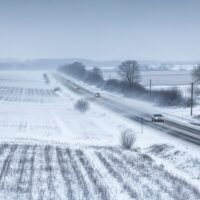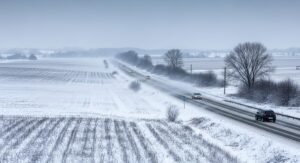
As winter maintains its firm grip across Eastern Europe, Ukraine faced a day of challenging meteorological conditions on December 29, 2025. Forecasters from the Ukrainian Hydrometeorological Center had anticipated a mix of cloudy skies, precipitation in the form of snow, and hazardous road conditions due to ice formation. This weather pattern aligns with the seasonal norms for late December, where cold air masses from the northwest often bring instability to the region. Residents in various parts of the country were advised to exercise caution, particularly those traveling or engaging in outdoor activities, as the combination of low temperatures and strong winds contributed to reduced visibility and increased risks.
The day’s weather was characterized by a predominant northwest wind flow, which transported colder air into Ukraine, leading to temperature drops and the potential for blizzards in exposed areas. According to official reports, the atmospheric pressure systems influencing the region included a low-pressure trough extending from the Baltic Sea, interacting with higher pressure over the Black Sea. This setup created conditions conducive to snowfall, especially in the western and southwestern territories. Such patterns are not uncommon during this time of year, but the intensity of the winds added an element of severity, prompting authorities to issue alerts for public safety.
In major urban centers like Kyiv, the capital, the impact of these conditions was felt through disruptions in daily routines, including potential delays in public transportation and heightened demands on heating systems. The forecast emphasized the need for preparedness, with recommendations for drivers to equip vehicles with winter tires and for pedestrians to be mindful of slippery surfaces. Overall, the weather on this date reflected the broader climatic trends of a Ukrainian winter, marked by variability and occasional extremes that test the resilience of infrastructure and communities.
Building on the synoptic analysis, the day’s events unfolded as predicted, with observations confirming the arrival of moderate snow in several oblasts. Meteorological stations across the country recorded data that corroborated the pre-dawn forecasts, highlighting the accuracy of modern weather modeling techniques employed by national agencies. These models incorporate satellite imagery, ground-based observations, and numerical predictions to provide reliable insights, which proved essential for mitigating potential hazards on December 29, 2025.
National Weather Overview
On a national scale, Ukraine experienced predominantly cloudy weather with periods of clearing in some eastern regions. The primary concern was the presence of black ice on roads, a phenomenon where a thin layer of transparent ice forms, making surfaces treacherously slippery without obvious visual cues. This condition arises when moisture freezes on cold pavements, often exacerbated by overnight temperature drops. Authorities declared a Level I danger, classified as yellow, indicating a moderate risk that requires public awareness but not immediate evacuation or shutdowns.
Temperature readings varied across the country, with nighttime lows dipping to between 1 and 6 degrees below zero Celsius in most areas, and even colder in mountainous zones like the Carpathians, where values reached up to 9 degrees below zero. Daytime highs ranged from 4 degrees below zero to 1 degree above zero, with slightly warmer conditions in the extreme southern parts, registering 1 to 4 degrees above zero. These figures represent a typical winter profile, influenced by the continental climate that dominates Ukraine’s geography.
Precipitation was mainly in the form of light to moderate snow, commencing in the afternoon and affecting primarily the western and southwestern sectors. The snow accumulation was expected to be minimal in most places, but sufficient to create hazardous driving conditions when combined with wind. Northwest winds prevailed at speeds of 7 to 12 meters per second, with gusts reaching 15 to 20 meters per second in certain Right Bank areas, excluding Transcarpathia, leading to blizzard-like visibility reductions.
The overall atmospheric stability was low, with humidity levels hovering around 80 to 90 percent, contributing to the foggy and overcast appearance in many locations. Barometric pressure trended slightly upward by evening, suggesting a potential easing of conditions overnight. This national snapshot underscores the importance of continuous monitoring by meteorological services to provide timely updates to the public and emergency responders.
Regional Weather Variations
Weather conditions exhibited notable differences across Ukraine’s diverse regions, reflecting the country’s expansive territory and varied topography. In the western parts, including oblasts such as Lviv and Ivano-Frankivsk, moderate snow was more pronounced, accompanied by stronger wind gusts that whipped up existing snow cover into drifts. These areas, closer to the Carpathian Mountains, often bear the brunt of incoming Atlantic air masses modified by continental influences, resulting in higher precipitation totals compared to eastern lowlands.
Moving to the southwestern regions, encompassing Odesa and Mykolaiv oblasts, the forecast indicated lighter snow but persistent icy roads, with temperatures marginally warmer due to proximity to the Black Sea. The maritime influence here moderates extremes, but the prevailing northerly winds still brought chill factors that made outdoor exposure uncomfortable. Local authorities in these areas focused on road maintenance, deploying salt and sand to combat ice buildup.
Central Ukraine, including Kyiv oblast, saw a blend of national trends, with cloudy skies, snow, and blizzards particularly at night and morning hours. Winds at 7 to 12 meters per second, gusting to 15 to 20, caused temporary whiteout conditions in open areas. Nighttime temperatures in the region were 1 to 6 degrees below zero, with Kyiv specifically at 2 to 4 degrees below zero, while daytime hovered around zero in the capital.
In the eastern regions like Kharkiv and Donetsk, conditions were somewhat drier, with overcast skies but less precipitation. Temperatures mirrored the national average, but wind speeds were lower, reducing the blizzard risk. The flat terrain here allows for quicker dissipation of weather systems, though black ice remained a concern on untreated surfaces.
Southern Ukraine, including Crimea and Zaporizhzhia, experienced the mildest conditions, with daytime temperatures up to 4 degrees above zero and minimal snow. However, coastal areas dealt with higher humidity and potential fog, which could impair visibility for maritime activities. The region’s subtropical undertones in winter provide a buffer against severe cold snaps.
Northern oblasts such as Chernihiv and Sumy faced colder nights, with lows approaching 6 degrees below zero, and light snow flurries. The proximity to Belarus influences these areas with continental air, leading to more stable but chilly conditions. Overall, the regional disparities highlight Ukraine’s climatic diversity, from mountainous west to steppe east.
Key Weather Features Across Regions
- Snowfall Intensity: In western Ukraine, moderate snow led to accumulations of 5 to 10 centimeters, creating picturesque landscapes but complicating travel. This precipitation was driven by moist air ascending over the Carpathians, a common orographic effect in the region. Residents were urged to clear walkways promptly to prevent refreezing overnight.
- Wind Gusts and Blizzards: Northwestern winds gusting up to 20 meters per second caused blizzards in exposed areas, reducing visibility to under 500 meters at times. Such conditions pose risks to drivers and can lead to power outages if lines are burdened by ice. Emergency services monitored these zones closely for any incidents.
- Black Ice Formation: Widespread black ice on roads resulted from daytime melting followed by nighttime freezing, a hazard that increases accident rates significantly. This phenomenon is particularly dangerous on bridges and overpasses, where air circulation accelerates cooling. Authorities recommended reduced speeds and increased following distances.
- Temperature Variations: Nighttime lows varied from -1 to -9 degrees Celsius, with the coldest in mountainous areas due to elevation effects. Daytime highs offered little relief, staying near freezing and contributing to persistent discomfort. These ranges are consistent with December climatology but can strain heating resources.
- Humidity and Fog: High humidity levels around 85 percent fostered fog in valleys and coastal areas, impairing aviation and maritime operations. Fog forms when warm, moist air cools over colder surfaces, a frequent occurrence in Ukraine’s winter. Pilots and captains were advised to use instrumental navigation.
- Precipitation Distribution: Snow was unevenly distributed, with heavier falls in the southwest where frontal systems converged. This led to localized flooding risks if rapid melting occurred later. Agricultural sectors monitored this for impacts on winter crops.
- Alert Levels: The yellow Level I danger alert covered most of the country, signaling potential disruptions but not catastrophic threats. This classification helps prioritize response efforts, focusing on vulnerable populations like the elderly. Public broadcasts reinforced safety messages throughout the day.
- Visibility Challenges: Blizzards and blowing snow reduced visibility, especially in rural areas with open fields. This affects not only transportation but also wildlife and farming activities. Farmers delayed operations, waiting for clearer conditions.
Impacts on Daily Life and Infrastructure
The adverse weather on December 29, 2025, had tangible effects on daily life in Ukraine, with many residents opting to stay indoors to avoid the cold and slippery conditions. Public transportation systems in cities like Kyiv reported minor delays due to de-icing procedures on rails and buses, ensuring safe operations amidst the snow. Schools and businesses operated normally in most areas, but with flexible schedules to accommodate travel challenges.
Road maintenance crews were active throughout the day, plowing snow and applying anti-icing agents to major highways and urban streets. This proactive approach minimized accidents, though isolated incidents of skidding were reported in rural districts. The energy sector monitored demand spikes for heating, with utilities confirming sufficient capacity to handle the load without interruptions.
In agricultural regions, the snow provided a protective layer for winter wheat crops, insulating them from deeper freezes. However, excessive wind could erode this cover in open fields, prompting farmers to assess fields post-event. The tourism industry in the Carpathians saw a boost from fresh snow, attracting skiers despite the blustery conditions.
Health services prepared for weather-related issues, such as hypothermia and slips, with hospitals stocking supplies and advising on preventive measures. Community centers offered warm shelters for the homeless, demonstrating social resilience in the face of winter hardships. These impacts illustrate how weather intertwines with societal functions, requiring coordinated responses.
Emergency response teams remained on standby, with no major incidents reported by evening. The focus was on prevention, including public service announcements via media and apps, informing citizens of real-time conditions. This integration of technology enhances safety, allowing for rapid dissemination of updates from meteorological centers.
Commercial activities, particularly in retail and delivery services, adapted by extending hours or offering online options to reduce exposure. The weather also influenced energy consumption patterns, with higher usage in residential areas as people stayed home. Overall, the day’s conditions tested but did not overwhelm Ukraine’s infrastructure.
Historical and Climatic Context
Placing the weather of December 29, 2025, in historical context, December in Ukraine typically features average high temperatures decreasing from around 2 degrees Celsius early in the month to near freezing by the end. Historical data from Kyiv shows that overcast skies prevail about 71 percent of the time, aligning with the cloudy conditions observed. Snowfall is common, with monthly accumulations varying based on annual climate oscillations.
Compared to past years, this day’s temperatures were within normal ranges, though wind gusts were slightly above average for late December. Records from the 20th century indicate similar patterns during La Niña phases, which can enhance cold air intrusions. Modern climate trends suggest increasing variability, with more frequent extreme events, though this specific day did not deviate markedly.
Regional averages for Lviv in December show highs of 2 degrees Celsius and lows of -4 degrees, consistent with reports from western Ukraine. In contrast, eastern areas like Mariupol experience milder winters due to Azov Sea influences, with light snow as noted. These historical benchmarks aid in understanding current events and preparing for future winters.
Climatological studies emphasize Ukraine’s position at the crossroads of Atlantic, Mediterranean, and Siberian air masses, leading to diverse weather. December often marks the onset of persistent snow cover, crucial for water resources in spring. The 2025 conditions fit this framework, providing continuity in seasonal expectations.
Expert analyses from meteorological institutes highlight the role of global warming in potentially altering precipitation types, with more rain than snow in warmer winters. However, 2025’s December leaned toward traditional cold snaps, reinforcing the need for adaptive strategies. Historical comparisons also reveal that blizzard frequency has remained stable over decades.
The day’s weather can be viewed through the lens of long-term data sets, which show a gradual warming trend but with preserved winter severity in continental interiors. This context enriches public understanding, fostering appreciation for forecasting advancements that mitigate impacts.
Forecast for Subsequent Days
Looking ahead, the weather pattern was expected to persist into December 30, 2025, with continued cloudy conditions, light snow, and black ice on roads. Temperatures would remain similar, with nighttime lows of 1 to 6 degrees below zero and daytime highs near freezing. Winds were forecasted to ease slightly, reducing blizzard risks but maintaining chilly feels.
By mid-week, a shift toward clearer skies was anticipated in eastern regions, potentially bringing drier air. However, western areas might see additional snow showers as another front approached. These short-term outlooks assist in planning, from travel to energy management.
Longer-range models suggested a possible warming trend by early January, with temperatures rising above average. This could lead to thawing and refreezing cycles, heightening ice hazards. Continuous updates from official sources were recommended to stay informed.
The transition from December’s cold to potential January mildness underscores seasonal dynamics, influenced by jet stream positions. Forecasters stressed vigilance, as winter weather can change rapidly in Ukraine’s climate zone.
Precipitation chances diminished toward the end of the week, with high pressure building from the south. This setup promised more stable conditions, beneficial for holiday recoveries. However, lingering cold air pockets could sustain frost in shaded areas.
Overall, the immediate forecast maintained cautionary tones, prioritizing safety amid ongoing winter challenges. Public adherence to advisories ensures minimal disruptions.
Conclusion
In summary, December 29, 2025, brought a quintessential winter day to Ukraine, featuring snow, blizzards, icy roads, and cold temperatures that varied by region but united the nation in preparedness. The national overview and regional details painted a picture of resilience against natural elements, with infrastructure holding steady and communities adapting effectively. Historical context and future outlooks provided depth, emphasizing the value of accurate forecasting in managing impacts on daily life, transportation, and economy. As winter progresses, continued monitoring will be key to navigating similar conditions, ensuring safety and continuity for all Ukrainians.