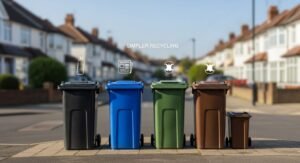
The landscape of waste management in England is undergoing its most significant transformation in a generation. Under the government’s Simpler Recycling initiative, every household and business in the country will soon be subject to a standardized set of rules designed to end the “postcode lottery” of recycling. Currently, residents in different local authorities face a confusing array of regulations regarding what can and cannot be placed in their bins. By March 31, 2026, these discrepancies will be largely eliminated, replaced by a uniform system that mandates the collection of specific waste streams across all councils.
The primary driver behind this overhaul is the Environment Act 2021, which established the legal framework for more consistent recycling collections. The Department for Environment, Food and Rural Affairs (DEFRA) has spent years refining these plans to ensure they balance environmental goals with practical feasibility for local councils. Central to the 2026 reforms is the introduction of mandatory weekly food waste collections, a move intended to prevent millions of tonnes of organic material from rotting in landfills and releasing harmful methane emissions. This shift represents a major logistical challenge for many authorities but is viewed as essential for the UK to meet its net-zero carbon targets.
As the deadline approaches, residents will see changes not only in how they sort their rubbish but also in the types of containers provided by their local councils. While the specific hardware—whether wheelie bins, stackable boxes, or bags—may vary depending on the local housing stock and geography, the categories of waste being sorted will be identical from London to Liverpool. This consistency is expected to boost the quality of recycled materials, making it easier and more cost-effective for processing facilities to turn waste back into valuable resources.
The Four-Bin System: What You Need to Know
The most visible change for the average household will be the requirement to separate waste into four distinct categories. Although many councils already utilize multiple bins, the 2026 rules formalize the categories to ensure high-quality recycling. The standard model includes a bin for residual waste (non-recyclables), one for food waste, one for paper and cardboard, and one for dry recyclables such as plastic, metal, and glass. This separation is crucial because mixing paper with wet recyclables like glass or plastic often leads to contamination, rendering the paper unrecyclable.
Crucially, the government has provided exemptions that allow councils to collect all “dry” recyclables (glass, metal, plastic, and paper) in a single container if they can prove that separation isn’t necessary for high-quality recycling or is logistically impossible. However, the overarching goal remains to keep “dry” and “organic” waste strictly separate. For many, this will mean the arrival of a new, smaller caddy specifically for food scraps, which will be collected every week to minimize odors and hygiene concerns often associated with less frequent collections.
The transition to this system is backed by significant government investment, with nearly £295 million in capital funding allocated to help councils purchase new vehicles and bins. Despite this, some local authorities have raised concerns about the ongoing operational costs, particularly in urban areas with high-density housing where communal bin stores may need expensive structural upgrades. For residents in flats, the rules remain the same: landlords and councils must work together to provide accessible facilities for separating these four waste streams by the 2026 deadline.
Mandatory Weekly Food Waste Collections
Perhaps the most impactful change for households currently without a dedicated organic waste service is the mandatory weekly food waste collection. Under the new legislation, almost all households in England must have their food waste collected separately by March 31, 2026. This service will cover everything from plate scrapings and vegetable peelings to meat bones and eggshells. By diverting this waste from general rubbish bins, the government aims to utilize anaerobic digestion facilities to create renewable energy and high-quality fertilizer.
Currently, only about half of the councils in England offer a separate food waste service. The expansion to 100% coverage is expected to save approximately 18 million tonnes of greenhouse gas emissions over the next decade. For households, this typically involves a small “kitchen caddy” for daily use and a larger, lockable “kerbside caddy” for collection day. The weekly frequency is a statutory requirement, ensuring that even if general waste is collected fortnightly, smelly food waste is removed from the premises more regularly.
Key items included in the new mandatory food waste collections are:
- All Food Scraps: This includes cooked and uncooked food, meat, fish, dairy products, and small bones, ensuring that no organic kitchen waste is sent to landfill.
- Peelings and Off-cuts: Fruit and vegetable skins, cores, and stalks are prime candidates for anaerobic digestion and must be separated from general waste.
- Tea Bags and Coffee Grounds: Even small items like tea bags (preferably compostable versions) and coffee filters are included in the new organic waste stream.
- Caddy Liners: Most councils will allow the use of specific compostable or plastic liners to keep caddies clean, though residents should check local guidance for accepted types.
- Inedible Food Parts: Nut shells, eggshells, and the rinds of citrus fruits or melons are all part of the mandatory collection requirement.
- Pet Food Waste: Leftover wet or dry pet food can typically be included, though pet litter and animal feces remain strictly prohibited from these bins.
Dry Recyclables and the Elimination of the ‘Postcode Lottery’
For years, UK residents have been frustrated by the fact that a plastic pot recyclable in one town might be rejected by the council in the next. The 2026 Simpler Recycling rules aim to solve this by mandating that every council must collect a specific list of “dry recyclables.” This list includes glass bottles and jars, metal tins and cans, and a wide variety of plastic packaging including PET, HDPE, and PP. By standardizing the list, the government hopes to provide clarity to manufacturers on which packaging materials are most sustainable and easiest to process.
The rules regarding paper and cardboard are equally strict. To maintain the value of paper for recycling mills, it must be kept “clean and dry.” This means that pizza boxes heavily soaked in grease or paper contaminated with food waste should still be placed in the residual waste bin. However, most other forms of cardboard, magazines, and office paper will be collected universally. This consistency will allow for clearer labeling on product packaging, as brands will no longer need to include vague “check local recycling” markers on their goods.
One notable exclusion from the 2026 start date is plastic film and flexible packaging, such as crisp packets and bread bags. While some councils already collect these, the mandatory nationwide requirement for plastic film does not kick in until March 31, 2027. This delay is intended to give the recycling industry time to build the specialized infrastructure required to sort and process these lightweight, often multi-layered materials. Until then, most residents will continue to rely on supermarket collection points for flexible plastics.
Impact on Businesses and Micro-Firms
The 2026 reforms are not limited to households; they also place new burdens on the commercial sector. In fact, the timeline for businesses is even more aggressive. All businesses, schools, and hospitals with 10 or more full-time employees were required to begin separating their waste into the standardized streams by March 31, 2025. This means that by the time the household rules take effect in 2026, the majority of the UK workforce will already be familiar with the new sorting requirements at their place of employment.
For smaller organizations, known as micro-firms (those with fewer than 10 employees), the government has provided a longer transition period. These small businesses have until March 31, 2027, to comply with the new recycling laws. This phased approach recognizes that smaller shops, cafes, and offices may have limited space for multiple bins and may need more time to negotiate new contracts with waste carriers. However, once the 2027 deadline passes, the rules will be universal across all sectors of the economy.
The “duty of care” for businesses under these rules is significant. Business owners must ensure they have a registered waste carrier that can handle separated streams, and they must take reasonable steps to prevent contamination. Failure to comply can result in fixed penalty notices. The government has emphasized a “supportive and educational” approach during the initial rollout, but the legal requirement to separate food waste and recyclables is a cornerstone of the new strategy to reduce commercial waste going to incineration or landfill.
Exemptions and Transitional Arrangements
While the March 2026 deadline is firm for the vast majority of the country, DEFRA has identified a small number of local authorities that require additional time. A total of 31 local authorities have been granted “bespoke transitional arrangements.” These councils typically have long-term waste disposal contracts—often involving Energy from Waste (EfW) plants—that would be prohibitively expensive to break or modify before 2026. For these specific areas, the mandatory food waste requirements may be delayed until 2027 or whenever their current contracts expire.
Furthermore, there are specific items that councils are not obligated to collect under the new scheme. Understanding these “opt-outs” is essential for residents to avoid contaminating their bins. For example, while glass packaging (bottles and jars) is mandatory, councils do not have to collect “non-packaging” glass such as light bulbs, Pyrex cookware, mirrors, or window glass. These materials have different melting points and chemical compositions than packaging glass and can ruin an entire batch of recycled material if mixed in.
Key items that remain outside the mandatory collection scope for 2026 include:
- Non-Packaging Glass: Items like mirrors, vases, and drinking glasses are made of different materials than bottles and jars and can contaminate the recycling stream.
- Compostable Packaging: Interestingly, councils are not required to collect “compostable” or “biodegradable” plastics (like coffee pods) in food waste bins, as they often don’t break down fast enough in industrial anaerobic digesters.
- Garden Waste: While councils must offer garden waste collection, they are still permitted to charge a fee for this service, unlike the “free” mandatory food and dry recycling collections.
- Absorbent Hygiene Products: Nappies, wet wipes, and period products must still be placed in the residual (general) waste bin as they cannot currently be recycled through standard municipal systems.
- Textiles and Electronics: While the government plans to improve textile and WEEE (Waste Electrical and Electronic Equipment) recycling, these are not part of the four-bin mandatory household collection for 2026.
- Specific Garden Contaminants: Ash from wood burners, soil, turf, and invasive weeds like Japanese Knotweed are strictly prohibited from standard garden waste bins.
How to Prepare Your Household for the 2026 Changes
Preparation is key to ensuring a smooth transition when your local council implements the new rules. The first step for most residents will be an internal “audit” of how waste is managed within the home. Under the new system, the volume of residual waste (the “black bin”) should decrease significantly as food and more types of plastic are diverted. This may allow households to use smaller general waste bins, freeing up space for the new recycling containers.
Education within the household is also vital. Many recycling efforts fail because of “wish-cycling”—the act of putting non-recyclable items into the recycling bin in the hope that they will be recycled. Under the 2026 rules, contamination will be monitored more closely. Councils may use “bin tagging” systems to alert residents if the wrong materials are found in a bin, and in extreme cases of persistent contamination, bins may be left uncollected until the offending items are removed.
Residents should also keep an eye out for communications from their local authority. Throughout 2025 and early 2026, councils will be sending out leaflets, updating their websites, and perhaps holding community events to explain the specific dates for their local rollout. Because some councils are starting their phased rollout as early as autumn 2025, your neighborhood might be affected sooner than the national March 2026 deadline. Staying informed will ensure you have the correct bins and liners ready for the first day of the new service.
The Environmental and Economic Benefits of Simpler Recycling
The move toward a standardized recycling system is not merely an administrative exercise; it has profound environmental implications. By ensuring that food waste is collected weekly, the UK can significantly reduce the amount of organic matter sent to landfills, where it produces methane—a greenhouse gas 28 times more potent than carbon dioxide. The biogas produced from collected food waste can be injected into the national gas grid or used to generate electricity, providing a home-grown source of renewable energy.
Economically, the 2026 rules are designed to support the UK’s “circular economy.” By producing cleaner, more consistent streams of plastic, paper, and glass, the country reduces its reliance on imported raw materials. High-quality recycled plastic (rPET), for instance, is in high demand by manufacturers who face new taxes on virgin plastic packaging. A stable and predictable supply of these materials from UK households will encourage investment in domestic reprocessing plants, creating jobs and reducing the carbon footprint associated with shipping waste overseas.
Furthermore, the standardization of bins helps lower the overall cost of waste management in the long run. When every council collects the same materials, waste companies can achieve better economies of scale. Sorting facilities can be optimized for a specific mix of materials, leading to higher efficiency and lower rejection rates. While the initial setup costs are high, the government’s impact assessment suggests that the long-term savings for taxpayers and the environmental benefits for the planet far outweigh the transitional hurdles.
Pro Tips for the 2026 Bin Transition
To make the shift to the new four-bin system as easy as possible, consider these expert tips. First, manage your food waste effectively by using a “ventilated” kitchen caddy; these allow moisture to evaporate, which significantly reduces odors compared to sealed containers. If your council allows it, using newspaper to line your caddy is often cheaper and more environmentally friendly than buying specialized liners. Second, always rinse your plastic and glass containers. A small amount of food residue can contaminate a large batch of paper or cardboard if they are collected together, potentially sending the whole load to the incinerator.
Another tip is to “flatten” your recycling. Cardboard boxes and plastic bottles take up a huge amount of volume when full of air. By crushing them, you ensure you have enough space in your bins for a full fortnight of waste. Finally, consider starting a home compost heap for garden waste if you have the space. While councils will still collect garden waste, composting at home is the most sustainable way to deal with grass cuttings and hedge trimmings, and it provides free, nutrient-rich soil for your garden, saving you money at the garden center.
Frequently Asked Questions
Will I have to pay for the new food waste bin?
No. Under the government’s funding agreement, local authorities are responsible for providing the necessary bins and caddies for the mandatory food waste and dry recycling services. While some councils charge for garden waste, the core recycling services will remain free at the point of use for households.
What happens if I put the wrong thing in my recycling bin?
Initially, councils are expected to take an educational approach, providing “oops” tags or leaflets explaining why an item was rejected. However, persistent contamination can lead to your bin not being emptied. The new rules are designed to be “simpler,” so the list of accepted items should be much clearer than in previous years.
I live in a flat with no room for more bins. How will this work?
Councils are required to provide solutions for all housing types, including flats and houses with no front gardens. This may involve the use of “stackable” boxes that take up less floor space, or the installation of larger communal “smart bins” for the whole building. Your landlord or managing agent will need to coordinate with the council to ensure compliance.
Why is plastic film not being collected until 2027?
Plastic film (like bubble wrap and frozen food bags) is technically difficult to sort at most current recycling centers. The extra year gives the industry time to upgrade sorting machinery and secure “end markets” where the film can be recycled into new products like bin liners or construction materials.
Can I still use my current bins?
In many cases, yes. If your council already collects the mandatory streams in bins that meet the new requirements, they may simply relabel them or update their guidance. However, if your current system doesn’t allow for the mandatory separation of food or paper, you will likely receive new containers before the 2026 deadline.
Conclusion
The 2026 UK bin collection reforms mark a turning point in how the nation handles its household waste. By moving to the Simpler Recycling model, the government is tackling the confusion and inefficiency that have hampered recycling rates for decades. The mandatory introduction of weekly food waste collections and the standardization of dry recyclables will not only make life easier for residents but will also provide the high-quality raw materials needed for a truly circular economy. While the transition may require some adjustment in household routines and a temporary increase in the number of bins on our streets, the environmental rewards—including massive reductions in methane emissions and the creation of renewable energy—are significant. As the March 31, 2026, deadline approaches, staying informed and adopting better sorting habits today will ensure that every household is ready for the “bin revolution.”