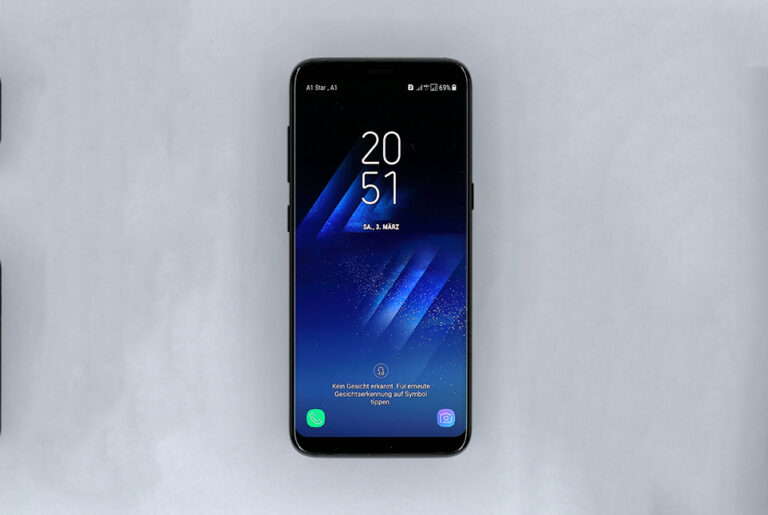
The Samsung Galaxy S8, introduced in 2017, marked a pivotal moment in smartphone design with its innovative Infinity Display and seamless integration of advanced hardware. This device set new benchmarks for aesthetics and functionality, blending premium materials with cutting-edge technology to deliver an immersive user experience. As interest in classic flagships persists among enthusiasts and budget-conscious consumers, understanding its comprehensive specifications reveals why it remains a reference point in mobile history. This analysis delves into every aspect of the Galaxy S8, from its physical construction to its software capabilities, providing a thorough overview for those evaluating its enduring value.
At its core, the Galaxy S8 embodies Samsung’s commitment to pushing boundaries in mobile innovation. Launched globally on April 21, 2017, following an announcement on March 29, it arrived in the wake of the Galaxy Note 7 challenges, yet quickly reclaimed consumer confidence through refined engineering. Available in configurations tailored for various markets, the device supports both single and hybrid dual SIM options, ensuring versatility for international users. Its discontinuation in 2020 has not diminished its appeal, as second-hand markets continue to thrive with units offering reliable performance for everyday tasks.
The Galaxy S8’s network compatibility underscores its global readiness, supporting GSM, HSPA, and LTE bands that cover major carriers worldwide. This foundation enables seamless connectivity, whether for high-speed data streaming or international roaming. As users navigate an increasingly connected world, the phone’s robust communication framework remains a testament to forward-thinking design principles that prioritize accessibility and reliability.
Design and Build Quality
The Galaxy S8’s exterior craftsmanship represents a harmonious fusion of form and function, featuring dimensions of 148.9 x 68.1 x 8 mm and a lightweight 155-gram profile that enhances portability without sacrificing presence. Constructed with Corning Gorilla Glass 5 on both front and back panels, framed by a durable aluminum alloy, the device achieves an IP68 rating for dust and water resistance, capable of submersion up to 1.5 meters for 30 minutes. This build not only elevates its premium feel but also ensures resilience against everyday environmental hazards.
Color options span a spectrum of sophisticated hues, including Midnight Black, Orchid Gray, Arctic Silver, Coral Blue, Maple Gold, and Rose Pink, allowing personalization that aligns with individual styles. The ergonomic curvature of the glass surfaces facilitates comfortable one-handed operation, while the absence of a physical home button ushers in a modern, edge-to-edge aesthetic. Samsung’s attention to tactile feedback through haptic responses further refines the interaction, making gestures feel intuitive and responsive.
Beyond aesthetics, the design philosophy emphasizes minimalism, with slim bezels maximizing screen real estate in a compact form factor. This approach influenced subsequent Galaxy models, establishing curved displays as a hallmark of Samsung’s flagship lineage. For users accustomed to contemporary devices, the S8’s construction highlights the evolution of materials science in consumer electronics, where strength and elegance coexist seamlessly.
The integration of practical features like Samsung Pay, certified for Visa and MasterCard, adds a layer of convenience to its physical prowess. This contactless payment system, combined with the phone’s secure enclosure, positions the Galaxy S8 as a multifaceted tool for modern lifestyles, blending security with sophistication.
Display Excellence
Central to the Galaxy S8’s allure is its 5.8-inch Super AMOLED capacitive touchscreen, delivering 16 million colors with a resolution of 1440 x 2960 pixels in an 18.5:9 aspect ratio, yielding approximately 570 pixels per inch for unparalleled sharpness. The ~83.6% screen-to-body ratio creates an immersive viewing environment, enhanced by HDR10 support and an Always-on display that provides at-a-glance information without draining resources. Protected by Corning Gorilla Glass 5, the panel withstands scratches and impacts, ensuring longevity in daily use.
The Infinity Display’s dual-curved edges not only contribute to its visual appeal but also improve usability by allowing thumb swipes from the sides for quick navigation. This design innovation minimizes black bars during video playback, particularly for 21:9 content, expanding the effective viewing area by up to 36% compared to predecessors. Multitasking benefits from the taller aspect ratio, enabling split-screen modes that boost productivity without compromising visibility.
Color accuracy and brightness levels, peaking at levels suitable for outdoor visibility, make the display a standout for media consumption. Whether streaming high-definition videos or editing documents, the panel’s vibrant reproduction and deep blacks deliver a cinematic quality that rivals dedicated entertainment devices. Samsung’s calibration ensures consistent performance across applications, fostering an ecosystem where visual fidelity enhances every interaction.
Additional features like 3D Touch on the virtual home button provide haptic feedback, simulating physical presses for a more engaging interface. This sensory enhancement, paired with the display’s fluidity at 60Hz refresh rates, underscores the Galaxy S8’s role in advancing touch technology, setting expectations for future iterations in the smartphone market.
Performance and Hardware
Powered by either the Exynos 8895 (10 nm) chipset for EMEA regions or the Qualcomm MSM8998 Snapdragon 835 (10 nm) for USA and China, the Galaxy S8 employs an octa-core processor configured as 4×2.3 GHz Mongoose M2 and 4×1.7 GHz Cortex-A53 for Exynos variants, or 4×2.35 GHz Kryo and 4×1.9 GHz Kryo for Snapdragon models. Complementing this is 4 GB of LPDDR4X RAM, ensuring smooth multitasking even under demanding workloads. The Mali-G71 MP20 GPU (Exynos) or Adreno 540 (Snapdragon) handles graphics-intensive tasks with efficiency, supporting casual gaming and augmented reality applications.
Internal storage options of 64 GB or 128 GB utilize UFS 2.0 or 2.1 standards for rapid data access, expandable via microSD up to 1 TB on dual-SIM models using the hybrid slot. This configurability caters to users with extensive media libraries, providing ample space for photos, videos, and apps without frequent cloud reliance. Benchmark performances from the era positioned the S8 as a leader in its class, capable of handling 4K video editing and virtual reality experiences with minimal lag.
The thermal management system, incorporating advanced heat dissipation, maintains optimal temperatures during prolonged use, preventing throttling that could impede performance. This engineering feat allows the device to sustain peak speeds, making it suitable for power users who demand consistency across sessions. In 2025, while not competing with latest processors, the hardware’s efficiency still supports essential functions like web browsing, social media, and light productivity tools effectively.
Samsung’s optimization of hardware-software synergy ensures that even years post-launch, the Galaxy S8 executes commands with precision. Features like Samsung DeX enable desktop-like functionality when docked, transforming the phone into a workstation with external peripherals, a forward-looking capability that anticipated hybrid computing trends.
Camera System Capabilities
The rear camera setup features a single 12 MP sensor with f/1.7 aperture, 26mm wide-angle lens, 1/2.55-inch size, and 1.4µm pixels, incorporating dual pixel PDAF and OIS for sharp, stabilized shots in varied lighting. An LED flash accompanies auto-HDR and panorama modes, while video recording reaches 4K at 30fps, 1080p at 60fps, and 720p at 240fps, with HDR and dual-video options for creative flexibility. This configuration excels in low-light scenarios, capturing details with natural color balance and reduced noise.
Front-facing, an 8 MP sensor with f/1.7 aperture, 25mm wide-angle, 1/3.6-inch size, and 1.22µm pixels includes autofocus and supports Dual video call with Auto-HDR, recording up to 1440p at 30fps. Ideal for selfies and video chats, the system delivers consistent quality, enhanced by software algorithms that refine skin tones and backgrounds. The dedicated iris scanner camera augments facial recognition, adding layers of secure authentication for quick access.
Post-processing tools within the camera app allow manual adjustments, selective focus, and beauty filters, empowering users to tailor outputs to their vision. In practice, the Galaxy S8’s imaging prowess rivals contemporaries, producing prints suitable for professional sharing. Its ability to handle dynamic range ensures balanced exposures in challenging conditions, such as backlit portraits or twilight landscapes.
The integration of computational photography elements, like real-time scene detection, anticipates user needs, automatically optimizing settings for food, landscapes, or night modes. This intelligent approach not only simplifies operation but also elevates results, making the camera a versatile companion for documentation and expression.
Battery and Charging Solutions
Equipped with a non-removable 3000 mAh Li-Ion battery, the Galaxy S8 offers endurance for a full day of moderate use, including streaming and calls. Fast charging at 15W via Quick Charge 2.0 replenishes up to 50% in approximately 30 minutes, while Qi/PMA wireless charging provides cable-free convenience, market-dependent. These options address common pain points, ensuring minimal downtime in fast-paced routines.
Efficient power management through adaptive battery features learns usage patterns, prioritizing essential apps and dimming idle screens to conserve energy. In tests, the device sustains 10-12 hours of screen-on time, varying with brightness and connectivity. For extended outings, power-saving modes throttle performance judiciously, extending usability without abrupt shutdowns.
The USB Type-C 3.1 port facilitates rapid data transfer alongside charging, supporting reversible connectors for hassle-free connections. Samsung’s emphasis on safety includes multi-layer protections against overcharging, mitigating risks associated with lithium-ion cells. This holistic approach to power delivery reinforces the phone’s practicality for on-the-go professionals.
Audio and Multimedia Features
Audio output includes a loudspeaker tuned for clarity and a 3.5mm headphone jack supporting 32-bit/384kHz high-resolution playback, paired with active noise cancellation via a dedicated microphone. This setup delivers immersive sound for music and calls, with balanced bass and treble that appeal to audiophiles on a budget. Compatibility with formats like MP4, DivX, XviD, H.265, MP3, WAV, eAAC+, and FLAC ensures broad media support.
Built-in editors for photos, videos, and documents enhance creative workflows, allowing on-device modifications without third-party apps. The heart rate and SpO2 sensors add wellness tracking, integrating with Samsung Health for comprehensive monitoring. These multimedia capabilities transform the Galaxy S8 into a portable studio, ideal for content creators capturing and refining work in real-time.
Wireless connectivity extends to Wi-Fi 802.11 a/b/g/n/ac dual-band with Direct and hotspot functionality, Bluetooth 5.0 featuring A2DP, LE, and aptX for stable pairings, and GPS with A-GPS, GLONASS, BDS, and GALILEO for precise navigation. NFC enables seamless transactions, while ANT+ supports fitness peripherals, broadening the ecosystem for health enthusiasts.
Sensors and Security Enhancements
A suite of sensors—including iris scanner, rear-mounted fingerprint, accelerometer, gyro, proximity, compass, barometer, heart rate, and SpO2—provides multifaceted input for intuitive controls and health insights. The iris scanner offers rapid, secure unlocking, while the fingerprint sensor, though positioned beside the camera, authenticates with high accuracy once registered. These biometrics safeguard sensitive data, aligning with privacy standards of the era.
Face recognition complements these, enabling hands-free access in well-lit environments. The barometer aids in altitude-based fitness tracking, enhancing step counts and floor changes. Gyro and accelerometer support motion gaming and screen orientation, ensuring responsive interactions across applications.
Security extends to Knox platform integration, protecting against malware and unauthorized access at the hardware level. This fortified architecture reassures users handling financial apps or confidential information, maintaining trust in an increasingly digital landscape.
Software and User Interface
Shipping with Android 7.0 Nougat, upgradable to Android 9.0 Pie with One UI, the Galaxy S8 receives quarterly security patches through early 2025, ensuring ongoing protection. Bixby, Samsung’s AI assistant, facilitates natural language commands and dictation, accessible via a dedicated button for contextual assistance in navigation, reminders, and app controls.
One UI’s intuitive layout prioritizes usability, with gesture-based navigation and customizable themes. Edge panels provide quick access to tools and contacts, streamlining workflows. The interface’s fluidity, bolstered by hardware optimizations, minimizes bloatware, focusing on core functionalities that enhance daily efficiency.
Developer options and accessibility features, like magnification and talkback, cater to diverse needs, promoting inclusivity. Over-the-air updates deliver refinements, keeping the experience fresh despite the device’s age.
Connectivity and Additional Features
Full-featured connectivity includes USB 3.1 Type-C for high-speed transfers and radio-free design to declutter the chassis. Samsung Pay’s magnetic secure transmission emulates card swipes, expanding payment options beyond NFC terminals. DeX mode docks the phone for desktop use, supporting external displays and inputs for productivity boosts.
Model variants like SM-G950F, SM-G950U, and others ensure regional optimizations, from carrier locking to band support. Priced at approximately $750 upon release, current market values hover around $100-$200, offering value for entry-level premium experiences.
- Innovative Infinity Display: The 5.8-inch Super AMOLED panel with 18.5:9 aspect ratio provides an expansive viewing area, ideal for immersive media consumption; its curved edges reduce bezels for a modern look; HDR10 certification ensures vibrant colors and contrast for professional-grade visuals.
- Advanced Dual-Chipset Architecture: Exynos 8895 or Snapdragon 835 delivers efficient octa-core processing tailored to regions; 4GB RAM supports seamless multitasking; GPU variants handle graphics demands without overheating during extended sessions.
- Versatile Camera Array: 12MP rear sensor with OIS captures steady 4K videos; 8MP front autofocus enables sharp selfies; dual-video recording allows simultaneous front-rear capture for vlogging.
- Robust Battery Management: 3000mAh capacity sustains all-day use; 15W fast charging minimizes wait times; wireless options add convenience for desk setups.
- Comprehensive Sensor Suite: Iris and fingerprint biometrics secure access swiftly; health sensors track vitals accurately; environmental sensors enhance navigation and fitness apps.
- Enhanced Audio Ecosystem: 32-bit/384kHz jack supports hi-res audio; noise cancellation improves call quality; multimedia codecs ensure compatibility with diverse formats.
- Expandable Storage Solutions: Up to 1TB microSD via hybrid slot accommodates large files; UFS storage speeds load times; cloud integration complements local capacity.
- Secure Payment Integration: Samsung Pay works with NFC and MST; Visa/MasterCard certification broadens acceptance; biometric verification adds fraud protection layers.
This detailed enumeration highlights the Galaxy S8’s multifaceted strengths, each contributing to a cohesive user-centric design that balances innovation with practicality.
Performance in 2025 Context
In contemporary evaluations, the Galaxy S8 handles basic to moderate tasks admirably, running modern apps like social media platforms and web browsers without significant delays. Custom ROMs based on Android 13 extend usability, incorporating fresh interfaces while preserving core hardware limits. Battery replacements restore original endurance, countering age-related degradation.
Gaming remains viable for titles optimized for older APIs, though intensive graphics may require lowered settings. The device’s thermal efficiency prevents excessive heat, supporting prolonged sessions. As a secondary device, it excels in media playback and communication, leveraging its display for crisp visuals.
Comparisons to successors reveal evolutionary steps, yet the S8’s foundational features like wireless charging and water resistance hold relevance. Community forums praise its build quality, with users reporting satisfaction through 2025 for non-demanding roles.
User feedback emphasizes the phone’s aesthetic timelessness, often described as Samsung’s most elegant design. Handling challenges, like the rear fingerprint placement, are mitigated by alternatives, maintaining accessibility. Overall, its performance narrative underscores resilience, proving that quality engineering transcends temporal constraints.
Conclusion
The Samsung Galaxy S8 stands as a landmark achievement in smartphone evolution, its full specifications weaving a tapestry of innovation that continues to resonate. From the boundary-pushing Infinity Display and dual-chipset prowess to the versatile camera system and enduring battery solutions, every element reflects meticulous engineering aimed at elevating user experiences. Security enhancements, multimedia richness, and connectivity breadth further solidify its legacy, while software upgradability ensures adaptability over time. In 2025, as a reliable secondary option or nostalgic flagship, the Galaxy S8 exemplifies how thoughtful design fosters lasting utility, reminding us that true excellence endures beyond initial acclaim.