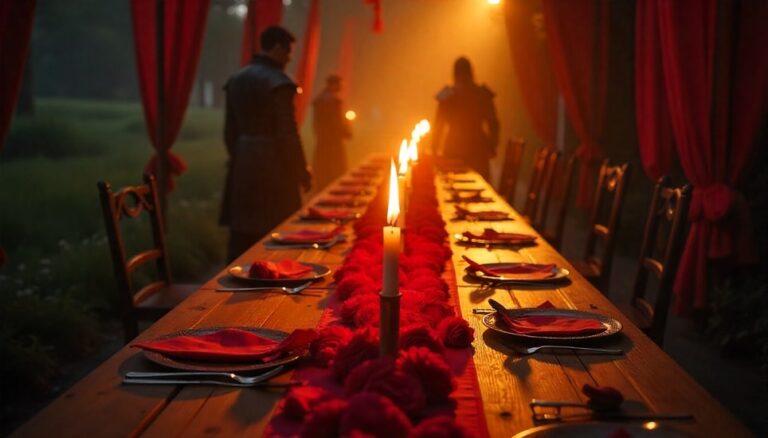
The anniversary of one of television’s most devastating moments prompted renewed global attention when fans and critics revisited the infamous massacre that forever altered the legacy of a cultural phenomenon. A decade after it first aired, the episode commonly known as the Red Wedding continues to dominate conversations about storytelling, audience trust, and the emotional power of serialized drama.
Originally broadcast as the penultimate chapter of the third season of a landmark fantasy series, the episode delivered an unprecedented narrative rupture. Major characters who had been positioned as moral centers and future leaders were abruptly and brutally eliminated, defying long-standing television conventions and reshaping audience expectations.
Ten years on, the impact remains undiminished. Streaming platforms continue to report spikes in viewership around the anniversary, social media fills with first-time reactions from new audiences, and industry professionals still reference the episode as a benchmark for bold creative risk.
Context and Build-Up to a Television Turning Point
In the years leading up to the episode’s broadcast, the series had steadily grown from a niche fantasy adaptation into a mainstream juggernaut. Its reputation rested on political intrigue, moral ambiguity, and a willingness to subvert traditional heroic narratives, but nothing prepared audiences for the scale of what was about to unfold.
The storyline leading to the massacre was carefully constructed across multiple episodes. Political alliances were formed out of necessity rather than trust, and vows were broken in ways that seemed survivable within conventional storytelling frameworks. Viewers were encouraged to believe that reconciliation, while fragile, was still possible.
This sense of cautious optimism was essential to the episode’s effectiveness. By positioning its central characters as newly married, strategically aligned, and on the verge of regaining power, the narrative lulled audiences into emotional investment before dismantling it with ruthless precision.
The Episode That Changed Audience Expectations
When the episode aired, it quickly became clear that television had crossed a threshold. The deliberate pacing of the first half, filled with ceremony and guarded celebration, contrasted violently with the sudden eruption of orchestrated betrayal.
What followed was not merely shocking violence but a profound narrative statement. The episode communicated that lineage, honor, and audience attachment offered no protection. Consequences were absolute, and the world depicted operated under a logic closer to historical power struggles than traditional fantasy.
This creative decision recalibrated how audiences approached long-form storytelling. Viewers learned to watch with heightened awareness, understanding that no character was safe and that emotional investment carried genuine risk.
Performances That Amplified the Trauma
The enduring power of the episode owes much to its performances. The actors portraying the doomed leaders delivered restrained, emotionally grounded portrayals that emphasized vulnerability rather than heroism. Their reactions conveyed disbelief and betrayal rather than defiant spectacle.
Equally critical were the performances of the antagonists, whose calculated calm underscored the premeditated nature of the violence. By avoiding overt villainy, the episode framed the massacre as a strategic decision rooted in political expediency.
This tonal restraint prevented the sequence from becoming gratuitous. Instead, it reinforced the sense that viewers were witnessing an inevitable consequence of choices made long before the first blade was drawn.
Cultural Reaction and Immediate Aftermath
The initial broadcast triggered an immediate and visceral response. Social media platforms were flooded with real-time reactions, many expressing disbelief, grief, and anger. For some viewers unfamiliar with the source material, the episode felt like a betrayal of narrative trust.
News outlets and entertainment programs quickly took notice, dedicating segments to analyzing the creative decision and its implications. The episode became a reference point not only within fan communities but also in broader discussions about storytelling ethics.
Rather than diminishing viewership, the controversy amplified interest. Ratings remained strong, and the series cemented its reputation as appointment television capable of generating genuine cultural moments.
Long-Term Influence on Television Storytelling
Over the following decade, the episode’s influence became increasingly apparent. Writers and showrunners across genres cited it as proof that audiences could handle, and even crave, radical narrative shifts.
The willingness to eliminate central characters inspired a wave of prestige dramas that embraced unpredictability. However, few managed to replicate the careful groundwork that made the moment resonate rather than alienate.
Industry retrospectives often highlight the episode as a reminder that shock alone is insufficient. Its success lay in its narrative logic, thematic consistency, and emotional honesty.
Reevaluation Through a Modern Lens
Ten years later, the episode is frequently reassessed in light of changing cultural conversations. Discussions now extend beyond shock value to examine themes of power, gender, and agency within the narrative.
Some critics have revisited the episode’s portrayal of violence, questioning its necessity while acknowledging its storytelling intent. Others emphasize its historical parallels, noting how real-world power struggles often conclude with sudden, devastating reversals.
This ongoing dialogue has kept the episode relevant, allowing new generations of viewers to engage with it critically rather than merely reactively.
Why the Episode Still Resonates
The lasting resonance of the episode stems from its emotional authenticity. The characters’ fates feel tragic because they are rooted in understandable human motivations, including pride, love, and desperation.
The episode also serves as a narrative hinge, transforming the series from a tale of contested inheritance into a meditation on survival in a morally indifferent world. Subsequent storylines draw their gravity from the loss experienced here.
For many viewers, revisiting the episode is less about reliving shock and more about appreciating the craftsmanship that made such an outcome feel both horrifying and inevitable.
The Red Wedding in Retrospect
A decade after its debut, the episode stands as a defining moment in television history. It demonstrated that serialized storytelling could wield emotional impact comparable to the most powerful moments in cinema or literature.
Its legacy persists not because it was brutal, but because it was honest within the rules of its world. The massacre was not a narrative stunt but a culmination of choices, alliances, and betrayals carefully established over time.
As audiences continue to discover and rediscover the series through streaming platforms, the episode remains a rite of passage, a moment that forever changes how viewers understand the story being told.
Conclusion
Ten years on, the Red Wedding remains an unparalleled example of narrative audacity executed with precision and purpose. It reshaped audience expectations, influenced an entire generation of storytellers, and secured its place as one of the most discussed episodes in television history. By honoring its internal logic and emotional truth, the episode transcended shock to become a lasting cultural touchstone, proving that when storytelling risks are grounded in character and consequence, their impact can endure for decades.