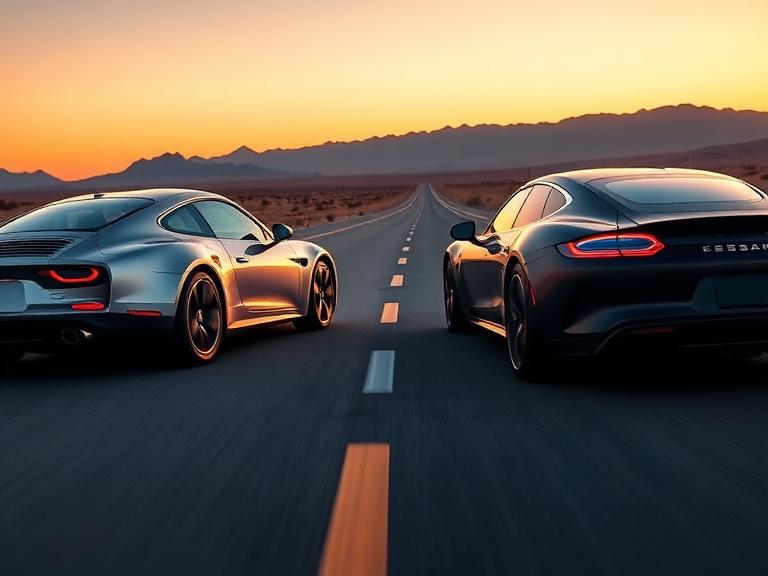
The world of high-performance driving stands at a critical juncture, defined by a thrilling yet complex convergence of technologies. The classic sports car ethos of lightweight agility and internal combustion roar now coexists with the silent, instantaneous torque of electric powertrains and the seamless boost of hybrid systems. For the discerning driver, this creates an unparalleled breadth of choice but also demands a more nuanced evaluation. It is no longer sufficient to compare zero-to-sixty times alone; the modern assessment must weigh driving purity against technological sophistication, emotional appeal against environmental consideration, and initial purchase price against long-term ownership costs. This analysis delves into the current state of the sports car, examining the vehicles that masterfully balance these competing demands to deliver a compelling and relevant driving experience.
The definition of a true sports car has expanded. While purists may cling to a specific formula, the market now rightfully includes everything from lightweight, manual-transmission roadsters to all-wheel-drive electric coupes that defy traditional physics. This diversification reflects shifting consumer expectations, where connectivity, daily usability, and even efficiency play significant roles alongside lap times. The key differentiator remains a singular focus on the driver’s connection to the road—a quality that can be achieved through analog feedback or digital precision. Our exploration categorizes these vehicles not by powertrain alone, but by their core mission and the experience they offer behind the wheel.
The Contemporary Contenders: A Spectrum of Experience
To provide clarity in a crowded field, we have grouped leading sports cars based on their philosophical approach to performance. This allows for meaningful comparison between vehicles that share a similar purpose, whether it’s accessible fun, technical excellence, or technological showcase.
The Driver’s Car Purebreds: Engagement Over Everything
This category is reserved for machines that prioritize the visceral, unfiltered connection between human and machine. They often forop extreme power or luxury in favor of balance, feedback, and controllability.
- Mazda MX-5 Miata: The unwavering champion of the analog driving experience. Its enduring recipe—a lightweight chassis, perfect weight distribution, a free-revving naturally aspirated engine, and a manual transmission—remains a beacon for purists. It offers a masterclass in momentum driving, where skill and finesse are rewarded over brute force, and its convertible top provides an immersive open-air experience unmatched in its price range.
- Subaru BRZ / Toyota GR86: These sibling coupes represent the modern interpretation of the affordable, rear-wheel-drive sports car. Their low center of gravity, precise steering, and balanced handling encourage exploration of the car’s limits. The focus is on driver involvement, with a cabin designed around the pilot and a powertrain that loves to be worked hard, proving that accessible performance need not be digitally mediated.
- Porsche 718 Cayman/Boxster (Base & GTS 4.0): The mid-engine benchmark. Even in its entry forms, the 718 delivers a telepathic driving experience with sublime chassis balance. The pinnacle is the GTS 4.0, whose naturally aspirated flat-six engine provides a linear power delivery and an evocative soundtrack that electrifies the senses. It is a vehicle engineered to flatter and challenge in equal measure, with build quality that justifies its premium positioning.
The Technological Powerhouses: Redefining Performance Limits
These models leverage advanced engineering—including forced induction, hybrid systems, and cutting-edge chassis dynamics—to achieve staggering performance figures while expanding the envelope of usability and capability.
- Chevrolet Corvette Stingray (C8): The shift to a mid-engine layout transformed the Corvette into a global supercar contender. Its naturally aspirated V8 delivers tremendous power, while the sophisticated chassis and available performance technologies make its immense capabilities accessible. It represents a seismic value proposition, offering a level of performance that was once the exclusive domain of exotic European marques.
- BMW M2 & M4: BMW’s M division continues to hone its formula of turbocharged inline-six power and rear-wheel-drive dynamics. The smaller M2 offers a rawer, more playful character, while the M4 provides devastating speed and technological sophistication. Both feature advanced differentials and driver-adjustable systems that allow the character to shift from comfortable cruiser to track-focused weapon.
- Nissan Z: A passionate homage to its heritage, the latest Z car combines retro styling with modern turbocharged power. It stands out for offering a standard manual transmission and a focus on analog controls in an increasingly digital world. It appeals to the enthusiast who values mechanical feel and traditional sports car proportions alongside contemporary performance.
The Electrified Vanguard: The New Frontier of Instant Response
This rapidly growing segment showcases the potential and the challenges of electric performance. These vehicles deliver instantaneous acceleration and novel packaging but must also address questions of weight, engagement, and energy replenishment.
- Porsche 718 Cayman/Boxster EV (Anticipated Models): The highly anticipated all-electric successors to the 718 series are tasked with a monumental challenge: retaining the model’s legendary handling DNA. By using the battery pack as a structural element to lower the center of gravity, Porsche aims to deliver a new kind of precision with zero tailpipe emissions, setting a crucial benchmark for the electric sports car.
- Performance EV Coupes (Emerging Class): The market is beginning to see the first dedicated electric sports cars from both established and new manufacturers. These vehicles often feature innovative multi-motor setups for torque vectoring, ultra-low centers of gravity, and acceleration that redefines expectations. Their development is critical to proving that electric powertrains can provide not just speed, but also driver engagement.
- Hybrid Performance Models: Serving as a bridge technology, hybrid sports cars pair internal combustion engines with electric motors to boost power, fill in torque gaps, and occasionally offer short electric-only range. These systems can enhance performance dramatically, but they also add complexity and weight, making their integration a delicate engineering balance.
Critical Ownership Metrics: Beyond the Brochure Specs
Choosing a sports car requires a pragmatic analysis of long-term costs and real-world performance. The sticker price is merely the opening chapter in the total cost of ownership story.
Understanding Real-World Efficiency
Fuel economy and energy consumption vary wildly based on driving style. While EPA estimates provide a baseline, spirited driving in any performance car will increase consumption significantly. The efficiency equation now has new variables.
- Efficiency Leaders (Combustion & Hybrid): Lightweight vehicles with smaller, turbocharged engines, like the Mazda MX-5 or Volkswagen Golf R, can achieve respectable highway mileage. Modern hybrid sports cars can surprisingly return reasonable fuel economy under gentle use, though their efficiency advantage often diminishes during aggressive driving.
- Performance-Oriented Powertrains: High-output turbocharged and large-displacement naturally aspirated engines, found in models like the Corvette or Nissan Z, prioritize power over efficiency. Owners should anticipate higher fuel costs, especially if the car is driven as intended.
- The Electric Consideration (MPGe & Range): For electric sports cars, the metric shifts to MPGe (Miles Per Gallon Equivalent) and total range. While “fueling” costs are lower, real-world range can be significantly impacted by aggressive driving, similar to how MPG drops in a gasoline car. Charging speed and infrastructure access become paramount considerations for usability.
Pricing, Value Retention, and Market Realities
The financial landscape for sports cars is dynamic, influenced by production volumes, market trends, and technological shifts. Understanding this context is key to a smart purchase.
- The Accessible Segment: Cars like the Toyota GR86 and Mazda MX-5 continue to offer the core sports car experience with a relatively low barrier to entry. Their strong enthusiast following often supports stable residual values.
- The Mid-Range Performance Tier: This competitive space includes the Nissan Z, base Porsche 718 models, and premium hot hatches. Here, buyers balance significant performance against features and brand cachet. Dealer markups on high-demand models can distort true market value.
- High-Performance & Technology Flagships: This range covers vehicles like the Chevrolet Corvette, upper-tier Porsche models, and advanced hybrids. These cars offer cutting-edge performance and technology, but their complex systems can impact long-term depreciation and maintenance costs.
- Depreciation Trends: Traditionally, sports cars from brands like Porsche and certain limited-run models have demonstrated strong value retention. The depreciation curve for new electric and hybrid sports cars is less established, as it is tied to battery technology advancement and market adoption.
Pros and Cons of Modern Sports Car Ownership
The decision to own a sports car is both emotional and practical. Weighing the following factors is essential.
- Pros: Unmatched driver engagement and emotional reward; potential for strong community connection with fellow enthusiasts; some models are appreciating or stable assets; advanced driver-assistance and infotainment features improve daily usability; the diversity of choice means there is a perfect car for nearly every preference.
- Cons: Higher operating costs (premium fuel, performance tires, insurance premiums); often compromised practicality for passengers and cargo; rapid technological advancement can lead to quicker obsolescence; complexity in newer hybrid/electric systems may lead to higher repair costs out of warranty; the driving experience in some highly digitalized models can feel isolated.
Pro Tips for the Informed Buyer
Navigating today’s sports car market requires a strategic approach grounded in research and self-awareness.
- Clarify Your Primary Use Case: Honestly assess whether this will be a dedicated weekend car, a daily driver, or a seasonal toy. This will immediately eliminate models that are too harsh or too compromised for your lifestyle.
- Prioritize the Test Drive: Schedule extended drives in your final contenders. Pay acute attention to seating position, visibility, control ergonomics, and how the car communicates with you at low speeds and high speeds. Does it engage you, or simply transport you quickly?
- Model the Total Cost of Ownership: Before committing, get detailed insurance quotes, research standard maintenance schedules and costs, and understand the replacement price for consumables like tires and brakes. For electric vehicles, investigate home charging installation costs and public charging network accessibility in your area.
- Seriously Consider Certified Pre-Owned (CPO): The CPO market is an excellent way to access higher-tier models like Porsches and BMW M cars with significant depreciation already absorbed, while still benefiting from a manufacturer-backed warranty. It is often the most financially intelligent entry point.
- Research the Enthusiast Ecosystem: Every model has an online community. Engage with these forums to learn about real-world reliability, common issues, and the true ownership experience beyond the polished marketing materials.
Frequently Asked Questions
Common questions reflect the uncertainties and excitements of the current sports car transition.
- Are manual transmission sports cars becoming obsolete? While their availability is shrinking, they are not obsolete. Enthusiast demand remains strong for certain iconic models like the Porsche 911 GT3, Toyota GR86, and Nissan Z. Manufacturers committed to the driver-car connection continue to offer them, often as a purist’s choice over a faster automatic.
- How practical is a modern sports car for daily use? Practicality has greatly improved. Many sports cars now offer advanced driver aids, comfortable suspension modes, and improved interior storage. Models with 2+2 seating or liftback designs, like the Chevrolet Corvette or Porsche 911, offer surprising utility. The primary limitation remains passenger capacity, not necessarily day-to-day livability.
- Is this a good time to buy an internal combustion sports car? For driving purists who value traditional engine character and engagement, the current offerings represent some of the most refined and capable internal combustion engines ever made. With the industry’s focus shifting, these may be seen as the pinnacle of a certain era, which could influence future collectability and value.
- What are the real concerns with electric sports cars? The main considerations are weight, sound (or lack thereof), and charging logistics. Engineers are battling the physics of heavy battery packs to maintain agility. The emotional aspect of engine sound is being addressed artificially by some, but it remains divisive. Finally, the ability to take spontaneous long trips depends entirely on charging network density and speed.
- How is the meaning of “handling” changing with new technologies? Handling is evolving from a purely mechanical art to a digital-mechanical synthesis. Advanced torque-vectoring systems (both electric and mechanical), adaptive suspensions managed by powerful computers, and traction control systems that are nearly imperceptible now allow cars to achieve cornering speeds and stability that were previously impossible. The challenge for engineers is to retain communicative feedback through these layers of technology.
Conclusion
The sports car universe is in a state of exhilarating flux, offering a richer and more diverse portfolio of performance vehicles than at any point in history. From the timeless, tactile joy of a lightweight roadster to the silent, devastating thrust of an electric coupe, the core promise of heightened driving experience remains intact, even as the methods to achieve it diverge. The most successful modern sports cars are those that understand this duality: they harness new technologies not as a replacement for feeling, but as a tool to enhance capability while preserving—or redefining—the essential connection between driver, machine, and road. The optimal choice is no longer a simple matter of ranking specifications, but a personal alignment of values, weighing the emotional resonance of an engine’s scream against the brilliance of instant torque, and the purity of analog control against the confidence of digital mastery. In this transformative era, the intelligent enthusiast is rewarded with unprecedented choice, where the soul of the sports car is not disappearing, but evolving into exciting and multifaceted new forms.