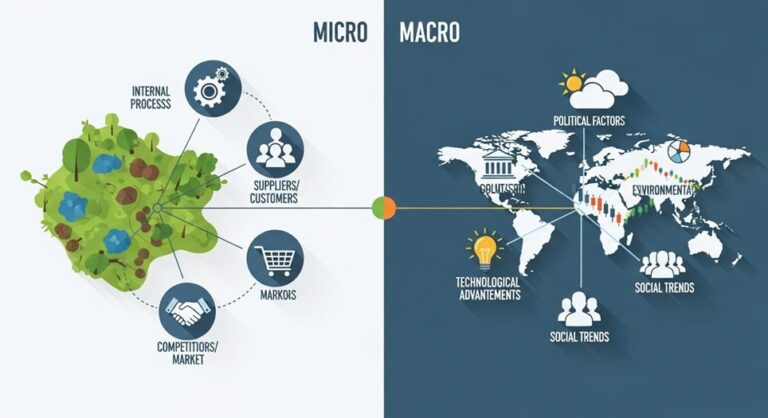
Business success in today’s dynamic marketplace requires a comprehensive understanding of the environmental forces that shape organizational performance. Every company operates within a complex ecosystem of internal and external factors that directly influence strategic decision-making, operational efficiency, and long-term sustainability. These forces are categorized into two distinct yet interconnected environments: the micro environment and the macro environment. While the micro environment encompasses immediate, controllable factors close to the organization, the macro environment consists of broader, uncontrollable external forces that affect entire industries and economies.
The distinction between these two environmental spheres is fundamental to developing effective business strategies. Organizations that master the art of analyzing and responding to both micro and macro environmental factors position themselves for competitive advantage, sustainable growth, and market resilience. This comprehensive understanding enables business leaders to anticipate changes, identify opportunities, mitigate risks, and make informed decisions that align with both their internal capabilities and external market realities.
The Micro Environment: Internal Forces Shaping Daily Operations
The micro environment represents the immediate operational sphere surrounding a business, consisting of factors and entities that directly influence day-to-day activities and tactical decisions. Unlike macro environmental factors, these elements are often within the organization’s sphere of influence and can be managed, controlled, or at least substantially influenced through strategic actions and relationship management. The micro environment is sometimes referred to as the task environment because it deals with the specific actors and forces that directly affect the company’s ability to serve its customers and achieve its objectives.
Understanding the micro environment is crucial because these factors have an immediate and direct impact on business performance. Changes in the micro environment can quickly translate into operational challenges or opportunities, requiring swift responses and adaptive strategies. Organizations that maintain close monitoring of their micro environmental factors can build stronger relationships with key stakeholders, respond proactively to competitive threats, and create value delivery systems that effectively meet customer needs.
Key Components of the Micro Environment
The micro environment consists of several critical components that work together to shape a company’s operational landscape. Each element plays a distinct role in determining organizational success and requires careful analysis and strategic management.
Customers represent the cornerstone of any business strategy and form the most vital component of the micro environment. Without customers, no organization can survive or prosper, making customer satisfaction and value creation paramount objectives. Businesses must continuously monitor customer behavior, preferences, expectations, and purchasing patterns to remain competitive and relevant. The modern marketplace has elevated customer experience to unprecedented importance, with consumers expecting personalized interactions, seamless transactions, and consistent value across all touchpoints. Organizations segment their customer base using demographic, geographic, psychographic, and behavioral criteria to develop targeted marketing strategies and customized offerings. Customer loyalty programs, feedback mechanisms, and satisfaction surveys have become essential tools for maintaining strong customer relationships and ensuring long-term business viability.
Suppliers constitute another critical micro environmental factor, providing the raw materials, components, services, and resources necessary for production and operations. The strength and reliability of supplier relationships directly impact production schedules, product quality, cost structures, and overall business efficiency. Organizations depend on suppliers for timely delivery of quality inputs at competitive prices, making supplier management a strategic priority. Supply chain disruptions, as evidenced during global crises, can severely impact business continuity and customer satisfaction. Forward-thinking companies develop strong partnerships with their suppliers, often implementing collaborative planning systems, quality assurance programs, and long-term contracts to ensure supply chain stability. Supplier diversification strategies help mitigate risks associated with over-dependence on single sources, while supplier evaluation systems ensure consistent performance and alignment with organizational standards and values.
Competitors represent one of the most dynamic aspects of the micro environment, directly influencing strategic positioning, pricing strategies, product development, and market share. Competition exists on multiple levels, including direct competitors offering similar products or services, indirect competitors satisfying the same customer needs through alternative solutions, and potential competitors who may enter the market. Comprehensive competitive analysis examines competitors’ strengths, weaknesses, market positions, strategies, pricing models, and customer relationships. This intelligence enables organizations to differentiate themselves, identify market gaps, anticipate competitive moves, and develop strategies that create sustainable competitive advantages. Market leaders understand that competition drives innovation, improves efficiency, and ultimately benefits consumers through better products, services, and value propositions.
Marketing Intermediaries serve as vital links between manufacturers and end consumers, facilitating product distribution, promotion, and sales. This category includes wholesalers, retailers, distributors, agents, logistics companies, and marketing service agencies. These intermediaries play essential roles in market coverage, product placement, customer access, and brand visibility. Physical distribution firms such as shipping companies and warehousing operations ensure products reach customers efficiently and cost-effectively. Financial intermediaries, including banks and payment processors, facilitate transactions and provide credit facilities. Marketing service agencies offer specialized expertise in advertising, market research, and promotional activities. The rise of e-commerce has transformed traditional intermediary relationships, creating new distribution channels and business models while maintaining the fundamental importance of effective partnership management.
Publics encompass various stakeholder groups that have actual or potential interest in or impact on the organization’s ability to achieve its objectives. These groups include financial publics such as banks and investors, media publics that influence public opinion, government publics that regulate and oversee business activities, citizen-action groups that advocate for specific causes, local communities surrounding business operations, internal publics consisting of employees and management, and the general public. Each public group can significantly influence organizational reputation, operations, and success. Effective public relations strategies, transparent communication, corporate social responsibility initiatives, and stakeholder engagement programs help organizations build positive relationships with various publics and maintain their social license to operate.
Managing Micro Environmental Factors for Competitive Advantage
Successful management of micro environmental factors requires systematic monitoring, analysis, and strategic response mechanisms. Organizations employ various tools and techniques to understand and influence their immediate business environment. Customer relationship management systems track customer interactions and preferences, enabling personalized service and targeted marketing. Supplier relationship management programs foster collaboration, ensure quality, and optimize supply chain performance. Competitive intelligence systems gather and analyze information about rival firms, market trends, and industry developments. Distribution channel management strategies ensure product availability and market penetration. Public relations and stakeholder engagement initiatives build trust, manage reputation, and maintain positive relationships with diverse stakeholder groups.
The interconnected nature of micro environmental factors means that changes in one area often trigger responses in others. For example, a new competitor entering the market might affect supplier negotiations, require new intermediary relationships, change customer expectations, and influence various publics’ perceptions. This interconnectedness necessitates integrated strategic approaches that consider all micro environmental components simultaneously, creating synergies rather than conflicts between different environmental elements.
The Macro Environment: External Forces Shaping Industry Landscapes
The macro environment encompasses the broader external forces that influence not only individual businesses but entire industries and economies. Unlike micro environmental factors, these forces are generally beyond the control of any single organization and must be analyzed, anticipated, and adapted to through strategic planning and organizational flexibility. The macro environment shapes the context in which businesses operate, affecting demand and supply conditions, cost structures, regulatory obligations, innovation pathways, and consumer attitudes across entire markets.
Macro environmental analysis reveals large-scale trends and developments that can create significant opportunities or pose substantial threats to business operations. These external forces operate at regional, national, or global levels, and their impacts often unfold over extended timeframes, requiring long-term strategic thinking and scenario planning. Organizations that effectively monitor and respond to macro environmental changes position themselves to capitalize on emerging opportunities while mitigating potential risks before they materialize into serious challenges.
PESTEL Framework: Analyzing Macro Environmental Factors
The PESTEL framework provides a structured approach to analyzing macro environmental factors by examining six key dimensions that shape the external business landscape. This analytical tool helps organizations conduct comprehensive environmental scans and develop strategies aligned with external realities.
Political Factors encompass government policies, political stability, leadership changes, regulatory frameworks, foreign trade policies, taxation systems, and government intervention in the economy. Political decisions can significantly impact business operations through changes in trade agreements, tariff structures, labor laws, environmental regulations, and industry-specific policies. Election cycles and shifts in political ideologies may lead to regulatory changes that affect business costs, market access, and competitive dynamics. Organizations operating internationally must navigate diverse political systems and geopolitical tensions that influence cross-border operations, supply chains, and market expansion strategies. Political risk assessment and government relations programs help businesses anticipate policy changes and maintain productive relationships with regulatory authorities.
Economic Factors influence consumer purchasing power, business investment decisions, and overall market conditions. Key economic indicators include gross domestic product growth rates, inflation levels, interest rates, unemployment rates, exchange rate fluctuations, disposable income levels, and consumer confidence indices. Economic conditions determine the demand for products and services, affecting sales volumes, pricing strategies, and profitability. Recession periods typically reduce consumer spending on discretionary items, while economic expansion creates opportunities for business growth and market expansion. Interest rates affect borrowing costs for both businesses and consumers, influencing investment decisions and purchasing behavior. Exchange rate volatility impacts international trade, import costs, and export competitiveness. Organizations must continuously monitor economic trends and adjust their strategies to align with prevailing economic conditions, building financial resilience to weather economic uncertainties.
Social and Cultural Factors reflect demographic characteristics, lifestyle preferences, cultural values, attitudes, beliefs, and social trends that shape consumer behavior and market demand. Demographics such as population size, age distribution, income levels, education, occupation, and geographic distribution directly influence market potential and customer segmentation strategies. Cultural factors including language, religion, traditions, and social norms affect product acceptance, marketing messages, and business practices. Contemporary social trends toward health consciousness, sustainability, digital connectivity, work-life balance, and social responsibility create new market opportunities while rendering some traditional products and services obsolete. Organizations must demonstrate cultural sensitivity, adapt their offerings to local preferences, and align their values with evolving social expectations to maintain market relevance and customer loyalty.
Technological Factors encompass innovation, automation, digitalization, research and development activities, technology adoption rates, and technological infrastructure. Technological advancement drives industry disruption, creates new business models, improves operational efficiency, and transforms customer experiences. Emerging technologies such as artificial intelligence, machine learning, blockchain, Internet of Things, and cloud computing are reshaping industries and creating both opportunities and threats for established businesses. Technology affects production processes, distribution channels, marketing approaches, and customer service delivery. Organizations must invest in technological capabilities, foster innovation cultures, and remain agile in adopting relevant technologies to maintain competitive positions. Technology also raises considerations around data security, privacy protection, and digital ethics that require careful management and compliance with evolving regulatory standards.
Environmental Factors relate to ecological concerns, natural resource availability, climate change impacts, environmental regulations, sustainability requirements, and corporate environmental responsibility. Growing awareness of environmental issues has elevated sustainability from a peripheral concern to a central business imperative. Organizations face increasing pressure from regulators, consumers, investors, and advocacy groups to reduce carbon footprints, minimize waste, adopt circular economy principles, and demonstrate environmental stewardship. Climate change creates physical risks through extreme weather events, resource scarcity, and ecosystem disruption, while also creating transition risks through policy changes and shifting consumer preferences. Environmental factors influence supply chain management, product design, manufacturing processes, and corporate reputation. Companies that proactively address environmental challenges through green innovation, sustainable practices, and transparent reporting can gain competitive advantages and enhance brand value.
Legal Factors include legislation, regulations, standards, and legal frameworks governing business operations. Legal requirements span multiple areas including consumer protection, employment law, health and safety regulations, antitrust legislation, intellectual property rights, data protection, advertising standards, and industry-specific regulations. Compliance with legal requirements is not optional but mandatory, with violations potentially resulting in fines, legal action, operational restrictions, and reputational damage. Legal frameworks vary significantly across jurisdictions, creating complexity for international businesses that must navigate diverse regulatory environments. Organizations require robust compliance programs, legal expertise, and monitoring systems to ensure adherence to applicable laws and regulations. Changes in legal frameworks, such as new privacy regulations or environmental standards, necessitate operational adjustments and strategic adaptations to maintain legal compliance while pursuing business objectives.
Strategic Tools for Environmental Analysis
Organizations employ various analytical frameworks and tools to systematically evaluate both micro and macro environmental factors and translate insights into actionable strategies. These tools provide structured approaches to environmental scanning, helping businesses identify critical factors, assess their implications, and develop appropriate responses.
SWOT Analysis: Bridging Internal and External Environments
SWOT analysis stands as one of the most widely used strategic planning tools, examining four key dimensions that shape organizational positioning. Strengths represent internal capabilities and resources that provide competitive advantages, such as strong brand reputation, proprietary technology, skilled workforce, efficient operations, financial resources, or unique products and services. Weaknesses identify internal limitations or areas requiring improvement, including outdated technology, skill gaps, high costs, limited market presence, or operational inefficiencies. Opportunities highlight external circumstances that organizations can exploit for growth and competitive advantage, such as emerging markets, favorable regulatory changes, technological innovations, changing consumer preferences, or competitor weaknesses. Threats represent external factors that could negatively impact organizational performance, including intense competition, economic downturns, regulatory challenges, technological disruption, or changing market conditions.
The power of SWOT analysis lies in its ability to connect internal capabilities with external realities, enabling organizations to develop strategies that leverage strengths to capitalize on opportunities, address weaknesses that leave the organization vulnerable to threats, use strengths to mitigate threats, and minimize weaknesses while avoiding opportunities that require capabilities the organization lacks. The framework’s simplicity and flexibility make it applicable across various contexts, from overall corporate strategy to specific functional areas or individual projects. However, effective SWOT analysis requires honest assessment, comprehensive data gathering, stakeholder involvement, and translation of findings into concrete strategic actions rather than mere cataloging of factors.
Combining Analytical Frameworks for Comprehensive Insights
While individual analytical tools provide valuable insights, combining multiple frameworks creates a more complete understanding of organizational environments and strategic options. PESTEL analysis identifies macro environmental factors, SWOT analysis connects internal capabilities with external realities, Porter’s Five Forces examines competitive dynamics, and scenario planning explores alternative future possibilities. Using these tools together provides multiple perspectives on strategic challenges and opportunities, reduces blind spots in analysis, validates findings across different frameworks, and supports more robust strategic decision-making. Organizations that integrate insights from various analytical approaches develop more comprehensive strategies that account for the complexity and interconnectedness of business environments.
Distinguishing Between Micro and Macro Environments
Understanding the fundamental differences between micro and macro environments is essential for appropriate analysis and strategic response. These distinctions guide how organizations approach environmental scanning, allocate analytical resources, and develop strategic initiatives.
Scope and Proximity differ significantly between the two environments. The micro environment is organization-specific, dealing with immediate surroundings and direct relationships. Factors such as specific customers, particular suppliers, identified competitors, and chosen intermediaries are unique to each organization. The macro environment, conversely, operates at industry or economy-wide levels, encompassing forces that affect multiple organizations simultaneously. Economic conditions, political developments, technological trends, and social changes impact entire sectors rather than individual companies.
Control and Influence represent another crucial distinction. Micro environmental factors are often controllable or at least influenceable through organizational actions. Companies can negotiate with suppliers, compete for customers, differentiate from competitors, and manage relationships with intermediaries and publics. These factors respond to organizational strategies and management decisions. Macro environmental factors, however, are generally beyond organizational control. Individual companies cannot change economic policies, alter social trends, stop technological advancement, or modify regulatory frameworks. Organizations must adapt to macro environmental forces rather than attempting to control them.
Time Horizons and Impact Patterns also differ between environments. Micro environmental changes can have immediate effects on operations. A supplier disruption, competitive price change, or customer complaint requires swift response. Macro environmental shifts typically unfold over longer timeframes, though their eventual impacts may be profound. Demographic trends, technological revolutions, and regulatory reforms develop gradually but reshape entire industries over time. This distinction influences planning horizons and response strategies, with micro environmental management often focusing on tactical adjustments while macro environmental analysis informs long-term strategic planning.
Analysis Methods and Tools vary according to environmental characteristics. Micro environmental analysis often involves relationship management, competitive intelligence, customer research, and operational monitoring. Tools include customer satisfaction surveys, supplier audits, competitive benchmarking, and market share analysis. Macro environmental analysis employs broader scanning techniques, including trend analysis, scenario planning, expert consultation, and statistical modeling. PESTEL frameworks, economic forecasting, demographic studies, and technology foresight methods support macro environmental understanding.
Integrating Micro and Macro Environmental Analysis
While distinct in nature, micro and macro environments are deeply interconnected, and effective strategy development requires integrated analysis that considers both dimensions simultaneously. Macro environmental forces shape the context in which micro environmental interactions occur, while micro environmental realities determine how macro trends manifest at the organizational level.
Economic downturns represent macro environmental factors that affect consumer purchasing power, investment availability, and market demand. These broad conditions then influence micro environmental dynamics such as customer buying behavior, supplier pricing, competitive intensity, and intermediary relationships. Organizations must understand these connections to develop coherent strategies that address both environmental levels appropriately. Similarly, technological advancement at the macro level creates opportunities and threats that play out through specific competitive dynamics, customer expectations, and supplier capabilities at the micro level.
Successful organizations develop environmental analysis processes that systematically examine both environments and identify critical linkages between them. This integrated approach involves conducting regular environmental scans using appropriate tools for each environmental level, identifying key factors and trends in both environments, analyzing connections and interactions between micro and macro factors, assessing combined implications for organizational strategy, developing responses that address both environmental dimensions, and monitoring implementation effectiveness while continuing environmental surveillance.
Strategic Responses to Environmental Factors
Environmental analysis provides the foundation for strategic decision-making, but value comes from translating insights into effective actions. Organizations must develop systematic approaches to responding to environmental factors, with response strategies varying according to factor type and organizational capabilities.
Adapting to Macro Environmental Forces
Since macro environmental factors are largely uncontrollable, organizational responses focus on adaptation, anticipation, and positioning. Proactive monitoring systems track macro environmental trends through regular environmental scanning, expert consultation, scenario planning, and trend analysis. Early warning indicators help organizations anticipate changes before they fully manifest, providing time for strategic adjustment. Strategic positioning aligns organizational strategies with favorable macro trends while building resilience against unfavorable developments. This might involve diversifying into markets less affected by particular macro trends, developing capabilities relevant to emerging technological or social developments, or restructuring operations to accommodate regulatory changes.
Flexibility and agility become critical organizational capabilities in responding to macro environmental uncertainty. Rigid strategies and inflexible operations leave organizations vulnerable to environmental shifts. Building adaptive capacity through modular organizational structures, diverse capability portfolios, scenario-based planning, and cultural emphasis on learning and adaptation enables effective response to macro environmental changes. Organizations might also engage in advocacy and coalition-building to influence regulatory developments or industry standards, though recognizing the limits of such influence compared to adaptation strategies.
Managing Micro Environmental Factors
Micro environmental factors allow for more direct management and influence, though they still require strategic attention and systematic approaches. Relationship management forms the core of micro environmental strategy, involving customer relationship management programs, supplier development initiatives, competitive positioning strategies, intermediary partnership management, and stakeholder engagement activities. Strong relationships with micro environmental actors create mutual value, build loyalty, enhance collaboration, and provide competitive advantages.
Differentiation strategies help organizations stand out in their immediate competitive environment through unique value propositions, superior customer service, innovative products or services, brand building, or operational excellence. Effective differentiation creates customer preference, justifies premium pricing, and builds barriers to competition. Resource allocation decisions must consider micro environmental priorities, ensuring adequate investment in areas such as customer acquisition and retention, supplier relationship management, competitive intelligence and response capabilities, distribution channel development, and reputation management.
Building Environmental Awareness Throughout Organizations
Effective environmental analysis and response require organizational capabilities that extend beyond strategic planning departments. Environmental awareness must permeate organizational culture, decision-making processes, and operational activities. This requires leadership commitment to environmental scanning and strategic thinking, integration of environmental considerations into decision processes across all levels, training and development programs that build analytical skills, information systems that collect and disseminate environmental intelligence, cross-functional collaboration that brings diverse perspectives to environmental analysis, and regular review and updating of environmental assessments and strategic responses.
Organizations should establish formal processes for environmental scanning and analysis, including designated responsibility for monitoring specific environmental factors, regular reporting and discussion of environmental developments, systematic evaluation of strategic implications, and mechanisms for translating insights into action plans. Creating forums for strategic dialogue about environmental factors encourages organizational learning, challenges assumptions, identifies emerging issues, and builds consensus around strategic priorities.
Case Applications: Environmental Analysis in Practice
Examining how organizations apply environmental analysis in real-world contexts illustrates the practical value and challenges of these approaches. Successful companies continuously scan their environments, identify critical factors, and adapt strategies accordingly.
The retail industry provides compelling examples of environmental analysis importance. E-commerce giants recognized early the technological trend toward online shopping, built capabilities in digital platforms and logistics, and capitalized on changing consumer preferences for convenience and selection. Traditional retailers that failed to adapt to these macro environmental changes lost market share and relevance. At the micro environmental level, successful retailers build strong supplier relationships to ensure product quality and availability, differentiate through customer service and unique offerings, and manage complex distribution networks involving multiple intermediaries.
The automotive industry demonstrates how both macro and micro environmental factors reshape competitive landscapes. Macro environmental forces including environmental regulations, technological advancement in electric and autonomous vehicles, changing social attitudes toward sustainability and car ownership, and economic factors affecting vehicle affordability have transformed industry dynamics. Manufacturers respond through strategic investments in new technologies, partnerships and acquisitions to build capabilities, regulatory compliance programs, and market repositioning. At the micro level, intense competition drives continuous innovation, supplier relationships become critical for accessing new technologies, and customer preferences increasingly emphasize digital experiences and environmental performance.
Future Considerations in Environmental Analysis
The business environment continues evolving, presenting new challenges and opportunities for environmental analysis and strategic response. Several trends are reshaping how organizations conduct environmental analysis and develop strategies.
Increasing complexity and interconnection characterize modern business environments. Globalization links markets, supply chains, and competitive dynamics across borders, meaning that developments in one region rapidly affect others. Digital technologies connect businesses, customers, and suppliers in real-time networks where information flows quickly and expectations for responsiveness increase. These interconnections make environmental analysis more challenging but also more critical, as organizations must monitor broader ranges of factors and understand complex relationships between them.
The pace of environmental change appears to be accelerating across multiple dimensions. Technological innovation cycles shorten, regulatory frameworks evolve rapidly in response to emerging issues, consumer preferences shift quickly influenced by social media and digital information, and competitive landscapes transform through disruption and industry convergence. This acceleration demands more frequent environmental scanning, greater organizational agility, and strategies that balance efficiency with flexibility.
Sustainability and social responsibility have moved from peripheral concerns to central strategic considerations. Environmental factors increasingly influence consumer choices, regulatory requirements, investor decisions, and employee attraction and retention. Organizations face growing expectations to address social issues including diversity and inclusion, fair labor practices, community impact, and ethical business conduct. These expectations reshape competitive advantages and require integration of environmental and social considerations into core strategies rather than treating them as separate corporate social responsibility programs.
Conclusion
Understanding and effectively responding to micro and macro environmental factors represents a fundamental requirement for business success in contemporary markets. The micro environment encompasses immediate, often influenceable factors including customers, suppliers, competitors, intermediaries, and publics that directly affect daily operations and tactical decisions. The macro environment consists of broader, generally uncontrollable forces including political, economic, social, technological, environmental, and legal factors that shape industry landscapes and long-term strategic contexts.
Successful organizations develop systematic approaches to environmental analysis using tools such as SWOT analysis for connecting internal capabilities with external realities and PESTEL frameworks for examining macro environmental factors. They recognize the distinctions between micro and macro environments while appreciating their interconnections and combined influence on strategic options. Environmental analysis translates into strategic value through adaptation strategies that position organizations favorably relative to macro trends, relationship management approaches that optimize micro environmental interactions, and integrated strategies that address both environmental dimensions simultaneously.
As business environments continue evolving in complexity, pace, and interconnection, environmental analysis capabilities become increasingly critical competitive advantages. Organizations that excel at environmental scanning, strategic thinking, and adaptive response position themselves to anticipate changes, identify opportunities, mitigate risks, and achieve sustainable success. The discipline of environmental analysis provides the foundation for strategic decision-making that aligns organizational capabilities with external realities and positions businesses for long-term prosperity in dynamic, uncertain markets. By maintaining vigilance toward both micro and macro environmental factors, organizations can navigate complexity, capitalize on opportunities, and build resilience against threats in an ever-changing business landscape.