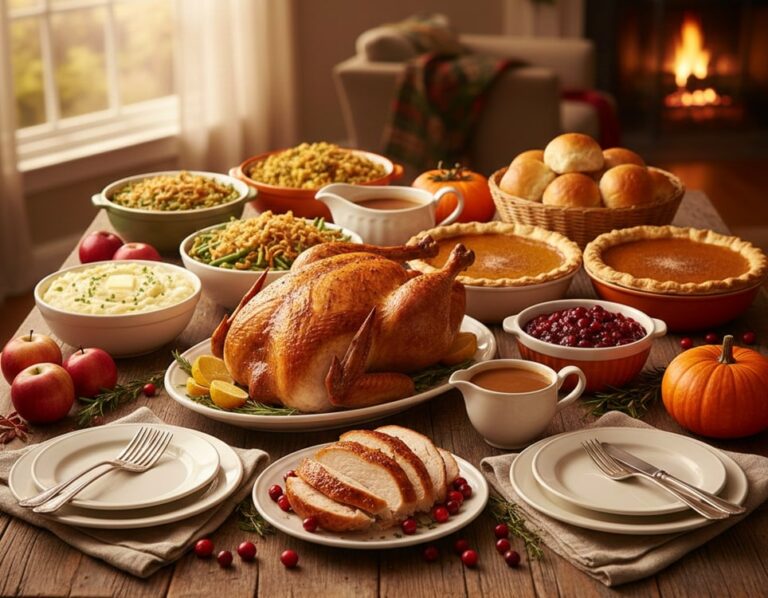
The cost of hosting a major holiday like Thanksgiving has become a central concern for consumers navigating fluctuating food prices. As inflation and supply chain volatility impact grocery budgets, the promise of a complete, traditional holiday meal at a deeply discounted rate captures significant public attention. For many years, the cost of the average Thanksgiving feast for a family of ten has hovered near or above the $60 mark, according to annual surveys. However, in an effort to provide relief and showcase their commitment to price leadership, discount retailers like ALDI have introduced curated meal promotions designed to drastically undercut these market averages.
The retailer’s budget-focused Thanksgiving meal, often promoted in the low-$40 range, has set a new benchmark for affordability. This specific promotion, engineered to feed a gathering of ten guests with all the traditional fixings, positions ALDI as a critical player in the annual cost comparison wars among grocers. This is not simply a discount; it is a strategic response to consumer demand for unwavering value during a season defined by heightened expenditure. For the host focused on financial prudence, understanding the mechanics of this value proposition is essential.
Deciphering the $40 Aldi Meal: An Unprecedented Value
The concept behind ALDI’s Thanksgiving offering is straightforward yet powerful: provide the foundational ingredients for a full, traditional meal at an advertised price point that is significantly lower than the national average. This price challenge is often framed as a “basket” or “bundle,” emphasizing that the ingredients are sold individually and marked for easy identification on the shelf, removing the complexity of coupons or minimum purchase requirements often associated with competitors. The price point, which has been cited in recent years as low as $40 for a meal designed for ten people, calculates out to just $4.00 per person—a figure nearly impossible to achieve using standard shopping methods at conventional grocery stores.
This achievement is largely due to ALDI’s business model, which heavily relies on private label goods and efficient operations to minimize overhead. By streamlining their inventory and focusing on high-quality store brands, the retailer is able to pass substantial savings directly to the consumer. This strategy is most effective during high-stakes holidays, allowing them to dramatically drop the price of staple items like turkey, potatoes, and canned goods. This approach not only aids budget-conscious families but also serves to anchor the retailer’s brand identity as the champion of low prices.
The Components of the Aldi Thanksgiving Basket
To qualify as a “traditional” Thanksgiving meal, the basket must include the key components that define the holiday table. ALDI’s publicized list typically comprises approximately 21 to 25 essential ingredients required to assemble the feast. This detailed inventory ensures hosts have the necessary raw materials for the turkey and nine popular side dishes. The comprehensiveness of the list is a major selling point, providing a sense of planning completion for the often-daunting holiday meal preparation.
The menu is intentionally classic, avoiding expensive gourmet ingredients in favor of universally accepted, affordable staples. It includes:
- The Main Protein: Whole Turkey. This is the cornerstone of the meal, usually a 14-pound frozen bird (like a Jennie-O or Butterball in some markets) selected to comfortably serve ten guests. The low price of the turkey is often the major loss-leader that drives shoppers into the store, anticipating additional purchases once inside.
- Starches and Fillers: Potatoes and Stuffing. The meal includes key ingredients for mashed potatoes (often a large 10-pound bag of Russet potatoes) and stuffing (typically two boxes of chicken or cornbread stuffing mix). These items are cost-effective and critical for satisfying a large crowd.
- Casserole Bases: Green Beans and Cream of Mushroom Soup. The essential ingredients for the classic green bean casserole are included: two cans of cut green beans, condensed cream of mushroom soup, and French fried onions. These components are shelf-stable and form the basis of a universally recognized side dish.
- Sweet Sides: Sweet Potatoes and Marshmallows. Ingredients for sweet potato casserole are also part of the bundle, including a bag of sweet potatoes and miniature marshmallows. This adds a crucial element of variety to the side dishes and caters to different regional preferences.
- Baking Essentials: Pie Crust and Canned Pumpkin. Dessert is covered with a pie crust and 100% pure canned pumpkin, allowing the host to quickly prepare the iconic pumpkin pie.
- Condiments and Liquid Bases: Gravy Mix and Broth. Multiple packages of brown gravy mix and chicken broth are included for preparing the turkey, seasoning the stuffing, and creating the necessary sauce accompaniments.
- Miscellaneous Staples: Rolls and Dairy. A package of Hawaiian-style sweet rolls or similar dinner rolls is included, along with evaporated milk (used in pies or mashed potatoes), celery, onions, and basic poultry spices and herbs necessary for seasoning the turkey.
The curated list provides a roadmap for a complete, traditional holiday table, ensuring that the host has all the primary ingredients to avoid last-minute, expensive trips to a different grocery store.
A Factual Look at Meal Composition and Serving Sizes
While the $40 price tag is incredibly appealing, a crucial part of the keyword research and consumer interest focuses on the practical execution: can this amount of food truly feed ten people generously? Consumer reviews and independent cooking tests often address this query, highlighting that the advertised quantity is generally sufficient for a family-style meal, but may require minor supplemental purchases for specific preferences or larger appetites. The key distinction lies between the definition of a serving size for nutritional tracking versus a standard holiday portion.
The assumption of ten servings is based on standard culinary guidelines for holiday feasts, which account for a variety of dishes. In a typical Thanksgiving setting, guests sample smaller portions of many different items rather than a single, large helping of one dish. Therefore, the total volume of food across the 21 items is designed to collectively satisfy ten adults. However, hosts must be mindful of recipes, as some foundational ingredients like butter, eggs, and specific seasonings (such as brown sugar for the crumble or pie spice) are often considered pantry staples and may not be explicitly included in the base list, potentially adding $5 to $10 to the total cost. Savvy hosts often already have these items on hand, maintaining the integrity of the core budget.
The Turkey Question: Sizing Up the Main Course
The 14-pound frozen turkey is the focal point of the meal and often the largest component of the cost. The standard recommendation for turkey serving size is approximately 1 to 1.5 pounds per person. A 14-pound bird, therefore, is ideally suited to serve between 9 and 14 people, placing it comfortably within the advertised range of ten servings while accounting for bones and waste. The quality of the turkey, often being a national brand like Butterball, reassures consumers about the standard of the main course, despite the deep discount.
For the budget host, the turkey itself is frequently a “loss leader” for the grocery store. Retailers strategically price turkeys extremely low—sometimes below their wholesale cost—to ensure shoppers select their store for the bulk of their holiday purchasing. This means that even if a host decides to skip the rest of the ALDI meal kit and only purchase the turkey, they are likely receiving one of the best available prices on the market. Proper thawing and preparation are critical to maximizing the value of this large protein. A 14-pound turkey requires at least three full days of thawing in a refrigerator (approximately 24 hours per 5 pounds), a planning detail essential for first-time or budget hosts.
The Essential Sides: Pantry Staples and Fresh Produce
The nine sides included in the ALDI bundle rely heavily on private label canned goods and mixes, which are the engine of cost-effectiveness. The use of canned green beans, condensed soups, and boxed stuffing mix dramatically cuts down on prep time and material cost compared to preparing every item from scratch. While this approach is budget-friendly, hosts can enhance the quality and flavor of these staples with minor, low-cost additions. For instance, sautéing a small amount of onion and celery (included in the bundle) before adding the stuffing mix can elevate its flavor profile.
Similarly, the inclusion of whole, fresh vegetables—like the 10-pound bag of Russet potatoes and sweet potatoes—ensures that the meal is grounded in quality, unprocessed ingredients. This combination of budget-friendly, pre-packaged convenience and necessary fresh produce strikes an effective balance between cost control and taste expectation. For the mashed potatoes, using the evaporated milk (included) instead of fresh heavy cream can maintain a creamy texture while adhering strictly to the ingredients in the budget list, demonstrating the careful selection of items designed to maximize both cost savings and cooking function.
Aldi vs. The Competition: Budget Grocery Store Showdown
The success of ALDI’s budget meal is not simply about its low price, but how that price compares to the increasingly aggressive offerings from its competitors. The competition for the budget-conscious holiday host is fierce, involving major national chains, big-box retailers, and regional discount stores. Understanding this landscape is key to realizing the full potential of savings.
Comparing the Big Box Retailers: Walmart and Target
Both Walmart and Target actively compete in the Thanksgiving dinner segment by offering similar “baskets” or curated shopping lists at heavily discounted prices. Historically, Walmart has been ALDI’s closest competitor in price leadership, often aiming for a meal that serves 10 for approximately $5 to $7 per person. Recent Walmart promotions have offered a curated meal basket for around $40, aligning precisely with ALDI’s aggressive pricing strategy and intensifying the rivalry. Walmart relies on its massive scale and its in-house Great Value brand to achieve these prices, often promoting specific national brands (like Butterball) as loss leaders to match or beat ALDI’s offer.
Target, typically catering to a slightly smaller gathering, has often positioned its holiday bundles for parties of four to five people, offering low upfront costs of around $20. While their per-person cost might sometimes be comparable to the larger bundles, their focus is on the smaller host or family unit. The competition between these three retailers—ALDI, Walmart, and Target—is highly beneficial for the consumer, ensuring that price floors are established across the country, making the overall cost of the holiday meal more manageable for the majority of families.
Warehouse Clubs and Regional Deals (Costco, Lidl, Sam’s Club)
Beyond the primary budget chains, other retailers offer distinct value propositions. Warehouse clubs like Costco and Sam’s Club typically cater to hosts seeking convenience over scratch cooking, or those hosting much larger gatherings. Their offerings usually include ready-to-heat or fully prepared turkeys, mashed potatoes, and sides. While these options are significantly more expensive—often ranging from $100 to $200 for a prepared meal—they save immense amounts of time and labor, making them a value-add for time-constrained hosts. The focus here shifts from raw ingredient cost to time-savings value.
Regional competitors, especially those with similar German discount origins like Lidl, often offer the deepest cuts. Lidl has sometimes beaten ALDI’s per-person price, offering a complete holiday meal for even less, particularly when utilizing their loyalty programs to secure deeply discounted turkey prices. This means the host who is truly committed to saving money should compare all local circulars, but the ALDI $40 meal serves as the reliable, easily accessible benchmark that requires no loyalty card or extensive coupon clipping to access.
Advanced Budget Strategies for the Holiday Host
While purchasing a curated meal kit from a retailer like ALDI is the fastest way to save money, achieving true mastery over the budget feast requires adopting several advanced strategies that go beyond the grocery basket. These involve smart menu engineering, timing, and strategic ingredient substitution.
Menu Engineering: Limiting the Side Dish Creep
One of the most common causes of budget overruns is the phenomenon known as “side dish creep,” where the host feels compelled to add more and more dishes to an already packed menu. While the ALDI basket provides nine sides, many hosts are tempted to add specialty items, often resulting in significant food waste and unnecessary cost. A critical strategy for budget mastery is to limit the total number of dishes served. Studies show that guests often appreciate quality over quantity; a beautifully executed turkey with four to five well-loved sides is superior to a dozen rushed or mediocre dishes.
To implement this, hosts should conduct a simple family survey to identify the three to four “must-have” sides and eliminate the rest. By focusing resources (time, money, and labor) on fewer, higher-quality dishes, the host can allocate money saved from two eliminated side dishes toward better wine or more specialized spices for the remaining favorites. This controlled approach prevents both financial strain and kitchen overwhelm.
Timing and Substitution: The Smart Shopper’s Toolkit
Effective holiday budgeting begins weeks before the actual event. Prices for non-perishable holiday staples—such as flour, sugar, baking powder, canned broth, and many spices—tend to rise sharply in the two weeks immediately preceding Thanksgiving. The smart host begins stocking up in October. By purchasing one or two shelf-stable items on each regular grocery trip in the month leading up to the holiday, the shopper can both lock in lower prices and distribute the financial burden across multiple paychecks, thus easing the final, often stressful, week of shopping.
Substitution is another powerful tool. For instance, instead of purchasing an expensive, pre-made caramel sauce for dessert, a simple sauce can be made at home using brown sugar and butter, which are cheap, high-volume staples. Similarly, for savory dishes, substituting a portion of the pricey imported seasonings for basic herbs like thyme and rosemary grown in a small indoor pot can significantly cut costs without sacrificing flavor. These small, calculated substitutions, when applied across the entire menu, amount to considerable savings.
The following money-saving culinary practices are essential for hosts looking to keep their Thanksgiving dinner within the $4-per-person budget, even when purchasing supplemental ingredients:
- Homemade Broth Utilization. Instead of buying expensive, pre-packaged specialty turkey broth, hosts should utilize the included chicken broth from the ALDI bundle and supplement it by saving vegetable scraps (carrot ends, onion skins, celery tops) in the freezer throughout the month of November. These scraps can be quickly boiled to create a flavorful, virtually free vegetable stock to enhance gravy and stuffing, adding depth of flavor that store-bought broths often lack. This practice transforms kitchen waste into a high-value ingredient.
- Dry Goods Efficiency. Many traditional recipes call for large amounts of baking powder, vanilla extract, or specialty flours. The budget-conscious host should purchase these dry goods in bulk sizes from warehouse stores or use the in-house brand available at ALDI (e.g., Baker’s Corner). Buying ingredients like flour and sugar in 5-pound bags offers a lower price per unit than smaller, specialty containers, ensuring the pantry is stocked for all holiday baking needs, including the pumpkin pie and dinner rolls.
- Herb and Spice Management. Fresh herbs, such as sage and rosemary, are essential for traditional turkey flavor but can be costly when purchased in small clam-shell containers. A cost-effective alternative is to purchase them from the bulk spice section of a supermarket, buying only the exact small quantity needed, or purchasing a single small plant to snip from. Alternatively, relying heavily on dried spices (poultry seasoning, garlic powder, onion powder), which are inexpensive and included in the ALDI bundle, maintains flavor complexity on a budget.
- Making Gravy from Pan Drippings. The most economical and flavorful gravy is made directly from the drippings collected at the bottom of the roasting pan. The ALDI basket provides gravy mix, but the host should combine the mix with the rendered fat and caramelized juices from the turkey, along with the included flour and broth. This technique transforms a low-cost powdered mix into a rich, complex sauce, leveraging a “free” ingredient (the drippings) that would otherwise be discarded.
- Creating Custom Cranberry Sauce. While canned cranberry sauce is included in the budget list, purchasing fresh cranberries (which are highly affordable and in season in November) allows the host to create a homemade sauce for pennies. A simple combination of fresh cranberries, sugar (a pantry staple), and water (or orange juice, if available) yields a far superior product that can be made days in advance, providing a gourmet touch without the premium cost.
- Leveraging Leftover Turkey Carcass. Once the meal is complete, the single most valuable remaining item is the turkey carcass. It should never be thrown away. By simmering the bones and remaining meat with the leftover celery and onion ends, the host can create a huge batch of turkey stock. This stock is perfect for freezing and using in soups, stews, and casseroles in the weeks following the holiday, essentially extending the value of the original $40 purchase far beyond Thanksgiving Day.
- Potluck Contribution Management. While the host provides the main meal, smart budgeting involves requesting that guests bring specific, pre-assigned items that do not overlap with the ALDI bundle’s contents. Instead of a general request, the host should ask for high-cost or specialty items like a specific appetizer, an expensive bottle of wine, or a second type of gourmet dessert (e.g., pecan pie). This strategy ensures that guests contribute value without duplicating efforts or adding financial strain to the core budget.
The Non-Food Budget: Beverages, Decorations, and Logistics
The total cost of hosting Thanksgiving extends far beyond the groceries for the main meal. The non-food budget—encompassing beverages, decorations, and dining logistics—can easily consume an additional 20% to 50% of the total expenditure if not managed proactively. The budget-conscious host must apply the same stringent cost control to these areas.
Smart Shopping for Drinks and Dessert
Beverages, particularly alcoholic options, are notorious for inflating the holiday budget. A host must make a strategic decision regarding the drink menu. Limiting drink options to one inexpensive signature cocktail, a large batch of iced tea, and a few two-liter bottles of budget-friendly soda is far more cost-effective than stocking a full bar. Furthermore, ALDI often rolls out seasonal, budget-friendly wines and cheeses that can be paired for under $10 or $25, respectively, providing a high-value impression without the high price tag. For those offering wine, buying the store’s private label or purchasing an entire case (often discounted by 10-20% at many retailers) offers significant savings.
Dessert, already partially covered by the pumpkin pie ingredients in the ALDI bundle, should also be approached strategically. Adding a second, simpler dessert, such as an apple crisp or crumble (which uses inexpensive, seasonal apples and basic pantry ingredients), ensures variety without the expense of a second complex pie. By keeping both the drink and dessert menus focused and leveraging value-based items, the host can preserve the financial integrity of the $40 budget for the core meal.
Beyond the Kitchen: Planning for Leftovers and Waste Reduction
Food waste is not only an environmental concern but also a financial drain. Any food discarded is money that was spent unnecessarily. Planning for leftovers is, therefore, a crucial budget strategy. This involves two steps: proper estimation and efficient storage.
First, the host must resist the urge to over-prepare. While the ALDI meal kit serves 10, the host should resist buying three extra side dish kits “just in case.” Instead, trust the provided portions and focus on proper storage containers. Second, before Thanksgiving, the host should purchase inexpensive, airtight storage containers specifically for leftovers. A popular strategy is to have small, disposable containers on hand so guests can immediately assemble and take home a “leftover plate.” This not only reduces waste for the host but also provides guests with a pre-made meal for the following day, adding value to their experience. By transforming leftovers into future meals, the per-person cost of the original $40 investment is effectively lowered.
The Economics of Holiday Hosting: Tracking Price Trends
The existence of the $40 meal is a direct result of broader economic trends and competitive pressures within the grocery industry. The host who understands these underlying forces can better anticipate future pricing and maximize their savings.
The Farm Bureau Index and Grocery Price Shifts
For decades, the American Farm Bureau Federation (AFBF) has tracked the average cost of a traditional Thanksgiving meal for ten people. This index serves as the key benchmark against which budget deals like ALDI’s are measured. When the AFBF average rose significantly due to pandemic-related supply chain issues and inflation, budget retailers recognized the massive opportunity to distinguish themselves. By publicly offering a meal that is 20-30% below the national average, they capitalize on the consumer sentiment that holiday costs are “out of control.”
Recent data indicates that while the cost of specific items like turkey and fresh cranberries has stabilized or even decreased year-over-year, prices for highly processed items like canned green beans, evaporated milk, and some baking supplies have continued to rise. This nuanced price shift explains why retailers strategically rely on bulk pricing and generic brand offerings for the sides, allowing them to absorb the higher cost of the turkey and still meet the low price guarantee. This strategy allows them to control the final advertised price regardless of minor fluctuations in the underlying commodity markets.
The Role of Private Label Brands in Cost Savings
The foundation of the ALDI budget strategy is the near-exclusive use of private label brands—products like Specially Selected, Baker’s Corner, and Clancy’s. These brands often match the quality of national brands but are sold at a significantly lower cost because the retailer does not incur the marketing, distribution, and slotting fees associated with national manufacturers. For the Thanksgiving basket, the stuffing mix, canned vegetables, and gravy mixes are almost always private label.
This reliance on generic brands is crucial because it gives the retailer complete control over the production and pricing cycle, eliminating the need to wait for manufacturer sales or coupons. For the budget host, embracing the private label product is the single most important step in achieving maximum savings, as the price difference between store-brand green beans and a name-brand alternative can be 30-50%. The $40 meal is not just a collection of ingredients; it is a master class in the financial power of the private label grocery model.
Conclusion
The $40 Thanksgiving meal for ten people offered by retailers like ALDI represents a powerful shift in holiday spending and hospitality. It is a data-driven, strategic effort to anchor the consumer perception of value during a period of financial stress. The success of this budget feast is built on three core pillars: strategic loss-leading on the main protein (the turkey), heavy reliance on cost-effective private label brands for the sides, and operational efficiency that minimizes overhead costs. While the meal kit provides a comprehensive foundation, the savvy host recognizes that true budget mastery involves supplemental strategies, including early stocking of non-perishables, thoughtful menu engineering to prevent side dish creep, and transforming leftovers into future meals. By understanding the economics behind the offer and applying smart shopping principles, any host can confidently deliver a traditional, satisfying Thanksgiving dinner for $4 per person, proving that a generous holiday feast does not require a significant financial sacrifice.