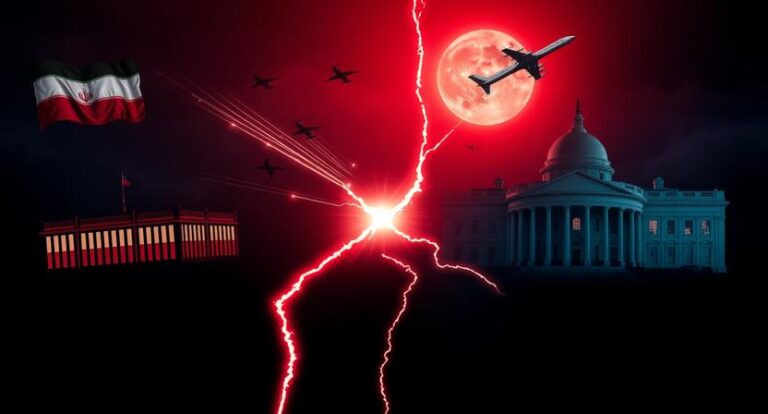
The geopolitical landscape of the Middle East has entered a perilous new phase as Iran’s president publicly declared that his country is engaged in what he described as a “total war” with the United States, Israel and major European powers. The statement, issued on the official website of Iran’s Supreme Leader and seen as among the strongest yet from Tehran, comes just days before a scheduled high-level meeting between Israeli Prime Minister Benjamin Netanyahu and U.S. President Donald Trump — a meeting expected to be dominated by discussions about Iran’s growing military capabilities and its broader role in regional conflicts.
In a stark departure from diplomatic language, Iranian President Masoud Pezeshkian said that the confrontation with the West was more complex and dangerous than Iran’s brutal 1980s war with Iraq. He accused Western governments of seeking to destabilize the Islamic Republic and prevent it from achieving economic and strategic stability. Pezeshkian’s comments underscore the extent of tension between Tehran and Western capitals at a time when global diplomacy has struggled to contain escalating hostilities across multiple fronts in the region.
The backdrop to this declaration is a dramatic series of conflicts and diplomatic ruptures that have reshaped Iran’s relations with key international actors. In June 2025, a short but intense 12-day war erupted between Iran and Israel, sparked by Israeli airstrikes on Iranian military and nuclear sites. According to health officials and independent observers, Israeli attacks killed hundreds of Iranian soldiers, nuclear scientists and other personnel, and Iranian forces retaliated with missile strikes that resulted in civilian casualties within Israel. These clashes drew direct U.S. military involvement, with American forces supporting Israeli defenses and conducting strikes on Iranian nuclear facilities, significantly deepening the crisis.
Iran’s president likened the current hostilities to a form of comprehensive warfare in which economic pressure, covert operations and multilateral alliances play as crucial a role as military action. While earlier rounds of nuclear negotiations between Tehran and Washington had sought to stave off conflict through diplomacy, those talks broke down long before the June confrontations and have not been successfully revived. The re-imposition of United Nations sanctions by European states over Iran’s nuclear ambitions has only compounded the sense of encirclement felt by Iranian leaders.
The global reaction to Pezeshkian’s announcement has been immediate and multifaceted. Western capitals have expressed alarm but dismissed the notion that a full-blown world war is underway. Analysts say the Iranian rhetoric is designed in part to shore up domestic support in the face of economic hardship and renewed international isolation. They also note that Tehran’s strategic posture aims to deter further attacks on its nuclear infrastructure and military assets, which it considers vital to national defense.
In Jerusalem, officials have affirmed their concern about Iran’s expanding missile and drone capabilities, which have been demonstrated through multiple tests in recent months. Israeli leadership has expressed interest in pressing the United States for continued military cooperation and support against what it sees as an existential threat posed by Iran’s military and proxy networks. The Trump administration, while reiterating its backing for Israel’s security, has also highlighted the need for cautious diplomacy to avoid drawing the United States deeper into sustained conflict.
Regional actors beyond the U.S. and Israel have also been drawn into the unfolding drama. European powers that reinstated sanctions on Tehran have signaled a readiness to maintain pressure on Iran’s nuclear program, emphasizing non-proliferation objectives. Meanwhile, Tehran’s alliances with groups such as Hezbollah in Lebanon and Iran-aligned forces in Syria and Iraq continue to influence the calculus of conflict and deterrence across the Levant.
Despite the ferocity of recent rhetoric, experts caution against interpreting the situation as a declaration of unrestrained global war. Instead, they describe the moment as a high-stakes confrontation marked by overlapping military, diplomatic and economic pressures. Negotiators from past nuclear talks have noted the complex web of conditions that would need to be met to revive substantive dialogue, including stringent limits on uranium enrichment and robust verification mechanisms — conditions Iran has historically rejected as infringements on its sovereign rights.
Public sentiment in Iran reflects a blend of defiance and concern. Economic pressure from sanctions has strained ordinary citizens, while nationalist narratives emphasize resistance to foreign intervention. In the United States and Europe, policymakers and commentators are divided on the best approach to managing Iran’s ambitions and regional influence, with some advocating for renewed diplomatic engagement and others urging a firmer military posture to deter future escalation.
As Netanyahu and Trump prepare to meet, all eyes will be on how the United States prioritizes its strategic alliances and security commitments. The conversation is expected to cover Iran’s missile tests, its role in regional proxy conflicts, and broader questions about stability in the Middle East. The outcome of these discussions could shape geopolitical dynamics for years to come.
Roots of the Escalation: From Negotiation Fallout to Direct Confrontation
The origins of today’s heightened confrontation trace back to the collapse of nuclear negotiations earlier in 2025, when efforts to reach a comprehensive agreement between Tehran and Washington faltered amid deep mistrust over uranium enrichment and compliance with international norms. Iran’s refusal to accept limits on nuclear development led both sides to harden their positions, closing the diplomatic avenues that might have prevented direct military engagement.
Complicating matters were covert operations, proxy engagements and competing strategic objectives. Israel’s concern about Iran’s nuclear achievements and hostilities from Tehran-aligned militias in neighboring states increased pressure on Israeli leadership to take assertive action. When direct strikes occurred in June, both countries crossed a threshold that shifted decades of indirect conflict into overt military confrontation. The implications reverberated beyond the immediate battlefield, affecting oil markets, global security dialogues and international diplomatic initiatives aimed at containing instability in the Middle East.
Economic Pressure and Sanctions: A Parallel Front
Iran’s president’s war rhetoric extends beyond conventional military discourse to include economic warfare. European powers reinstated sanctions targeting sectors linked to Tehran’s nuclear ambitions and defense industries, seeking to limit Iran’s capacity to finance military development. Tehran, for its part, has decried these measures as attempts to cripple its economy and provoke domestic unrest. By framing economic pressure as part of the conflict, Iranian leaders aim to project resilience and push back against what they characterize as Western attempts at subjugation and influence.^turn1search1
Domestic Iranian officials have underscored national unity in the face of hardship, declaring that economic challenges will not deter their strategic objectives. This message resonates with segments of the Iranian public who view resistance to Western pressure as a core tenet of national identity. However, analysts caution that prolonged economic strain could have long-term effects on social stability and political cohesion within Iran.
Regional and International Reactions
Global reaction to Iran’s declaration of being at war has been mixed. Western states, while affirming support for Israel’s security, have called for de-escalation and renewed diplomatic efforts. Some European leaders have reiterated the need to prevent proliferation and ensure that Iran’s nuclear program remains under strict international oversight. Other states in the Middle East are watching closely, aware that instability in Iran could spill over into neighboring countries and exacerbate existing conflicts.
Iran’s alliances with non-state actors such as Hezbollah and its influence in militia groups across the region have added layers of complexity to the situation. These networks have the capacity to launch indirect actions that can escalate tensions even further. Regional diplomats have expressed concern that a miscalculation by any party could lead to a broader conflagration that extends beyond the immediate actors involved.
Diplomacy Versus Deterrence: Competing Strategies
The debate over how to manage Iran’s growing assertiveness pits proponents of diplomacy against advocates of deterrence. Supporters of renewed negotiation argue that a sustainable agreement addressing nuclear limits and security assurances could reduce the likelihood of future hostilities. They point to past diplomatic frameworks as evidence that dialogue, even if imperfect, provides a mechanism for mitigating conflict.
Conversely, those who favor deterrence argue that only a firm posture — including visible military readiness and credible threats — can dissuade Iran from pursuing actions that Western governments view as destabilizing. This school of thought emphasizes that concessions without enforcement embolden adversaries and undermine long-term security interests.
Military Posture and Preparedness
Both Iran and Israel have bolstered their military capabilities in recent months. Iran’s missile program has advanced, with multiple tests demonstrating range and precision that concern neighboring states and Western defense planners. Israel, for its part, has reinforced its defensive systems and sought deeper military cooperation with the United States. The strategic calculus involves not only direct confrontation but also deterrence — showing capability and resolve to prevent further escalation.
Experts warn that a sustained military stalemate could lead to periodic flare-ups, each carrying the risk of drawing in additional actors. The presence of U.S. forces in the region adds another dimension, as any direct confrontation involving American troops would have global repercussions. Policymakers must therefore balance the imperative of security with the risks of open warfare.
Human Cost and Humanitarian Concerns
Underlying the geopolitical analysis is the human toll of conflict. Casualty figures from earlier direct confrontations — particularly the June 2025 hostilities — include significant loss of life and injury on both sides. Civilians have borne much of the suffering, with communities disrupted by missile strikes, displacement and insecurity. International organizations have called for protections for non-combatants and humanitarian access where needed.
The psychological impact of sustained tension and intermittent violence cannot be understated. Families on both sides live with the uncertainty of conflict recurrence, and the broader regional population grapples with the economic and social ripple effects of military engagement. Addressing these human dimensions remains a critical component of any long-term peace strategy.
Future Prospects: Diplomacy, Conflict or Status Quo?
The coming weeks and months are likely to be pivotal in determining whether the current state of confrontation evolves into negotiated settlement, sustained conflict, or a tense status quo. The Netanyahu-Trump meeting is widely anticipated to signal the United States’ strategic priorities and approach to Iran. Whether this results in renewed diplomatic overtures, increased pressure, or continued deterrence will significantly shape regional dynamics.
Ultimately, the interplay of military strategy, economic pressures, international alliances and domestic politics within Iran and Western capitals will dictate the trajectory of this fraught relationship. The world watches closely as leaders navigate these high-stakes decisions, with the hope that escalation can be contained and avenues for peace explored more earnestly.
Conclusion
The recent declaration by Iran’s president that the nation is engaged in a “total war” with the United States, Israel and Europe represents one of the most forceful public statements in a period marked by rising tensions and direct military confrontations. This rhetoric reflects deep strategic distrust, unresolved diplomatic challenges, and a complex blend of military, economic and political pressures. As global leaders prepare for high-level discussions, the international community faces critical choices about diplomacy, deterrence and security. Understanding the intersecting factors at play — from nuclear negotiations to missile development, sanctions to alliance politics — is essential for comprehending how this confrontation may evolve. In a region long accustomed to cycles of tension, the next chapter will be shaped by how seriously all parties commit to either escalating conflict or pursuing negotiated de-escalation.

Full-stack developer at Scylla Technologies (USA), working remotely from Bangladesh. Adobe Certified Magento Developer.