

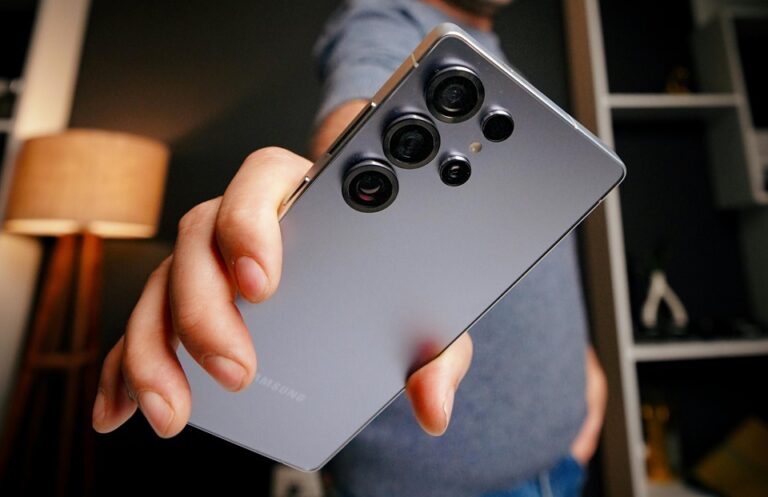
In today’s world of remote work and digital organization, the ability to quickly turn a physical document into a crisp, clear PDF is more valuable than ever. While many turn to specialized document scanners, the most powerful scanning tool you own is likely already in your pocket. Your Android phone, equipped with a high-resolution camera and intelligent software, can transform into a portable, high-quality scanner in seconds, allowing you to digitize receipts, contracts, whiteboards, and notes with professional results. This comprehensive guide will walk you through everything you need to know to master document scanning on your Android device, from choosing the right app to advanced editing and secure sharing.
This guide is not just about the basic steps; it’s about empowering you to use this technology effectively in your daily life. We’ll explore multiple methods, including built-in features from Google and Samsung, as well as powerful third-party alternatives. You’ll learn how to optimize image quality, organize your digital files, and implement best practices that save you time and frustration. Whether you’re a student archiving lecture notes, a professional managing business contracts, or someone simply trying to reduce paper clutter, these skills will enhance your productivity and organization.
Why Your Android Phone is the Ultimate Scanner
Modern Android phones are engineered with capabilities that make them exceptionally well-suited for document scanning. The cameras are not just for photos; with features like high megapixel counts, optical image stabilization, and advanced computational photography, they can capture text and details with remarkable clarity. The real magic, however, happens in the software. Using technologies like edge detection, perspective correction, and image enhancement, your phone can automatically identify a document, flatten its perspective, remove shadows, and boost contrast to produce a result that often surpasses a traditional flatbed scanner in convenience and speed.
The benefits of using your phone are substantial. It offers unmatched portability and convenience—you can scan anything, anywhere, without needing access to a printer or office. It’s a significant cost-saver, eliminating the need for a dedicated scanner for most individuals and small businesses. Furthermore, the process is deeply integrated into the digital workflow. Scans can be instantly saved to cloud storage like Google Drive or Dropbox, converted to editable text via OCR (Optical Character Recognition), and shared globally via email or messaging apps in a matter of moments. This seamless bridge from the physical to the digital world is why smartphone scanning has become a standard practice.
Method 1: Using Google Drive for Simple, Integrated Scans
For many Android users, the most straightforward and effective scanning tool is already installed: the Google Drive app. This method is ideal for those deeply embedded in the Google ecosystem, as it saves scans directly to your cloud storage, making them instantly accessible from any device. The process is intuitive and leverages Google’s reliable scanning technology.
To begin, open the Google Drive app and tap the multicolored “+” button in the bottom-right corner. From the menu that appears, select “Scan.” Your camera will activate. Position your phone so the document is within the viewfinder. The app will automatically detect the document’s edges and highlight them with a blue border. You can manually adjust these edges by dragging the circular handles at each corner for a perfect crop. Tap the shutter button to capture the page.
After capturing an image, you have several options before saving. You can tap the “Add” button to scan multiple pages into a single document. Use the cropping, rotation, and color filter tools (located at the bottom) to improve the scan. The color filters are particularly useful: choose “Color” for photographs or colored documents, “Black & White” for text-heavy documents to reduce file size and improve readability, or “Scan” for a balanced, enhanced look. Once satisfied, tap “Save.” You will be prompted to name your file, choose a destination folder in Drive, and select the file format—always choose “PDF Document” for a universal, non-editable format. Your scan is now safely stored in the cloud.
Pros and Cons of the Google Drive Method
- Seamless Integration: Scans are saved directly to your Google Drive, creating a flawless link between capture and cloud storage. This eliminates extra transfer steps and ensures automatic backup.
- Simplicity and Accessibility: The interface is clean and minimal, making it easy for anyone to use. Since Drive is pre-installed on most Android phones, it requires no additional downloads.
- Basic Editing Suite: It offers essential post-capture tools like cropping, rotating, and applying color filters, which are sufficient for most standard documents.
- Limited Advanced Features: It lacks more sophisticated tools such as batch scanning of multiple documents at once, advanced perspective correction, or detailed image adjustment settings for challenging lighting conditions.
- Dependent on Google Services: This method requires a Google account and functions best with an internet connection for uploading, which might be a consideration for users concerned about privacy or those often in areas with poor connectivity.
Method 2: Leveraging Built-in Phone Features (Google Lens & Samsung Notes)
Beyond dedicated scanning apps, your Android phone’s native features can be powerful allies. Two of the most prominent are Google Lens and, for Samsung users, the scanner built into Samsung Notes. These tools are deeply integrated into the system, offering quick access without opening a separate application.
Google Lens is a visual search tool that includes a robust document scanner. You can access it through the Google Assistant, the Google app, or even the camera app on some phones. Point your camera at a document, and an icon to scan text or documents will often appear. Tapping it captures the image and provides options to crop, adjust color, and save. The saved file can be exported as a PDF or image file to your preferred location. Its strength lies in its deep integration with Google’s ecosystem and its powerful OCR, which can copy text directly from the scan into your clipboard.
Samsung Galaxy users have a particularly refined tool at their disposal within the Samsung Notes app. Open the app, tap the “+” icon to create a new note, and then select the “Camera” icon. Choose the “Scan document” mode. The app provides excellent auto-capture and edge detection. After scanning, it offers a rich set of editing options, including perspective adjustment, color mode selection, and the ability to reorder pages. You can then save the scan as a PDF directly from the app or insert it into a note. The quality and control offered here are often superior to many third-party apps for Samsung device owners.
Method 3: Top Third-Party Scanning Apps for Power Users
For those who require more control, advanced features, or specific workflows, third-party scanning apps are the answer. These apps often provide superior image processing, better organization tools, and capabilities tailored for business or academic use. When choosing a third-party app, prioritize those with a strong reputation for privacy, especially if you’re scanning sensitive documents.
Here is a breakdown of some of the most highly-regarded options available on the Google Play Store:
- Adobe Scan (Free): From the creators of the PDF standard, this app offers exceptional quality. It automatically recognizes documents, enhances scans, and uses Adobe’s powerful OCR to create searchable and editable PDFs. It integrates seamlessly with Adobe Document Cloud and other storage services. Its user interface is professional and intuitive, making it a top choice for consistent, high-quality results.
- Microsoft Lens (Free): Formerly known as Office Lens, this is an excellent choice for users in the Microsoft 365 ecosystem. It excels at scanning whiteboards and documents, and saved scans can be directly exported to Word, PowerPoint, or OneNote as editable files. It also integrates flawlessly with OneDrive for cloud storage and sync, making it perfect for Office power users.
- CamScanner (Freemium): One of the most popular dedicated scanner apps, CamScanner offers a wide array of features including smart cropping, image enhancement, batch scanning, and advanced sharing options. The free version includes watermarks and has usage limits, while the paid subscription unlocks full resolution, removes ads and watermarks, and provides more cloud storage. It’s known for its reliability and rich feature set.
- Tiny Scanner (Freemium): As the name suggests, this app focuses on creating small, compact PDF files without sacrificing legibility. It’s incredibly simple to use—it functions like a physical scanner with a “start” and “stop” button—and is ideal for quickly digitizing multi-page documents. The Pro version removes ads and allows for more pages per document.
Pro Tips for Professional-Quality Scans Every Time
Mastering the technical steps is only half the battle. Consistently achieving clear, professional, and usable scans requires attention to the environment and technique. Follow these expert tips to elevate your scanning results.
- Optimize Your Lighting: This is the single most important factor. Use bright, indirect, and even lighting. Avoid harsh overhead lights that create glare or shadows across the document. Natural daylight near a window is often perfect. If you must use a lamp, position it at an angle to the document to minimize shine.
- Create a Clean, Contrasting Background: Always place your document on a high-contrast, uncluttered surface. A dark table for a white sheet of paper, or a white floor tile for a dark document, helps the app’s edge detection work flawlessly and prevents it from accidentally including parts of the background in the scan.
- Hold Steady and Keep It Flat: Ensure the document is as flat as possible. For books or bound documents, gently press down the spine. Hold your phone parallel to the document to avoid perspective distortion (a “keystone” effect). Use two hands to stabilize your phone, or rest it on a stack of books for a perfectly steady shot.
- Leverage Auto-Capture Wisely: Most apps have an auto-capture feature that snaps the picture when the document is perfectly framed. Use this feature to avoid camera shake from tapping the screen. If the auto-capture is too sensitive or slow, you can usually disable it in the app’s settings.
- Review and Edit Immediately: Don’t save and close the app right away. Take a moment to review each scanned page. Check the corners are correctly cropped, the image is straight, and the text is clear. Use the app’s tools to adjust brightness, contrast, or apply a black-and-white filter to improve text sharpness and reduce file size.
- Implement a Naming and Filing System: Develop a consistent habit for naming your files. Use descriptive names that include the document type, date, and key subject (e.g., “2026-01-12_Lease_Agreement_Signature.pdf”). Immediately file them into logically organized folders in your cloud storage (e.g., Drive > Personal > Taxes > 2026). This saves immense time when you need to retrieve a document later.
Frequently Asked Questions (FAQ)
What’s the best format to save my scans: PDF or JPEG?
For documents, PDF is almost always the superior choice. A PDF packages all pages into a single, universally openable file that preserves layout and formatting. It is the standard for official documents, contracts, and forms. JPEGs are better suited for single-page scans where image quality is the priority, like a photograph or a detailed drawing, as they are easier to edit in image software. Most scanning apps allow you to choose your preferred output format.
How can I make the text in my scanned PDF searchable or editable?
To make text searchable and editable, you need an app that performs Optical Character Recognition (OCR). Apps like Adobe Scan, Microsoft Lens, and the premium versions of others include this feature. During the save process, look for an option labeled “Create Searchable PDF,” “OCR,” or “Recognize Text.” This process analyzes the image of the text and layers an invisible, selectable text file over it, allowing you to copy, paste, and search within the document using a PDF reader.
My scans are coming out blurry or distorted. What am I doing wrong?
Blurry scans are typically caused by camera movement, poor lighting, or the phone being too close. Ensure you have ample light so the camera can use a faster shutter speed. Hold the phone steady or use a stand. Distortion (where the document looks trapezoidal) happens when the camera isn’t parallel to the page. Many apps have a “perspective correction” tool in the editing menu that can digitally fix this after the fact. Clean your phone’s camera lens with a soft cloth, as fingerprints can also cause haze.
Are these scanning apps safe for confidential documents?
Safety depends entirely on the app. Stick to reputable apps from major developers like Google, Adobe, or Microsoft, and carefully review their privacy policies. Be cautious of free apps from unknown developers that may upload your data to their servers. For highly sensitive documents, consider using an app that processes everything locally on your device (offline) and allows you to save directly to a secure, encrypted folder. Avoid using public Wi-Fi when transmitting scanned confidential data.
Can I scan documents without an internet connection?
Yes, most scanning apps allow you to capture and edit documents offline. The scanning and image processing are done locally on your device. However, features that require cloud processing—such as syncing to Google Drive, performing cloud-based OCR, or backing up to online storage—will naturally require an internet connection. You can typically scan a batch of documents offline and then have them upload automatically once you reconnect to Wi-Fi.
Conclusion
Transforming your Android phone into a powerful portable scanner is a straightforward process that unlocks a new level of productivity and organization. As we’ve explored, you have multiple paths to achieve excellent results, whether through the integrated simplicity of Google Drive, the system-level power of Google Lens or Samsung Notes, or the advanced capabilities of dedicated third-party apps like Adobe Scan. The key to professional results lies not just in the software but in your technique: mastering lighting, stability, and immediate review. By implementing the pro tips and organizational strategies outlined here, such as consistent file naming and leveraging OCR for editable text, you can build a seamless digital workflow. This empowers you to confidently tackle paperwork, preserve important information, and maintain a clutter-free, efficient digital life, all with the device you already carry every day.
