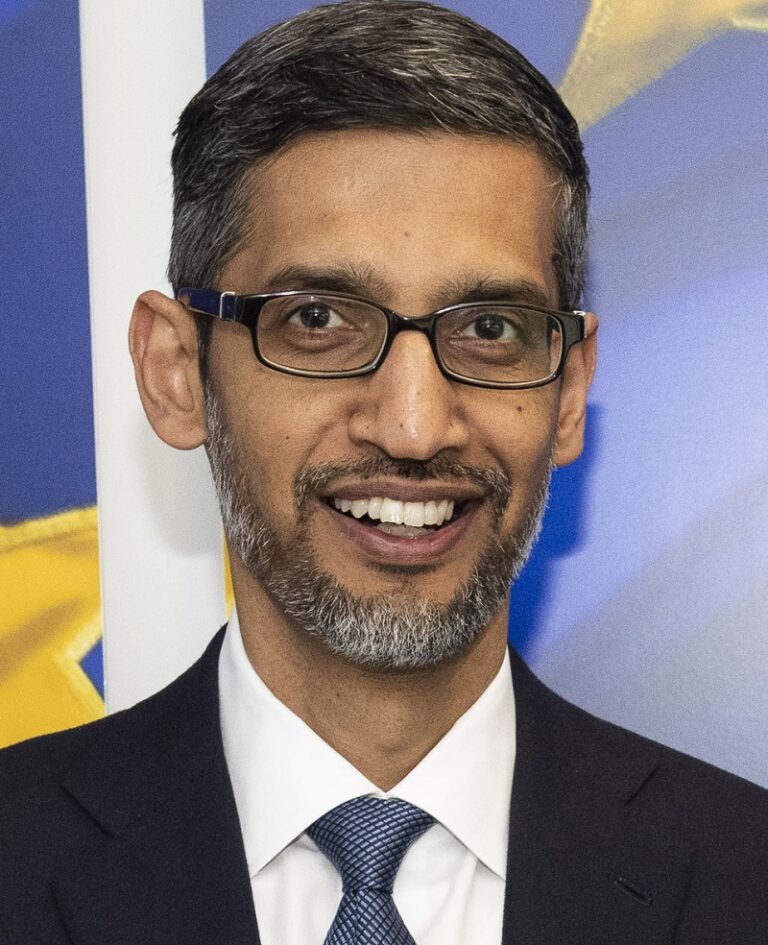
In 2025, Google and Alphabet CEO Sundar Pichai achieved a significant financial milestone, officially becoming a billionaire despite his cash compensation seeing a sharp decline. This paradox at the pinnacle of tech leadership highlights the complex dynamics of modern executive wealth, where stock ownership and company performance vastly outweigh traditional salary. Pichai’s journey to a ten-figure net worth, crossing the $1.1 billion threshold according to the Bloomberg Billionaires Index, is a story less about salary and more about strategic equity accumulation and the transformative power of artificial intelligence on corporate valuation.
The cornerstone of this wealth is a comparatively tiny 0.02% stake in the behemoth that is Alphabet Inc. Yet, with the company’s total market value soaring past $440 billion, driven by blockbuster quarterly earnings fueled by AI integration across its business, even this fractional ownership translates into immense personal fortune. His compensation package, which dropped from a headline-grabbing $226 million in 2022 to $10.7 million in 2024, reveals a standard executive pay structure where massive, multi-year stock awards are the true drivers of long-term wealth, not the annual base salary.
This analysis will explore the intricate mechanisms behind Pichai’s billionaire status, breaking down the composition of his compensation, the performance of Alphabet that underpins his stock’s value, and what this reveals about wealth generation in the 21st-century technology sector.
The Anatomy of Sundar Pichai’s Compensation and Wealth
To understand how Sundar Pichai became a billionaire, it is essential to dissect the official compensation figures reported by Alphabet and understand what they represent beyond the headline numbers.
Breaking Down the Salary Drop: From $226M to $10.7M
The most striking figure in Pichai’s pay history is the dramatic drop from $226 million in total compensation in 2022 to $10.72 million in 2024. This is not a pay cut in the conventional sense but a reflection of the cyclical nature of executive equity awards. The $226 million figure was almost entirely comprised of a massive, once-every-three-years stock grant. In contrast, the 2024 compensation represents a more “typical” year without such a mega-grant, consisting of his steady $2 million base salary, an annual performance-based stock award, and other non-equity compensation.
His base salary has remained consistently at $2 million since he became CEO. The remainder of his annual income comes from:
- Annual Stock Awards: These are performance-based restricted stock units (RSUs) that vest over time, aligning his long-term financial interests directly with shareholder value.
- Non-Equity Incentive Plan Compensation: A cash bonus tied to the achievement of specific annual company and personal performance goals.
- All Other Compensation: This category includes substantial security expenses, which for Pichai totaled $8.27 million in 2024, covering residential security, security monitoring, and personal security during all travel.
The Real Engine of Wealth: Stock Ownership and Appreciation
The true source of Pichai’s billionaire status is not his annual paycheck but his accumulated ownership in Alphabet. His 0.02% stake, while a small percentage, represents a multi-billion-dollar asset due to the sheer scale of the company. The appreciation of Alphabet’s stock price, particularly in 2025, directly and exponentially increased the value of this holding.
For instance, a 4% single-day jump in Alphabet’s stock price—as witnessed after strong earnings reports—can add tens of millions of dollars to the value of his shares. This creates a powerful incentive structure where Pichai’s personal net worth is inextricably linked to creating long-term, sustainable value for all Alphabet shareholders.
Alphabet’s Performance: The Fuel for Wealth Creation
Sundar Pichai’s personal financial milestone is a direct derivative of Alphabet’s corporate success. The company’s robust performance, especially in key growth areas, has been the primary driver behind its rising stock price and, consequently, Pichai’s net worth.
Blockbuster Earnings and AI Integration
In the quarters leading up to Pichai crossing the billionaire threshold, Alphabet posted financial results that significantly exceeded market expectations. A pivotal second-quarter report showed a profit of $28.2 billion on revenue of $96.4 billion. Company leadership explicitly credited the integration of artificial intelligence across its core products—Search, YouTube, and the Google Cloud Platform—for boosting every segment of its business.
This successful execution of an “AI-first” strategy reassured investors that Alphabet was not only competing effectively in the new AI landscape but was also monetizing these advancements. The market’s confidence was reflected in an immediate stock price rally, demonstrating how operational excellence translates directly into executive wealth through equity markets.
Strategic Capital Expenditures and Market Confidence
Concurrent with its strong earnings, Alphabet announced a substantial increase in its planned capital expenditures for the year—an additional $10 billion. This aggressive investment is targeted at expanding data center capacity and cloud infrastructure to meet exploding demand for AI and cloud services.
While large capital spends can sometimes concern investors about short-term margins, the market interpreted this move positively. It was seen as a confident, forward-looking bet by Pichai’s leadership on sustained growth, signaling that Alphabet is investing heavily to secure its future dominance. This strategic clarity further bolstered investor sentiment and supported the stock’s valuation.
Executive Wealth in the Modern Tech Era: Salary vs. Equity
Sundar Pichai’s financial profile epitomizes a fundamental shift in how top-tier technology executives are compensated and build wealth. The model has moved decisively away from lavish salaries and toward wealth creation through long-term stock ownership.
The Prevalence of the “One-Dollar Salary” Model
While Pichai maintains a $2 million base salary, his situation is conceptually aligned with the “one-dollar salary” model popularized by founders like Steve Jobs and Larry Page. In this model, executives forgo large cash compensation in favor of stock options or awards. The philosophy is simple: an executive’s rewards should be perfectly aligned with those of the shareholders. If they create tremendous value for the company, the appreciation of their stock holdings will provide commensurate personal reward. Pichai’s compensation structure, with its heavy reliance on multi-year stock grants, is a formalized version of this principle, ensuring his financial success is a direct function of Alphabet’s long-term stock performance.
Comparative Analysis with Other Tech CEOs
Pichai’s journey is not an outlier but part of a broader pattern among tech titans. The wealth of figures like Elon Musk (Tesla, SpaceX), Mark Zuckerberg (Meta), and Jensen Huang (NVIDIA) is almost entirely derived from their founding or significant equity stakes in their companies, not from salaries or annual bonuses. This creates a different kind of billionaire profile:
- Wealth Volatility: Their net worth is highly sensitive to daily stock market fluctuations, leading to headline-making gains and losses.
- Long-Term Horizon: The vesting schedules of stock awards (often over 3-4 years) encourage a focus on sustainable, multi-year growth rather than short-term financial engineering.
- Skin in the Game It represents the ultimate form of “skin in the game,” where the leader’s personal fortune is permanently at risk alongside that of public market investors.
The Significance and Implications of a CEO Billionaire
The rise of a sitting CEO to billionaire status based on compensation-linked equity is a phenomenon with wider implications for corporate governance, public perception, and internal company culture.
Governance and Shareholder Alignment
From a corporate governance perspective, significant equity ownership by a CEO is generally viewed favorably by institutional investors. It theoretically minimizes “agency problem”—the risk that management acts in its own interest rather than that of shareholders. When Pichai’s wealth is tied to Alphabet’s stock, his incentives are directly aligned with those of a pension fund or retail investor holding the same stock. This alignment is a key rationale defended by board compensation committees when approving large equity awards, arguing they are necessary to attract and retain top talent while ensuring focus on value creation.
Public and Employee Perception Challenges
However, such extreme wealth accumulation can also present challenges. In the public sphere, especially in times of economic uncertainty or during company layoffs, a CEO’s billionaire status can become a lightning rod for criticism about income inequality. Internally, while it can be framed as a testament to the company’s success, it can also create a perceived distance between the C-suite and rank-and-file employees. Managing this perception requires transparent communication about how overall company success benefits all stakeholders through mechanisms like overall job creation, investment in new divisions, and broad-based employee stock grant programs.
The Role of Security and Other “All Other” Compensation
A notable and growing component of Pichai’s reported compensation is the multi-million dollar expenditure on his personal and family security. In 2024, this figure reached $8.27 million, a 22% increase from the previous year.
This cost, covered by the company, includes a comprehensive suite of measures: 24/7 residential security and monitoring, security consultation, dedicated car and driver services, and personal security details for all travel, business or personal. For high-profile executives of global tech giants, these measures are deemed a necessary business expense. The rationale is twofold: it protects a vital corporate asset (the CEO’s leadership and continuity), and it mitigates tangible personal security risks that come with such a prominent public position and extreme wealth. This aspect of compensation, while not contributing to net worth like stock, reflects the unique and costly realities of life at the apex of global business.
Looking Ahead: Sustainability and Future Trends
The sustainability of Pichai’s billionaire status, and the model it represents, hinges entirely on Alphabet’s continued ability to innovate and grow. His net worth is not a static number but a variable directly pegged to market sentiment and company performance.
Dependence on AI Leadership and Cloud Growth
The primary growth engines for Alphabet are its AI capabilities and the Google Cloud Platform. Maintaining a competitive edge in generative AI against well-funded rivals like Microsoft and OpenAI is critical. Similarly, continued growth in the high-margin cloud business is essential for revenue diversification beyond advertising. Any significant stumble in these strategic areas would likely pressure the stock price and, by extension, the value of Pichai’s holdings. His financial future is bet on his own and his team’s ability to execute in these hyper-competitive fields.
The Potential for Philanthropy and Impact Investing
As with many tech billionaires, Pichai’s newfound status raises questions about potential philanthropic endeavors. While he has not been as publicly active in philanthropy as some peers, achieving this level of wealth often brings increased public expectation for charitable giving and social impact investment. How he chooses to deploy his capital outside of Alphabet could become a significant aspect of his public legacy, separate from his professional role. It also represents a future avenue for the wealth generated by this equity-based compensation model to be recycled into societal causes.
Frequently Asked Questions on Executive Wealth
How can a CEO’s net worth increase while their salary drops?
This happens because the majority of their wealth comes from company stock they already own, not their annual salary. If the company’s stock price rises significantly (as Alphabet’s did), the value of their existing shares increases, boosting their net worth independently of that year’s paycheck.
Is Sundar Pichai’s $8 million security detail considered part of his “pay”?
Yes, it is reported as part of his total annual compensation in SEC filings under “All Other Compensation.” However, it is not liquid income he receives like salary or a bonus. It is a necessary business expense paid by the company for his protection and is not an asset that contributes to his net worth.
Why do boards award such large stock grants instead of just high salaries?
Large stock grants are designed to align the CEO’s long-term financial interests with those of the company’s shareholders. The goal is to incentivize decisions that drive sustainable growth and stock appreciation over many years, as the executive cannot fully cash out the awards until they vest over time.
What is the difference between the net worth figures from Bloomberg and Forbes?
Bloomberg ($1.1B) and Forbes ($1.2B) use slightly different methodologies and data sources to value private assets, account for debt, and value stock holdings. Such small discrepancies are common in real-time billionaire tracking due to different calculation models and timing of data updates.
Conclusion
Sundar Pichai’s ascent to billionaire status is a definitive case study in 21st-century executive wealth creation. It underscores the profound shift from compensation based on salary to wealth built through strategic equity ownership. His financial milestone was not achieved through an outsized annual paycheck, but through the careful accumulation and appreciation of Alphabet stock, driven by the company’s stellar performance under his leadership, particularly in harnessing the power of artificial intelligence. The dramatic fluctuation in his reported “salary” between 2022 and 2024 highlights the cyclical nature of mega-stock grants, while his steady, multi-million-dollar security costs reveal the non-monetary complexities of leading a global tech empire.
Ultimately, Pichai’s story demonstrates that in the modern technology sector, a CEO’s financial success is designed to be a direct mirror of the value they create for shareholders. His $1.1 billion net worth is a function of Alphabet’s $440+ billion market valuation and his fractional stake within it. This model tightly couples leadership incentives with long-term corporate health, making the CEO not just a highly paid employee, but a committed owner whose personal fortune rises and falls with the fate of the enterprise they lead.

Riffat Hossain is a business strategist and content specialist with a focus on consumer insights and market trends. After completing both a BBA and an MBA at East West University, Dhaka, Riffat combined academic expertise in business administration with a passion for helping consumers navigate modern services. Through data-driven guides and business-centric analysis, Riffat provides actionable advice for users looking to optimize their daily digital and consumer experiences.