
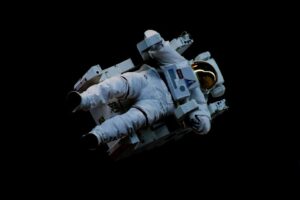
In 2025, the allure of becoming a NASA astronaut remains as strong as ever, but the financial realities—and risks—of the profession are often misunderstood. While the prestige of space exploration is unmatched, the compensation for astronauts is structured under the federal General Schedule (GS) pay system, with salaries ranging from $85,000 to over $170,000 annually, depending on experience, rank, and mission assignments. Yet, the true value of an astronaut’s career extends far beyond the paycheck, encompassing unparalleled benefits, career advancement, and the chance to contribute to humanity’s future in space.
This comprehensive guide explores NASA astronaut salaries in 2025, including pay scales, benefits, career progression, and the inherent risks of space exploration. Whether you’re an aspiring astronaut, a STEM professional, or simply curious about the financial and professional landscape of spaceflight, this article provides verified, up-to-date insights into one of the most exclusive careers on—and off—the planet.
NASA Astronaut Salary Breakdown for 2025
NASA astronauts are federal employees, and their salaries are determined by the General Schedule (GS) pay scale, a system used across U.S. government agencies. Most active astronauts fall within the GS-12 to GS-15 range, with pay increasing based on experience, promotions, and locality adjustments. Here’s a detailed breakdown of what astronauts earn in 2025:
- Entry-Level Astronauts (GS-12): Newly selected astronauts typically start at the GS-12 level, earning between $85,000 and $110,000 per year. This range reflects base pay for individuals with minimal prior federal service or those transitioning from military or private-sector roles.
- Mid-Level Astronauts (GS-13): After gaining experience, astronauts advance to GS-13, where salaries range from $95,000 to $125,000 annually. This level is common for astronauts with 3–10 years of service or those who have completed multiple missions.
- Senior-Level Astronauts (GS-14/GS-15): Highly experienced astronauts, including mission commanders and program managers, earn between $110,000 and $170,000+ per year. Those in leadership roles or overseeing major missions (e.g., Artemis or ISS expeditions) can exceed $180,000 annually when including bonuses and locality pay.
- Locality Adjustments: Astronauts based at NASA’s Johnson Space Center in Houston receive a 28.71% cost-of-living adjustment, significantly boosting their take-home pay. For example, a GS-13 astronaut in Houston earns $112,926 annually at the highest step, compared to the base GS-13 rate.
- Mission Bonuses and Hazard Pay: While NASA does not offer overtime, astronauts on long-duration or high-risk missions may receive modest stipends (e.g., $5 per day for extended ISS stays). Hazard pay is rare but may apply to exceptionally dangerous assignments, such as deep-space missions.
For context, the average NASA astronaut salary in 2025 is $135,000–$150,000, with top earners (e.g., chief astronauts or program directors) reaching $180,000–$215,000. These figures align with Glassdoor and FederalPay data, which report a typical pay range of $102,000 to $180,000, including base salary and additional compensation.
NASA Astronaut Benefits: Beyond the Paycheck
NASA astronauts receive one of the most comprehensive benefits packages available to federal employees. These benefits are designed to support astronauts and their families, both during and after their careers. Key perks include:
- Federal Employees Retirement System (FERS): Astronauts are eligible for a pension, Thrift Savings Plan (TSP) with government matching, and Social Security. FERS ensures financial security post-retirement, with contributions vesting after just five years of service.
- Health, Dental, and Vision Insurance: NASA provides premium-free or low-cost healthcare plans, including coverage for dependents. Astronauts also access NASA’s occupational health services, which monitor their well-being before, during, and after missions.
- Housing and Relocation Allowances: Astronauts relocating to Houston or other NASA facilities receive subsidized housing or relocation stipends, easing the transition for families.
- Life Insurance and Disability Coverage: NASA offers group life insurance and disability protections, critical for a profession with inherent physical risks.
- Professional Development: Astronauts have access to tuition reimbursement, advanced degrees, and certifications, often funded by NASA to enhance their skills for future missions.
- Mission-Specific Perks: While rare, some astronauts receive bonuses for milestone achievements, such as commanding a lunar mission or contributing to groundbreaking research.
These benefits make NASA one of the most attractive employers for STEM professionals, despite the salary being lower than comparable private-sector roles (e.g., aerospace engineers at SpaceX or Boeing). The prestige, job security, and opportunity to advance human spaceflight often outweigh purely financial considerations.
How to Become a NASA Astronaut: Requirements and Career Path
The path to becoming a NASA astronaut is notoriously competitive, with an acceptance rate of 0.1% or lower—far more selective than Ivy League universities. In 2025, NASA selected just 10 candidates from over 8,000 applicants, highlighting the extreme demand for these roles. Here’s what it takes to qualify:
Educational and Experience Requirements
- Master’s Degree in a STEM Field: Applicants must hold a master’s degree in engineering, biological science, physical science, computer science, or mathematics from an accredited institution. Exceptions include medical doctors (with completed residencies) or graduates of nationally recognized test pilot schools.
- Professional Experience: Candidates need at least three years of related professional experience or 1,000 hours of pilot-in-command time in jet aircraft (with 850 hours in high-performance jets). For medical professionals, residency counts toward this requirement.
- Physical and Psychological Standards: Astronauts must pass NASA’s long-duration spaceflight physical, which includes vision, blood pressure, and cardiovascular tests. Psychological resilience is equally critical, given the stresses of isolation and high-stakes missions.
The Selection and Training Process
- Application and Screening: NASA reviews applications via USAJobs, inviting the most qualified candidates for interviews at Johnson Space Center. The selection board evaluates technical skills, leadership, teamwork, and adaptability.
- Astronaut Candidate Training: Selected candidates undergo two years of rigorous training, covering spacecraft systems, spacewalk protocols, robotics, and survival skills. Training includes simulated missions, underwater exercises (to mimic microgravity), and exposure to extreme environments.
- Mission Assignment: After training, astronauts become eligible for ISS expeditions, lunar missions (Artemis program), or future Mars voyages. Assignments depend on NASA’s mission needs and the astronaut’s expertise.
The career trajectory for astronauts is highly individualized. Some may spend decades in the program, advancing to leadership roles, while others transition to research, education, or private-sector aerospace careers after active duty.
The Risks and Dangers of Being a NASA Astronaut
While the financial and professional rewards of being an astronaut are substantial, the risks are equally significant. Spaceflight exposes astronauts to physical, psychological, and operational hazards that can have lifelong consequences. Here are the most critical risks faced by astronauts in 2025:
- Space Radiation: Astronauts are exposed to solar particles and galactic cosmic rays, which increase the risk of cancer, cardiovascular disease, and cognitive decline. Shielding on the ISS and spacecraft provides limited protection, and long-duration missions (e.g., to Mars) pose even greater risks.
- Muscle and Bone Loss: Microgravity causes 1–2% bone density loss per month and significant muscle atrophy. Astronauts mitigate this with daily resistance exercise, but recovery post-mission can take years.
- Vision Impairment: Up to 70% of astronauts experience vision changes due to intracranial pressure shifts in microgravity, a condition known as Spaceflight-Associated Neuro-Ocular Syndrome (SANS).
- Psychological Stress: Isolation, confinement, and the pressure of high-stakes missions can lead to anxiety, depression, and sleep disorders. NASA provides psychological support, but the mental toll remains a major challenge.
- Mission-Specific Dangers: Risks include launch/re-entry accidents, equipment failures, and medical emergencies in space, where evacuation is often impossible. The Boeing Starliner incident in 2024–2025, which stranded astronauts for nine months, underscores these dangers.
Despite these risks, NASA’s safety protocols, medical research, and technological advancements continue to improve astronaut well-being. However, the profession remains one of the most physically and mentally demanding in the world.
How NASA Astronaut Salaries Compare to Other High-Risk Professions
When evaluating astronaut compensation, it’s helpful to compare it to other high-risk, high-skill professions. Here’s how NASA astronaut salaries stack up:
- Commercial Airline Pilots: Senior airline pilots earn $200,000–$300,000 annually, with additional perks like profit-sharing. However, astronauts trade higher pay for unmatched prestige and the opportunity to advance space exploration.
- Military Test Pilots: Test pilots in the U.S. Air Force or Navy earn $100,000–$150,000, similar to astronauts but without the same long-term career benefits or public recognition.
- SpaceX and Private Sector Astronauts: SpaceX astronauts earn $80,000–$120,000, with potential bonuses tied to mission success. However, private-sector roles lack the job security and benefits of federal employment.
- European Space Agency (ESA) Astronauts: ESA astronauts earn €5,000–€10,000 monthly (tax-free in their home country), comparable to NASA’s mid-tier salaries but with different benefit structures.
Ultimately, NASA astronauts prioritize mission impact over financial gain. The chance to walk on the Moon, conduct groundbreaking research, or pave the way for Mars colonization is a motivator that transcends salary alone.
Real-Life Examples: What Do NASA Astronauts Actually Earn?
To illustrate the financial realities of astronaut careers, consider these real-world examples from 2024–2025:
- Sunita Williams and Butch Wilmore: These astronauts earned $152,258 annually during their nine-month ISS mission (2024–2025). Despite the extended stay, they received no overtime or hazard pay, only a $5 daily stipend for being on long-term duty.
- Artemis Program Astronauts: Astronauts selected for lunar missions (e.g., Reid Wiseman or Christina Koch) earn $160,000–$190,000, reflecting their seniority and the mission’s historical significance.
- New Astronaut Candidates (2025 Class): The latest class, selected from 8,000+ applicants, starts at $100,000–$120,000 during training, with salaries increasing as they gain experience.
These examples highlight that while astronaut salaries are competitive within the federal system, they are not extravagant—especially considering the risks, training demands, and public scrutiny involved.
Conclusion: Is Becoming a NASA Astronaut Worth It?
The decision to pursue a career as a NASA astronaut hinges on more than just salary. While the financial compensation is solid—ranging from $85,000 to over $180,000—the true rewards lie in the opportunity to push the boundaries of human achievement. Astronauts contribute to scientific discovery, international collaboration, and the future of space exploration, all while enjoying unmatched job security and benefits.
However, the profession demands exceptional sacrifice: years of training, prolonged separation from family, and exposure to life-altering physical and psychological risks. For those passionate about space, the trade-offs are justified by the chance to be part of history—whether it’s walking on the Moon, conducting research on the ISS, or preparing for the first human mission to Mars.
If you’re considering this path, focus on building a strong STEM foundation, gaining relevant experience, and maintaining peak physical and mental health. The road to becoming an astronaut is long and arduous, but for the select few who succeed, it offers a career unlike any other—one that transcends Earth and shapes the future of humanity.