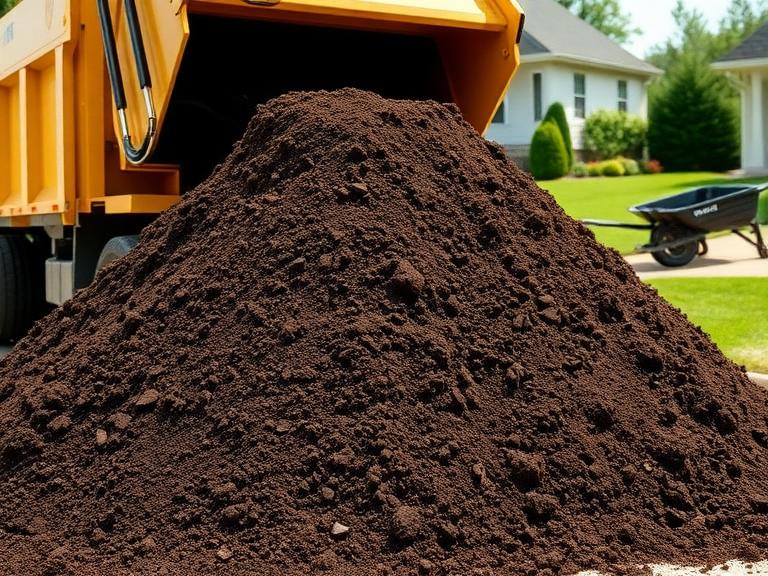
Understanding the weight of soil is a fundamental requirement for any landscaping, construction, or gardening project. Whether you are leveling a backyard, installing a new raised garden bed, or calculating the load capacity for a delivery truck, knowing the precise weight of a “yard” of dirt is essential for safety and budget management. While the term “dirt” is used colloquially, the actual weight varies significantly based on the composition of the material, its moisture content, and how tightly it has been compacted. Failing to account for these variables can lead to overloaded vehicles, broken axles, or insufficient materials for your project site.
In the world of bulk materials, a “yard” refers to a cubic yard, which is a measurement of volume rather than weight. A cubic yard is defined as an area that is three feet wide, three feet long, and three feet deep. However, because different types of soil have different densities, one cubic yard of loose topsoil will weigh significantly less than one cubic yard of heavy clay or wet fill dirt. For most residential and commercial applications, professionals use a baseline average to begin their calculations, but they always adjust for environmental factors such as recent rainfall or the specific mineral makeup of the earth being moved.
Calculating the weight of soil is not just about logistics; it is also about cost-efficiency. Most suppliers sell soil by the cubic yard, but delivery fees are often influenced by the weight of the load and the fuel required to transport it. Furthermore, if you are renting a dumpster or a trailer, you must adhere to strict weight limits to avoid heavy fines or equipment damage. By mastering the physics of soil weight, you can streamline your procurement process and ensure that your project stays on schedule and within its allocated budget without any mechanical or financial surprises.
The standard industry estimate for the weight of one cubic yard of dry, loose topsoil is approximately 2,000 to 2,200 pounds, which is roughly equivalent to one short ton. This figure assumes the soil is relatively dry and contains a healthy mix of organic matter and minerals. However, topsoil is rarely “standard.” If the soil has been screened to remove rocks and debris, it may be lighter and fluffier. Conversely, if the soil is unscreened and contains large chunks of rock or heavy clay deposits, the weight can easily climb toward 2,600 pounds per cubic yard. This variability is why professional contractors often request weight tickets from the quarry or supply yard.
Moisture is the most significant factor that changes the weight of dirt almost instantly. Water fills the pore spaces between soil particles, adding significant mass without increasing the volume. A cubic yard of soil that weighs 2,100 pounds when dry can easily exceed 3,000 pounds after a heavy rainstorm. This represents a nearly 50% increase in weight. When planning a delivery, it is crucial to check the weather forecast. If you receive a delivery of “wet” dirt, you are essentially paying for the weight of water, and you may find that your equipment struggles to move the heavier, stickier material once it is on-site.
Compaction also plays a vital role in weight-to-volume ratios. When dirt is dug out of the ground, it is considered “loose” because air has been introduced into the mixture. When that same dirt is placed into a hole and compacted with a plate compactor or heavy machinery, the air is squeezed out, and the particles are pressed closer together. It often takes about 1.2 to 1.5 cubic yards of loose dirt to fill a 1-cubic-yard hole once it has been properly compacted. Understanding the difference between “bank yards” (undisturbed earth), “loose yards” (excavated earth), and “compacted yards” is vital for accurate project estimations.
The Variables of Soil Density and Composition
Different types of earth materials have distinct densities based on their geological origins. Sandy soil, for instance, is comprised of larger particles with significant air gaps, but because sand grains are essentially small rocks, sandy soil is quite heavy, often weighing between 2,600 and 2,800 pounds per yard. Clay, on the other hand, is made of very fine particles that stick together. While dry clay can be lighter than sand, its ability to hold water is unparalleled. Saturated clay is among the heaviest materials a landscaper will encounter, frequently topping 3,000 pounds per cubic yard, making it difficult to shovel and transport manually.
Fill dirt is another common material used in construction to raise grade levels or fill large cavities. Because fill dirt is usually taken from deeper in the earth, it lacks the organic matter found in topsoil. It often consists of a mix of subsoil, rocks, and clay. This makes it denser and heavier than garden-grade topsoil. Generally, you should expect fill dirt to weigh between 2,400 and 2,700 pounds per yard. If the fill dirt contains a high concentration of gravel or “crushed run,” the weight will be even higher, as the density of stone far exceeds that of organic earth.
Specialized soil mixes, such as those used for raised beds or container gardening, are designed to be lightweight to encourage root growth and drainage. These mixes often include peat moss, perlite, or vermiculite. A cubic yard of high-quality potting or garden mix may weigh as little as 1,000 to 1,500 pounds. While this makes it much easier to move with a wheelbarrow, it also means it may settle significantly over the first few months. Understanding the specific type of soil you are ordering is the only way to ensure you have the right equipment for the job.
Critical Factors for Weight Calculation
- Moisture Content: Water is the primary variable in soil weight, as it occupies the voids between soil particles and adds 62.4 pounds per cubic foot. In a cubic yard, which contains 27 cubic feet, even a small increase in saturation can add hundreds of pounds to the total load.
- Organic Matter Ratio: Soils rich in decomposed leaves, compost, and peat are naturally lighter because organic matter is less dense than mineral components like silica or alumina. High-organic soils are excellent for plants but may require more volume to achieve the same coverage as denser soils.
- Mineral Composition: The presence of heavy minerals or metals in the earth can drive up the weight per yard. For example, soils with high iron content or volcanic basalt remnants will be significantly heavier than soils primarily composed of quartz sand or limestone dust.
- Compaction Levels: Loose dirt contains “fluff” or air pockets created during the excavation process. Once the material is placed and subjected to foot traffic, rain, or mechanical tamping, those air pockets collapse, increasing the density and effectively reducing the visible volume while the weight remains the same.
- Debris and Rock Content: Unscreened dirt often contains “oversized” materials like river rocks, concrete chunks, or large roots. These items do not compress and generally have a higher specific gravity than the surrounding soil, leading to an unpredictable and usually heavier total weight per yard.
How to Measure Your Project Needs
Before you can worry about the weight, you must accurately calculate the volume of dirt required. The standard formula for volume is Length x Width x Depth. However, the most common mistake is failing to convert all measurements into feet before multiplying. For example, if you want to cover an area 10 feet wide and 20 feet long with 4 inches of topsoil, you must convert 4 inches into 0.33 feet. Multiplying 10 x 20 x 0.33 gives you 66 cubic feet. Since there are 27 cubic feet in a cubic yard, you divide 66 by 27 to get approximately 2.44 cubic yards. Professionals usually round up by 10% to account for settling and waste.
Once you have the cubic yardage, you can estimate the total weight to determine your transportation needs. If you are using a standard pickup truck, you must be extremely cautious. A typical half-ton pickup (like an F-150 or Silverado 1500) has a payload capacity of roughly 1,500 to 2,200 pounds. This means that a single cubic yard of dry topsoil may already be at or over the truck’s maximum limit. If the soil is wet, you are almost certainly overloading the vehicle, which can lead to tire failure, braking issues, and suspension damage. For most projects requiring more than two yards, hiring a professional delivery service with a dump truck is both safer and more cost-effective.
When ordering from a landscaping center, ask them about the “dry weight” versus the “wet weight” of their current stock. Most reputable suppliers keep their premium topsoil under cover or in tarped bins to prevent it from becoming waterlogged. If the soil is stored in open piles during a rainy week, expect the weight to be at the highest end of the spectrum. Always communicate the capacity of your vehicle or trailer to the loader operator; they are usually experienced in judging how much a particular truck can handle and will often stop loading if they see the leaf springs flattening out.
Equipment and Safety Considerations
Moving a yard of dirt by hand is a labor-intensive process that requires the right tools to prevent injury. A standard contractor-grade wheelbarrow holds about 4 to 6 cubic feet. This means it takes between 5 and 7 full wheelbarrow trips to move a single cubic yard of dirt. Given that a full wheelbarrow of moist soil can weigh between 250 and 400 pounds, the physical toll on the body is significant. Using a dual-wheel wheelbarrow can provide better stability, while a motorized power buggy is a better choice for projects involving more than five yards of material.
Safety should always be the priority when dealing with bulk materials. When dirt is delivered, it is usually dropped in a large pile. If the pile is tall, be wary of “slumping,” where the sides of the pile collapse outward. If you are working in a trench or a deep excavation, you must follow OSHA guidelines regarding shoring and sloping. Dirt is deceptively heavy; a cave-in involving just a few cubic feet of soil can exert enough pressure to crush a human chest or trap a limb. Never work alone in deep excavations, and always ensure the soil is stable before entering a dug-out area.
For those using trailers, weight distribution is key. Loading all the dirt at the back of the trailer will cause “fishtailing” or swaying at high speeds, which can lead to catastrophic accidents. Conversely, placing all the weight on the tongue can strain the towing vehicle’s transmission and lift the front tires, reducing steering control. The “60/40 rule” should be applied: place 60% of the weight in the front half of the trailer (closer to the hitch) and 40% in the rear. Use a heavy-duty tarp to cover the load during transport to prevent dust and debris from flying out and hitting other vehicles.
Comparison of Common Bulk Materials
It is helpful to compare the weight of dirt to other common landscaping materials to get a sense of the logistical requirements. While a yard of dirt averages 2,200 pounds, a yard of gravel or crushed stone is significantly heavier, typically ranging from 2,700 to 3,000 pounds. This is because stone is denser and has less organic porosity than soil. If you are switching from a soil project to a driveway project using stone, you must reduce the volume per load to stay within the same weight limits of your vehicle.
Conversely, organic mulches are much lighter. A cubic yard of wood mulch or bark nuggets usually weighs between 400 and 800 pounds, depending on moisture content. You can often fill a truck bed to the brim with mulch without exceeding the weight capacity, whereas the same truck would be dangerously overloaded with only half a bed of dirt. Sand falls in the middle but leans toward the heavier side, often weighing 2,600 to 2,800 pounds per yard. Because sand particles are uniform and heavy, they settle tightly, leaving very little room for air.
Understanding these weight differences allows for better planning when staging materials. If you have a limited area for delivery, you might choose to have the heaviest materials (stone and fill dirt) delivered first so they can be placed at the base of your project. Lighter materials like topsoil and mulch can then be layered on top. Knowing the weights helps you determine the order of operations and ensures that the delivery trucks do not sink into soft ground or damage your driveway under the pressure of a maximum-capacity load.
Pro Tips for Managing Soil Weight
Check the Weather: Always schedule your soil delivery during a dry spell. Not only is dry soil lighter and easier to transport, but it is also much easier to spread and level. Wet soil turns into mud, which sticks to tools and clumps together, making it impossible to achieve a smooth finish.
Use Plywood Runners: If a heavy truck or a full wheelbarrow needs to cross your lawn, lay down sheets of 3/4-inch plywood to create a temporary path. This distributes the weight over a larger surface area and prevents the tires from creating deep ruts in your grass or compacting the soil where you don’t want it compacted.
Calculate for Settling: When filling a hole or a raised bed, remember that loose dirt will settle by 10% to 20% over the first few weeks as air escapes. Always overfill the area slightly and mound the dirt in the center so that after the first few rains, the surface becomes level rather than sunken.
Rent the Right Equipment: If your project requires more than 10 yards of dirt, consider renting a skid-steer loader (like a Bobcat). These machines are designed to handle the heavy weight of soil and can complete in minutes what would take hours of manual labor. Just be sure to check the lift capacity of the machine against the weight of the material you are moving.
Ask for a Weigh Ticket: If you are paying by the ton rather than the yard, ask the supplier for a certified weigh ticket from their scale. This ensures you are getting exactly what you paid for and provides a record of the actual weight for your records.
Frequently Asked Questions
Can I fit a yard of dirt in my pickup truck?
Most standard pickup trucks can hold about 1.5 to 2 cubic yards of volume in the bed, but they cannot handle the weight of that much dirt. A single yard of dry dirt (2,200 lbs) is already at the limit for many 1500-series trucks. If the dirt is wet, it will likely exceed the payload capacity. Always check your vehicle’s GVWR (Gross Vehicle Weight Rating) before loading.
Does “fill dirt” weigh the same as “topsoil”?
No. Fill dirt is generally denser and contains more rocks and clay, making it heavier—usually between 2,400 and 2,700 pounds per yard. Topsoil is screened and contains more organic matter, which makes it lighter, averaging 2,000 to 2,200 pounds per yard.
How many wheelbarrows are in a yard of dirt?
A standard 6-cubic-foot contractor wheelbarrow will require 4.5 to 5 full loads to move one cubic yard of dirt. Smaller homeowner-grade wheelbarrows (3 or 4 cubic feet) will require 7 to 9 trips. Remember that a full wheelbarrow can be quite heavy and difficult to balance.
How much does a yard of wet dirt weigh?
Wet dirt can weigh significantly more than dry dirt. While dry topsoil is around 2,100 pounds, fully saturated soil can reach 3,000 pounds or more per cubic yard. The water fills the air gaps, adding mass without increasing the volume of the pile.
Is it cheaper to buy dirt by the yard or by the bag?
Buying in bulk by the yard is almost always significantly cheaper for large projects. A cubic yard is equivalent to about 27 bags of soil (each 1 cubic foot). If a bag costs $5.00, you are paying $135 per yard. Bulk dirt often costs between $30 and $60 per yard, though delivery fees will apply.
Conclusion
Accurately estimating how much a yard of dirt weighs is the cornerstone of a successful outdoor project. By recognizing that a cubic yard is a measurement of space and not a fixed weight, you can better prepare for the logistical challenges of transport and labor. From the standard 2,200-pound average for dry topsoil to the 3,000-pound threshold for wet clay, these numbers dictate the type of vehicle you need, the amount of money you will spend, and the physical effort required. Always prioritize safety by respecting vehicle payload limits and using proper lifting techniques. Whether you are a professional contractor or a weekend gardener, taking the time to calculate soil density and moisture factors will ensure that your project is built on a solid—and correctly weighted—foundation. With the right preparation, you can avoid the common pitfalls of over-ordering or under-estimating, leading to a smoother, more efficient, and more professional result.